Bitcoin genesis block: What it is, why it matters, and how it changed everything
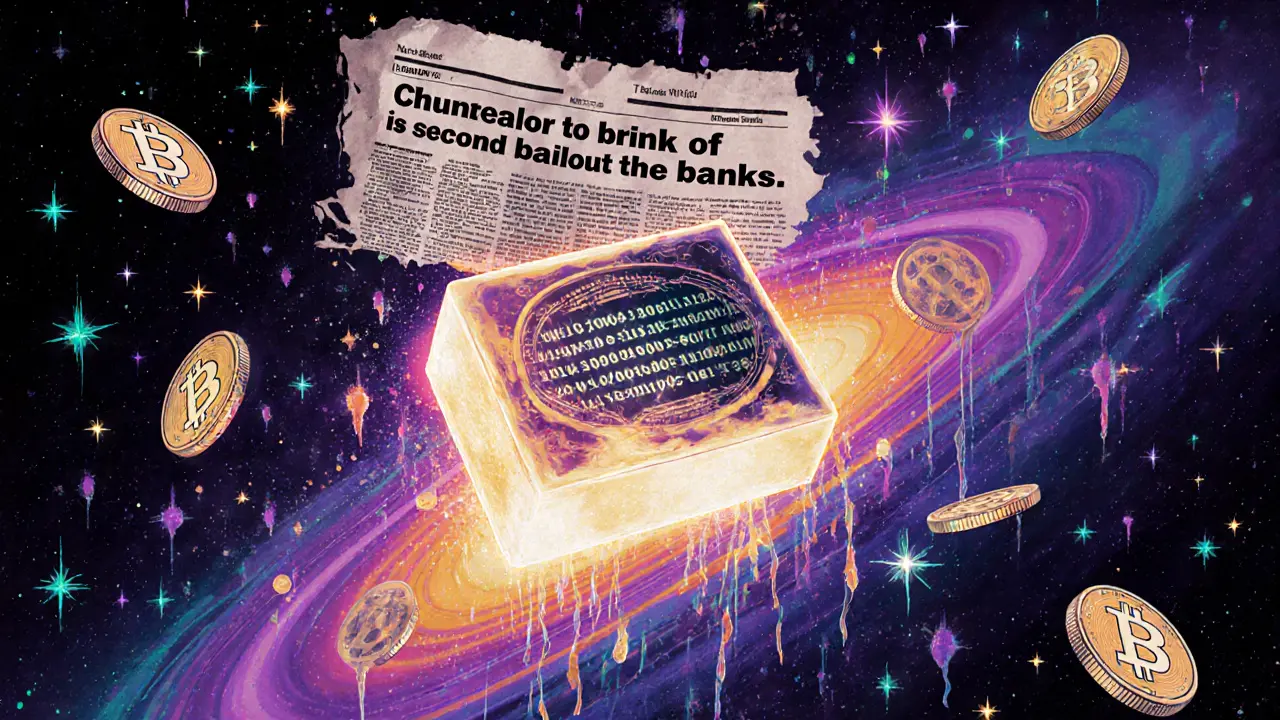
When you think of Bitcoin, you think of price charts, wallets, or mining rigs—but none of that would exist without the Bitcoin genesis block, the very first block in the Bitcoin blockchain, created by Satoshi Nakamoto on January 3, 2009. Also known as block 0, it’s not just a technical milestone—it’s the foundation of everything that came after in crypto. This block didn’t just record a transaction; it embedded a message in its coinbase: "The Times 03/Jan/2009 Chancellor on brink of second bailout for banks." That headline wasn’t random. It was a statement. Bitcoin was built to fix what traditional finance broke.
The Bitcoin genesis block, the first block in the Bitcoin blockchain, created by Satoshi Nakamoto on January 3, 2009. Also known as block 0, it’s not just a technical milestone—it’s the foundation of everything that came after in crypto. The Proof of Work, the consensus mechanism that secures Bitcoin by requiring miners to solve complex puzzles used in this block became the blueprint for every major blockchain that followed. Even Ethereum, which later switched to Proof of Stake, started with the same idea: make it expensive to cheat, and honest behavior wins. The Satoshi Nakamoto, the pseudonymous creator of Bitcoin who mined the genesis block and disappeared in 2011 never spent those first 50 BTC. They still sit there, untouched. That’s not a mistake—it’s a symbol. Bitcoin’s value isn’t in spending coins; it’s in proving the system works without trust.
Today, you’ll find hundreds of blockchains, thousands of tokens, and dozens of exchanges—but they all trace back to that one block. The cryptocurrency origin, the moment when decentralized digital money became real, marked by the Bitcoin genesis block didn’t just create a new asset. It created a new way to think about money, control, and power. Every post in this collection digs into what followed: from China’s state-controlled digital yuan to scams hiding behind fake airdrops, from DeFi’s "money legos" to exchanges that vanish overnight. They all react, in some way, to the promise—and the flaws—of that first block.
What you’ll find here aren’t just articles. They’re case studies in what happens when decentralization meets reality. Some projects built on Bitcoin’s ideals. Others exploited its name. Some succeeded. Most failed. But they all started with the same question: Can we do better than banks? The genesis block gave us the answer—and the tools to keep asking it.
Why the Genesis Block Timestamp Matters More Than You Think
The Bitcoin genesis block timestamp isn't just a date-it's a political statement, a technical marvel, and the foundation of all cryptocurrency. Embedded with a newspaper headline about bank bailouts, it marks the birth of a system designed to outlast centralized finance.