Ethereum hard fork: What it means, why it happens, and what you need to know
When you hear Ethereum hard fork, a permanent change to Ethereum’s protocol that splits the blockchain into two versions. Also known as Ethereum protocol upgrade, it’s not just a software update—it’s a vote by the network on how money and code should work together. Unlike a simple patch, a hard fork makes old nodes incompatible with new ones. If enough people agree, the chain keeps moving forward. If not, you get two blockchains—one old, one new. That’s what happened in 2016 after the DAO hack, when Ethereum split into Ethereum (ETH) and Ethereum Classic (ETC). One kept the rules as they were; the other rewrote history to undo the theft.
Hard forks aren’t just about fixing bugs or closing loopholes. They’re about power. Who controls the rules? Miners? Developers? Token holders? The Ethereum consensus, the system that lets thousands of computers agree on the state of the blockchain changed completely in 2022 with the Merge, swapping proof-of-work for proof-of-stake. That wasn’t a soft change—it was a hard fork disguised as an upgrade. And it worked because the community backed it. But not every fork gets that support. Some, like the failed Ethereum PoW fork in 2022, died quietly because nobody wanted to run the old version.
What you need to know: if you hold ETH, you don’t need to do anything during a hard fork. Your wallet keeps working. But if you’re running a node, staking, or using a DeFi app, you might get caught off guard. Some protocols break. Liquidity pools vanish. Airdrops appear—sometimes legitimate, sometimes scams. The Ethereum upgrade, a planned change to the network’s core rules, often involving consensus, fees, or scalability isn’t just tech talk—it’s money moving under your feet. The next one could change how gas fees work, how fast transactions confirm, or even how staking rewards are paid out.
Look at the posts below. You’ll see real examples: how a broken exchange like KyberSwap Elastic died after a fork left it unstable, how people chased fake airdrops tied to network changes, and how scams exploit confusion during upgrades. Some posts warn you about fake tokens pretending to be new chain assets. Others show how on-chain data reveals whether a fork is gaining real traction—or just noise. This isn’t theory. It’s what happens when code meets cash, and people bet their money on which version of Ethereum wins.
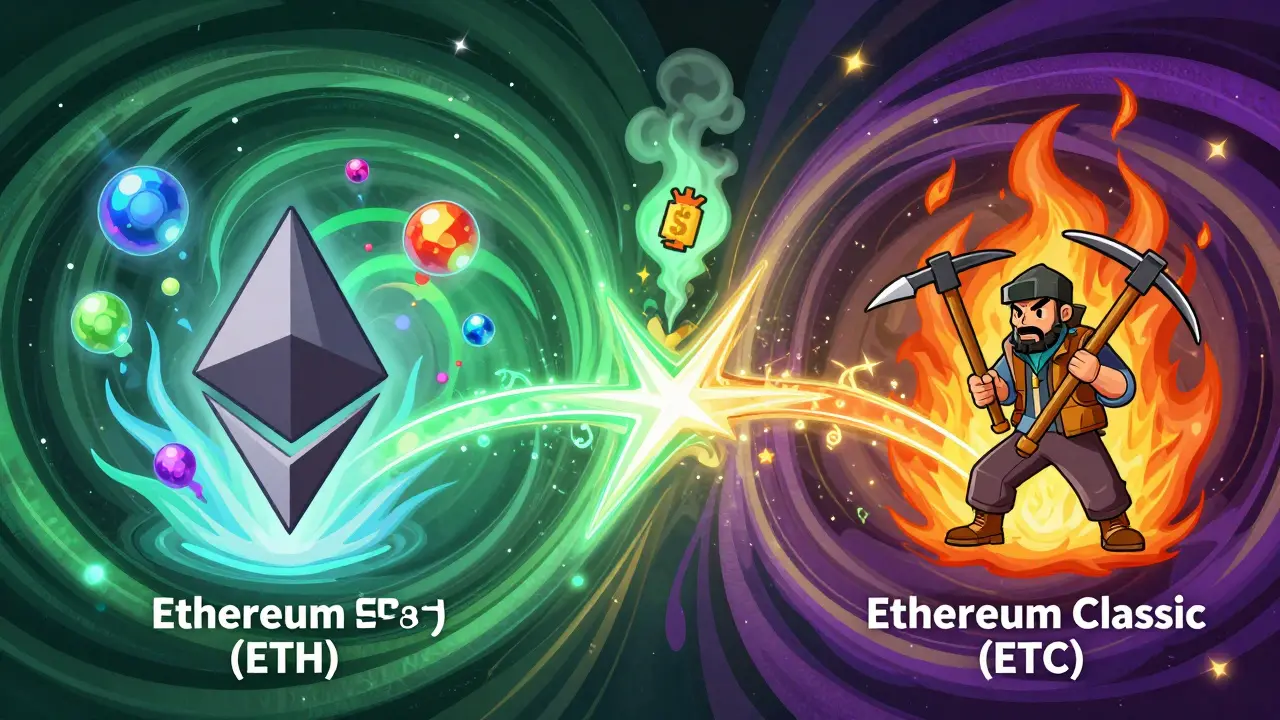
How Ethereum Hard Forks Upgrade the Network
Ethereum hard forks are major, irreversible upgrades that change the core rules of the blockchain. From fixing hacks to killing mining, they're how Ethereum evolves without breaking the network.