Ethereum Network Upgrade: What Changed and Why It Matters
When you hear Ethereum network upgrade, a series of major changes to the Ethereum blockchain that shifted it from proof-of-work to proof-of-stake. Also known as Ethereum 2.0, it wasn’t just a tweak—it was a full rebuild of how the network secures itself and processes transactions. Before the upgrade, Ethereum relied on miners using powerful hardware to solve complex math puzzles, burning massive amounts of electricity. After the upgrade, validators now stake ETH to propose and confirm blocks. This cut Ethereum’s energy use by over 99%—a change so big it reshaped how people think about crypto’s environmental impact.
The proof-of-stake, a consensus mechanism where validators are chosen based on how much cryptocurrency they lock up as collateral. Also known as staking, it enables users to earn rewards simply by holding ETH and helping secure the network didn’t just make Ethereum greener. It also made the network faster and cheaper to use. Before the upgrade, gas fees often spiked above $100 during peak times. Now, with layer-2 solutions like Arbitrum and Optimism running on top of the upgraded base layer, fees for simple swaps or NFT trades can drop below $1. This shift directly impacted platforms like Ethereum DEX, decentralized exchanges built on Ethereum that let users trade crypto without intermediaries. Also known as DeFi platforms, they now handle far more volume with fewer bottlenecks. Projects like SushiSwap and KyberSwap Elastic (even though the latter crashed after a breach) became more viable because the underlying network could handle more traffic without breaking.
But the upgrade didn’t fix everything. Scalability is still a work in progress. While the core protocol is more efficient, users still need to rely on layer-2 networks for low-cost transactions. And while staking rewards are steady, they’re not huge—usually between 3% and 5% annually. The real winners? Developers and users who want predictable, low-fee interactions with DeFi apps, NFTs, and tokenized assets. The upgrade also made Ethereum more attractive to institutions and regulators because it’s now transparent, energy-efficient, and easier to audit. That’s why you see more traditional finance players exploring Ethereum-based products today.
Looking at the posts below, you’ll find real-world examples of how this upgrade changed the landscape. Some projects thrived because of lower fees and better security. Others failed because they didn’t adapt. You’ll see reviews of exchanges built on Ethereum, deep dives into tokens that rely on its new infrastructure, and warnings about scams that prey on users who don’t understand the upgrade’s impact. This isn’t just history—it’s the foundation for every crypto move you make today.
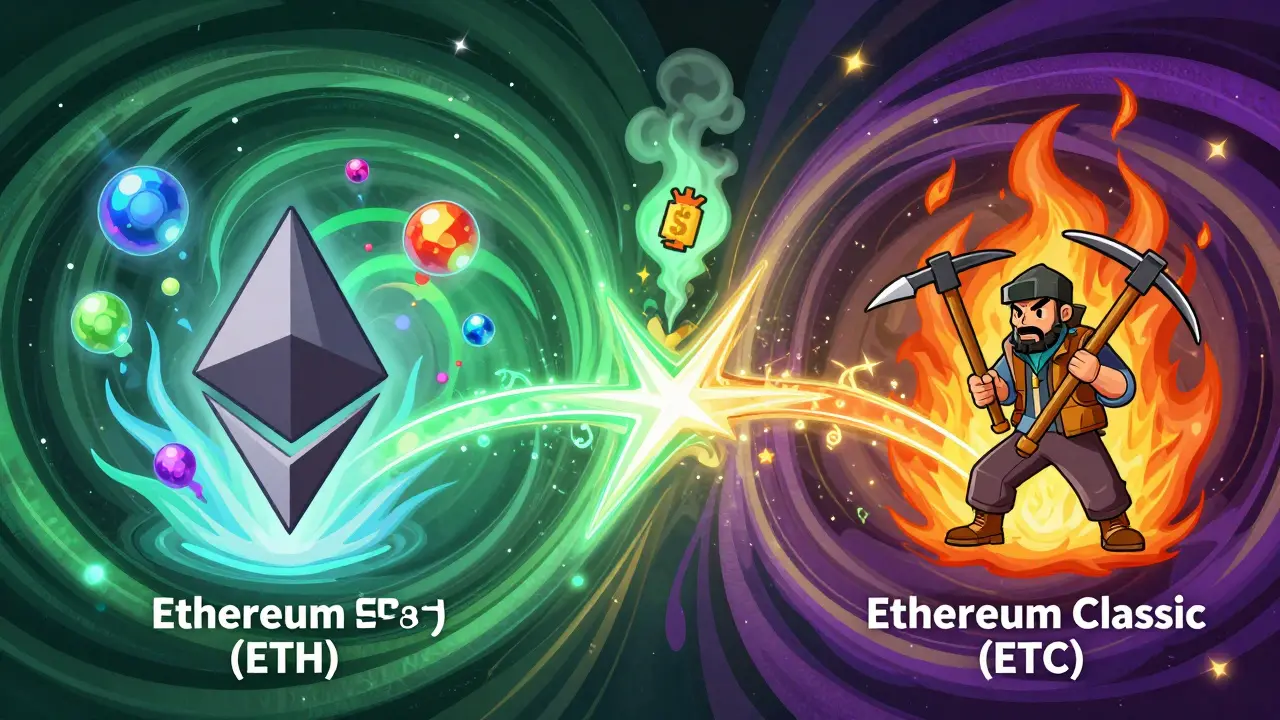
How Ethereum Hard Forks Upgrade the Network
Ethereum hard forks are major, irreversible upgrades that change the core rules of the blockchain. From fixing hacks to killing mining, they're how Ethereum evolves without breaking the network.