Ethereum Upgrade: What Changed, What Failed, and What Matters Now
When the Ethereum upgrade, the shift from proof-of-work to proof-of-stake that ended Ethereum mining and slashed energy use by 99.95%. Also known as Ethereum 2.0, it wasn't just a technical tweak—it rewrote the rules for how value moves on blockchain. This wasn’t a feature update. It was a complete overhaul of the system’s backbone, and its effects still ripple through every DeFi app, DEX, and token you interact with today.
The upgrade didn’t just change how Ethereum works—it changed what people expected from blockchain. Before, miners controlled the network and earned rewards through electricity and hardware. After, validators replaced them, staking ETH to secure the chain and earning interest instead of mining fees. That shift made Ethereum more scalable, more secure, and far less wasteful. But it also exposed weaknesses. Platforms like KyberSwap Elastic, built to take advantage of Ethereum’s new efficiency, collapsed after security breaches because they overpromised on yield without securing the fundamentals. Meanwhile, DEXs like SushiSwap and Acala Swap kept growing—not because they were flashy, but because they kept it simple: swap tokens, earn fees, and stay solvent.
The real impact? Ethereum became the backbone for everything from NFT royalties to cross-border payments, but only the strongest projects survived. The upgrade didn’t fix bad code, lazy teams, or fake airdrops. It just made the stakes higher. Now, if a project fails, it doesn’t just lose users—it loses trust in a system where every transaction is permanent and transparent. That’s why you’ll find posts here about failed DEXs, broken airdrops, and scam tokens. They’re not random. They’re the fallout from a network that no longer tolerates noise. The Ethereum upgrade didn’t create winners. It just made it easier to spot the losers.
What follows isn’t a list of hype. It’s a collection of real stories—what worked, what crashed, and what you need to know before you stake, swap, or speculate on anything tied to Ethereum’s new reality.
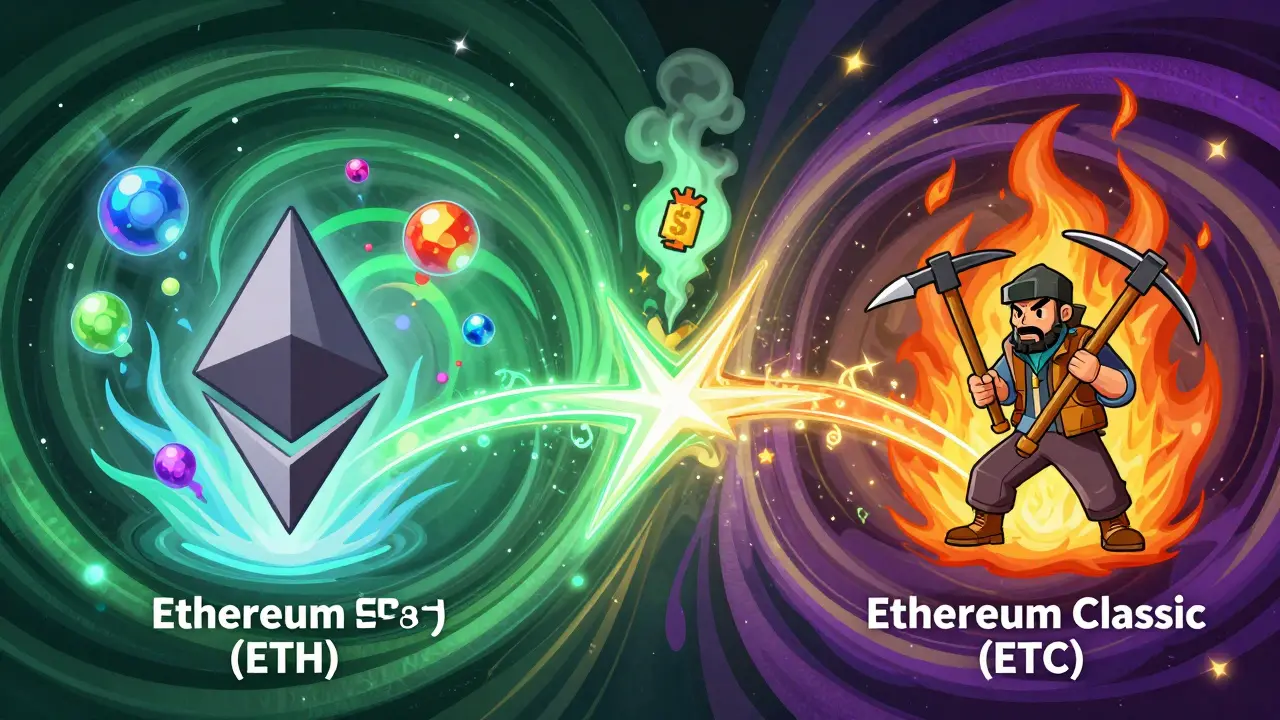
How Ethereum Hard Forks Upgrade the Network
Ethereum hard forks are major, irreversible upgrades that change the core rules of the blockchain. From fixing hacks to killing mining, they're how Ethereum evolves without breaking the network.