HAI token scam: How to spot fake crypto airdrops and avoid losing money
When you hear about a free HAI token, a cryptocurrency token that’s been tied to fraudulent airdrop campaigns. Also known as HAI coin, it’s been used in dozens of phishing schemes pretending to be a new project with huge rewards. But here’s the truth: there’s no legitimate HAI token airdrop. Every claim you see online is a scam designed to steal your crypto or your private keys.
These scams don’t come from nowhere. They copy the look and feel of real projects—fake websites, fake Twitter accounts, even fake CoinMarketCap listings. They promise free tokens if you connect your wallet, sign a transaction, or send a small amount of ETH or BNB. That’s how they get you. Once you sign that first transaction, they drain your wallet. It’s not magic. It’s not hacking. It’s you giving them access. And it happens every single day. The crypto airdrop, a distribution of free tokens to early users or community members is a real thing—but only when it’s announced by a team with a public GitHub, verified social media, and a clear tokenomics document. Fake ones skip all that. They rely on hype, urgency, and fear of missing out.
Look at what happened with GDOGE, Kalata, and GameFi Protocol. All had the same pattern: a flashy website, a CoinMarketCap listing that wasn’t official, and a flood of social media ads. None delivered real value. All vanished after collecting wallets. The private key, the secret code that gives you full control over your crypto wallet is the most important thing you own. Never share it. Never enter it on a website. Never sign a transaction unless you know exactly what you’re approving. If you’re unsure, stop. Walk away. Check the official project site—not a link from a Telegram group or a TikTok ad.
Real airdrops don’t ask for money. They don’t pressure you. They don’t use countdown timers. They’re announced on official channels, and they’re followed by a clear roadmap. The crypto security, the practices and tools used to protect digital assets from theft and fraud starts with skepticism. If it sounds too good to be true, it is. And the HAI token scam? It’s not an exception. It’s the rule.
Below, you’ll find real breakdowns of how these scams operate, what they steal, and how to spot the next one before it catches you. No fluff. No hype. Just what you need to stay safe.
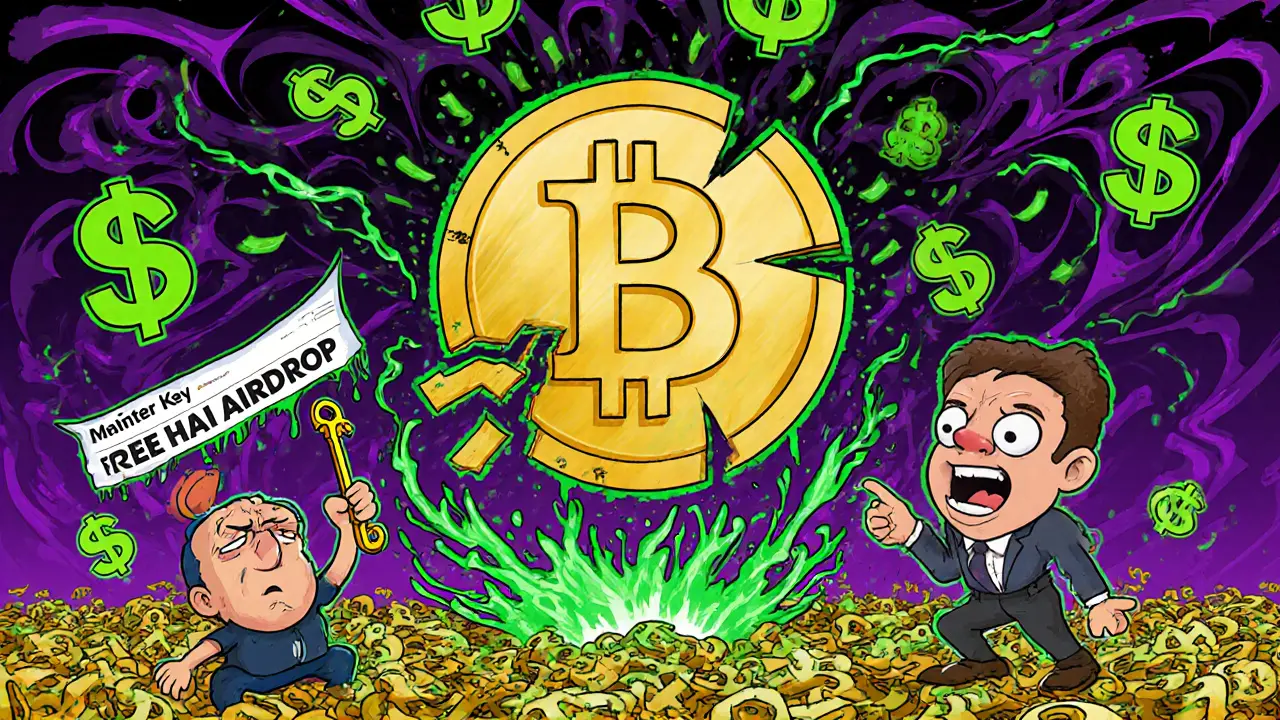
HAI Hacken Token Airdrop: What Really Happened and Why There Isn't One
HAI Hacken Token had no airdrop - only a devastating security breach that crashed its price by 99%. Learn what really happened, why scams are flooding the internet, and whether HAI has any future left.