Are Crypto Payments Allowed in Nigeria? The 2025 Legal Reality Explained
For years, the question of whether you can use cryptocurrency for payments in Nigeria felt like a game of Russian roulette. One day banks were freezing accounts; the next, regulators seemed to be looking the other way. If you are sitting in Lagos or Abuja right now, wondering if sending money via Bitcoin or USDT will get your bank account shut down, the answer has finally changed. As of 2026, crypto payments are not only allowed but operate within a defined legal framework, provided you stick to licensed platforms.
The landscape shifted dramatically with the signing of the Investments and Securities Act (ISA) 2025. This law moved digital assets from a legal gray zone into a regulated sector. It didn't just legalize holding crypto; it created a structure for trading, exchanging, and using these assets for transactions under strict oversight. However, there is a catch: the Nigerian Naira remains the only legal tender. You cannot pay your government taxes or official fees directly in crypto, but peer-to-peer transfers and commercial settlements on licensed platforms are fair game.
The Game-Changer: Investments and Securities Act 2025
To understand where things stand today, we have to look at what happened in March 2025. President Bola Ahmed Tinubu signed the Investments and Securities Act (ISA) 2025 into law. This wasn't a minor tweak to existing rules; it was a complete overhaul that officially recognized cryptocurrencies as securities under Nigerian legislation.
Before this act, the Central Bank of Nigeria (CBN) had issued circulars banning banks from facilitating crypto transactions, creating a hostile environment for users. The ISA 2025 effectively overrode those restrictions by establishing a clear regulatory home for digital assets. It designated the Securities and Exchange Commission (SEC) as the primary regulator for virtual asset service providers (VASPs). This means exchanges and payment processors aren't operating in the shadows anymore-they need licenses.
This shift transformed Nigeria’s position in the global crypto market. Despite previous bans, Nigeria consistently ranked first globally in peer-to-peer (P2P) crypto transaction volume. The ISA 2025 acknowledged this reality rather than fighting it, aiming to channel that massive activity into a compliant ecosystem. For the average user, this means the risk of sudden account closures dropped significantly, as long as you are using platforms that comply with the new rules.
Who Regulates Crypto Now? The Multi-Agency Approach
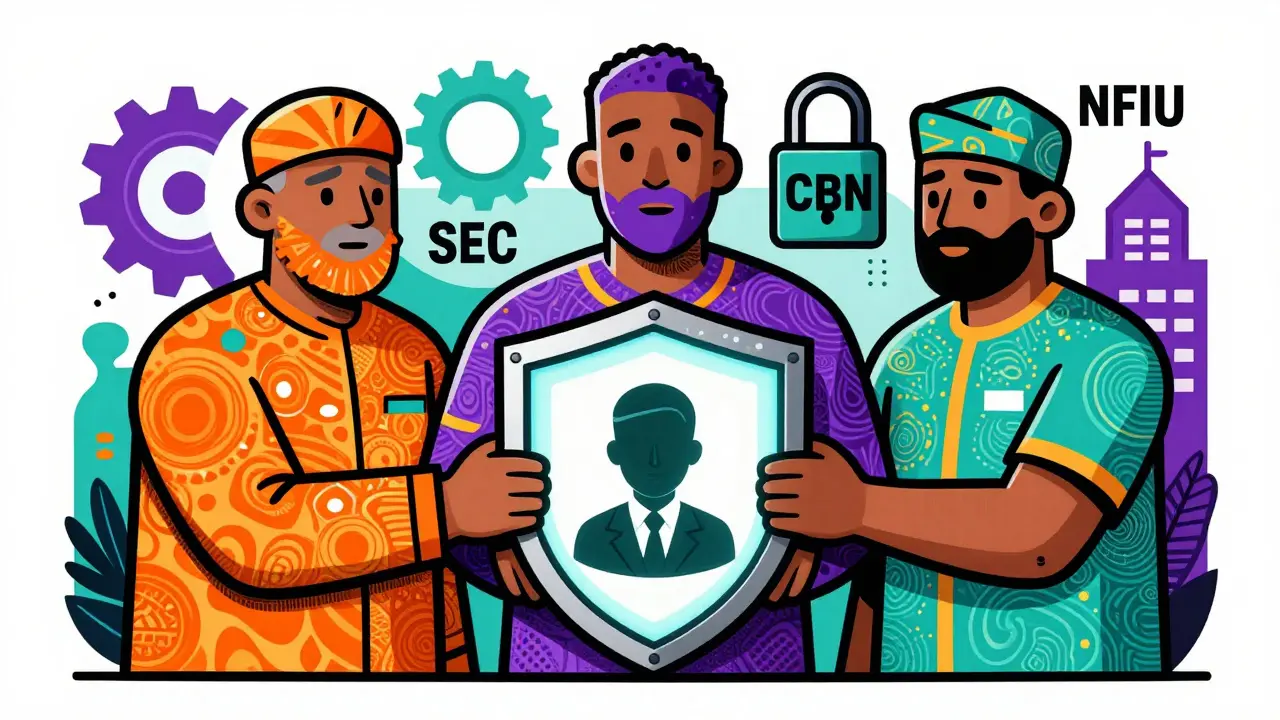
You might wonder who actually watches over these transactions. It isn't just one body. The current system uses a multi-agency approach designed to balance innovation with financial stability and security.
Securities and Exchange Commission (SEC) is the lead regulator for digital assets under the ISA 2025, responsible for licensing exchanges and enforcing compliance rules. They issue the licenses that allow companies like Busha and Quidax to operate legally. If an exchange wants to process your payments, they must register with the SEC and follow the Digital Assets Rules.
The Central Bank of Nigeria (CBN) is responsible for monetary policy and banking regulations, ensuring that crypto activities do not destabilize the broader financial system. In December 2023, even before the full ISA implementation, the CBN reversed its ban on banks serving crypto businesses. Today, banks can provide accounts to SEC-licensed crypto firms. This is crucial for payments because it allows fiat currency (Naira) to move freely between your bank account and your crypto wallet without triggering arbitrary freezes.
Then there is the Nigerian Financial Intelligence Unit (NFIU) is the agency overseeing anti-money laundering (AML) and counter-terrorism financing (CFT) compliance for all crypto operators. Alongside the Economic and Financial Crimes Commission (EFCC), they monitor transactions for illicit activity. This means while payments are allowed, anonymity is dead. Every transaction on a licensed platform is traceable, and providers must verify your identity (KYC).
Licensed Platforms vs. Unlicensed Risks
Not all crypto apps are created equal under the new laws. The ISA 2025 established stringent compliance standards. Early approvals went to domestic platforms that understood the local regulatory nuance. Companies like Busha is a leading Nigerian crypto exchange that secured early SEC licensing, allowing it to offer compliant trading and payment services. and Quidax is a major licensed virtual asset service provider in Nigeria known for integrating crypto payments with local banking systems. have been at the forefront of this transition.
Using these licensed platforms offers significant protection. They are required to adhere to strict operational guidelines, maintain reserve funds, and undergo regular audits. If something goes wrong, there is a regulatory body you can complain to. Conversely, using unlicensed international exchanges or private P2P deals carries higher risks. While private P2P is still widely used, the lack of recourse if a counterparty scams you remains a concern. Regulators have explicitly stated that Ponzi schemes and fraudulent platforms face aggressive enforcement, including the suspension of licenses and heavy fines.
The penalties for non-compliance are severe. Licensed VASPs face initial fines of ₦10 million ($6,693) for violations, plus additional monthly penalties. This strictness ensures that the platforms offering payment services are serious about their operations. For you, the user, it means choosing a platform that displays its SEC registration number prominently. If it doesn’t, think twice before loading your wallet.
| Feature | Licensed Platforms (e.g., Busha, Quidax) | Unlicensed/Private P2P |
|---|---|---|
| Regulatory Oversight | SEC regulated and monitored | No oversight |
| Bank Integration | Direct Naira deposits/withdrawals allowed | Risk of account freezes or delays |
| Fraud Protection | Recourse through regulatory bodies | None; buyer beware |
| KYC Requirements | Mandatory identity verification | Variable; often lax |
| Tax Reporting | Platforms may assist with reporting | User fully responsible |
The New Tax Reality: January 2026 Changes
If you thought regulation was the only hurdle, wait until you hear about taxes. Starting January 1, 2026, the Nigerian Tax Administration Act (NTAA) 2025 came into effect. This closes the loop on how the government treats crypto income. Previously, many users operated under the assumption that crypto gains were untaxed due to ambiguity. That era is over.
Under the NTAA 2025, crypto assets are treated as property. Holding them does not trigger a tax event. You don't pay tax just for having Bitcoin in your wallet. However, when you sell, trade, or use crypto to purchase goods and realize a profit, that is a taxable event.
Individuals face personal income tax on crypto profits on a sliding scale, capped at 25%. This is comparable to other capital gains treatments globally. For corporate entities, the rates are differentiated based on revenue. Companies earning between ₦25 million and ₦100 million annually pay a 20% corporate income tax, while those earning over ₦100 million pay 30%. Additionally, all companies subject to corporate tax must charge 7.5% VAT on the transaction fees they collect from users.
This tax clarity is actually a positive signal for the industry. It shows the government intends to generate revenue from the sector rather than ban it. Industry experts describe this regime as 'progressive' because it provides clear rules rather than arbitrary confiscation. However, it does mean you need to keep records of your transactions. Ignorance of the tax law is no longer a valid defense if the Federal Inland Revenue Service (FIRS) comes knocking.
Practical Steps for Using Crypto Payments Safely
So, how do you actually make a payment in Nigeria today without running afoul of the law? The process is straightforward if you follow the regulatory path.
- Choose a Licensed Platform: Stick to exchanges that are registered with the SEC. Look for Busha, Quidax, or other platforms that publicly display their license status. Avoid obscure apps that promise high returns or anonymous transactions.
- Complete KYC Verification: Don't try to bypass identity checks. The NFIU requires all VASPs to know who their customers are. Uploading your BVN (Bank Verification Number) and ID is standard practice and protects you from being flagged for suspicious activity.
- Use Stablecoins for Daily Transactions: While Bitcoin is great for investment, its volatility makes it risky for payments. Most Nigerians use stablecoins like USDT or USDC for daily commerce because their value is pegged to the US dollar, minimizing loss during transfer times.
- Keep Transaction Records: With the 2026 tax law in place, save screenshots or export CSV files of your trades. You will need these to calculate your taxable gains if you sell for a profit.
- Avoid Mixing Services: Do not use mixers or tumblers to obscure your transaction history. The EFCC actively investigates such activities, and associating your wallet with mixed funds can lead to frozen assets.
The integration between traditional banking and crypto has improved. Since banks can now serve SEC-licensed entities, you can deposit Naira directly into your exchange account via bank transfer or debit card. This seamless flow encourages legitimate usage for remittances, savings, and cross-border payments.

Challenges and What to Watch For
Despite the progress, challenges remain. The licensing process itself has been slow. Many international giants have yet to secure Nigerian licenses due to the rigorous vetting. This limits options for users who prefer global platforms. There is also the issue of network effects. Not every merchant accepts crypto payments directly. Most 'crypto payments' in Nigeria still happen via P2P sales where you sell crypto to receive Naira, or vice versa.
Additionally, the cost of compliance is rising. Licensed platforms pass some of their regulatory costs onto users through slightly higher fees. You might notice that withdrawal fees or spread margins are tighter than they were during the wild west days of 2021. However, this is the price of stability and safety.
Another point of caution is the distinction between investment NFTs and artistic NFTs. The SEC has expanded oversight to include investment-focused NFTs, treating them as securities. Artistic NFTs remain largely unaffected. If you are buying digital art, you are generally safe from securities regulation, but if you are buying fractionalized real estate tokens or similar instruments, they fall under the strict SEC rules.
Future Outlook: A Maturing Market
The trajectory for crypto payments in Nigeria points toward maturation. The ISA 2025 laid the foundation, and the 2026 tax law added the necessary fiscal framework. As regulators gain experience, expect more specific guidelines on consumer protection and dispute resolution. The goal is to position Nigeria not just as a hub for speculative trading, but as a leader in blockchain-based financial infrastructure in Africa.
For the everyday user, this means greater confidence. You can use crypto to send money to family abroad, hedge against Naira inflation, or conduct business with partners who prefer digital assets, all while staying within the bounds of the law. The key is to stay informed, use licensed tools, and respect the new tax obligations. The era of fear is ending; the era of responsibility has begun.
Is it illegal to own cryptocurrency in Nigeria?
No, owning cryptocurrency is not illegal in Nigeria. The Investments and Securities Act (ISA) 2025 recognizes digital assets as securities. However, they are not legal tender, meaning you cannot use them to pay government taxes or official fees directly. They are legal for investment, trading, and private transactions.
Can I use my Nigerian bank account to buy crypto?
Yes, you can. Since December 2023, the Central Bank of Nigeria (CBN) has allowed banks to provide services to Virtual Asset Service Providers (VASPs) that are licensed by the Securities and Exchange Commission (SEC). You can deposit Naira into licensed exchanges like Busha or Quidax to purchase crypto.
Do I have to pay tax on my crypto profits?
Yes, starting January 1, 2026. Under the Nigerian Tax Administration Act (NTAA) 2025, profits from selling or exchanging crypto are subject to personal income tax. The rate is on a sliding scale capped at 25%. Holding crypto without selling it does not trigger a tax liability.
Which crypto exchanges are legal in Nigeria?
Legal exchanges must be licensed by the SEC. Prominent examples include Busha and Quidax, which received early approvals under the ISA 2025 framework. Always check if a platform displays its SEC registration number before using it for payments or trading.
What happens if I use an unlicensed crypto platform?
Using unlicensed platforms carries significant risks. These platforms operate outside the regulatory framework, meaning you have no recourse if they freeze your funds or go bankrupt. Additionally, banks may block transactions linked to unlicensed entities, and you could face scrutiny from the NFIU or EFCC if your activities appear suspicious.
Can I pay for groceries or utilities with crypto in Nigeria?
Generally, no. Crypto is not legal tender, so merchants are not obligated to accept it, and government utility bills must be paid in Naira. However, some private businesses may accept crypto via licensed payment processors, and individuals often use P2P sales to convert crypto to Naira for daily expenses.
How does the SEC protect crypto users?
The SEC protects users by licensing and monitoring exchanges, enforcing anti-fraud measures, and requiring platforms to adhere to strict capital and operational standards. They also coordinate with the EFCC and NFIU to investigate and shut down fraudulent schemes like Ponzi platforms disguised as crypto investments.