BitBegin Crypto Exchange Review: What You Need to Know in 2026
BitBegin isn’t another Binance or Coinbase. It doesn’t have hundreds of coins, instant card deposits, or global name recognition. But if you live in Georgia, it might be one of the few crypto exchanges that actually works for you. For everyone else? It’s a tricky bet. This review cuts through the noise and tells you exactly what BitBegin offers - and what it leaves out.
What BitBegin Actually Is
BitBegin is a centralized crypto exchange registered in Georgia. That’s not just a location - it’s the core of its entire design. Unlike global platforms that try to serve everyone, BitBegin built itself around one thing: helping Georgians trade crypto with their local currency, the Georgian Lari (GEL). If you’re in Tbilisi or Batumi and want to buy Bitcoin without jumping through hoops, BitBegin’s fiat on-ramp is one of the only options that doesn’t require a foreign bank account.
It’s not just spot trading. BitBegin also offers derivatives, staking, and an NFT marketplace. Its native token, BRIT is a 10 billion-token blockchain project with a DAO governance structure and MIT-licensed open-source code. It’s marketed as compliant with FATF’s AML/CFT rules, though no independent audit confirms this. The token’s entire supply is circulating - a red flag for some investors who expect deflationary models.
Fees: Transparent, But Not Cheap
BitBegin’s fee structure is one of its few clear advantages. Trading fees are flat at 0.1% for both makers and takers. That’s competitive with bigger exchanges like Kraken or Bitstamp. No hidden fees. No tiered discounts. Just simple pricing.
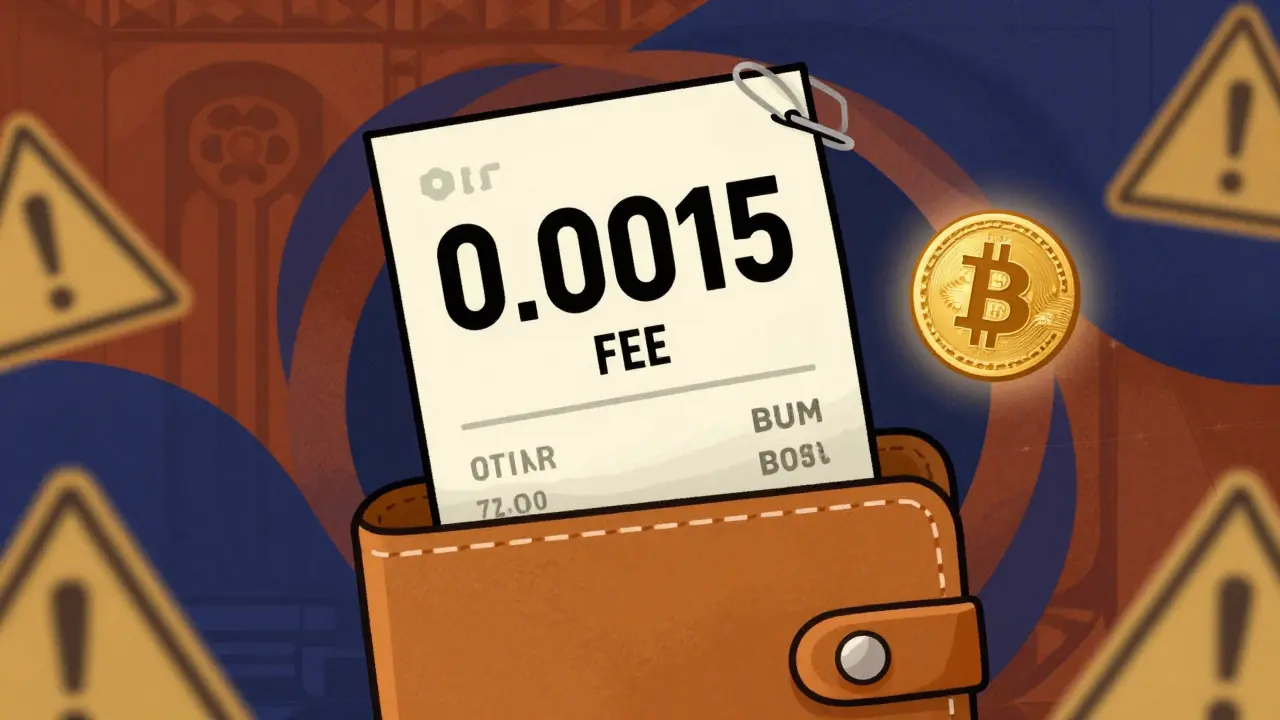
But here’s where it falls apart: withdrawals. If you want to pull out Bitcoin, you pay 0.0015 BTC - roughly $120 at current prices. That’s more than double what Binance charges. USDT withdrawals on TRC20 cost 5 USDT. Compare that to Kraken’s 0.0005 BTC or Coinbase’s near-free withdrawals. For someone moving large amounts, these fees eat into profits fast.
Deposits are free - if you use bank transfer. No credit or debit cards. No PayPal. No Apple Pay. If you’re used to funding your account in seconds, BitBegin will feel painfully slow. You’re stuck waiting for bank wires, which can take 1-3 business days.
Supported Assets: Too Few for Serious Traders
BitBegin lists around 32-38 cryptocurrencies. You’ll find Bitcoin, Ethereum, Solana, TRON, Litecoin, and a few others. But that’s it. No Dogecoin. No Polygon. No Shiba Inu. No real altcoin diversity. For a beginner exploring crypto, this might be enough. For anyone with a strategy, it’s a dead end.
Compare that to Binance (350+ coins), Coinbase (200+), or even KuCoin (700+). BitBegin doesn’t just lag - it’s missing entire categories of tokens. If you’re holding an emerging DeFi coin or a new Layer-2 token, you won’t find it here. This limitation isn’t an oversight - it’s intentional. BitBegin targets Georgian users who want to trade mainstream assets, not speculators chasing the next 100x.

Regulation and Security: Local, Not Global
BitBegin is registered with the Georgian government. That means it follows local AML and KYC rules. You’ll need to submit ID, proof of address, and possibly a selfie. No exceptions. This isn’t a privacy-focused exchange - it’s a regulated one.
That’s good if you care about safety. Georgian regulators don’t tolerate shady operations. But it’s bad if you’re outside Georgia. The exchange blocks users from sanctioned countries like Sudan and North Korea - fine - but it also doesn’t accept users from most of the world. No Americans. No Brits. No Australians. Even if you have a VPN, your bank transfer will be flagged.
Security features are standard: two-factor authentication, cold storage for assets, and email alerts. But there’s no public proof of reserves. No transparency reports. No insurance fund. That’s not unique - many smaller exchanges do this - but it’s a risk you take when you’re not on a global platform.
Who Is This For? (And Who Should Avoid It)
BitBegin isn’t for everyone. Here’s who it works for:
- Residents of Georgia who want to trade crypto with GEL
- People who value simple, transparent fees
- Users who don’t need hundreds of coins
- Those who prefer regulated platforms over anonymous ones
And here’s who should walk away:
- Traders looking for altcoins beyond BTC, ETH, and SOL
- Anyone who wants to deposit with a credit card
- International users outside Georgia
- People withdrawing large sums - those fees add up fast
If you’re in Georgia and you’re tired of using foreign exchanges with high conversion fees, BitBegin is one of the few local options that makes sense. But if you’re anywhere else? Stick with Kraken, Coinbase, or Binance. They’ll save you time, money, and frustration.
The Bottom Line
BitBegin is a regional tool, not a global player. It solves one real problem - helping Georgians trade crypto in their own currency - and does it decently. The fee structure is clean, the interface is simple, and the regulatory backing adds trust.
But it’s not a replacement for the big exchanges. The asset list is too narrow. The withdrawal fees are too high. The payment options are too limited. It’s not designed to compete with Binance. It’s designed to serve Georgia.
If you’re not in Georgia? Don’t bother. If you are? It’s worth a try - but keep your funds small until you’re sure it works for your needs.
Is BitBegin safe to use?
BitBegin is registered with the Georgian government and follows AML/KYC rules, which adds a layer of legitimacy. It uses two-factor authentication and cold storage for crypto assets. But it doesn’t publish proof of reserves or have an insurance fund like some larger exchanges. For users in Georgia, it’s one of the safer local options. For international users, it’s not even available.
Can I deposit USD or EUR on BitBegin?
Yes, but only via bank transfer. BitBegin accepts USD, EUR, and GEL through bank wires. You cannot deposit with credit cards, PayPal, or any other instant method. This makes funding your account slower and less convenient than on global exchanges.
What cryptocurrencies does BitBegin support?
BitBegin supports around 32-38 cryptocurrencies, including Bitcoin (BTC), Ethereum (ETH), Solana (SOL), TRON (TRX), Litecoin (LTC), and its native token BRIT. It does not support popular altcoins like Dogecoin, Polygon, or Shiba Inu. The selection is intentionally limited to mainstream assets.
Are there any withdrawal fees on BitBegin?
Yes. Withdrawal fees are high compared to global exchanges. Bitcoin withdrawals cost 0.0015 BTC (about $120), and USDT withdrawals on TRC20 cost 5 USDT. These fees are significantly higher than those on Binance, Kraken, or Coinbase, making large withdrawals expensive.
Can I use BitBegin if I’m not in Georgia?
No. BitBegin restricts access to users from Georgia only. It blocks users from sanctioned countries like Sudan and North Korea, and it does not accept users from the U.S., EU, UK, or most other regions. Even if you have a Georgian bank account or a VPN, your bank transfer will likely be rejected if you’re not a resident.
What is the BRIT token?
BRIT is BitBegin’s native token with a total supply of 10 billion, all of which are in circulation. It’s described as an open-source, MIT-licensed blockchain project governed by a DAO. BitBegin claims it complies with FATF’s AML/CFT standards, but there’s no public audit to verify this. BRIT is primarily used for fee discounts and governance voting on the platform.
What Comes Next?
If you’re in Georgia and using BitBegin, watch for updates on new fiat pairs or lower withdrawal fees. The platform’s future depends on whether it can expand its asset list without losing its local focus. For now, it’s a narrow but functional tool for one specific group of users.
If you’re outside Georgia, don’t waste time trying to make it work. There are better, faster, cheaper options everywhere else.
Jeffrey Dean
March 8, 2026 AT 08:24BitBegin isn't a crypto exchange-it's a geographic lock-in. They're not trying to compete with Binance; they're trying to create a walled garden for Georgians so they can't leave. And honestly? That’s not innovation. That’s colonialism with blockchain tags.
It’s the same playbook every regional platform uses: ‘We’re niche, we’re focused, we’re special.’ No, you’re just avoiding regulation by hiding behind a border. If your entire business model relies on excluding 99% of the world, you’re not solving a problem-you’re avoiding accountability.
Brian T
March 9, 2026 AT 10:07So you’re telling me the only reason this exists is because Georgia has weird banking rules? And now we’re supposed to be impressed because they don’t take credit cards? That’s not a feature. That’s a bug dressed up like a value proposition.
Eva Gupta
March 9, 2026 AT 19:30I'm from India and I can't help but feel for Georgians here-having to rely on bank transfers when everything else is instant is such a pain. I get why BitBegin exists, but wow, the withdrawal fees? Oof.
Still, if this helps someone in Tbilisi avoid crazy forex fees, maybe it's worth it? Just wish they'd open up a bit more. Maybe add USDT on ERC20? Lower that 0.0015 BTC fee? Come on now.
Nancy Jewer
March 10, 2026 AT 07:24From a compliance standpoint, this is actually a fascinating case study in localized financial infrastructure. The fact that they’re aligning with Georgian AML/KYC frameworks while maintaining FATF-aligned tokenomics suggests a deliberate regulatory arbitrage strategy.
BRIT’s circulating supply is concerning from a macroeconomic perspective, but if it’s being used as a governance and fee-discount mechanism within a tightly regulated jurisdiction, it might function as a stable internal economy rather than a speculative asset. The real question is whether this model scales-or if it’s just a regional anomaly.
Julie Potter
March 12, 2026 AT 05:350.0015 BTC withdrawal fee? Are they trying to fund their next yacht? That’s not a fee-it’s a robbery with a website.
And don’t even get me started on ‘no Dogecoin.’ Who the hell is running this place, a 2014 Reddit mod? I’m not here to trade BTC and ETH-I want to meme my way to freedom! Where’s the Shiba? WHERE’S THE DOGE?!
This isn’t crypto. This is a museum exhibit labeled ‘Crypto as It Was in 2017.’
Christina Young
March 12, 2026 AT 07:10Withdrawal fees are 3x industry standard. Asset list is 90% smaller than competitors. No card deposits. No international access. This isn’t a platform-it’s a liability with a login page.
James Burke
March 14, 2026 AT 06:46Look, if you're in Georgia and you've been trying to buy crypto with your local bank for years, this actually makes sense. I get the gripes about fees and coins-but for someone who just wants to move GEL to BTC without getting flagged by their bank? This is the only game in town.
It’s not for everyone. But it doesn’t have to be. Sometimes niche is better than broad. Just don’t pretend it’s a global alternative.
Bill Pommier
March 15, 2026 AT 03:17The arrogance of this platform is breathtaking. They don’t serve the world. They don’t serve innovation. They serve bureaucracy. And they’ve dressed up regulatory compliance as ‘trustworthiness.’
There is no such thing as ‘local crypto.’ Crypto is either decentralized-or it’s a bank with a different logo. BitBegin is a bank. With a blockchain sticker. And a 120-dollar withdrawal fee. Congratulations, you’ve built the most expensive savings account in the Caucasus.
Olivia Parsons
March 15, 2026 AT 04:48Is BRIT’s entire supply circulating because they’re trying to avoid the ‘pre-mine’ stigma? Or because they ran out of ideas?
And why is there no mention of liquidity pools or staking APY? If this token is supposed to be the backbone of the platform, where’s the incentive to hold it? Just fee discounts? That’s not enough. Not even close.
Nick Greening
March 16, 2026 AT 12:12Oh wow, a crypto exchange that doesn’t list Shiba Inu. How revolutionary. Next they’ll tell us the moon is made of cheese and we should all just buy gold.
They’re not ‘focused’-they’re lazy. If you can’t list the top 100 coins by market cap, you’re not a crypto exchange. You’re a glorified bank with a website that says ‘blockchain’ in the footer.
Issack Vaid
March 17, 2026 AT 22:24Let’s be clear: BitBegin is not a product. It’s a political statement. It says, ‘We do not trust the global financial system. We do not trust your USD. We do not trust your regulations. We only trust the Georgian state.’
That’s not innovation. That’s isolationism. And if you’re selling that as a feature, you’re not building for the future-you’re building a time capsule for 2010.
Megan Lutz
March 18, 2026 AT 17:14The fact that they’re using MIT-licensed open-source code for BRIT is actually kind of impressive. Most centralized exchanges just fork a token and slap their logo on it. At least they’re not pretending to be decentralized while hoarding 10 billion tokens.
But the withdrawal fees? That’s the kind of detail that kills trust. You can have the cleanest UI and the best KYC, but if you charge $120 to withdraw BTC, people will leave. Not because they’re mad-they’re just being rational.
jay baravkar
March 19, 2026 AT 19:46For Georgians, this might be a lifeline. Seriously. Imagine trying to buy BTC with a local bank that hates crypto. This isn’t perfect-but it’s something. And sometimes, something is better than nothing.
Also-BRIT? I’m not sold on the 10B supply, but if it gives me 20% off fees? I’ll hold it. Small wins matter.
Ian Thomas
March 21, 2026 AT 10:45It’s funny. BitBegin isn’t trying to be the next Binance. It’s trying to be the last crypto exchange that matters to its users. And maybe… that’s the real innovation.
Most platforms chase global dominance. This one accepts its limits. It doesn’t pretend to serve the world. It serves Georgia. And sometimes, doing one thing well-without trying to be everything-is the most radical thing you can do.
Nash Tree Service
March 23, 2026 AT 05:56One might posit that the structural limitations of BitBegin-its exclusionary geography, its punitive withdrawal fees, its tokenomics predicated on total supply circulation-are not failures, but rather intentional design choices meant to enforce a specific socio-economic ecosystem: one where capital mobility is restricted, regulatory compliance is absolute, and speculative ambition is deliberately curtailed.
In this light, BRIT is not a cryptocurrency-it is a civic instrument. A mechanism for internal governance within a bounded jurisdiction. To critique its lack of altcoins is to misunderstand its purpose entirely.
It is not a platform for traders. It is a platform for citizens. And perhaps, in an age of financial anarchy, that is the most revolutionary concept of all.