Cashierest Crypto Exchange Review: Why It Shut Down and What Happened to Users
Crypto Exchange Safety Checker
Evaluate Your Crypto Exchange Safety
Based on the article about Cashierest's shutdown, this tool helps you determine if a cryptocurrency exchange meets minimum safety criteria. Check all features the exchange offers to get your safety assessment.
Safety Assessment
This exchange meets the minimum safety criteria based on the Cashierest shutdown lessons.
This exchange does NOT meet minimum safety criteria. Consider other options.
Your safety assessment is based on the following criteria:
Why These Safety Features Matter
Based on Cashierest's shutdown, these are the minimum safety features you should look for in a crypto exchange:
- Full KYC verification - Reduces fraud risk and establishes accountability. Exchanges without proper verification are vulnerable to scams.
- Fiat support - Enables you to buy crypto with traditional currency. Cashierest failed by not offering fiat support, which is critical for most users.
- Verified trading volume - Indicates liquidity and real user activity. Low volume makes trading difficult and price manipulation easier.
- Public security audits - Provides proof of fund security. Without audits, you can't verify if the exchange actually holds your funds.
- 100+ verified reviews - Indicates a large user base with real-world experience. Cashierest had only 1 verified review.
- Global reach - Ensures the exchange is actively maintained with updates and customer support. Cashierest was Korea-only with no global presence.
When you hear the name Cashierest, you might think it’s another crypto exchange you can sign up for today. But here’s the truth: Cashierest stopped trading forever on December 22, 2023. It’s not just inactive - it’s gone. No new deposits. No new trades. No customer support beyond a narrow window to recover your crypto. If you’re looking to trade, this isn’t an option. It’s a cautionary tale. Cashierest was a small, Korea-focused exchange that launched in June 2018. It never aimed to compete with Binance or Coinbase. Instead, it tried to be a quiet, no-frills platform for Korean users who wanted to trade crypto without the hassle of full KYC. It didn’t support bank transfers, USD, or Korean Won. You could only deposit and withdraw cryptocurrencies. That made it feel fast and simple - at first. But simplicity doesn’t last if you’re invisible. By 2021, major crypto data sites like CoinGecko and CoinMarketCap stopped showing any trading volume for Cashierest. That’s a red flag. No volume means no liquidity. No liquidity means you can’t buy or sell without moving the price. And if you can’t trade easily, why use it? The exchange claimed to use hardware wallets to secure funds and had a "KYC-lite" process - meaning you didn’t need to submit government ID right away. That appealed to users who wanted privacy. But it also raised questions. No clear identity verification? No third-party security audits? No public track record? Those aren’t features - they’re warning signs. By 2023, the writing was on the wall. Cashierest announced it was shutting down. Not because of a hack or scandal. Not because of fraud. Just because "changing business conditions" made it unsustainable. That’s corporate speak for: we didn’t have enough users, enough volume, or enough trust to keep going. Even the withdrawal window was limited. Users had until December 22, 2028, to request their funds back. After that, it’s over. No more access. No more appeals. If you didn’t act in time, your crypto is likely lost forever. So who used Cashierest? Mostly Korean traders who didn’t want to jump through hoops. But even in South Korea - a country with over 5 million crypto users in 2021 - Cashierest never cracked the top five. Upbit, Bithumb, and Korbit dominated. Cashierest was a footnote. No Reddit threads. No Trustpilot reviews. No YouTube tutorials. Just one user rating on a small comparison site. That’s not a community. That’s a ghost. Why did it fail? Three big reasons:
- No fiat support: You couldn’t buy crypto with a bank card or wire transfer. That’s a huge barrier in 2025. Most users want to start with USD, EUR, or KRW - not crypto they already own.
- No transparency: No public trading volume, no audits, no clear team info. If you don’t know who’s running the platform, why trust them?
- No growth: While global exchanges added new coins, lower fees, and better apps, Cashierest stayed frozen in 2019. No updates. No marketing. No innovation.
What happened to users’ funds after Cashierest shut down?
After Cashierest stopped trading on December 22, 2023, users weren’t left with nothing - but they weren’t given easy access either. The exchange announced a five-year window to withdraw remaining assets, ending on December 22, 2028. That means if you still had crypto on the platform, you had until 2028 to get it out. To do that, you had to submit a formal request through their website. You needed to provide your full legal name, government-issued ID, and the wallet address where you wanted your crypto sent. Cashierest claimed they’d verify your identity within 7 business days. Once confirmed, they said funds would be sent within 14 days. But here’s the catch: no one outside the exchange knew how many users were still active. No public dashboard. No update logs. No transparency. If you didn’t log in during those five years, you probably lost everything. There’s no guarantee the exchange held all the funds it claimed to. No independent audit was ever published. No blockchain explorer could verify the wallet balances linked to Cashierest. That’s the danger of using an unregulated, low-volume platform. You’re trusting someone you can’t verify, with no backup. And if your claim was rejected? The exchange said you’d be directed to "legal procedures" - which, in practice, means you’d need a lawyer, court documents, and a lot of time. Most users didn’t have the resources for that. So they gave up.Was Cashierest safe to use before it shut down?
Cashierest claimed to be secure. They said they used hardware wallets and "a variety of security solutions." But that’s marketing speak. No details. No proof. No third-party verification. Compare that to exchanges like Kraken or Coinbase. They publish regular proof-of-reserves reports. They undergo audits by firms like BDO or Armanino. They’ve been hacked before - and they’ve been transparent about it. Cashierest? Nothing. No blog posts. No security updates. No incident disclosures. Even their website didn’t mention SSL certificates or two-factor authentication requirements clearly. The lack of KYC was marketed as a benefit - faster sign-up. But in crypto, anonymity isn’t safety. It’s risk. Regulators don’t trust exchanges that don’t verify users. And users shouldn’t either. Also, the exchange didn’t offer insurance. If their wallet got hacked, your coins were gone. No compensation. No recourse. The fact that no major crypto news site ever covered Cashierest as a secure or trustworthy platform tells you everything. Even in 2019, experts called it "a red flag." By 2023, it was dead.Why didn’t Cashierest grow like other exchanges?
Cashierest had one big advantage: it was simple. No fiat. No paperwork. Just crypto in, crypto out. That worked for a small group of tech-savvy Korean traders in 2018. But crypto moved fast. By 2020, users wanted to buy Bitcoin with their debit cards. By 2021, they wanted staking, lending, and DeFi access. By 2023, they wanted mobile apps, customer support in English, and educational content. Cashierest didn’t evolve. It didn’t add new coins. It didn’t improve its interface. It didn’t hire a marketing team. It didn’t even update its website. Meanwhile, Binance added 50+ new trading pairs every year. Kraken launched staking in 2020. Coinbase released a full educational hub. Even smaller players like Bitget rolled out referral bonuses and cashback programs. Cashierest stayed still. And in crypto, standing still means falling behind. It also had zero global reach. No English-language marketing. No partnerships. No presence outside Korea. Even though their site had an English toggle, their support, community, and liquidity were all Korean. That limited them to a tiny slice of the market. South Korea had over 5 million crypto users in 2021. Cashierest didn’t capture even 0.1% of that. That’s not a niche. That’s a failure.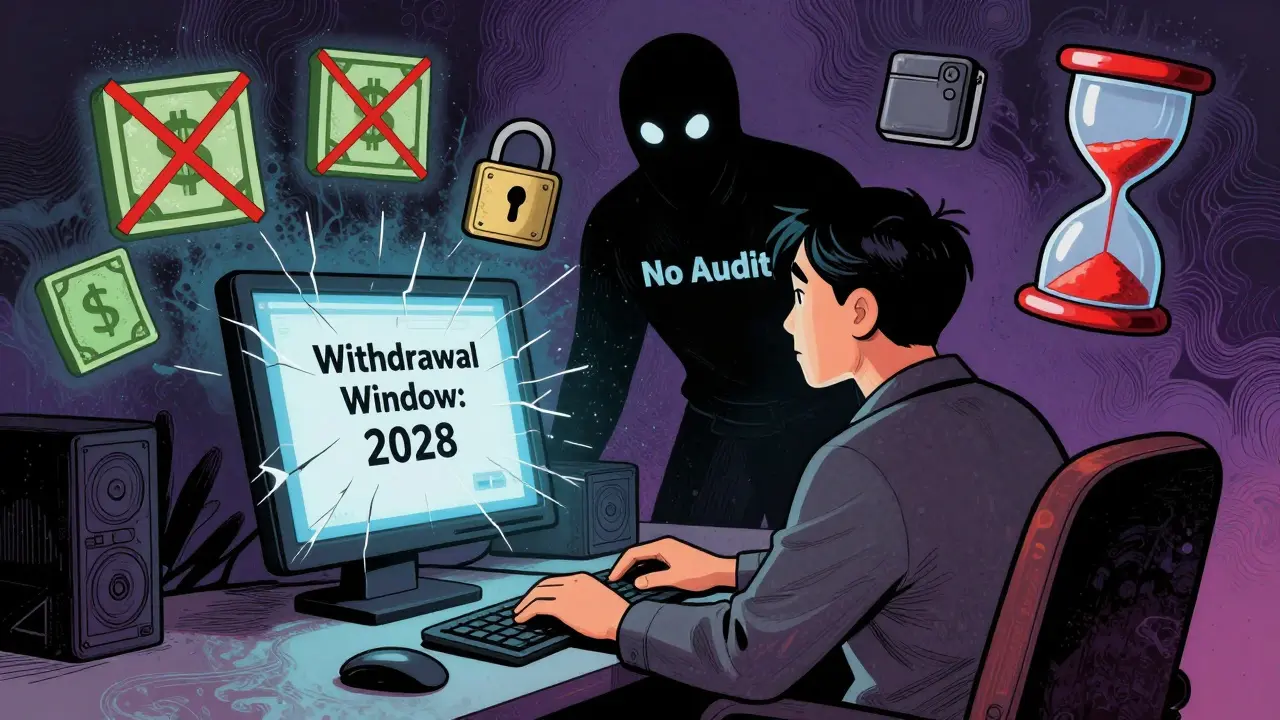
How does Cashierest compare to other exchanges?
Here’s how Cashierest stacked up against major exchanges before it shut down:| Feature | Cashierest | Binance | Kraken | Coinbase |
|---|---|---|---|---|
| Operational Status | Closed (Dec 2023) | Active | Active | Active |
| Fiat Support | No | Yes (50+ currencies) | Yes (15+ currencies) | Yes (10+ currencies) |
| Trading Pairs | 64 (2019) | 1,000+ | 300+ | 200+ |
| Trading Volume (2023) | None reported | $50B+ daily | $2B+ daily | $1.5B+ daily |
| KYC Requirements | KYC-lite | Full KYC | Full KYC | Full KYC |
| Security Audits | None published | Regular, public | Regular, public | Regular, public |
| User Reviews | 1 verified | 100,000+ | 50,000+ | 200,000+ |
| Mobile App | Unknown | Yes | Yes | Yes |
| Global Reach | Korea only | Worldwide | Worldwide | Worldwide |
What should you do if you still have crypto on Cashierest?
If you’re reading this and you still have coins on Cashierest, you need to act - now. First, go to their official website. If it’s down, search for archived versions on the Wayback Machine. Look for any contact or withdrawal portal. Second, gather your documents: a government ID (passport or driver’s license), proof of address, and the wallet address where you want your crypto sent. Third, submit your request through their system. Keep a screenshot. Save the confirmation email. Don’t wait. The clock is ticking. December 22, 2028, is the last day. After that, your funds are gone for good. And if you can’t get your crypto back? There’s no insurance. No refund. No legal recourse unless you hire a lawyer and file in South Korea - which costs more than most people’s balances. This isn’t a warning. It’s a final notice.
What are safer alternatives to Cashierest today?
If you’re looking for a reliable crypto exchange in 2025, here are your best options:- Binance: Best for traders. Lowest fees, most coins, advanced tools. Not for beginners in the U.S. due to regulatory limits.
- Coinbase: Best for beginners. Simple interface, insured custody, educational resources. Higher fees, but trustworthy.
- Kraken: Best for security-focused users. Strong compliance, public audits, good customer service. Slightly more complex UI.
- Bybit: Best for derivatives and staking. Offers $30,000 sign-up bonuses (check current promotions). Popular with active traders.
- Bitget: Best for copy trading and low fees. Strong in Asia, growing globally.
- Real trading volume (verified on CoinGecko)
- Full KYC and compliance
- Public security audits
- 24/7 customer support
- Mobile apps and web platforms
Final thoughts: What Cashierest teaches us about crypto exchanges
Cashierest didn’t fail because it was bad. It failed because it was invisible. It didn’t have enough users. It didn’t have enough trust. It didn’t have enough transparency. And in crypto, that’s a death sentence. The lesson isn’t that small exchanges can’t survive. It’s that they must earn attention. They must prove they’re safe. They must keep evolving. If you’re considering any exchange today - big or small - ask these questions:- Is it listed on CoinGecko or CoinMarketCap?
- Does it show real, verifiable trading volume?
- Has it ever been audited by a known firm?
- Are there at least 100+ user reviews from independent sources?
- Can I deposit fiat currency?
- Is there a clear team with real names and LinkedIn profiles?
Sarah Luttrell
December 15, 2025 AT 03:22Jeremy Eugene
December 16, 2025 AT 04:35Kathleen Sudborough
December 18, 2025 AT 02:42Vidhi Kotak
December 18, 2025 AT 13:40Kim Throne
December 19, 2025 AT 02:56Sue Gallaher
December 19, 2025 AT 14:06John Sebastian
December 20, 2025 AT 21:20Abhishek Bansal
December 21, 2025 AT 02:12Bridget Suhr
December 22, 2025 AT 15:47Ike McMahon
December 22, 2025 AT 18:03JoAnne Geigner
December 24, 2025 AT 14:19Anselmo Buffet
December 25, 2025 AT 11:01Joey Cacace
December 26, 2025 AT 14:07Taylor Fallon
December 27, 2025 AT 10:14amar zeid
December 28, 2025 AT 19:33Alex Warren
December 29, 2025 AT 10:33Steven Ellis
December 30, 2025 AT 11:54Claire Zapanta
December 31, 2025 AT 01:09Kurt Chambers
December 31, 2025 AT 01:18