Chinese Government Crypto Seizures and Enforcement Actions: The Complete Ban Explained
Digital Yuan vs. Bitcoin Comparison Tool
Compare Key Differences
Digital Yuan: Fully centralized (controlled by People's Bank of China)
Bitcoin: Decentralized (no central authority)
Digital Yuan: Complete state control over transactions and spending
Bitcoin: No government oversight or control
Digital Yuan: All transactions are tracked and traceable
Bitcoin: Transactions are pseudonymous with limited traceability
Digital Yuan: Official currency and legally required
Bitcoin: Illegal since June 1, 2025 (including ownership)
Digital Yuan: Enables state financial surveillance and control
Bitcoin: Represents decentralized finance outside state control
On June 1, 2025, China made it illegal to own, trade, or mine any cryptocurrency - even if you use a VPN to access a foreign exchange. This wasn’t a surprise. It was the final step in a 16-year campaign to erase private digital money from its economy. What started as warnings about virtual currencies in 2009 ended with a nationwide crackdown that seized billions in Bitcoin, shut down thousands of mining farms, and jailed people for holding crypto. Today, if you’re in China and you have Bitcoin in your wallet, you’re breaking the law - no exceptions.
The Timeline: How China Went From Crypto Hub to Crypto Zero
China didn’t wake up one day and ban crypto. It built the ban piece by piece. In 2009, the government first warned that virtual currencies couldn’t be used to buy real goods. That was mild. By 2013, banks were told to stop handling Bitcoin transactions. In 2014, trading accounts were closed. In 2017, Initial Coin Offerings (ICOs) were outlawed, and all domestic crypto exchanges were forced offline. That pushed traders to offshore platforms - but China kept watching.
The real turning point came in June 2021. The government ordered every crypto mining operation shut down. Not just in cities - everywhere. Data centers in Sichuan, Inner Mongolia, Xinjiang - all powered down. Miners lost millions in equipment. Some sold their rigs and moved to Kazakhstan or the U.S. Others just gave up. The official reason? Energy waste. The real reason? Control. Crypto mining meant people were creating money outside the state’s system. That couldn’t be allowed.
By September 2021, even holding crypto was effectively banned. Trading, mining, and transactions were all prohibited. But some people still found ways - through offshore apps, hidden wallets, or encrypted chats. That’s why the June 2025 ban was so final. It didn’t just ban exchanges. It banned ownership. Any digital asset, anywhere, anytime - if it’s not the digital yuan, it’s illegal.
How Seizures Work: From Wallets to Warrants
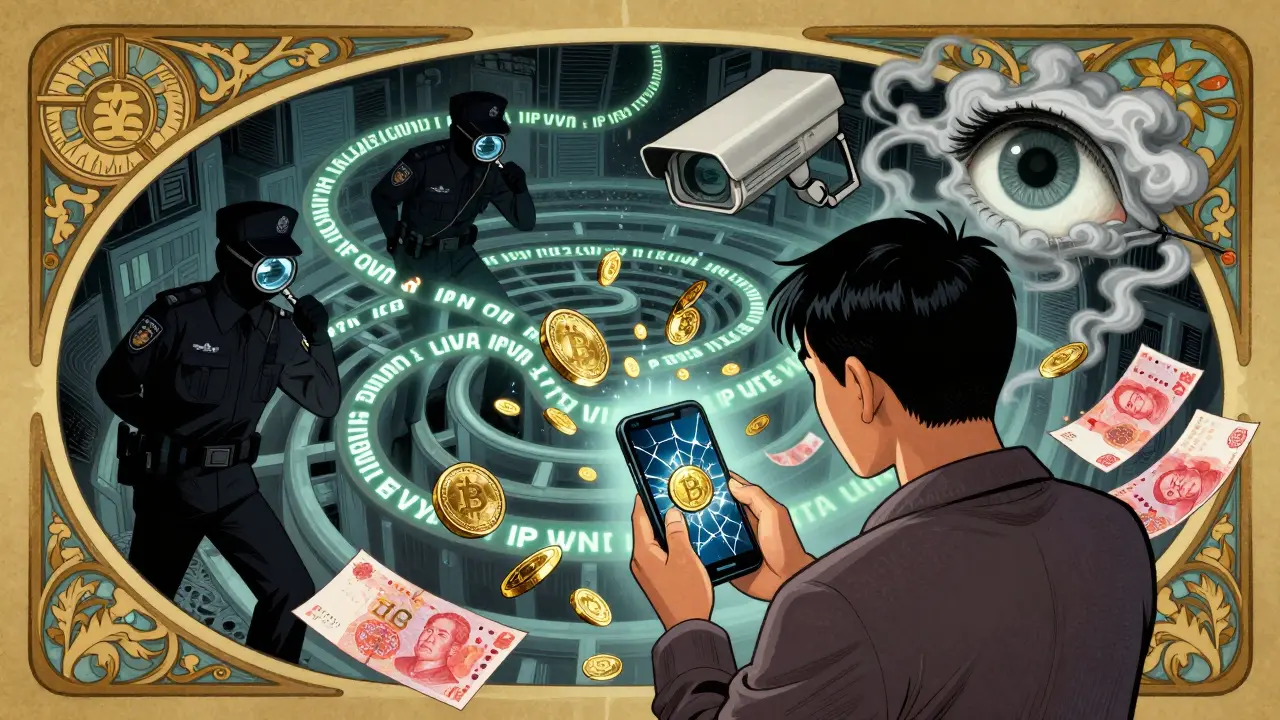
China doesn’t just make laws - it enforces them with precision. Authorities now have legal power to seize crypto holdings without a court order. If someone is suspected of holding Bitcoin, police can freeze bank accounts linked to crypto purchases, track IP addresses used on exchanges, and even demand access to phone backups where private keys might be stored. In one case in Hangzhou, a man was caught with 12 Bitcoin hidden in an encrypted file on his laptop. He didn’t even know the police had accessed it until they showed up at his door with the keys already cracked.
Seizures aren’t just about individuals. In 2024, authorities raided a warehouse in Guangdong that was disguised as a data center. Inside, they found 8,000 mining rigs running 24/7. The equipment was worth over $40 million. The owners were charged with illegal business operations and money laundering. The rigs were auctioned off - not to crypto buyers, but to state-owned tech firms.
Even overseas seizures tie back to China. In October 2025, UK police seized $7 billion in Bitcoin from a Chinese national who ran a Ponzi scheme targeting Chinese investors. The victims were mostly from Shanghai and Guangzhou. The UK wanted to keep the funds as restitution. China demanded they be returned to the victims - because under Chinese law, the victims were also breaking the law by investing in crypto. The case is still tied up in diplomatic negotiations.
Why the Digital Yuan? The Real Goal Behind the Ban
China isn’t anti-tech. It’s anti-decentralization. The country leads the world in digital payments - Alipay and WeChat Pay are used by nearly everyone. But those are still controlled by private companies. The digital yuan, or e-CNY, is different. It’s issued by the People’s Bank of China. Every transaction is recorded. Every dollar spent can be traced. You can’t spend it on illegal goods. You can’t send it abroad without approval. And you can’t hide it.
The crypto ban isn’t about stopping fraud. It’s about making the digital yuan the only option. No competition. No alternatives. No private money. When people can’t buy Bitcoin, they have nowhere else to go. They use the digital yuan - and the government gets full control over their financial behavior. That’s the real power.
Analysts say this is part of a broader strategy to reduce reliance on the U.S. dollar. By controlling all digital transactions within its borders, China can bypass SWIFT, avoid sanctions, and track capital flows in real time. Crypto was a threat to that system. The digital yuan is the solution.
What Happens If You Try to Bypass the Ban?
Before 2025, people used VPNs to access Binance, Coinbase, or Kraken. Now, using a VPN to access crypto sites is a violation of the ban. Internet service providers are required to block known crypto domains. If your traffic patterns match those of a crypto user - frequent visits to blockchain explorers, wallet addresses, or exchange APIs - you get flagged. First, your internet speed slows. Then, you get a warning from local police. Third offense? Fines, asset seizure, or even detention.
There’s no gray area. Even receiving crypto as a gift is illegal. Sending crypto to a family member abroad? Illegal. Holding it in a hardware wallet? Still illegal. The law doesn’t care if you didn’t trade it. Just owning it is enough.
Some people still try. A 2025 report from a Beijing cybersecurity firm found 12,000 active crypto wallets still in use - mostly by older users who refused to sell before the ban. The government has already traced 8,700 of them. The rest? They’re being monitored. The message is clear: if you’re holding crypto, you’re already on the radar.

The Global Impact: How China’s Ban Changed Crypto Forever
China used to be the center of the crypto world. In 2020, it accounted for 65% of Bitcoin mining and 40% of global trading volume. When the mining ban hit in 2021, the hash rate dropped overnight. Bitcoin’s price plunged 30% in a week. Exchanges like Huobi and OKX shut down their Chinese operations. Miners moved to Texas, Canada, and Kazakhstan.
The 2025 ban didn’t just affect China - it reshaped the entire industry. Crypto companies stopped hiring Chinese developers. Venture capital firms pulled out of China-based blockchain projects. Even decentralized apps (dApps) that once had large Chinese user bases now avoid the region entirely. China went from being the biggest market to being the biggest no-go zone.
Other countries watched. Some copied parts of China’s model - Russia banned crypto mining, India cracked down on exchanges. But none went as far. No other country has made ownership itself a crime. China’s approach is unique. And it’s working.
There’s No Turning Back
Will China ever lift the ban? Experts say no. Not in 2025. Not in 2030. The digital yuan is now embedded in everything - from public transit to government salaries. Over 800 million people use it regularly. The infrastructure is built. The control is complete. Reversing the ban would mean giving up that control. And the government won’t do that.
The crackdown wasn’t about fear of crypto. It was about power. China didn’t ban crypto because it was risky. It banned crypto because it was free. And in China, nothing is allowed to be free - especially money.
Is it illegal to own Bitcoin in China as of 2025?
Yes. As of June 1, 2025, owning, trading, or mining any cryptocurrency - including Bitcoin, Ethereum, or stablecoins - is illegal in China. The ban covers all forms of private digital assets, regardless of whether they’re stored on a hardware wallet, exchange, or mobile app. Even receiving crypto as a gift violates the law.
Can I use a VPN to access crypto exchanges from China?
No. Using a VPN to access foreign crypto exchanges is explicitly prohibited under the 2025 ban. Internet service providers are required to detect and block traffic to known crypto platforms. If detected, users face penalties ranging from internet throttling to fines or detention. Authorities actively monitor IP patterns linked to crypto activity.
What happens if I’m caught with crypto in China?
If you’re caught holding crypto, authorities can seize your assets without a court order. Your bank accounts may be frozen, and devices like phones or laptops may be confiscated to search for private keys. Penalties include fines, forced asset liquidation, and in severe cases, detention or criminal charges for money laundering or illegal business operations.
Why did China ban crypto mining in 2021?
The 2021 mining ban was officially justified by concerns over energy use and environmental impact. But the real reason was control. Mining creates new digital money outside the state’s system. By shutting down mining farms - especially in provinces like Sichuan and Inner Mongolia - China eliminated a major source of decentralized financial power and redirected electricity to state priorities.
How does the digital yuan differ from Bitcoin?
The digital yuan is a central bank digital currency (CBDC) fully controlled by the People’s Bank of China. Every transaction is tracked, and the government can freeze or restrict spending. Bitcoin is decentralized - no one owns it, and no one can stop transactions. China wants the digital yuan because it gives the state total control over money flow, unlike Bitcoin, which operates outside government oversight.
Can Chinese citizens legally hold crypto outside China?
No. Chinese law applies to citizens regardless of location. If you’re a Chinese citizen and you hold crypto - even in a wallet registered in the U.S. or Singapore - you’re still violating Chinese regulations. Authorities have increased monitoring of cross-border financial activity, and overseas holdings can be traced back to Chinese IDs or bank accounts.
Are there any exceptions to the crypto ban in China?
No exceptions exist for private individuals or businesses. The 2025 ban is absolute. Even blockchain technology for non-crypto uses - like supply chain tracking - is allowed only if it doesn’t involve tokens or native digital assets. All forms of cryptocurrency, regardless of purpose, are prohibited.
What happened to Chinese crypto miners after the 2021 ban?
Hundreds of thousands of miners lost their operations overnight. Many sold their equipment at deep discounts. Others relocated to countries like Kazakhstan, the U.S., and Canada, where energy costs were lower and regulations were friendlier. Some miners simply left the industry. The global hash rate dropped by over 50% in six months after the ban.
Adam Bosworth
December 6, 2025 AT 23:47Renelle Wilson
December 7, 2025 AT 02:21Josh Rivera
December 7, 2025 AT 11:27Neal Schechter
December 9, 2025 AT 08:51Tisha Berg
December 9, 2025 AT 09:12Billye Nipper
December 10, 2025 AT 16:36Jon Visotzky
December 12, 2025 AT 14:28Tara Marshall
December 13, 2025 AT 11:31Joe West
December 14, 2025 AT 13:08Richard T
December 15, 2025 AT 01:39miriam gionfriddo
December 15, 2025 AT 05:07Brooke Schmalbach
December 16, 2025 AT 09:12michael cuevas
December 18, 2025 AT 06:10Nina Meretoile
December 20, 2025 AT 02:42Krista Hewes
December 20, 2025 AT 17:22Holly Cute
December 21, 2025 AT 20:00Isha Kaur
December 22, 2025 AT 15:45Frank Cronin
December 23, 2025 AT 18:19Kenneth Ljungström
December 25, 2025 AT 09:03