Cryptopia Crypto Exchange Review: What Happened and Why It Failed
Cryptopia was once one of the most popular crypto exchanges for altcoin traders. At its peak, it offered over 900 cryptocurrencies - more than almost any other platform at the time. If you were into obscure coins like PIRL, PAC, or DOTCOIN in 2017 or 2018, Cryptopia was probably your go-to. But today, it doesn’t exist. No website. No app. No customer support. Just a ghost in the history of cryptocurrency.
How Cryptopia Grew So Fast
Cryptopia launched in July 2014 in Christchurch, New Zealand. It wasn’t flashy. It didn’t have fancy marketing. But it had something most exchanges didn’t: a massive selection of altcoins. While Binance and Coinbase stuck to Bitcoin, Ethereum, and a few top tokens, Cryptopia listed hundreds of obscure projects. If you wanted to trade a coin no one else had, Cryptopia was the place. By 2017, it had 30,000 users. By early 2018, that number jumped to 1.4 million. Trading volume sometimes exceeded the New Zealand Stock Exchange. The platform even launched its own stablecoin, NZDT, pegged to the New Zealand dollar - the first of its kind in the country. It had a daily lottery, arbitrage tools, and a Coininfo page that gave detailed info on every listed coin. For altcoin hunters, it was paradise. Fees were low - just 0.20% per trade. That made it attractive compared to other exchanges charging up to 0.5%. The interface wasn’t pretty, but it worked. For a while, users didn’t care.The Cracks Started Showing
But behind the scenes, things were falling apart. As users poured in, the platform couldn’t keep up. Trading froze for Dogecoin and Litecoin in early 2018 because the system couldn’t handle the load. New account signups were temporarily shut down. Withdrawals took days - sometimes weeks. Wallets for certain coins would just disappear from the site for months. Users started complaining. On Trustpilot, 47 out of 52 reviews were negative. Common complaints? Customer support ignored messages. When they did reply, they were rude. Some users reported being told to "fuck off" if they asked for help. The only way to get a response was to tweet at them. The NZDT stablecoin project collapsed when ASB Bank, one of New Zealand’s largest banks, cut off Cryptopia’s banking relationship. No bank account meant no way to convert NZDT to real money. That was a major blow. It showed how fragile the whole operation was - built on shaky infrastructure and zero regulatory backing. Internal issues were just as bad. Leadership was chaotic. Executives resigned. Employees described a toxic workplace. No one seemed to be in charge. And no one was fixing the security problems.The Hack That Killed Cryptopia
On January 14, 2019, Cryptopia announced a massive hack. Hackers stole around NZ$16 million in cryptocurrency - mostly Ethereum, Litecoin, and Bitcoin. The exchange shut down trading immediately. Then, it shut down everything. But here’s the thing: many users didn’t believe it was a hack. On G2 and Offshorereviews.com, people claimed the hack was fake. One user wrote: "Cryptopia used Dotcoin from the beginning to silently take criminal action." Another said their PIRL wallet was broken for the entire month of February - and when they finally got their coins out, the value had dropped 90%. They weren’t alone. Hundreds reported similar stories. The New Zealand High Court appointed Grant Thornton as liquidator in May 2019. The goal? Recover money for the 900,000 users across 190 countries who lost funds. The results? Grim. Total claims from users: NZ$180 million. Recoverable assets: NZ$70 million. That means most users lost 60-70% of their money. Some got nothing. Others got pennies on the dollar. Years later, in 2022, liquidators reported only partial recovery. No one expects to get their money back. The exchange is dead.
Why Cryptopia Failed When Others Survived
Cryptopia didn’t fail because crypto prices dropped. It didn’t fail because regulation cracked down. It failed because it grew too fast without the systems to support it. Compare it to Binance. Binance scaled too, but they invested in security, infrastructure, and compliance. Cryptopia didn’t. They added coins like crazy but never upgraded their wallet systems. They didn’t use multi-sig wallets. They didn’t have cold storage properly secured. They didn’t hire enough engineers. They also ignored user trust. When withdrawals stalled, they didn’t communicate. When users asked questions, they ghosted them. When the hack happened, they didn’t have a clear plan. They just shut down and disappeared. Other exchanges had problems too - Mt. Gox, Bitfinex, FTX - but none collapsed quite like Cryptopia. It wasn’t just a hack. It was a slow-motion disaster. A company that ignored every warning sign until it was too late.What You Can Learn From Cryptopia
If you’re trading crypto today, Cryptopia’s story is a warning.- Don’t keep large amounts on any exchange - especially small ones with low volume. Use cold wallets for long-term holdings.
- Check if the exchange has a history of downtime. If withdrawals take longer than 24 hours, that’s a red flag.
- Look at user reviews. Not the ones on their website. Look on Trustpilot, Reddit, or independent forums. If people are angry about support, walk away.
- Don’t trust obscure coins on unproven exchanges. Many of the coins listed on Cryptopia were scams or dead projects. You lost money not just because of the hack - but because the coins you held were worthless.
- Know your exchange’s location. Cryptopia was in New Zealand, which made legal recovery nearly impossible for users outside the country. If an exchange is based in a place with weak consumer protections, you’re at risk.
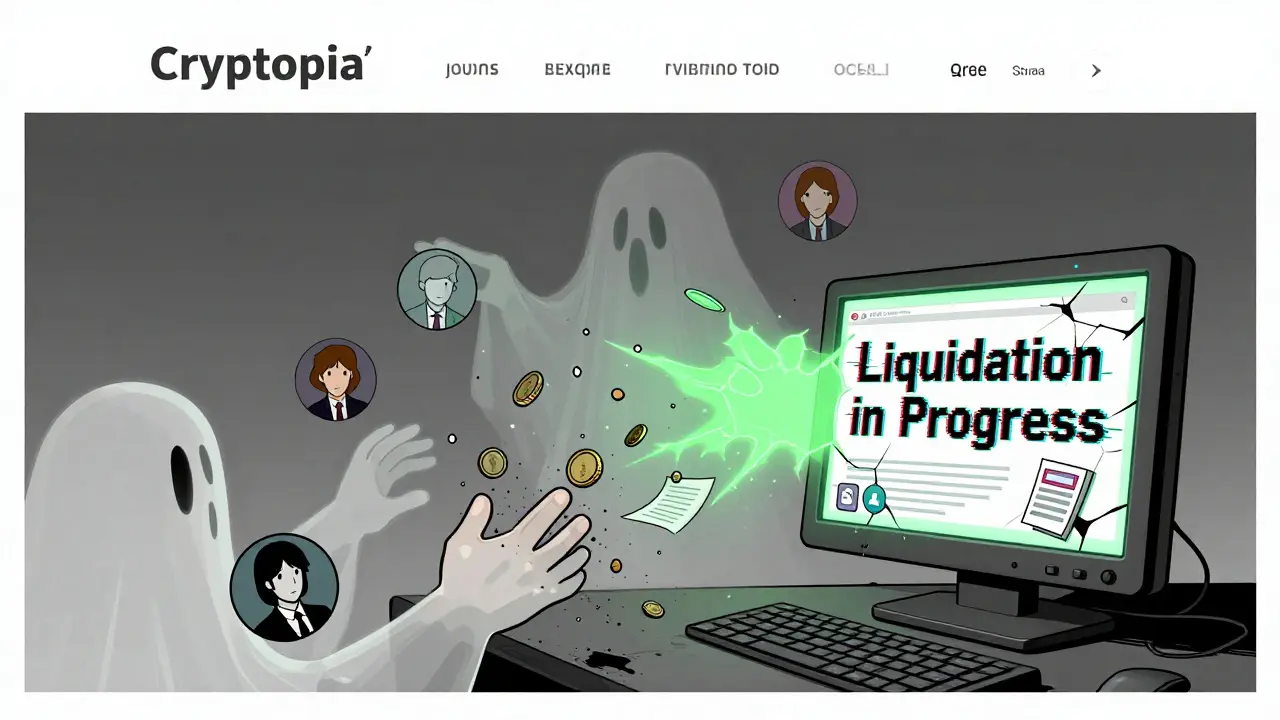
The Aftermath: No Recovery, No Hope
As of 2025, Cryptopia’s website is offline. Its domain expired. Its social media accounts are abandoned. The liquidation process is still dragging on, but no one expects a full payout. The New Zealand courts have moved on. The users? Most have given up. There’s no comeback plan. No new team. No revival. Cryptopia is a tombstone in the crypto graveyard. It’s a reminder that in crypto, popularity doesn’t equal safety. Volume doesn’t mean security. And if a platform feels too good to be true - with too many coins, too little support, and no transparency - it probably is.Frequently Asked Questions
Is Cryptopia still operating?
No, Cryptopia ceased all operations after a major hack in January 2019. The exchange filed for bankruptcy, and its assets are being liquidated. The website and services have been offline since then, with no plans to return.
Can I get my money back from Cryptopia?
Possibly, but not fully. Liquidators recovered about NZ$70 million from an estimated NZ$180 million in user claims. Most users lost between 60% and 70% of their funds. Payments have been slow and partial, and many users received nothing. Recovery is unlikely to be complete.
Was the Cryptopia hack real or a scam?
The hack was real - hackers stole funds from Cryptopia’s wallets. But many users believe the exchange used the hack as cover to steal money themselves. Reports from users showed wallet issues and coin delistings long before the hack, and some coins lost value immediately after being listed. The lack of transparency and poor security practices make it hard to trust the official story.
Why did Cryptopia list so many coins?
Cryptopia targeted altcoin traders who couldn’t find obscure tokens on bigger exchanges. By listing hundreds of coins, they attracted users looking for early-stage projects. But this also made the platform risky - many of these coins were scams, had no real value, or were manipulated by insiders. The sheer number of coins overwhelmed their system and made security harder to manage.
What made Cryptopia different from Binance or Coinbase?
Cryptopia focused almost entirely on altcoins - over 900 at its peak - while Binance and Coinbase stuck to top-tier coins like Bitcoin and Ethereum. Cryptopia also had unique features like a daily lottery and arbitrage tools. But unlike those larger exchanges, it had weak security, poor infrastructure, and no institutional backing. It was a niche platform that grew too fast without the systems to support it.
Tyler Porter
December 26, 2025 AT 22:41Cathy Bounchareune
December 27, 2025 AT 01:45Jordan Renaud
December 28, 2025 AT 17:40Luke Steven
December 29, 2025 AT 12:59Ellen Sales
December 29, 2025 AT 22:03Sheila Ayu
December 30, 2025 AT 11:58Janet Combs
January 1, 2026 AT 05:46Radha Reddy
January 2, 2026 AT 22:36Shubham Singh
January 4, 2026 AT 05:01Charles Freitas
January 5, 2026 AT 17:31Sarah Glaser
January 7, 2026 AT 00:29roxanne nott
January 8, 2026 AT 06:42Rachel McDonald
January 8, 2026 AT 14:26Vijay n
January 9, 2026 AT 18:22Alison Fenske
January 11, 2026 AT 02:11Grace Simmons
January 12, 2026 AT 07:07Collin Crawford
January 13, 2026 AT 09:03Jayakanth Kesan
January 15, 2026 AT 08:32Aaron Heaps
January 15, 2026 AT 13:49Tristan Bertles
January 17, 2026 AT 13:06