Decentralized Gaming Platforms: How Blockchain Is Changing Game Ownership and Earnings
Play-to-Earn Earnings Calculator
Calculate Your Gaming Earnings
Estimate potential earnings from play-to-earn games like Axie Infinity, The Sandbox, and Gods Unchained
Estimated Earnings
Important Note: Earnings are highly volatile. The article reports that 68% of token economies collapse within 18 months. This calculator shows potential earnings at current rates only.
What Are Decentralized Gaming Platforms?
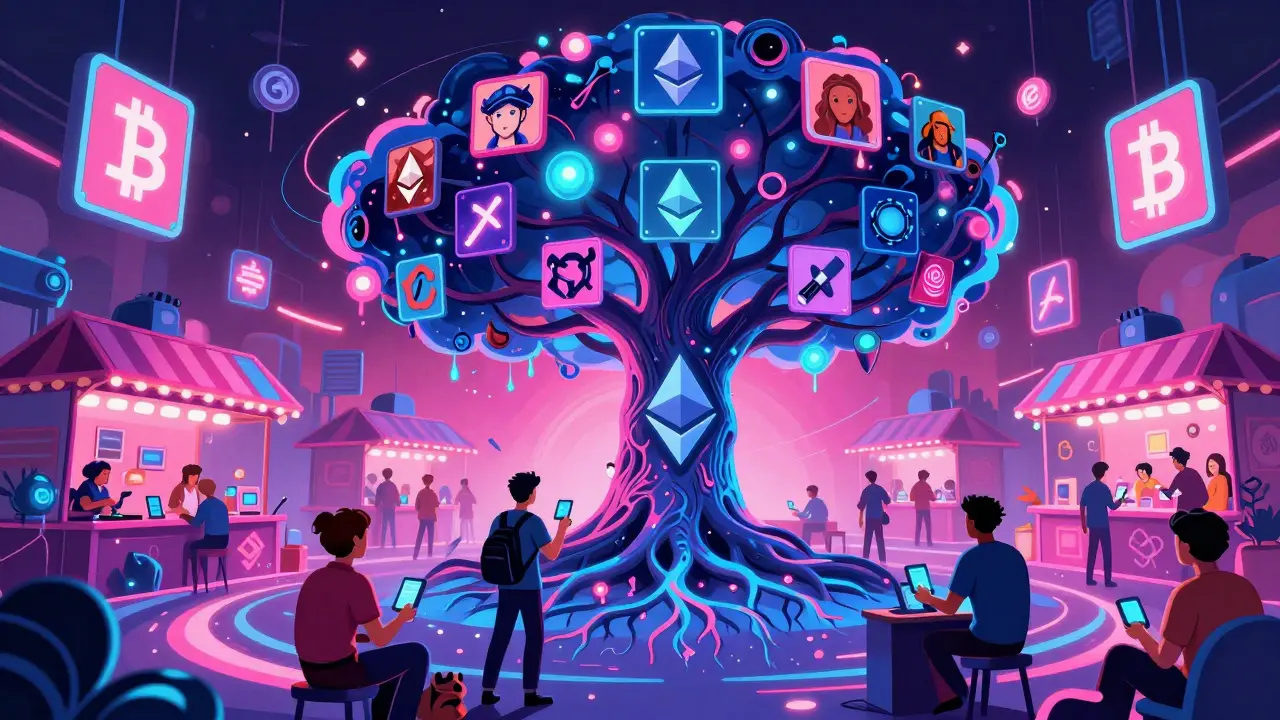
Decentralized gaming platforms are games built on blockchain technology where players truly own their in-game items - not the company running the game. Unlike traditional games like Fortnite or World of Warcraft, where everything you buy or earn is locked inside the game’s servers, decentralized games let you hold your characters, weapons, land, and skins as NFTs - digital assets you can sell, trade, or use across different games.
This isn’t just a marketing buzzword. It’s a structural change. When you buy a sword in a decentralized game, it’s recorded on a public ledger. No one can delete it, take it away, or change its rules. You control it with a crypto wallet like MetaMask or Trust Wallet. This shift started gaining real traction around 2018 with CryptoKitties, where people were buying and selling digital cats as NFTs. Today, it’s evolved into full ecosystems where players earn cryptocurrency just by playing.
How Do These Games Actually Work?
At the core of every decentralized game is a smart contract - a self-executing piece of code on a blockchain. These contracts handle everything: who owns what, how much you earn, how items are traded, and even who gets to vote on future updates. Most of these games run on blockchains like Ethereum, Solana, or Binance Smart Chain because they support NFTs and fast transactions.
Game assets aren’t stored entirely on-chain - that would be too slow and expensive. Instead, your character’s stats and ownership are on the blockchain, while graphics, sound, and maps are saved on decentralized storage like IPFS or Filecoin. When you log in, your wallet connects to the game, and the platform pulls your assets from the blockchain to load your inventory.
Performance isn’t perfect yet. Traditional games can handle 10,000+ transactions per second. Most decentralized games manage 15-50. That’s fine for turn-based strategy or open-world exploration, but it’s a dealbreaker for fast-paced shooters. That’s why games like CryptoShooter failed - they couldn’t keep up with real-time action.
Play-to-Earn: Real Money from Gaming
The biggest draw of decentralized gaming is play-to-earn (P2E). You don’t just spend time and money on a game - you can make money from it. In Axie Infinity, players breed, battle, and trade digital creatures called Axies. According to Coinfantasy.io’s 2025 report, active players in the Philippines and Vietnam earn between $0.50 and $5 per hour, with top players making $500 a month.
It’s not just about grinding. Many games have economies where players buy land, build structures, and rent them out to others. In The Sandbox, users create virtual worlds and sell access or items to other players. Some even earn royalties every time someone uses their creations.
But here’s the catch: earning isn’t guaranteed. A 2024 study by Stanford’s Blockchain Research Center found that 68% of token-based economies collapse within 18 months. When the token price drops, so does your earning potential. GameFi Zoo, a popular P2E game, crashed in August 2024 after its token lost 99% of its value - leaving 12,000 players with worthless assets.
Decentralized vs. Traditional Gaming: Key Differences
| Feature | Decentralized Gaming | Traditional Gaming |
|---|---|---|
| Asset Ownership | Players own NFTs; can sell or transfer | Company owns all assets; no real-world value |
| Earning Potential | Play-to-earn with crypto rewards | Cosmetic rewards only |
| Transaction Speed | 15-50 TPS (slower) | 10,000+ TPS (fast) |
| Technical Barriers | Wallet setup, crypto knowledge required | Just download and play |
| Regulatory Status | Unclear in 87% of countries | Well-established legal framework |
| Interoperability | Assets can work across games | Locked to one game |
Why So Many Players Are Struggling
Despite the hype, most new players hit walls fast. Trustpilot reviews from May 2025 show 67% of complaints are about wallet issues - connecting, signing transactions, or losing access. If you forget your private key or send crypto to the wrong address, there’s no customer service to help you. You lose everything.
Phishing scams are rampant. In March 2025, a Reddit user lost $1,200 worth of Axies after clicking a fake MetaMask login link. Immunefi’s 2024 report found that 42% of crypto losses in gaming came from user error, not hacks. Most people don’t understand gas fees, tokenomics, or how to claim rewards properly.
And then there’s the learning curve. Traditional game developers need 6-12 months to learn Solidity, Web3.js, and blockchain architecture before they can even start building. For players, it’s a steep climb: set up a wallet, buy ETH or SOL, connect to the game, understand token supply, acquire starter NFTs, learn the rules - and then hope the game doesn’t collapse next month.
Who’s Winning and Who’s Failing?
As of April 2025, the top three decentralized gaming platforms by active users are:
- The Sandbox - 1.2 million active wallets
- Axie Infinity - 950,000 active wallets
- Gods Unchained - 780,000 active wallets
These platforms have survived because they focus on community, not just tokens. The Sandbox lets players build and monetize their own worlds. Axie Infinity’s Scholar Program lets players borrow Axies to play and share earnings - a model that helped 17,000 Filipino players earn income during the pandemic.
Meanwhile, over 100 smaller projects have vanished. Many were pure pump-and-dump schemes - no real gameplay, just token sales. The Blockchain Gaming Alliance reports that 78% of decentralized games have critical smart contract vulnerabilities. In 2024 alone, players lost $412 million to exploits and scams.
Big Companies Are Watching - But Slowly
Don’t think only indie devs are building this. Ubisoft tried with Quartz in 2021, but only got 42,000 users. Square Enix tested NFTs in a Final Fantasy game - backlash was immediate. But things are changing.
By 2025, major players are quietly integrating blockchain features:
- Steam is planning blockchain integration by Q4 2025
- Epic Games is testing an NFT marketplace for Unreal Engine creators
- Nintendo filed patents for blockchain-based item verification in March 2025
They’re not going all-in on decentralization. They’re testing how to let players own cosmetic items without breaking their business models. It’s a cautious step - but it signals that the industry sees real value in player ownership.
What’s Next for Decentralized Gaming?
The future isn’t about replacing Call of Duty. It’s about creating new kinds of games - ones where your time and creativity have real value. Upgrades in 2025 are making things better: Axie Infinity slashed gas fees by 87% with a layer-2 solution. The Sandbox’s new VoxEdit 3.0 lets you move assets between games.
More platforms are adding social features - virtual concerts, meetups, and land-based businesses. The Metaverse Standards Forum found that 63% of major Web3 games now include virtual real estate and social hubs.
But scalability remains the biggest hurdle. If decentralized games can’t handle thousands of players at once, they’ll stay niche. Gartner predicts they’ll remain under 5% of the global market by 2030. Konvoy Ventures, however, believes they’ll hit 22% - if they solve user experience and economic sustainability.
Should You Get Involved?
If you’re curious, start small. Don’t invest money you can’t afford to lose. Try free-to-play Web3 games like Gods Unchained or Blankos Block Party. Learn how wallets work. Understand gas fees. Watch how token prices change.
If you’re a player looking to earn: focus on games with real gameplay, strong communities, and proven track records. Avoid any game that promises guaranteed returns. If it sounds too good to be true, it is.
If you’re a developer: learn Solidity and Web3. But don’t just build another P2E token farm. Build something fun, something people want to play - even if they never earn a cent.
How to Get Started (5 Simple Steps)
- Download a Web3 wallet (MetaMask or Trust Wallet)
- Buy a small amount of crypto (ETH, SOL, or BNB - depending on the game)
- Connect your wallet to a trusted decentralized game (Axie Infinity, The Sandbox, or Gods Unchained)
- Start playing - don’t rush to earn. Learn the rules first.
- Keep your private key safe. Never share it. Never click suspicious links.
Common Mistakes to Avoid
- Investing more than you can afford to lose
- Ignoring gas fees - they can eat your profits
- Not researching tokenomics - is the supply capped? Is there real demand?
- Using public Wi-Fi to connect your wallet
- Believing hype over gameplay
Can you really make money playing decentralized games?
Yes, but not for everyone. Players in countries with lower living costs, like the Philippines and Vietnam, often earn meaningful supplemental income - $50 to $500 a month. In the U.S. and Europe, most players break even or lose money after accounting for initial NFT costs and gas fees. Earning depends on the game’s economy, your skill, and market conditions. Treat it like a side hustle, not a job.
Are decentralized games safe?
They’re not inherently unsafe, but they’re risky. Smart contracts can be hacked - 78% of games have critical vulnerabilities. Scams targeting wallets are common. The biggest danger isn’t the game - it’s you. If you lose your private key, send crypto to the wrong address, or fall for a phishing link, there’s no refund. Always double-check URLs, use hardware wallets for large holdings, and never trust unsolicited DMs.
Do I need to pay to start playing?
Not always. Some games like Gods Unchained are free to play with basic cards. Others, like Axie Infinity, require buying starter NFTs - usually $50-$200. Many platforms now offer “scholarship” programs where you borrow assets and share earnings. If you can’t afford to buy in, look for these programs. Never borrow money to play.
What’s the difference between NFT games and regular games?
In regular games, your items are just data stored on the company’s servers. They can change, remove, or ban you anytime. In NFT games, your items are owned by you - recorded on a public blockchain. You can sell them on marketplaces, trade them with others, or even use them in other games. That’s true digital ownership.
Will decentralized gaming replace traditional games?
No - not anytime soon. Fast-paced, graphically intense games need speed and reliability that blockchains can’t yet match. But hybrid models are emerging: big studios are adding NFTs for cosmetics, skins, or collectibles while keeping core gameplay centralized. The future is likely a mix - where players own digital items, but the game runs smoothly on traditional servers.
What happens if a game shuts down?
If the game server closes, you still own your NFTs - but you can’t play the game anymore. Your items become digital collectibles with no utility. That’s why it’s crucial to choose games with strong communities and active development. A game that’s still being updated is more likely to survive than one that’s just a token pump.
Shane Budge
December 9, 2025 AT 13:59Kenneth Ljungström
December 11, 2025 AT 08:57michael cuevas
December 12, 2025 AT 22:08Sandra Lee Beagan
December 14, 2025 AT 20:30Brooke Schmalbach
December 15, 2025 AT 13:16Nina Meretoile
December 16, 2025 AT 08:34Nicole Parker
December 18, 2025 AT 05:30Tom Van bergen
December 19, 2025 AT 03:54Ben VanDyk
December 20, 2025 AT 10:14Barb Pooley
December 20, 2025 AT 17:09sonia sifflet
December 21, 2025 AT 07:49