Future of Gas Fees with Layer 2 Solutions: How Ethereum Costs Plunged 95% and What Comes Next
Two years ago, sending a simple ETH transfer could cost you $15. Now? It’s under 50 cents. That’s not a glitch. It’s the future of blockchain fees - and it’s already here.
Gas Fees Used to Break the Bank
In 2023, during the NFT boom, Ethereum gas fees spiked to $70 per transaction. People were paying more to move crypto than the crypto was worth. DeFi swaps, NFT mints, even basic token transfers became luxury activities. If you weren’t trading large sums, you were stuck watching from the sidelines. That changed in 2024. Ethereum’s upgrade to Proof of Stake cut energy use by 99%, but more importantly, it set the stage for Layer 2 solutions to take over. By early 2025, the average gas fee had dropped to $0.41 - a 97% drop from 2023 highs. Daily network fees fell from $23 million to $7.5 million. The blockchain was no longer a bottleneck. It was becoming usable again.How Layer 2 Solutions Cut Costs by 99%
Layer 2 networks like Arbitrum, Optimism, and Base aren’t just faster. They’re cheaper because they don’t do the heavy lifting on Ethereum’s main chain. Here’s how it works: Instead of every transaction being processed directly on Ethereum, Layer 2s bundle hundreds or thousands of transactions off-chain. They compress them into one single proof, then submit that proof to Ethereum. Ethereum only checks the math - it doesn’t run each transaction. That cuts computational load by over 99%. On Arbitrum, a simple token swap costs $0.02. On Optimism, it’s $0.03. On Ethereum mainnet? $0.41. That’s not a small difference - it’s the difference between using crypto daily and only using it when you have to. These networks don’t sacrifice security. They inherit Ethereum’s trust. If something goes wrong on Arbitrum, you can still prove your transaction on Ethereum. That’s why institutions and everyday users are moving en masse.Who’s Using Layer 2s - and Why
You don’t need to be a whale to benefit. Retail users are the biggest winners. On Base, a Layer 2 backed by Coinbase, users are doing daily DeFi trades, lending, and staking for pennies. Reddit threads are full of stories: "I swapped USDC for DAI for $0.01. Last year, that would’ve cost me $5." Even small transactions - sending $10 to a friend, buying a token on a DEX, claiming airdrops - are now practical. That’s huge for adoption. Before, new users got scared off by surprise fees. Now, they can test the waters without fear. Developers are shifting too. New dApps launch on Layer 2s by default. The ones still building on Ethereum mainnet are seen as outdated. Why pay 100x more when you don’t have to?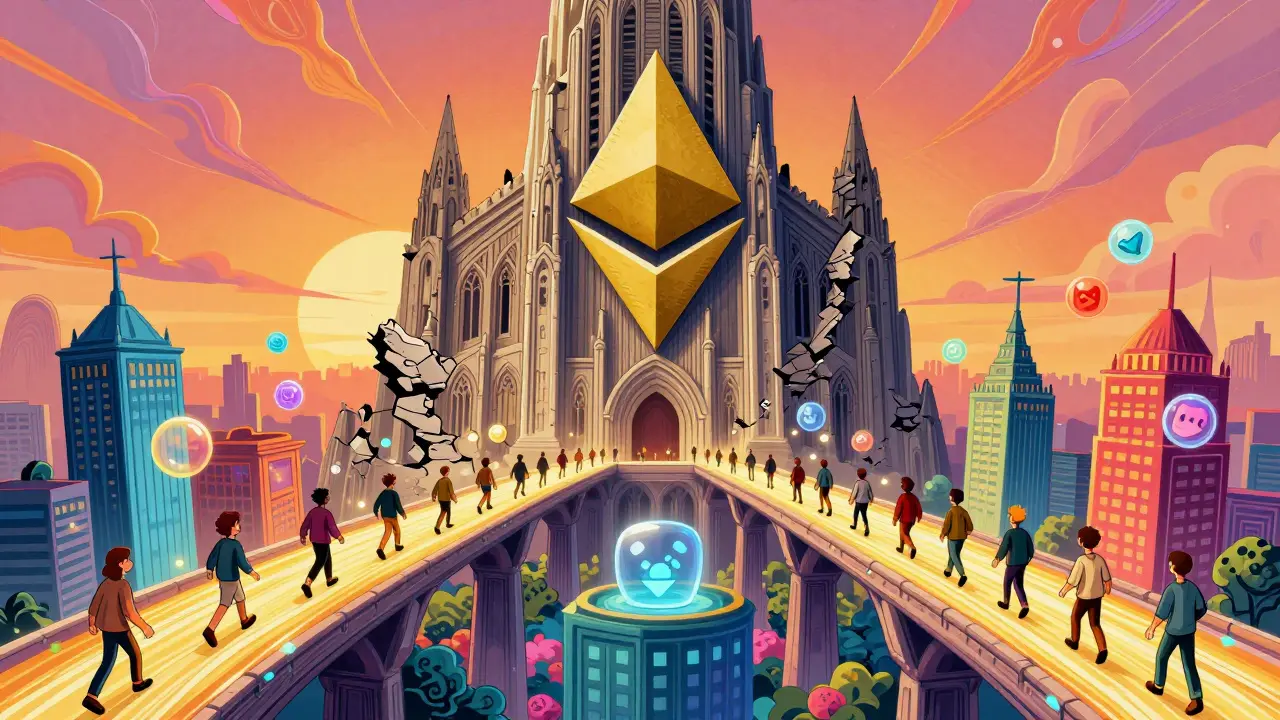
The Volatility Still Lingers
Don’t get fooled. Gas fees aren’t dead - they’re just smarter. On February 19, 2025, during a major token launch, Ethereum fees spiked to $50 per swap. That’s not a failure. It’s a reminder: when demand surges, even Layer 2s can’t stop congestion on the main chain - at least not yet. Seasonal patterns are clear. Fees rise during:- Major token launches
- Crypto price rallies
- Weekend NFT drops
AI Is Now Managing Your Gas Fees
The next wave isn’t just about cheaper networks - it’s about smarter tools. Platforms like TokenMetrics now offer AI-powered gas optimizers. These tools:- Watch network traffic in real time
- Predict when fees will drop
- Auto-route your transaction to the cheapest Layer 2
- Adjust gas prices based on urgency

Getting Started with Layer 2s - No PhD Required
You don’t need to be a developer to use Layer 2s. Here’s how most people do it:- Connect your wallet (MetaMask, Phantom, etc.)
- Click "Bridge" - usually right in the wallet interface
- Send ETH from Ethereum mainnet to Arbitrum or Optimism
- Wait 5-15 minutes
- Start using the Layer 2 network
What’s Next? The Competitive Race
Ethereum isn’t the only player. BNB Chain is talking about halving gas fees and doubling block speed. Solana’s already cheap, but it’s had outages. Polygon’s Layer 2s are growing fast. The real competition isn’t just about price - it’s about experience. The network that offers:- Lowest fees
- Fastest bridges
- Best tooling
- Smoothest UX
The Bottom Line
Gas fees aren’t gone. But they’re no longer a barrier. Layer 2 solutions turned Ethereum from a high-end luxury into a utility anyone can use. The future isn’t about eliminating fees - it’s about making them invisible. If you’re still paying $5 to send ETH, you’re not being careful - you’re being left behind. Start using Arbitrum or Optimism today. Bridge a small amount. Try a swap. See how easy it is. Then ask yourself: Why did I wait so long?Are gas fees completely gone on Ethereum?
No, gas fees still exist on Ethereum mainnet, but they’ve dropped dramatically - averaging $0.41 as of early 2025. Most everyday transactions now happen on Layer 2 networks like Arbitrum and Optimism, where fees are 99% cheaper. Ethereum mainnet is used mostly for bridging assets or high-security operations, not routine transactions.
Do I need to pay gas fees to move my crypto to a Layer 2?
Yes, but only once. Bridging assets from Ethereum mainnet to a Layer 2 like Arbitrum or Optimism requires a mainnet transaction, which costs a few dollars. After that, all transactions on the Layer 2 network cost pennies. The initial fee pays for years of cheap usage.
Is it safe to use Layer 2 networks?
Yes. Layer 2 networks like Arbitrum and Optimism use fraud proofs and cryptographic guarantees to ensure security. If a transaction is disputed, you can always verify it on Ethereum mainnet. They inherit Ethereum’s security without the cost. Thousands of users and institutions now hold billions in assets on these networks.
Which Layer 2 is the best for beginners?
Base is the easiest for beginners because it’s built into Coinbase Wallet and has a simple interface. Arbitrum and Optimism are more popular for DeFi, but they require a bit more setup. Start with Base if you’re new - you’ll be trading in minutes.
Will gas fees keep falling?
Yes - but not because Ethereum is getting cheaper. Layer 2 adoption is still growing, and AI tools are getting smarter at routing transactions to the lowest-cost paths. As more users shift off mainnet, Ethereum congestion will drop further, pushing fees even lower. The trend is clear: fees are becoming negligible for most users.
Should I still use Ethereum mainnet at all?
Only for bridging assets or if you’re interacting with a dApp that doesn’t support Layer 2s. For 95% of use cases - swaps, lending, NFTs, staking - Layer 2s are faster, cheaper, and just as secure. Mainnet is now the backbone, not the main stage.
Allen Dometita
January 6, 2026 AT 00:36Bro, I swapped $10 worth of USDC for DAI for 2 cents last week. Two years ago, that would’ve cost me a whole pizza. This is the future, and it’s already here. 🚀
Dennis Mbuthia
January 6, 2026 AT 18:19Let’s be real-Layer 2s didn’t ‘solve’ gas fees, they just kicked the can down the road. Ethereum mainnet is still the settlement layer, and when everyone tries to bridge at once? Congestion. Fees spike. It’s not magic-it’s just a shell game where the house always wins. And don’t get me started on how these ‘secure’ fraud proofs are only as good as the sequencers who aren’t colluding. The whole thing smells like a VC-funded distraction.
Meanwhile, your ‘cheap’ Arbitrum swap? Still needs you to hold ETH to pay for gas. So you’re still stuck buying crypto just to use crypto. That’s not freedom-that’s a subscription model with extra steps.
And AI gas optimizers? Cute. But they’re just glorified bots that trade your privacy for pennies. They track your behavior, predict your moves, and feed that data back to the exchanges. You think you’re saving money? You’re just being monetized harder.
And yes, Base is easy-but it’s Coinbase’s walled garden. You think you’re free? You’re just a user in a corporate crypto playground with a shiny UI. The moment they decide to de-list your token or freeze your bridge? Poof. Your ‘cheap’ DeFi is gone.
Don’t be fooled. This isn’t decentralization. It’s centralization with better branding. The only thing that’s truly cheap? Your attention.
Krista Hoefle
January 7, 2026 AT 21:38layer 2s? more like layer 2 scams. who even trusts these things? also, base? lol. coinbase. yeah. real decentralized. 😴
Gideon Kavali
January 9, 2026 AT 03:21Let me be perfectly clear: This isn’t progress-it’s surrender. Ethereum was supposed to be the unbreakable backbone of finance, not a glorified settlement layer for lazy devs who can’t write efficient code. Now we’ve got a patchwork of centralized sequencers, opaque fee structures, and AI tools that act like financial butlers for people who can’t read a gas tracker.
And you call this innovation? This is the death of decentralization dressed in Web3 pajamas. Layer 2s aren’t scaling Ethereum-they’re burying it under a mountain of trust assumptions, proprietary bridges, and corporate-backed chains that answer to venture capital, not code.
Arbitrum? Optimism? They’re not ‘secure’-they’re just slower to fail. Their fraud proofs are theoretical. Real users don’t monitor them. Real users just click ‘confirm’ and hope.
And don’t even get me started on AI gas optimizers. You’re not being helped-you’re being profiled. Every time you let an algorithm route your transaction, you’re feeding data to the very institutions that want to control this space. You think you’re saving $0.03? You’re giving up your financial autonomy for a discount.
The real tragedy? People are celebrating this as freedom. But freedom isn’t cheap fees. Freedom is sovereignty. And right now, your keys are still locked behind corporate wallets, centralized bridges, and opaque governance tokens.
They didn’t fix gas fees. They just made you forget why they mattered.
And if you’re still using MetaMask’s ‘smart’ suggestions? You’re not a user-you’re a beta tester for a surveillance economy.
Wake up. This isn’t the future. It’s the corporate takeover-with a smiley emoji.
Denise Paiva
January 9, 2026 AT 15:21Sabbra Ziro
January 9, 2026 AT 20:24Just wanted to say thank you for this breakdown-it’s so refreshing to see someone explain this without hype. I’m new to crypto and was terrified of fees, but now I bridged $20 to Base and did a swap for 12 cents. It felt like magic. I’m not a techie, but I get it now. You don’t need to be a genius to use this. Just curious. And patient. 🙏
Andy Schichter
January 11, 2026 AT 16:02Oh wow, gas fees dropped to 50 cents? How quaint. I guess we should all start a support group for people who still believe in blockchain’s original promise. Meanwhile, I’ll be over here watching my 10-year-old niece use Coinbase to buy Dogecoin for her lunch money.
‘Invisible fees’? More like invisible control. You think you’re free because your transaction costs less? You’re just a well-fed prisoner who forgot the bars are still there.
And AI optimizing your gas? That’s not convenience. That’s surrender. You’re outsourcing your financial agency to an algorithm trained on your past mistakes. Congrats-you’re now a data point with a wallet.
At least in 2023, you paid $70 and knew you were being robbed. Now you pay $0.03 and think you’re a pioneer. The scam got better.
Tracey Grammer-Porter
January 11, 2026 AT 16:18I tried bridging to Arbitrum last week and honestly? It was easier than setting up my smart thermostat. Took 8 minutes, paid $1.50, and now I’m swapping tokens like it’s nothing. I used to avoid crypto because of fees-now I’m actually using it. That’s huge. If you’re still on mainnet, you’re not being ‘secure’-you’re being stubborn.
Surendra Chopde
January 13, 2026 AT 13:49Interesting. In India, we still see many people afraid of bridging. They think Layer 2 is ‘not real Ethereum’. But once they try it, they’re shocked. One uncle sent me a screenshot: ‘I paid 2 rupees to swap tokens. In 2022, it cost me 200 rupees.’ He cried. Not from sadness-from relief.
This isn’t just tech. It’s dignity.
Kelley Ramsey
January 15, 2026 AT 02:56OMG I’m so happy for everyone who can finally use crypto without panic. I remember trying to mint an NFT and getting hit with $47 in fees-I just closed the tab and cried. Now my little sister mints her art on Base for $0.05. She’s 16. She didn’t even know what gas was before. This is the future we fought for. 💕
Jon Martín
January 17, 2026 AT 02:23Let me tell you something-this is the most important shift in crypto since 2017. Not the bull runs. Not the memes. This. People who couldn’t afford to participate are now in the game. Grandmas are staking. Teens are swapping. Artists are getting paid. This isn’t about tech-it’s about access. And access is justice.
Stop overcomplicating it. If you’re still on mainnet because you’re ‘protecting your assets’, you’re not being cautious-you’re being selfish. The whole point was to make this open to everyone. Now it finally is.
Go bridge. Try it. You’ll thank yourself.
Tiffani Frey
January 17, 2026 AT 16:08For those new to this: always keep a small balance on mainnet-like 0.05 ETH-for bridging back. I learned this the hard way when I needed to claim an airdrop that only supported mainnet. I had to pay $3 in fees just to get $12 back. Lesson learned: liquidity matters more than savings.
Also-don’t trust ‘one-click’ bridges. Use the official one from the Layer 2’s website. Scams love new users.
Caitlin Colwell
January 18, 2026 AT 02:40Ritu Singh
January 19, 2026 AT 12:14They say Layer 2s are secure. But have you heard about the 2024 Arbitrum exploit where the sequencer froze withdrawals for 72 hours? No? That’s because the media buried it. And now you’re told to trust ‘fraud proofs’? Those take 7 days to activate. What if you need your money tomorrow? You’re not protected-you’re hostages.
And AI gas tools? They’re not optimizing-they’re manipulating. They’re trained on your behavior to push you toward specific DEXs. You think you’re saving? You’re being nudged. Like a casino slot machine that only pays out when you’re emotionally vulnerable.
This isn’t freedom. It’s surveillance with a discount.
LeeAnn Herker
January 20, 2026 AT 07:56Wow. So now we’re supposed to be grateful that our financial system is being run by a bunch of tech bros who think ‘cheap’ equals ‘good’? I mean, I get it-$0.03 is better than $50. But now we’ve got AI making decisions for us, centralized sequencers holding our funds, and wallets that auto-select networks like they know better than us.
It’s not freedom. It’s convenience wrapped in a blockchain hoodie.
And don’t even get me started on ‘Base’. It’s Coinbase. With a different logo. You think they’re not watching you? They’re logging every swap. Every bridge. Every ‘cheap’ transaction. And when the SEC comes knocking? You think they’ll protect you? Or just hand over your data?
They didn’t solve gas fees. They just made us forget we had a right to privacy.
Charlotte Parker
January 21, 2026 AT 08:45Gas fees didn’t drop because of Layer 2s-they dropped because the market collapsed. Less demand, less congestion. The math is simple. The narrative? That’s the PR spin.
And now we’re told to celebrate this as innovation? Please. This isn’t progress-it’s entropy dressed up in whitepapers.
The real question: Who benefits? Not you. Not me. The VCs who funded these Layer 2s. They’re the ones cashing out while you’re busy thinking you’re a pioneer.
It’s not cheaper. It’s just quieter.
Calen Adams
January 23, 2026 AT 00:34Layer 2s are the only reason DeFi is alive right now. Without them, we’d be stuck paying $20 to swap stablecoins. That’s not sustainable-it’s extortion. The fact that we can now do 100 swaps for less than a coffee is revolutionary. Stop overthinking it. Just use it.
Also-AI gas tools are a game-changer. I used to waste hours checking Etherscan. Now I hit send and forget. That’s not laziness-that’s efficiency. And efficiency is power.
Stop being a crypto purist. The future doesn’t care about your ideals. It cares about utility.
Veronica Mead
January 23, 2026 AT 21:26It is imperative to note that the proliferation of Layer 2 solutions represents a fundamental erosion of the Ethereum protocol’s original design principles. The delegation of transaction processing to semi-centralized entities undermines the decentralized ethos upon which blockchain technology was founded. Furthermore, the reliance upon algorithmic gas optimization constitutes an unprecedented encroachment upon user autonomy, wherein financial agency is outsourced to proprietary, opaque systems. One must question: Is convenience worth the sacrifice of sovereignty? I submit that it is not.
Michael Richardson
January 24, 2026 AT 12:35