Hong Kong's Virtual Assets Ordinance 2025: What Cryptocurrency Users Need to Know
The Virtual Assets Ordinance 2025 isn't a single law - it's a whole new system. If you're trading, holding, or issuing cryptocurrency in or targeting Hong Kong, this changes everything. Starting in 2025, Hong Kong didn't just tweak rules - it rebuilt the foundation. No more guesswork. No more loopholes. If you're active in crypto here, you're now under a strict, clear, and aggressive regulatory net. This isn't about stopping crypto. It's about controlling it. And if you ignore it, you risk fines up to HK$5 million or seven years in prison.
What Exactly Does the Ordinance Cover?
The framework has two main parts: one for stablecoins, and one for everyone else. The first law to take effect was the Stablecoins Ordinance, which started on August 1, 2025. This only applies to fiat-referenced stablecoins - digital tokens pegged to the US dollar, euro, or other government-backed money. Think USDT, USDC, or any similar coin that claims to be worth exactly $1. If you issue one of these in Hong Kong, or even just offer it to Hong Kong users, you need a license. Period. But what about Bitcoin, Ethereum, or Solana? Those fall under the separate VA Dealing and Custody Licensing Regimes, which are expected to fully launch in 2026. These rules cover anyone who:- Buys or sells crypto on behalf of others
- Offers crypto trading services
- Holds crypto for clients (custody)
- Advertises crypto services to Hong Kong residents
Who’s in Charge? The Dual-Regulator System
You won’t deal with just one agency. You’ll answer to two:- SFC (Securities and Futures Commission): Sets the rules for trading platforms, asset managers, and VA dealers.
- HKMA (Hong Kong Monetary Authority): Oversees banks and stored value facilities (like prepaid cards) that offer crypto services.
The Hard Requirements: Capital, Oversight, and Controls
Getting licensed isn’t about filling out a form. It’s about proving you can handle serious risk. Here’s what you need:- Minimum capital: HK$129,730 (about $16,600 USD). This isn’t a suggestion - it’s a hard floor. Small startups are already walking away because they can’t meet it.
- Responsible officer: You must have at least one person with three years of experience managing crypto portfolios. No exceptions. No shortcuts.
- 24/7 portfolio supervision: Someone must be watching your crypto holdings around the clock. If you’re managing assets across time zones, you need teams in Asia, Europe, and the Americas.
- Dual approval for wallet whitelisting: Every time a user sends crypto to or from a wallet, two different employees must approve it. This slows down transactions by 30-40%. It’s meant to stop fraud. It also kills speed.
- Only trade on approved exchanges: You can’t trade on Binance, KuCoin, or any unlicensed platform. Your trades must go through exchanges in Hong Kong, the U.S., U.K., Dubai, or Japan. And even those have to be SFC-approved.

Who’s Excluded? The Gray Areas
The law doesn’t cover everything - and that’s where problems start. The Stablecoins Ordinance explicitly excludes:- Security tokens (those are regulated under securities law)
- Central bank digital currencies (CBDCs)
- Stored value facility deposits (like Octopus card balances)
- Banking deposits
- “Limited purpose” tokens (like in-game currency or loyalty points)
Real-World Impact: Who’s Winning and Who’s Losing
The market is already shifting. In Q2 2025, Hong Kong held 18.7% of Asia’s institutional crypto custody market. Singapore had 28.3%. But Hong Kong’s growth rate? 32% year-over-year. Singapore’s? Just 19%. Why? Because firms are moving. Seventeen crypto firms told Sumsub they’re setting up Hong Kong entities because the regulatory timeline is clearer. Singapore rushed everything at once. Hong Kong rolled it out in phases - stablecoins first, then dealers, then custody. That gave companies time to adjust. But it’s not all good news. Twelve firms delayed their Hong Kong launch because the cybersecurity requirements were too strict. One firm said they had to rebuild their entire wallet infrastructure. Another said they had to hire a full-time compliance officer just to handle the dual approval system. Operational costs jumped 15-20% for many. Retail users? They’re being pushed to the side. The SFC requires intermediaries to test users’ knowledge before letting them trade. No “just sign up and go.” You’ll need to prove you understand what crypto is, how wallets work, and what risks you’re taking. If you’re not a professional investor, your access is limited. That’s intentional. Hong Kong wants institutions - not casual traders.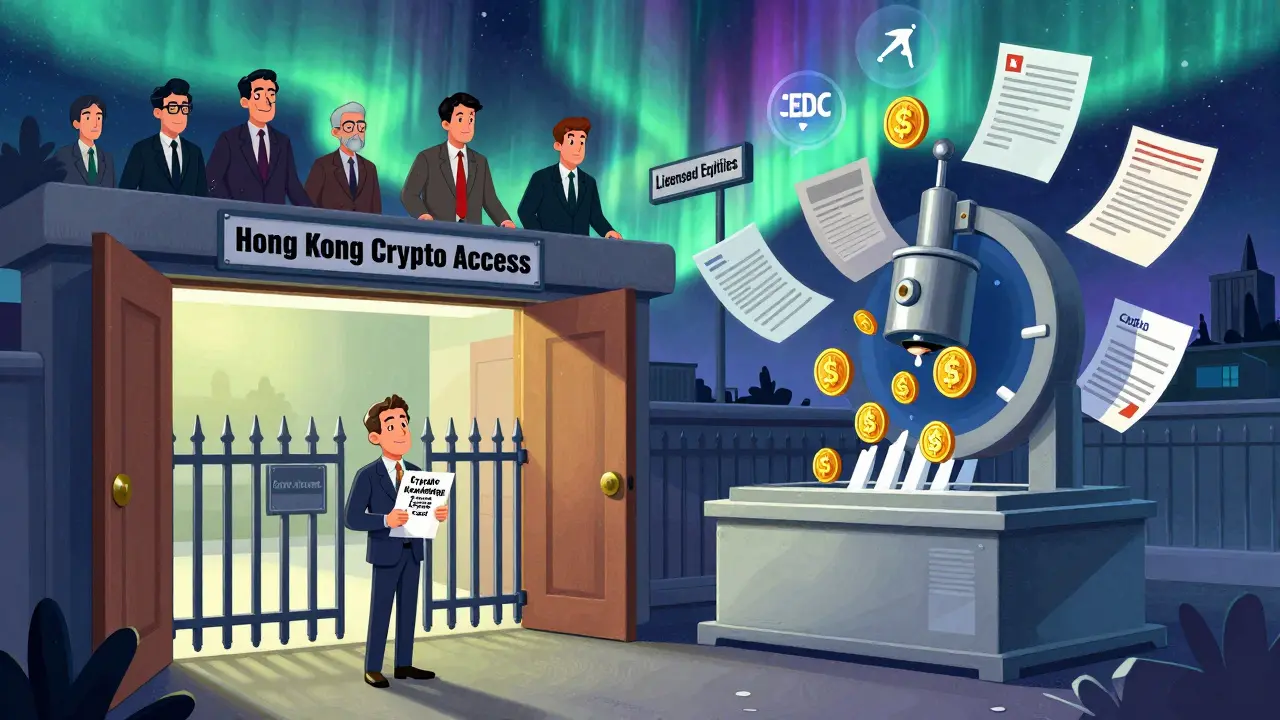
How Are Firms Adapting? The Tools That Work
The firms that are surviving - and thriving - are using tools that were never meant for regulation:- Chainalysis: Used by 68% of compliant firms to track transaction flows and flag suspicious activity.
- Multi-signature wallets: Adopted by 82% of custodians. Requires 3+ keys to move funds - one from you, one from your compliance officer, one from your legal team.
- Blockchain analytics dashboards: Real-time monitoring of all incoming and outgoing transactions.
- Legal tech platforms: Tools that auto-classify tokens based on Hong Kong’s exclusion list.
What’s Next? The Road Beyond 2025
This isn’t the end. It’s the beginning. By late 2025, the SFC will publish exact rules on stablecoin reserves - what assets back the tokens, and how much liquidity they need. In Q2 2026, the HKMA will launch a sandbox for cross-border stablecoin transfers, with HSBC, Standard Chartered, and Bank of China (Hong Kong) as the first testers. That’s a sign: they’re already thinking about how to scale this. By 2027, expect rules for NFTs. The FSTB has already said they’ll review NFT regulation after the current framework stabilizes. Tokenized real-world assets - like bonds or property shares - are already being traded. Eleven such funds launched in Q3 2025, totaling $2.3 billion. That’s not a trend. That’s the future.Final Reality Check
If you’re a crypto user in Hong Kong, this isn’t about freedom. It’s about compliance. The rules are strict. The penalties are real. The oversight is constant. But there’s a flip side: Hong Kong is now one of the few places in Asia with clear, predictable rules. That’s why institutions are moving in. That’s why $450-550 million in annual licensing fees could be generated by 2027. You don’t have to like it. But you do have to understand it. The days of operating in the gray are over. If you’re serious about crypto in Hong Kong, your next step isn’t trading. It’s applying for a license. Or walking away.Does the Virtual Assets Ordinance 2025 apply to me if I’m not in Hong Kong?
Yes - if you’re targeting Hong Kong users. The rules apply extraterritorially. That means even if your company is based in the U.S., Canada, or Singapore, if you advertise, sell, or offer crypto services to anyone in Hong Kong, you need to comply. Ignoring this because you’re “not local” won’t protect you. The SFC has already fined foreign firms for this.
Can I still use Binance or Coinbase in Hong Kong?
Only if they’re licensed by the SFC. As of early 2026, only a few platforms - like HashKey and OSL - have received full licenses. Binance, Coinbase, and Kraken are not licensed in Hong Kong. Using them puts you at risk. The SFC warns users that unlicensed platforms are not protected. If you lose funds on an unlicensed exchange, you have no legal recourse.
What happens if I don’t get licensed?
You could face criminal charges. The penalties include up to HK$5 million in fines and seven years in prison for operating without a license. Even if you’re not a company - if you’re running a crypto service (like a wallet or trading bot) for others without a license, you’re breaking the law. The SFC is actively investigating unlicensed operators.
Are stablecoins like USDT banned in Hong Kong?
No - but their issuers must be licensed. USDT issuer Tether, for example, must apply for a license under the Stablecoins Ordinance. Until they do, they can’t legally offer their tokens to Hong Kong users. Many issuers paused Hong Kong operations in late 2025 while applying. If you’re holding USDT, it’s still usable - but only if the issuer is licensed. Watch for official SFC announcements on approved issuers.
How long does it take to get licensed?
Expect 3 to 6 months. Early applicants took an average of 147 days. The SFC aims to cut that to 120 days by Q3 2026, but only if your application is complete. Missing documents, unclear business models, or unqualified officers will delay approval. Many firms spent months just preparing their paperwork before submitting.
Is there help available for small businesses?
Yes. The Hong Kong Fintech Association runs a free support channel with 47 verified experts. They’ve answered over 1,200 questions since June 2025, with an average response time of 1.7 business days. They don’t give legal advice, but they help you understand what documents you need, how to classify your tokens, and where to submit applications. It’s the best resource for small firms trying to navigate this.
Mansoor ahamed
March 24, 2026 AT 00:14Stablecoins first, then dealers, then custody. Phased rollout = smarter regulation. No surprise attacks on the market.
Nicolette Lutzi
March 24, 2026 AT 23:59Domenic Dawson
March 26, 2026 AT 17:56Most US-based exchanges still think they can ignore HK. They’re wrong. The SFC doesn’t care if you’re in Delaware. If your site loads in Hong Kong, you’re in scope. Period.
Pradip Solanki
March 27, 2026 AT 15:03Brad Zenner
March 28, 2026 AT 18:44Tony Phillips
March 29, 2026 AT 07:02Abhishek Thakur
March 30, 2026 AT 09:01Jackie Crusenberry
March 31, 2026 AT 02:54Zion Banks
April 1, 2026 AT 03:27Annette Gilbert
April 1, 2026 AT 18:59John Alde
April 3, 2026 AT 00:41And yes, the dual-regulator system is messy. But that’s because crypto crosses both securities and banking boundaries. You can’t put it in one box. So you need two regulators. It’s not a flaw - it’s a feature of a mature market.
Also, the 147-day approval time? That’s actually fast. The SEC takes 18 months just to review a token classification. HK is moving at warp speed. If you’re still complaining, you’re either not trying hard enough… or you’re not ready for real business.
manoj kumar
April 4, 2026 AT 02:36Florence Pardo
April 4, 2026 AT 22:09