How Russia Uses Cryptocurrency to Bypass Western Sanctions
Sanctions Evasion Calculator
How Sanctions Evasion Works
Enter ruble amount to see how it moves through Russia's crypto sanctions bypass system. Based on reported flows from the article.
Conversion Path
Enter rubles to see the transaction flow
Estimated Impact
Enter rubles to see the estimated impact
When Western nations slapped sanctions on Russia after its invasion of Ukraine, they expected to cripple its economy. Instead, Russia built a digital financial underground - one powered by cryptocurrency. It wasn’t just about moving money. It was about rewriting the rules of global finance, one blockchain transaction at a time.
The A7A5 Token: A Ruble in Disguise
At the heart of Russia’s crypto sanctions evasion is a digital currency called A7A5. It’s not Bitcoin. It’s not Ethereum. It’s a custom token, designed from scratch to look like a stablecoin but backed by the Russian ruble. Launched in early 2025, this token has already moved over $9.3 billion in just four months. It runs on both TRON and Ethereum blockchains - not by accident, but by design. Using two chains means if one gets blocked, the other keeps working. A7A5 isn’t traded on Binance or Coinbase. It lives on a private exchange tied to a Kyrgyzstani company. That’s the point. By operating outside Western-regulated platforms, Russia avoids the usual checkpoints. Users convert rubles into A7A5, then swap it for USDT or USDC. From there, it flows into global markets. No bank account needed. No paper trail. Just code.Garantex Dies. Grinex Is Born.
Russia didn’t start with A7A5. It started with Garantex. Once one of the largest crypto exchanges serving Russian users, Garantex was sanctioned by the U.S. in 2024. But instead of shutting down, its operators did something smarter: they ghosted it. On March 6, 2025, the U.S. Secret Service moved in. Within hours, the same team launched Grinex - a clone with a new name, same servers, same customers. Grinex even bragged on its website that it was created because Garantex got frozen. The U.S. Treasury labeled it a direct successor, and sanctioned it too. But by then, billions had already moved. This wasn’t a glitch. It was a playbook. Russia learned that when you’re targeted, you don’t hide. You rebuild - faster, cleaner, and under a new name. Grinex now handles billions in transactions, mostly from sanctioned Russian entities trying to buy weapons, drones, and electronics from global suppliers.Capital Bank: The Bridge Between Crypto and War
Crypto alone can’t buy missiles. You need cash. That’s where Capital Bank in Kyrgyzstan comes in. Run by Kantemir Chalbayev, this bank is the missing link between digital assets and physical weapons. Russian military suppliers send invoices to shell companies. Those companies get paid in A7A5 or USDT. Then, Capital Bank converts the crypto into rubles or euros - and wires the money to factories in China, Turkey, or Belarus. No Western bank touches it. No SWIFT trace. Just a small bank in Central Asia doing the dirty work. The U.S. and EU have sanctioned Chalbayev. But sanctions don’t shut down banks. They just make it harder. And Russia has learned to work around that too.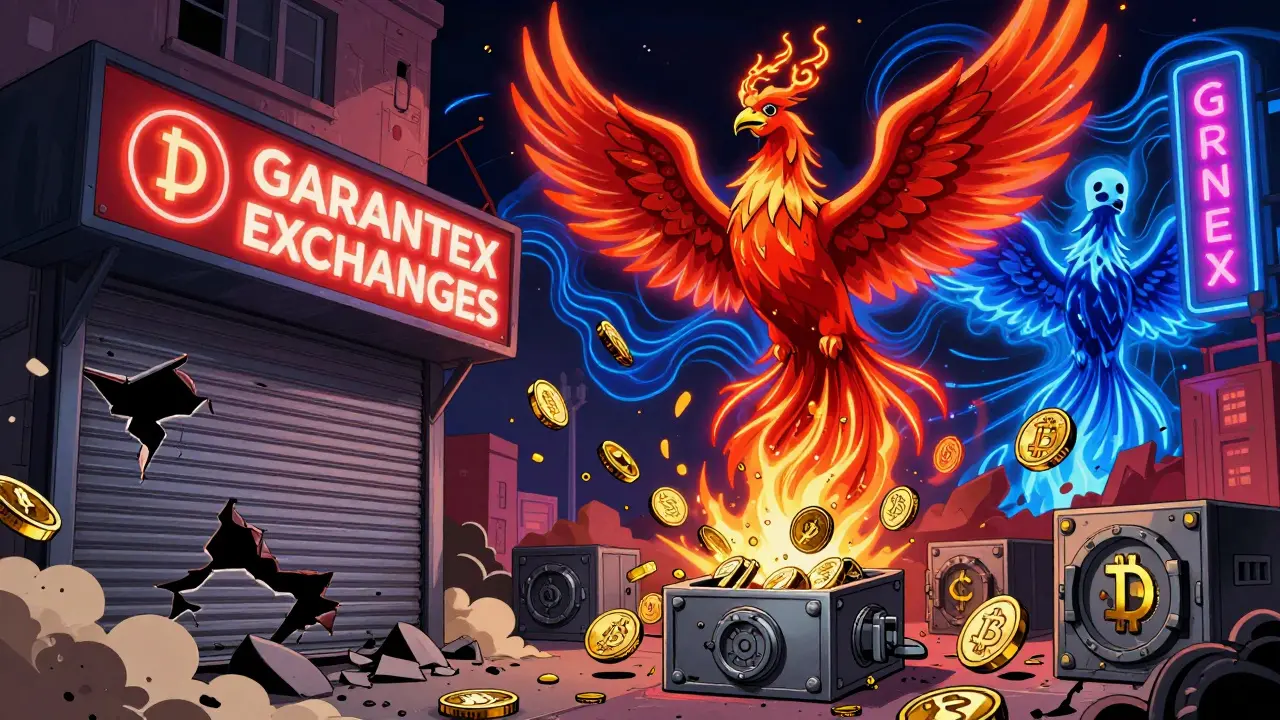
The Moldova Connection: Crypto Funds Political Warfare
Russia’s crypto network doesn’t stop at weapons. It’s funding political chaos too. Leaked data from Ilan Shor - a Moldovan fugitive and Putin ally - showed that wallets tied to A7A5 received $8 billion in stablecoins over 18 months. That money didn’t go to tanks. It went to apps. To troll farms. To paid protesters in Moldova. To digital campaigns designed to destabilize NATO-aligned governments near Russia’s border. These aren’t random transfers. They’re targeted. Elliptic, a blockchain analytics firm, traced the flow from crypto wallets to software developers in Moldova who built tools to coordinate pro-Russian rallies. It’s not just economic warfare. It’s digital insurgency.How the West Is Fighting Back
The EU didn’t wait. In June 2025, it passed its 19th package of sanctions - the first to directly ban crypto exchanges used to fund Russia’s war. The UK followed in October, targeting Grinex, A7A5, and another exchange called Meer. The U.S. Treasury added over 50 entities to its sanctions list, including developers behind the A7A5 token. But enforcement is hard. Blockchain is global. Transactions are anonymous. Exchanges operate in places with weak laws. Even when regulators identify a wallet, they can’t freeze it unless it connects to a regulated bank. And most of Russia’s crypto flows don’t. The real weapon isn’t sanctions anymore. It’s visibility. Companies like Elliptic now include A7A5 in their compliance tools. Banks and exchanges using their software can flag suspicious transactions. That’s a game-changer. It means Russia’s crypto network is no longer invisible - just harder to stop.
Shane Budge
December 6, 2025 AT 07:45So A7A5 is just a ruble-backed stablecoin on TRON and ETH? Wild.
Stanley Wong
December 6, 2025 AT 14:17It's kind of beautiful in a terrifying way. They didn't try to hide the system, they built it to be resilient. Two blockchains? Private exchange in Kyrgyzstan? That's not a loophole, that's a whole new architecture. And the fact that they just ghosted Garantex and relaunched as Grinex? That's not evasion, that's evolution. The West keeps thinking in terms of banks and SWIFT, but Russia's playing chess with code now. No one can shut down a blockchain. You can only try to make it less useful. And even then, they're already moving to Uzbekistan and Tajikistan next. This isn't a workaround, it's the future of finance for anyone who wants out of the dollar system.
miriam gionfriddo
December 6, 2025 AT 17:43OMG I JUST REALIZED THIS IS WORSE THAN I THOUGHT A7A5 IS LIKE A DIGITAL ZOMBIE CURRENCY THAT JUST KEEPS COMING BACK TO EAT OUR SANCTIONS LMAO GRINEX?? LIKE THE MOVIE BUT WITH MORE ETHER AND LESS BRAINS
Kenneth Ljungström
December 6, 2025 AT 17:45Really interesting breakdown. I like how you highlighted Capital Bank in Kyrgyzstan - it’s crazy how these small, unregulated institutions become the linchpins in global shadow systems. And the Moldova part? That’s psychological warfare disguised as crypto transfers. It’s not just about buying weapons, it’s about buying influence. We’re seeing a new kind of hybrid warfare now - digital, decentralized, and deniable. Honestly, I think this is the new normal. The old rules don’t apply anymore. We need to adapt or get left behind.
Brooke Schmalbach
December 6, 2025 AT 23:50Let me be the only one to point out that the entire premise is bullshit. A7A5? No one outside a Russian propaganda outlet has ever heard of it. Elliptic? They’re a private firm with a vested interest in selling compliance tools. And the $9.3 billion? That’s probably inflated by wash trading and fake volume. You’re treating a shadow economy like it’s Wall Street. Newsflash: most of these transactions are ghost money - digital smoke and mirrors. The real ruble economy is collapsing. This crypto nonsense is just a distraction for the elite. The average Russian can’t even buy a decent pair of shoes without a VPN.
Sandra Lee Beagan
December 7, 2025 AT 18:30The Moldova angle is chilling. It’s not just about laundering money - it’s about weaponizing information ecosystems. When stablecoins fund troll farms and rally coordination apps, you’re not just influencing politics, you’re hacking democracy at the software level. This is the next phase of hybrid conflict: non-kinetic, decentralized, and untraceable. The West’s response - more sanctions - feels like trying to stop a river with a sieve. What we need is coordinated blockchain analytics, open-source transparency tools, and international cooperation beyond just NATO. This isn’t a Russian problem. It’s a global governance failure.
Ben VanDyk
December 8, 2025 AT 19:47So Russia built a crypto network to bypass sanctions. Big deal. We’ve known about this for years. The real story is how slow the West reacted. And now we’re just slapping labels on exchanges like it’s a game of whack-a-mole. Meanwhile, the real money’s flowing through private wallets, peer-to-peer swaps, and Telegram bots. No one’s talking about that. Just more headlines about A7A5 like it’s the first time anyone ever used crypto to evade control.
michael cuevas
December 9, 2025 AT 12:18They didn't break the system they just outplayed it. And now the West is mad because the kids in Kyrgyzstan got better at coding than their regulators. Classic. Also Grinex? More like Grin and Bear It. 🤡
Nina Meretoile
December 10, 2025 AT 20:38It’s kinda poetic, right? Crypto was supposed to be free from governments… and now governments are using it to control everything. Russia didn’t break the system, they just showed us how fragile our trust in institutions really is. We built a tool for liberation, and now it’s being used to build walls. But maybe… maybe that’s the point. Maybe freedom isn’t about being unregulated. Maybe it’s about being aware. And if we’re paying attention, maybe we can still steer this thing toward something better.
Barb Pooley
December 11, 2025 AT 14:12This is all a psyop. A7A5 doesn’t exist. It’s a fake token created by the CIA to make Russia look more powerful than they are. The whole thing is a distraction so we don’t notice the real sanctions hitting the oligarchs in Cyprus. And Capital Bank? That’s a front for Mossad. You think Russia’s using crypto? Nah. They’re being used. The whole thing’s a setup to justify more surveillance and crypto bans. Wake up. They’re coming for your Bitcoin next.
sonia sifflet
December 12, 2025 AT 14:40Stop acting like this is some genius move. Russia is desperate. They’re using crypto because their own banking system is in shambles. A7A5? A joke. It’s not stable, it’s unstable. And the fact that they need to use Kyrgyzstan and Moldova as money laundering hubs proves they’re not powerful - they’re isolated. The West is not scared of crypto. The West is scared of how badly they messed up their own sanctions. This isn’t innovation. It’s collapse dressed up in blockchain jargon.
Chris Jenny
December 14, 2025 AT 07:20Uzoma Jenfrancis
December 15, 2025 AT 06:06Sanctions are theft. What Russia is doing is just survival. The West stole our assets, froze our banks, and then acted surprised when we found another way? Pathetic. This isn’t evasion - it’s justice. A7A5? Good. Grinex? Better. Let them ban every exchange. We’ll build ten more. The future belongs to those who refuse to kneel. And Russia? We’re not hiding. We’re rising.
Elizabeth Miranda
December 16, 2025 AT 11:34I read this whole thing and just felt… tired. Not because it’s false, but because it’s true. We knew this was coming. We just didn’t want to admit it. The system is broken, and now everyone’s just patching it with duct tape and blockchain. I don’t know if this is the end of sanctions or the beginning of something worse. But I do know one thing - we’re all just watching now. Waiting to see who blinks first.
jonathan dunlow
December 17, 2025 AT 08:40Let me tell you something - this isn’t just about Russia. This is about every country that’s been told they have to play by Western rules. China’s already testing its own digital yuan network. Iran’s got crypto corridors. Venezuela? They’ve been doing this for years. Russia just made it visible. The real story here isn’t A7A5 or Grinex - it’s that the dollar’s monopoly is cracking. Every time a small bank in Central Asia moves crypto to rubles, it’s a tiny crack in the foundation. And the West? They’re still trying to fix it with more paperwork. But you can’t regulate what you can’t see. And now? They can see it. And that’s the real threat. Because once you see it, you have to change. And change? That’s the hardest thing of all.