Mind Music (MND) Global Awareness Campaign Airdrop: Details & Analysis
Imagine getting paid to listen to music. Not just the pennies from Spotify streams, but actual tokens that could theoretically buy you something real. That was the pitch behind the Mind Music (MND) global awareness campaign. Launched in March 2022, this wasn't just another hype-driven token drop. It was a calculated move by what they called the "world's first record label powered by cryptocurrency." If you were digging through your old crypto wallets or reading up on failed experiments in the Web3 space, you might have seen references to this massive distribution event. But what actually happened? Was it worth the gas fees? And where did those trillions of tokens go?
| Metric | Details |
|---|---|
| Total Prize Pool | 30 Trillion MND Tokens |
| Number of Winners | 15,000 Participants |
| Max Individual Reward | 2 Billion MND Tokens |
| Hosting Platform | CoinMarketCap |
| Launch Date | March 10, 2022 |
The Mechanics Behind the Massive Drop
Let’s break down the numbers because they look insane at first glance. Mind Music distributed exactly 30 trillion MND tokens. Yes, trillion with a T. They split this massive pot among 15,000 lucky winners. That averages out to about 2 billion tokens per person. Now, before you start calculating how many Lamborghinis you could buy with 2 billion tokens, remember that early-stage altcoins often have astronomical supplies and microscopic individual values. The goal here wasn’t necessarily immediate wealth for everyone, but widespread distribution. By putting MND into 15,000 different wallets, Mind Music effectively bought visibility. Every time one of those users checked their portfolio on CoinMarketCap, they saw the MND logo. That’s free marketing.
The partnership with CoinMarketCap was the engine driving this train. Instead of building their own clunky claim interface, Mind Music leveraged CMC’s existing infrastructure. This reduced friction significantly. Users didn’t need to navigate a new, unproven website; they just logged into a platform they already trusted. The instructions were straightforward: connect your wallet, verify eligibility, and wait for the draw. This approach highlights a common strategy in the crypto world-borrowing credibility from established giants to launch smaller projects.
Beyond the Token: The Real Product
Here is where Mind Music tried to differentiate itself from the thousands of other meme coins popping up in 2022. They weren’t just selling a token; they were selling access to a record label. The project claimed to be the first of its kind, blending traditional music industry practices with blockchain tech. Did they deliver? The evidence suggests they had some traction. Their debut single, "HURT," racked up tens of thousands of streams on Spotify and hundreds of thousands of views on YouTube. More impressively, it hit millions of plays on TikTok and Instagram Reels. That’s organic engagement, not just bot farming.
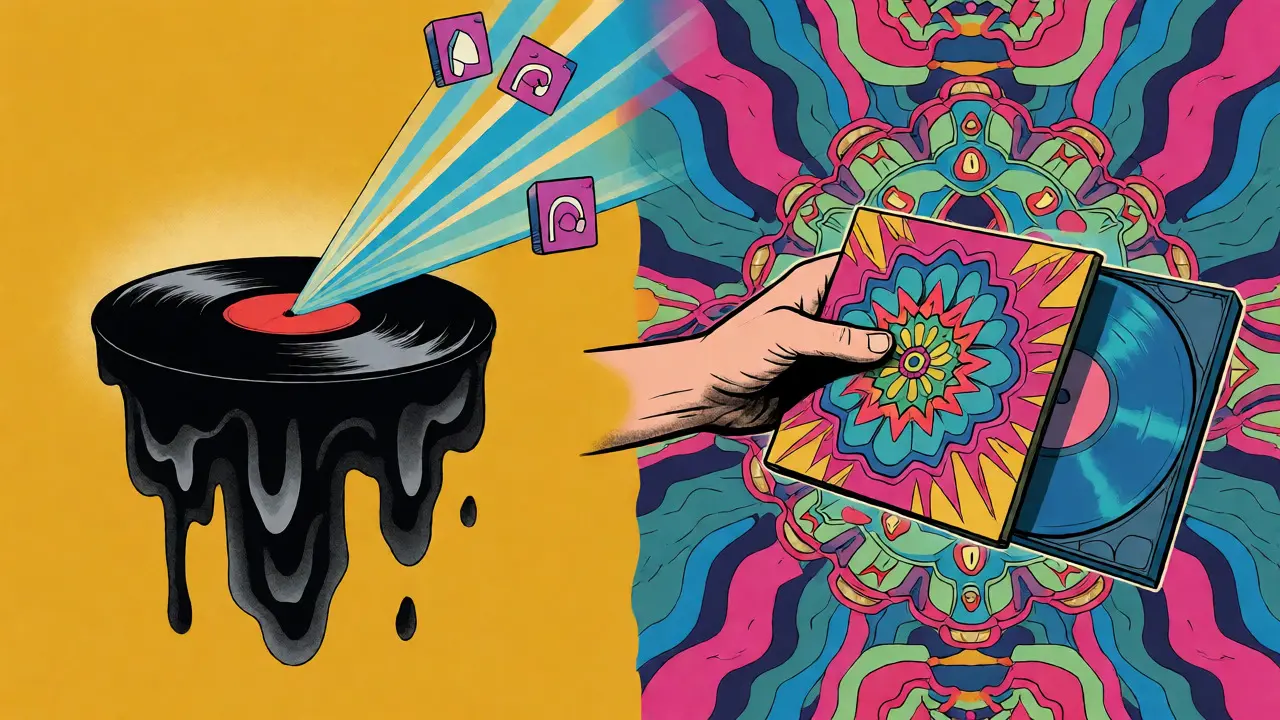
To sweeten the deal, Mind Music offered tangible rewards tied to their NFTs. If you bought an NFT during their initial collection release, you didn’t just get a JPEG. You got a physical package: a limited edition numbered colored vinyl, a CD, and a digital download. This hybrid model appealed to collectors who wanted both the digital proof of ownership and the nostalgic feel of holding a physical album. It was a smart way to bridge the gap between Web3 natives and traditional music fans.
Staking and Exchange Listings
Airdrops are useless if the token has nowhere to go. Mind Music anticipated this by securing a listing on Coin Tiger, a centralized exchange, right around the same time as the airdrop. This allowed recipients to trade their free tokens immediately. No more waiting months for a Binance listing. For traders, this meant liquidity was available from day one.
They also launched staking pools offering up to 75% Annual Percentage Yield (APY). In the volatile world of crypto, high APY is often a red flag for unsustainable inflation, but for a new project trying to lock up supply, it works. By incentivizing users to stake rather than sell, Mind Music hoped to stabilize the price floor. If you received 2 billion tokens in the airdrop, you could stake them and earn passive income while you waited to see if the ecosystem grew. It was a clever retention mechanism.
The Reality Check: What Happened Next?
Fast forward to today, October 2026. The landscape of crypto-music projects has shifted dramatically. Many of the ambitious promises made in 2022 didn’t materialize as expected. While Mind Music reported averaging 5 million participants shortly after launch, sustained user activity proved challenging. The 75% APY likely couldn’t be maintained forever without significant revenue inflows from music sales or licensing deals.
Did the project succeed? It depends on your metric. As a marketing campaign, it worked perfectly. It introduced MND to a global audience. As a long-term investment vehicle for the average airdrop recipient? Probably less so. Most airdropped tokens suffer from "sell-on-arrival" pressure. When 15,000 people suddenly hold billions of tokens each, the market can get flooded. Without strong utility beyond speculation, the value tends to dilute over time. However, the integration of physical merchandise and real chart performance shows they tried harder than most to build a genuine brand.
Lessons for Future Crypto-Music Projects
If you’re looking at similar opportunities today, keep these takeaways in mind:
- Utility Matters: An airdrop is just a hook. The real value comes from whether you’ll use the platform. Will you stream music there? Buy merch? Stake for yield?
- Check the Supply: 30 trillion tokens sounds like a lot, but check the total supply. If the max supply is 100 trillion, you only own 0.03%. Don’t let big numbers fool you.
- Exchange Access: Immediate trading capability is crucial. If a token isn’t listed on major exchanges quickly, it becomes hard to sell.
- Tangible Perks: Physical goods (like vinyl records) add real-world value that pure digital assets lack.
The Mind Music experiment serves as a case study in how to generate buzz. They combined a massive token giveaway with credible music content and physical rewards. Whether you still hold MND or cashed out in 2022, the campaign demonstrated the power of combining entertainment with financial incentives.
How many MND tokens did each winner receive?
Each of the 15,000 winners received up to 2 billion MND tokens. The total prize pool was 30 trillion tokens, meaning the distribution averaged 2 billion per winner, though exact amounts may have varied based on specific selection criteria.
Where was the Mind Music airdrop hosted?
The airdrop was executed through a partnership with CoinMarketCap. Users participated directly via the CoinMarketCap platform, which handled the wallet connections and random selection process.
Did Mind Music offer physical rewards?
Yes. In addition to digital NFTs, Mind Music provided physical packages including limited edition numbered colored vinyl records, CDs, and digital downloads for certain NFT purchases.
What was the staking reward for MND holders?
At launch, Mind Music offered staking pools with an Annual Percentage Yield (APY) of up to 75%. This was designed to encourage users to hold and stake their tokens rather than selling them immediately after the airdrop.
Is Mind Music still active in 2026?
Public information regarding Mind Music's operations has become sparse since the mid-2020s. While the project showed initial promise with chart success and exchange listings, many similar crypto-music ventures have faced challenges in maintaining long-term momentum and user engagement.