NFT Ticket Resale Markets: How Blockchain Is Changing Event Ticketing
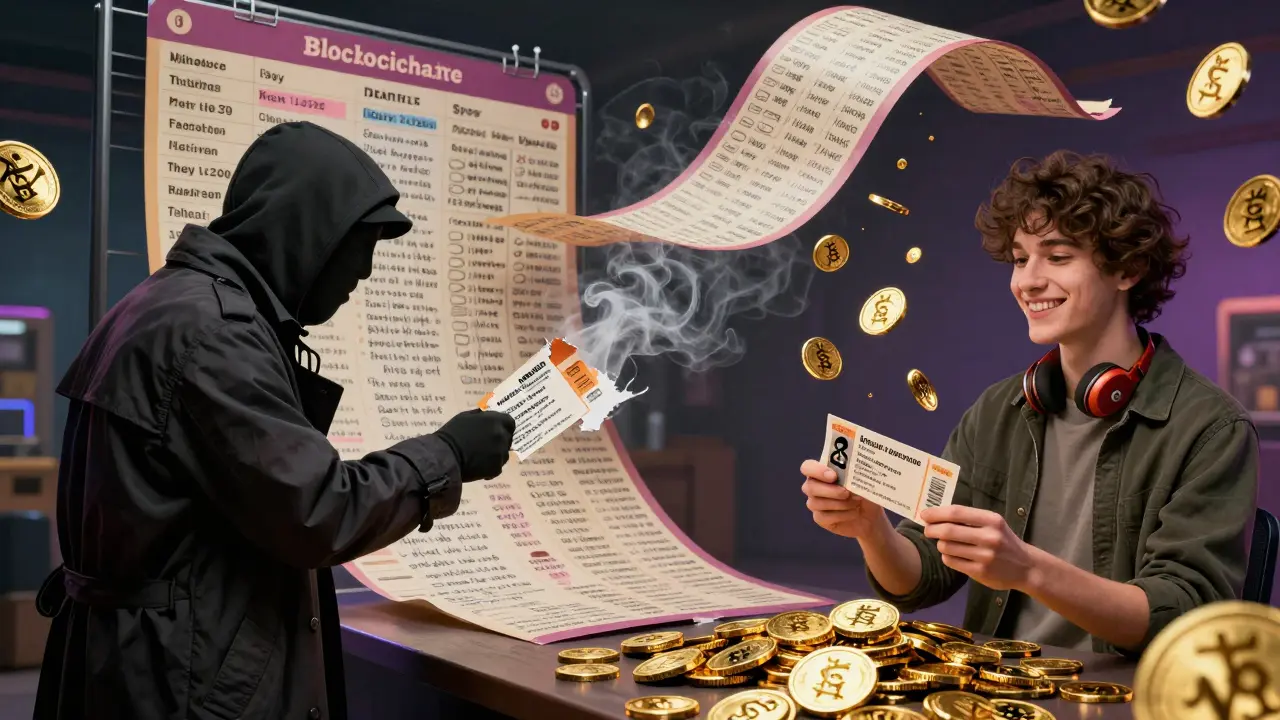
Imagine buying a concert ticket and knowing that every time someone resells it, the artist gets a cut. No middlemen. No scalpers jack up the price. No fake tickets. That’s not science fiction-it’s happening right now with NFT ticket resale markets. These aren’t just digital collectibles. They’re programmable tickets built on blockchain that change how events make money, how fans trade tickets, and how venues stop fraud.
How NFT Tickets Work
NFT tickets are unique digital tokens stored in your crypto wallet. Unlike PDFs or barcodes you print or screenshot, each NFT ticket is one-of-a-kind, recorded on a public ledger. This means no one can copy it. If someone tries to sell a fake ticket, the blockchain instantly shows it’s not real. That’s because NFTs use standards like ERC-721 on Ethereum or similar on Polygon and Solana. These standards make sure every ticket has a clear history-who bought it, when, and for how much.
Here’s the real game-changer: smart contracts. These are self-executing programs on the blockchain. When you buy an NFT ticket, the contract can be set to automatically send a percentage-usually 5% to 10%-to the original event organizer every time the ticket changes hands. That’s not a one-time fee. That’s ongoing revenue. A band selling 10,000 tickets at $100 each could earn $50,000 upfront. But if 3,000 of those tickets get resold at an average of $150, they could make another $225,000 in royalties. That’s money that used to go straight to StubHub or Vivid Seats.
Why NFT Resale Markets Are Different
Traditional resale platforms take 10% to 15% of every sale and give nothing back to the artist or promoter. NFT resale markets flip that model. Event creators control the rules. They can cap how high a ticket can be resold. They can block sales entirely if they want to. They can even tie perks to the ticket-like early access to merch, exclusive backstage videos, or VIP entry to next year’s show.
And it’s not just about money. It’s about trust. In 2025, over 5.3% of all major U.S. venue tickets were sold as NFTs. That number might sound small, but it’s growing fast. Why? Because counterfeit tickets cost the industry hundreds of millions every year. With NFTs, the ticket’s origin is locked in. No one can forge it. No one can double-sell it. Wallets act as your digital ID. If you have the private key, you own the ticket. If you don’t, you don’t.
The Downside: Cost and Complexity
But NFT tickets aren’t perfect. The biggest complaint? Gas fees. On Ethereum, transaction costs can spike to $20-$50 during high-demand sales. That’s more than the fee StubHub charges. For someone buying a $75 ticket, seeing a $40 fee on top is a hard sell. That’s why platforms are moving to Layer-2 networks like Polygon. These networks cut fees to under $1 and speed up transactions, making NFT tickets feel more like buying a regular online ticket.
Then there’s the learning curve. You need a wallet. You need to understand private keys. You need to know how to buy crypto to pay for the ticket. For a 45-year-old mom buying tickets for her kid’s festival, that’s a wall. Only 11% of people aged 35-54 currently use NFTs. But that number is climbing. As more people get used to crypto payments through apps like PayPal and Coinbase, the barrier drops.
Some users also lose access to their tickets because they misplace their keys or forget their password. There’s no “forgot password” button on the blockchain. If you lose your wallet, you lose your ticket. That’s why platforms are starting to offer recovery options-like backup codes or social recovery through trusted contacts.
Who’s Using NFT Tickets Right Now?
It’s not just niche crypto fans. Major artists and promoters are jumping in. Musicians have raised over $520 million through NFTs tied to music releases, tours, and exclusive content. Some tours now sell NFT tickets that unlock digital collectibles or virtual meet-and-greets. Even Ticketmaster and Eventbrite are testing NFT integration. They’re not ditching their old systems-they’re layering blockchain on top. Think of it like adding Wi-Fi to a landline phone.
The biggest adopters? Younger audiences. People under 30 who already use crypto, play blockchain games, or collect digital art. These users don’t just want to attend an event-they want to own part of it. NFT tickets give them proof of attendance, access to future perks, and a stake in the artist’s ecosystem.
What’s Next for NFT Ticketing
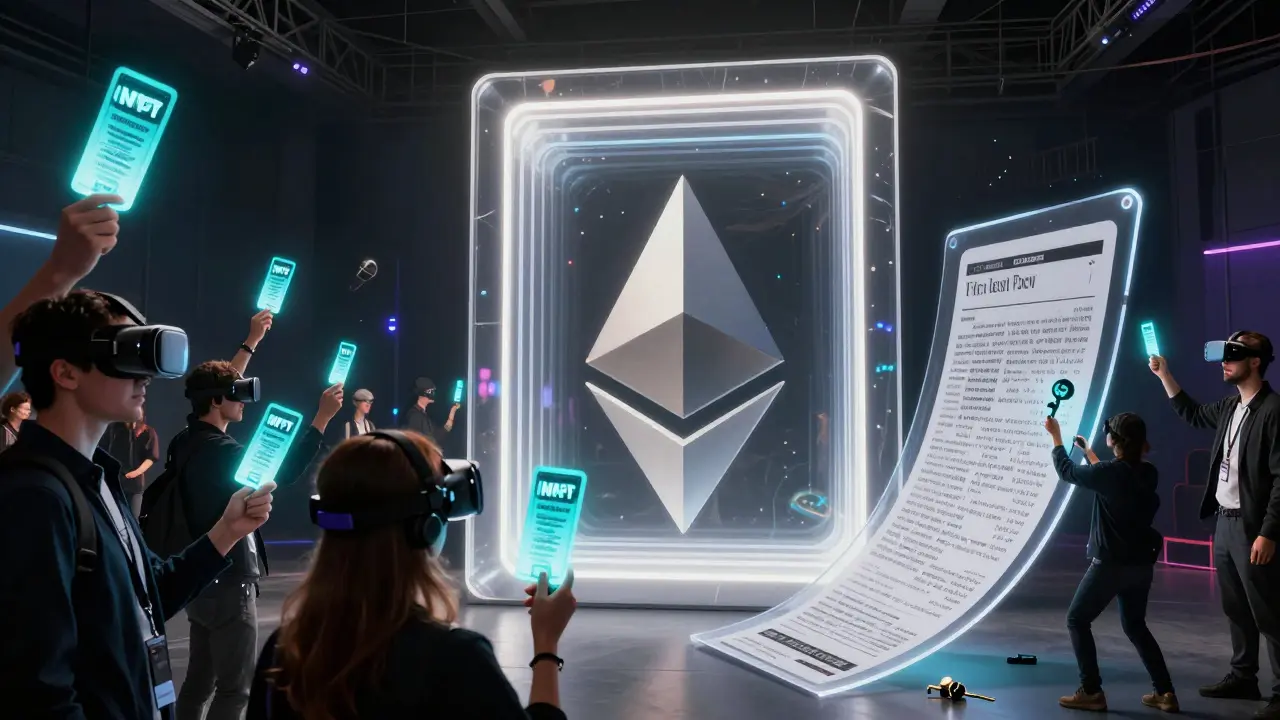
The next wave is integration. NFT tickets are starting to work across platforms. A ticket bought on Polygon can now be resold on Solana. Virtual concerts in the metaverse are using NFTs as entry passes. Imagine attending a live-streamed show from your VR headset, with your NFT ticket unlocking a 3D backstage area. That’s not a dream-it’s already being tested.
Hybrid models are the future. You’ll still be able to buy a regular e-ticket. But if you want perks, resale value, or creator royalties, you’ll choose the NFT version. Event organizers will offer both, letting fans pick their level of engagement.
By 2033, the NFT ticketing market could hit $7.82 billion. That’s not because everyone will switch overnight. It’s because the benefits are too strong to ignore. Artists get steady income. Fans get real ownership. Venues get fraud-free entry. And scalpers? They’re out of luck.
Real User Experiences
People who’ve used NFT tickets say the best part is the certainty. No more “I bought this on eBay and now I can’t get in.” They also love the extras-like a free digital poster or a surprise song drop after the show. One fan in Austin told me he got access to a private livestream just because he held his NFT ticket for three months.
But the frustration is real too. One user in Chicago lost her ticket because she didn’t back up her wallet. Another said she paid $47 in gas fees just to resell a $120 ticket. That’s not sustainable. Platforms are responding by offering fee subsidies and simplified interfaces. Some now let you buy NFT tickets with a credit card and auto-create a wallet for you-no crypto needed upfront.
Final Thoughts
NFT ticket resale markets aren’t replacing traditional ticketing. They’re adding a new layer. One that rewards creators, protects buyers, and makes fraud nearly impossible. The tech is still rough around the edges, but it’s improving fast. The real question isn’t whether NFT tickets will work. It’s whether you’re ready to own your ticket-not just rent it.
Can I resell my NFT ticket for any price?
No, not always. The event organizer sets resale rules in the smart contract. They can cap the maximum price, limit how many times it can be resold, or even block resale entirely. This prevents scalpers from driving prices up unfairly.
Do I need cryptocurrency to buy an NFT ticket?
Not always. Many platforms now let you pay with a credit card. Behind the scenes, they use crypto to create the NFT, but you don’t need to handle it yourself. However, if you want to resell the ticket later, you’ll need a crypto wallet to receive the payment.
What happens if I lose my wallet or private key?
You lose access to your ticket permanently. There’s no customer service reset button on the blockchain. That’s why newer platforms are offering recovery options-like backup codes or letting trusted friends help you restore access. Always store your keys securely.
Are NFT tickets better than traditional ones?
It depends. If you care about authenticity, resale value, and supporting artists, then yes. If you just want a simple way to get into a show without tech hassle, then traditional tickets are still easier. But NFT tickets offer more long-term value-especially if you plan to resell or collect event memorabilia.
Why do gas fees vary so much?
Gas fees depend on network demand. Ethereum gets congested during big ticket drops, pushing fees up. That’s why many NFT ticket platforms now use Layer-2 blockchains like Polygon, where fees stay under $1 regardless of traffic. Always check which network the ticket uses before buying.
JJ White
February 16, 2026 AT 18:50Let me get this straight-you’re telling me we’re going to trust a blockchain to prevent scalping, but we’re not gonna question how many people actually lost their tickets because they didn’t back up a 24-word phrase like it was their life insurance? This isn’t innovation. It’s a crypto cult with a ticketing side hustle.
And don’t even get me started on ‘royalties.’ You mean artists are gonna get paid every time someone resells a ticket? So now I’m paying for the privilege of being a middleman for a guy who bought a ticket for $100 and sold it for $150? I’m not a fan. I’m a tax collector.
Also-gas fees? You call $40 to resell a $120 ticket ‘affordable’? That’s not a fee. That’s a robbery with a whitepaper.
And don’t tell me about Polygon. I’ve seen what ‘low fees’ look like on Layer-2. It’s just Ethereum with a band-aid and a better PR team.
Nicole Stewart
February 17, 2026 AT 21:22NFT tickets are just another way for tech bros to feel superior while making live events more complicated for everyone else.
No one needs this.
Alan Enfield
February 18, 2026 AT 01:18Look, I’m not anti-tech, but I’ve been to 15 concerts this year. I’ve had two bad experiences with fake tickets. One was on eBay. The other? A friend’s phone died and they couldn’t show the barcode.
NFTs fix the fake ticket problem. That’s huge. The gas fee thing? Yeah, that’s rough. But Polygon’s been a game-changer-fees under $0.50. And if you’re buying with a card, you don’t even need to touch crypto. The wallet gets created for you.
It’s not perfect. But it’s the first real step toward ownership. Not just access. Ownership. That’s the difference.
kieron reid
February 18, 2026 AT 21:44They say NFT tickets prevent scalping. But what if the artist sets a resale cap at $200… and then sells 1000 NFTs at $500 each to their ‘loyal fans’ who are actually bots? Or their friends? Or their manager’s cousin?
It’s not eliminating scalping. It’s just making it more sophisticated. And less transparent.
Also-$7.82 billion by 2033? That’s not a market prediction. That’s a venture capitalist’s fantasy spreadsheet.
Avantika Mann
February 20, 2026 AT 20:47I love how this is opening up new ways for artists to connect with fans-not just through music, but through experiences. The digital poster, the backstage video, the surprise song drop-those little things mean so much.
I’m not a crypto person, but I bought an NFT ticket last month just for the perks. Used my credit card. Wallet was set up for me. Resold it later for $10 more than I paid. Got $3 back in royalties. Felt good.
If platforms keep making it this simple, more people will try it. No need to be a tech wizard. Just be a fan.
jennifer jean
February 22, 2026 AT 14:03YES. I got my ticket to the Phoebe Bridgers show as an NFT. Got a digital art piece with it. Then I resold it because I had to miss the show. Got 8% back to her. Felt like I was part of something real. 🙌
Gas fees were annoying but worth it. And now I have proof I was there. Not just a PDF. A memory. 💛
andy donnachie
February 23, 2026 AT 08:26As someone who’s worked in event tech for 12 years, I’ve seen every gimmick come and go. QR codes. RFID. Mobile apps. NFTs are different because they’re not just access-they’re identity.
The real win? The resale royalty. That’s revenue that used to vanish into StubHub’s black hole. Now it goes back to the people who made the show possible.
Yes, the UX needs work. But we’re already seeing platforms integrate wallet recovery and credit card onboarding. It’s not magic. It’s just evolving.
Lauren Brookes
February 24, 2026 AT 11:35I used to think NFTs were just JPEGs of apes. Then I bought a ticket to a local band’s show. Got a voice note from the lead singer thanking me for holding the ticket. Then I resold it because I got sick. The band got 7%.
It’s weird. But it’s also kind of beautiful.
We’ve spent decades turning concerts into transactions. Now we’re turning them into relationships.
That’s not just tech. That’s culture.
And yeah-I lost my wallet once. Took me three days to recover it. But I learned. And now I back up my keys like they’re my will.
Chris Thomas
February 25, 2026 AT 01:48Let’s be real-this is just Web3 vaporware dressed up as a solution to a problem that doesn’t exist. Scalping? It’s been around since the 70s. The real issue? Ticketmaster’s monopoly and lack of transparency.
Instead of fixing systemic pricing, we’re forcing people to learn private keys? You think a 45-year-old mom in Ohio is going to navigate MetaMask? No. She’s going to buy a paper ticket and call it a day.
This isn’t democratization. It’s exclusion with blockchain branding.
Also-ERC-721? You’re talking about a 2018 standard. We’re in 2025. Where’s the innovation? Where’s the real upgrade? It’s all just rebranded ICOs with better lighting.
Andrew Edmark
February 26, 2026 AT 04:12If you’re worried about losing your wallet-don’t. There are now services that let you recover it using trusted contacts. Like, you pick three friends. If you forget your password, they help you reset it. No crypto knowledge needed.
And if you hate gas fees? Buy on Polygon. Pay with your credit card. Done.
This isn’t about being a crypto bro. It’s about being a fan who wants to support the artist beyond the first purchase. That’s powerful.
And if you think NFTs are just for kids? Look at the data. 22% of ticket buyers aged 35-54 used NFT tickets last year. That number’s doubling every 18 months.
It’s not a trend. It’s a transition.
Dominica Anderson
February 26, 2026 AT 15:39America’s obsession with ‘ownership’ is why this will fail. You don’t own a ticket. You rent it. That’s how it’s always been. Now you want to pay extra to ‘own’ a digital file that can vanish if you forget a password?
And you think artists deserve royalties? What about the venue staff? The sound engineer? The guy who sweeps the floor after the show?
Stop romanticizing blockchain. It’s not justice. It’s capitalism with a new coat of paint.
Lisa Parker
February 28, 2026 AT 14:19I spent $150 on a ticket. Resold it for $200. Paid $47 in gas. Got $10 back to the artist. Felt like I was donating to a cult.
Then I got a free merch code. Then I got a voice note. Then I got access to a secret livestream.
…I’m not mad anymore.
It’s weird. But it’s kinda nice.
Nova Meristiana
March 1, 2026 AT 11:11Oh wow. Another ‘NFTs are the future’ piece. Let me guess-you also think AI-generated poetry is profound and that NFT apes are fine art.
Let’s not forget: the same people who sold you on NFTs as the next big thing are the ones who sold you on Bitcoin at $10,000 and then vanished when it hit $60,000.
They’re not revolutionizing ticketing. They’re just trying to get you to buy crypto so they can cash out before the next crash.
It’s not innovation. It’s a pyramid scheme with a concert.
Tarun Krishnakumar
March 2, 2026 AT 11:04Here’s the truth no one’s telling you: this isn’t about artists. It’s about control. The same corporations that run Ticketmaster are now funding these NFT platforms. Why? Because they can track you. Every resale. Every wallet. Every time you log in.
They’re not giving you ownership. They’re giving you a digital leash.
And when you lose your key? You’re not just losing a ticket. You’re losing your entire identity in their ecosystem.
They’re not preventing scalping. They’re preventing freedom.
And don’t tell me about Polygon. That’s just a front. The real ledger? It’s still on Ethereum. And Ethereum is controlled by a handful of mining pools and venture capitalists.
This isn’t decentralization. It’s re-centralization with a blockchain logo.
Paul David Rillorta
March 3, 2026 AT 14:08lol imagine paying 50 bucks in gas to resell a ticket to a lil nas x concert. like bro i just wanted to see my homie perform. now i gotta be a blockchain engineer?
also who the hell is gonna remember their 12 word phrase after a few beers? i lost my keys once and had to cry for 3 hours.
also why does every nft ticket come with a ‘digital poster’? i don’t want art. i want to get into the damn show.
we’re being sold snake oil and called innovation.
save the future. go back to pdfs.
Sarah Shergold
March 4, 2026 AT 17:11It’s not that NFTs are bad. It’s that they’re being forced on people who don’t care.
My mom tried to buy a ticket. Got stuck on ‘connect wallet.’ Gave up. Bought scalper ticket instead.
So now the artist gets nothing. And the scalper gets rich.
Great job, tech bros.
Charrie VanVleet
March 5, 2026 AT 01:38I used to hate NFTs. Then I saw a kid at a festival hold up his phone and say, ‘This is my ticket. I bought it in 2023. I resold it last month. My favorite band got $12 from it.’
He wasn’t bragging. He was proud.
That’s the future. Not perfect. Not easy. But meaningful.
If we make it simple, people will use it. We just have to stop treating them like tech idiots.
And yes-I’ve lost a wallet. I’ve also recovered one. It’s not magic. It’s just learning.
And hey-if you’re still skeptical? Try it once. With a $20 ticket. See what happens.
You might surprise yourself. 🤝
Anandaraj Br
March 5, 2026 AT 22:52So now we’re supposed to believe that a blockchain is going to stop scalpers? Please. The same people who run these NFT platforms are the ones who own the crypto exchanges. They profit from volatility. From gas fees. From panic sales.
They’re not fixing the system. They’re weaponizing it.
And don’t tell me about ‘royalties.’ You think a band gets $225k from resale? Nah. The platform takes 30%. The wallet provider takes 10%. The blockchain gas fees? Another 15%. The artist? Maybe 10%.
This isn’t empowerment. It’s a new kind of exploitation.
And the ‘digital poster’? That’s not a perk. That’s a Trojan horse. You’re giving them your data. Your wallet. Your history. All for a JPEG.
Avantika Mann
March 7, 2026 AT 09:12Just wanted to say thank you to @CharrieVanVleet for sharing that story. I had the same experience with my first NFT ticket. I was skeptical too. But the voice note from the artist? That’s the kind of moment you can’t buy.
And if you’re worried about losing your wallet? Start small. Use a platform that lets you recover it with a friend. I used my sister. She’s now my backup. We laugh about it.
It’s not about being tech-savvy. It’s about being human.
Geet Kulkarni
March 8, 2026 AT 15:34While the technological underpinnings of NFT-based ticketing systems are commendable from an architectural standpoint, one must critically evaluate the socio-economic implications of this paradigmatic shift.
By vesting intellectual property rights within decentralized ledgers, one inadvertently creates a class of digital asset holders who are, by virtue of technical literacy, privileged over those who are not.
Furthermore, the reliance upon cryptographic key management introduces an existential risk profile for non-technical users, which is neither ethically defensible nor economically sustainable in the long term.
Thus, while the innovation is intriguing, its implementation must be subjected to rigorous regulatory oversight and equitable accessibility protocols before mass adoption can be ethically justified.