Pakistan Virtual Assets Regulatory Authority (PVARA) for Crypto Oversight: What You Need to Know in 2025
Before July 2025, if you traded Bitcoin or used a crypto exchange in Pakistan, you were operating in a legal gray zone. No clear rules. No licensed platforms. No protection. That changed when President Asif Ali Zardari signed the VIRTUAL ASSETS REGULATORY AUTHORITY ORDINANCE 2025. The result? Pakistan’s first-ever federal regulator for digital assets: the Pakistan Virtual Assets Regulatory Authority (PVARA) is an independent federal body established in July 2025 to license, supervise, and enforce compliance for all virtual asset service providers in Pakistan, operating under the Virtual Assets Act, 2025, with full authority to impose fines, revoke licenses, and enforce FATF anti-money laundering standards.
Why PVARA Was Created
Pakistan didn’t wake up one day and decide to regulate crypto because it was trendy. The country had been watching its neighbors. The UAE built VARA. Singapore tightened rules with MAS. India introduced licensing. Meanwhile, Pakistan’s estimated 10 million crypto users were trading on unregulated platforms, often overseas. Money flowed out. No oversight. No accountability. The State Bank of Pakistan had repeatedly warned that crypto wasn’t legal tender-but it also never said it was illegal. That ambiguity created risk: scams, money laundering, and lost investor funds. PVARA was designed to fix that. It’s not about banning crypto. It’s about bringing it into the light. The government didn’t want to chase away innovation. It wanted to attract it-with rules.What PVARA Actually Controls
PVARA doesn’t just watch. It controls. Its powers are broad and clear:- Licenses every crypto exchange, wallet provider, custodian, and trading platform operating in Pakistan
- Can shut down any service that violates rules-no warning, no appeal period
- Imposes fines up to 10% of annual revenue for non-compliance
- Requires all firms to follow FATF’s Travel Rule: track sender and receiver info for every transaction over $1,000
- Sets cybersecurity standards: cold storage, multi-sig, penetration testing
- Monitors for suspicious activity and shares data with the Federal Investigation Agency (FIA)
Who Can Apply for a License?
PVARA isn’t handing out licenses to just anyone. To even apply, a company must already be licensed by one of these regulators:- U.S. Securities and Exchange Commission (SEC)
- UK Financial Conduct Authority (FCA)
- UAE Virtual Assets Regulatory Authority (VARA)
- Monetary Authority of Singapore (MAS)
- European Union’s MiCA framework
- Company structure and ownership details
- Proof of existing licenses in other jurisdictions
- Technical architecture and security protocols
- Annual revenue and assets under management
- Compliance history-no past fines or investigations
- A detailed plan for serving Pakistani users, including KYC and AML procedures
What About Pakistani Crypto Users?
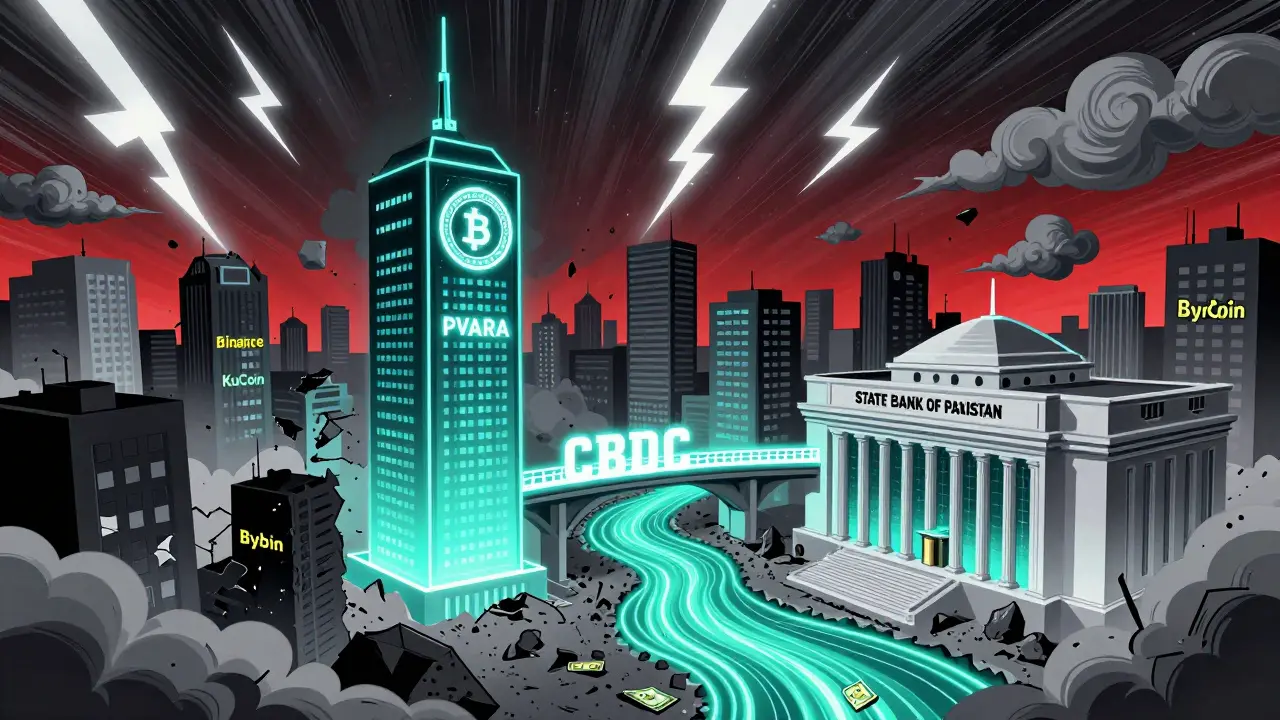
For regular users, this means two things: safety and fewer choices. Before PVARA, you could sign up for any exchange-Binance, KuCoin, Bybit, even obscure ones. Now, only PVARA-approved platforms can legally operate in Pakistan. That means you’ll have fewer options, but each one will be vetted. Your funds will be held in segregated accounts. Your identity will be verified properly. And if something goes wrong, you can file a complaint with PVARA. The authority also launched a regulatory sandbox a controlled environment where startups can test new crypto products under PVARA supervision, with temporary licenses, to develop Shariah-compliant tokens, remittance tools, and CBDC-linked services without full regulatory burden. This is where local fintechs are building crypto-based remittance apps, tokenized gold, and halal staking products. It’s the only legal path for homegrown innovation.CBDCs and the Bigger Picture
PVARA isn’t just about Bitcoin and Ethereum. It’s part of a larger digital finance overhaul. The State Bank of Pakistan is running a pilot for its own digital currency-the Pakistani CBDC. It’s not meant to replace cash. It’s meant to replace the slow, expensive banking rails that send remittances from the Middle East to Pakistan. Imagine this: a Pakistani worker in Saudi Arabia sends $500 home. Today, it takes 3 days and costs 8%. With the CBDC, it could take 10 seconds and cost 1%. PVARA will oversee how private crypto interacts with this public digital currency. The goal? To create a bridge between global crypto markets and Pakistan’s formal financial system.How PVARA Compares to Other Countries
| Country | Regulator | Licensing Model | FATF Compliance | CBDC Pilot |
|---|---|---|---|---|
| Pakistan | PVARA | Strict: Only globally licensed firms | Yes, fully aligned | Active pilot |
| India | Financial Intelligence Unit | Registration-based, no licensing | Yes, but enforcement weak | Under development |
| UAE | VARA | Open licensing, high fees | Yes, strict | Not yet |
| Singapore | MAS | Highly selective, tiered licensing | Yes, advanced | Phase 2 testing |
| United States | SEC + FinCEN | Fragmented, state-by-state | Yes, but inconsistent | No federal CBDC |

What Happens If You Ignore PVARA?
If you’re a Pakistani citizen using an unlicensed exchange, you won’t be arrested. But your funds are at risk. If the exchange gets shut down by PVARA, you lose access. No refunds. No recourse. If you’re a business operating without a license, PVARA can:- Block your website in Pakistan
- Freeze your local bank accounts
- Impose fines up to 10% of your global revenue
- Share your data with international regulators
The Future of Crypto in Pakistan
PVARA is still new. Its first license applications are being reviewed. The first licensed exchange could launch by mid-2026. The CBDC pilot will likely go live in late 2026. This isn’t a quick fix. It’s a multi-year transformation. The real win? Pakistan is now on the map. It’s no longer a crypto black hole. It’s a regulated market with clear rules, international standards, and real potential for fintech growth. For investors, entrepreneurs, and users-it’s the first time in years that crypto in Pakistan feels like it’s moving forward, not sideways.What You Should Do Now
If you’re a user:- Stop using unlicensed exchanges
- Wait for PVARA’s official list of approved platforms
- Only deposit funds on platforms you can verify through PVARA’s website
- Apply for an Expression of Interest (EoI) if you’re already licensed abroad
- Prepare your compliance documentation-FATF Travel Rule, AML policies, cybersecurity audits
- Engage with the regulatory sandbox if you’re building a local product
Is crypto legal in Pakistan now?
Yes-but only through PVARA-licensed platforms. Personal ownership and trading aren’t banned, but operating any crypto service without a license is illegal. The law doesn’t criminalize holding crypto, but it shuts down unregulated exchanges and wallets.
Can I still use Binance or Bybit in Pakistan?
Not legally. Binance and Bybit are not licensed by PVARA. While they may still be accessible, using them puts your funds at risk. PVARA can block access, and if those platforms get pressured by regulators, your account could be frozen without warning.
What’s the difference between PVARA and the State Bank of Pakistan?
PVARA regulates private virtual assets like Bitcoin, Ethereum, and tokens. The State Bank of Pakistan regulates traditional banking and is developing the national CBDC. They work together-PVARA ensures private crypto doesn’t interfere with the financial system, while the State Bank builds the public digital currency infrastructure.
Can startups in Pakistan build crypto products now?
Yes-through PVARA’s regulatory sandbox. Startups can test crypto-based remittance tools, tokenized assets, or Shariah-compliant staking under supervision, with temporary licenses. This is the only legal path for local innovation. Full licensing requires meeting the same global standards as foreign firms.
Will PVARA ban DeFi or NFTs?
Not outright. But any DeFi protocol or NFT marketplace that interacts with Pakistani users must be licensed by PVARA. Unlicensed DeFi platforms will be blocked. NFTs are treated as virtual assets-so if you’re selling them to Pakistanis, you need a license. The focus is on who serves whom, not the technology itself.
How do I know if a crypto platform is PVARA-approved?
PVARA will publish an official list of licensed virtual asset service providers on its website. Until then, assume no platform is approved. Do not rely on third-party lists or social media claims. Only trust official PVARA communications.
What happens to my crypto if PVARA shuts down my exchange?
If the exchange isn’t licensed, you likely won’t get your funds back. That’s why PVARA insists on licensed platforms-they’re required to hold client assets in segregated, audited accounts. If you use a licensed provider and it fails, you have legal recourse. If you use an unlicensed one, you’re on your own.
Is there a deadline to apply for a PVARA license?
No fixed deadline yet. PVARA is accepting Expressions of Interest on a rolling basis. However, the authority has signaled that the first wave of licenses will be granted in early 2026. Delaying your application risks missing the first opportunity to enter the market.
Can I invest in Pakistani crypto startups?
Yes-through the regulatory sandbox. Investors can back local fintechs building crypto-based remittance apps, tokenized real estate, or halal investment products under PVARA supervision. These startups are legal, vetted, and growing. They’re the future of Pakistan’s digital finance ecosystem.
Will PVARA tax crypto gains?
Tax rules are still being finalized. PVARA doesn’t handle taxation-that’s the Federal Board of Revenue’s job. But PVARA will share transaction data with tax authorities. Expect capital gains reporting requirements to be introduced alongside licensing. Don’t assume crypto is tax-free.
Sammy Tam
December 18, 2025 AT 14:50Okay, so Pakistan just dropped a crypto regulatory bomb and honestly? Kinda impressed. They didn’t go full China or full crypto-anarchist. They went for the ‘we want the good stuff, not the scammy junk’ route. Licensing only global players? Smart. Makes sure the exchanges aren’t some guy in a basement with a server farm and a fake whitepaper. Also, the sandbox for local startups? That’s the real win. Lets homegrown devs build halal staking or remittance tools without getting crushed by red tape right out the gate.
Abby Daguindal
December 20, 2025 AT 02:40This is just control dressed up as innovation. They think they’re being clever by forcing global licenses, but all they’re doing is making it impossible for anyone small to enter. You’re not protecting users-you’re protecting the oligopoly. And don’t get me started on that CBDC. It’s not about efficiency. It’s about tracking every single transaction. Welcome to financial surveillance, Pakistan.
Heather Turnbow
December 21, 2025 AT 22:55The structural clarity of PVARA is remarkably thoughtful. Unlike jurisdictions where regulatory ambiguity persists, Pakistan has opted for a principled, risk-averse framework grounded in international standards. The requirement for pre-existing licensing from recognized authorities (SEC, MAS, VARA, etc.) ensures that only entities with proven compliance infrastructure may operate. Furthermore, the segregation of client assets and mandatory FATF Travel Rule adherence are not merely procedural-they are foundational to investor protection. This is not overreach; it is responsible stewardship.
Jesse Messiah
December 23, 2025 AT 11:31Man, this is actually kinda cool. I was expecting Pakistan to ban crypto or just ignore it like India did. But they went full pro-innovation-with-rules. The sandbox for local devs? Genius. Imagine building a remittance app that cuts fees from 8% to 1%-that’s life-changing for families. And yeah, you gotta be licensed, but if you’ve got the creds from the US or UAE, you’re golden. This isn’t fear-it’s strategy.
Rebecca Kotnik
December 25, 2025 AT 10:35It is worth noting that the PVARA framework represents a rare convergence of regulatory ambition and pragmatic restraint. By anchoring its licensing criteria to internationally recognized financial authorities, Pakistan effectively outsources the burden of initial vetting, thereby reducing the risk of regulatory capture or corruption. The emphasis on segregated client accounts, penetration testing, and real-time AML monitoring demonstrates a profound understanding of systemic risk. Moreover, the deliberate exclusion of unlicensed offshore platforms-while politically unpopular-is economically rational. One might argue that this model could serve as a blueprint for other emerging economies seeking to integrate digital assets without sacrificing financial integrity.
Terrance Alan
December 26, 2025 AT 16:14They say they’re not banning crypto but they’re making it impossible to use. Who’s gonna get a license from the SEC just to serve 10 million people in Pakistan? Nobody. This is just a power grab. The CBDC? Of course it’s coming. They want to know where every penny goes. They want to freeze your account if you buy ETH. They’ll call it ‘financial stability’ but it’s just control. And don’t tell me about ‘safety’-if you’re not allowed to use Binance, you’re not safe, you’re trapped.
Jonny Cena
December 27, 2025 AT 11:12Big props to Pakistan for not going full crypto-anarchist or full authoritarian. They found the sweet spot: high standards, but room for local innovation. The sandbox is the secret sauce here. Local teams can test tokenized gold or halal staking without getting shut down before they even launch. That’s how you build a real fintech ecosystem-not by banning everything, but by giving smart people the space to build something that actually helps people. This is the kind of policy that could make Pakistan a leader in Muslim-majority fintech.
Kayla Murphy
December 29, 2025 AT 01:00Imagine being a Pakistani worker in Saudi Arabia and sending money home in 10 seconds instead of 3 days? That’s not tech-that’s liberation. PVARA isn’t about stopping crypto, it’s about giving real people real tools. And the fact they’re letting local startups build on this? That’s the future. This isn’t regulation. It’s revolution-with paperwork.
Florence Maail
December 29, 2025 AT 10:39LOL they think they’re smart. PVARA? More like P-VISA. They’re just handing crypto to the banks and the IMF. The CBDC? It’s a backdoor to track your groceries, your prayers, your crypto. They’ll say ‘security’ but it’s surveillance. And those ‘global licenses’? Only big Wall Street firms can afford that. This isn’t innovation-it’s a takeover. And the sandbox? Just a bait-and-switch so startups waste years getting approved while the real players sit back and wait for the monopoly.
Chevy Guy
December 30, 2025 AT 19:31So let me get this straight. To trade crypto in Pakistan you need a license from the SEC or MAS? So if I’m in Lahore and I use Binance, I’m breaking the law but the SEC doesn’t even care about me? That’s not regulation, that’s theater. And the CBDC? Yeah right. Next they’ll be scanning your QR code at the chai stall. This isn’t progress. It’s the beginning of a digital leash.
Amy Copeland
December 31, 2025 AT 15:10How quaint. Pakistan believes it can replicate Singapore’s model without Singapore’s infrastructure, legal tradition, or human capital. The notion that a startup from Islamabad can meet MiCA or MAS standards is delusional. This isn’t regulation-it’s performative governance. The sandbox is a distraction. The real agenda is to funnel all activity through state-aligned entities. The CBDC isn’t a tool-it’s a weapon. And the fact that anyone takes this seriously is proof of how desperate emerging markets are for legitimacy.
Patricia Amarante
January 1, 2026 AT 06:04Finally, someone got it right. No more sketchy exchanges. No more lost funds. Just one clean list of safe platforms. I’m waiting for the official list-then I’m moving all my crypto over. This is actually exciting.