Privacy Coin Delisting Wave: What Exchanges Are Removing and Why (2025-2026 Guide)
The landscape of cryptocurrency trading changed dramatically in 2025. If you tried to trade Monero or a leading privacy-focused cryptocurrency that uses ring signatures to obscure transaction details on major exchanges like Binance or Kraken, you likely hit a wall. This isn't just a glitch; it's part of a massive, coordinated wave of delistings targeting privacy coins. By the end of 2025, 73 global exchanges had removed these assets, a 43% jump from 2023. For users who value financial anonymity, this shift raises urgent questions about accessibility, legal risks, and where to go next.
This trend is not random. It is driven by strict new regulations that make it nearly impossible for centralized exchanges to comply with anti-money laundering laws while hosting anonymous cryptocurrencies. As we move into 2026, understanding why this is happening, which coins are affected, and how the market is reacting is essential for anyone holding or interested in private digital assets.
Why Exchanges Are Dropping Privacy Coins
To understand the delisting wave, you have to look at the technology behind privacy coins and the rules regulators are enforcing. Unlike Bitcoin or Ethereum, where every transaction is visible on a public ledger showing sender, receiver, and amount, privacy coins use advanced cryptography to hide this data.
Zcash is a cryptocurrency that employs zero-knowledge proofs to verify transactions without revealing underlying financial data, for example. These proofs allow the network to confirm a transaction is valid without exposing who sent what to whom. Similarly, Monero uses ring signatures to blend your transaction with others, making it computationally difficult to identify the true sender. Dash utilizes stealth addresses to obscure recipient information.
Regulators view this opacity as a risk. The primary driver of the 2025 delisting surge was guidance from the Financial Action Task Force is an intergovernmental body that sets standards for combating money laundering and terrorist financing globally (FATF). In June 2024, the FATF issued updated guidelines that intensified scrutiny on virtual asset service providers. Their "Travel Rule" requires exchanges to share customer information for transactions above certain thresholds. Because privacy coins' architecture makes tracking these transactions technically impossible, exchanges cannot comply with the rule if they list them.
In 2025, this regulatory pressure translated into action. According to CoinLaw statistics, 97 countries implemented stricter compliance frameworks, leading to a 34% surge in regulatory actions against privacy coins since 2024. The European Union’s Markets in Crypto-Assets (MiCA) regulation alone reduced privacy coin offerings by 22% through its transparency mandates. For an exchange operating in multiple jurisdictions, the cost of non-compliance-fines, license revocation, or criminal charges-far outweighs the revenue from trading privacy coins.
Major Exchange Actions in 2025
The delisting process wasn't gradual; it was systematic and rapid across major platforms. Here is how key players responded:
- Binance: In February 2025, the world’s largest exchange announced the removal of XMR, ZEC, and DASH from its European and US platforms. This single move impacted an estimated $600 million in daily trading volume.
- Kraken: Following updated regulations from FINTRAC (the Financial Transactions and Reports Analysis Centre of Canada), Kraken delisted privacy coins from its Canadian platform in March 2025.
- Poloniex: Citing direct concerns raised by the US Treasury Department, Poloniex delisted Monero globally in April 2025.
- South Korean Exchanges: Top platforms including Upbit and Bithumb removed privacy coins in Q1 2025. Upbit specifically delisted six privacy coins in September 2025 after receiving notice citing FATF requirements.
- Japan: Building on its complete privacy coin ban from 2018, all registered Japanese exchanges continued to refuse support for these assets, reinforcing the country’s strict stance.
This pattern shows that even exchanges with strong historical ties to privacy coins are prioritizing regulatory survival. The message is clear: if you want to operate legally in major markets, you cannot host untraceable assets.
| Coin | Primary Privacy Technology | Status on Major Exchanges (2025) | Regulatory Risk Level |
|---|---|---|---|
| Monero (XMR) | Ring Signatures, Stealth Addresses | Delisted from most top-tier exchanges | High |
| Zcash (ZEC) | Zero-Knowledge Proofs (zk-SNARKs) | Delisted from EU/US platforms | High |
| Dash (DASH) | PrivateSend (CoinJoin variant) | Removed from Binance, Kraken CA | Medium-High |
| Haven (XHV) | Integrated Ring Signatures | Restricted in most jurisdictions | High |

The Global Regulatory Patchwork
While the trend is global, the specific rules vary significantly by region, creating a complex map for traders. Understanding your local jurisdiction is critical because the legality of holding or trading these coins depends entirely on where you live.
Strict Bans: Japan maintains a total ban on privacy coins. South Korea prohibits exchanges from offering them. Dubai joined this group in 2023. In these regions, attempting to trade privacy coins through regulated channels is illegal.
Limited Access: Switzerland and Liechtenstein offer a different approach. Exchanges here continue to offer limited privacy coin services but only under extremely strict Know Your Customer (KYC) and Anti-Money Laundering (AML) frameworks. These countries act as regulatory sandboxes, allowing trading but with intense monitoring.
Upcoming EU Ban: The European Union has announced a comprehensive ban on privacy coins and anonymous cryptocurrency accounts starting July 2027 under its new Anti-Money Laundering Regulation. This will affect all 27 member states, effectively closing off one of the largest crypto markets to privacy assets.
Singapore: Maintains a regulated approach, allowing privacy coins but with enhanced compliance monitoring. This suggests that some Asian hubs may try to balance innovation with oversight, though the trend is tightening.
This divergence creates geographic arbitrage opportunities but also significant legal risks for cross-border traders. A user in Germany might find their access cut off by 2027, while a user in Singapore retains limited access today.
User Adaptation: Where Do Traders Go?
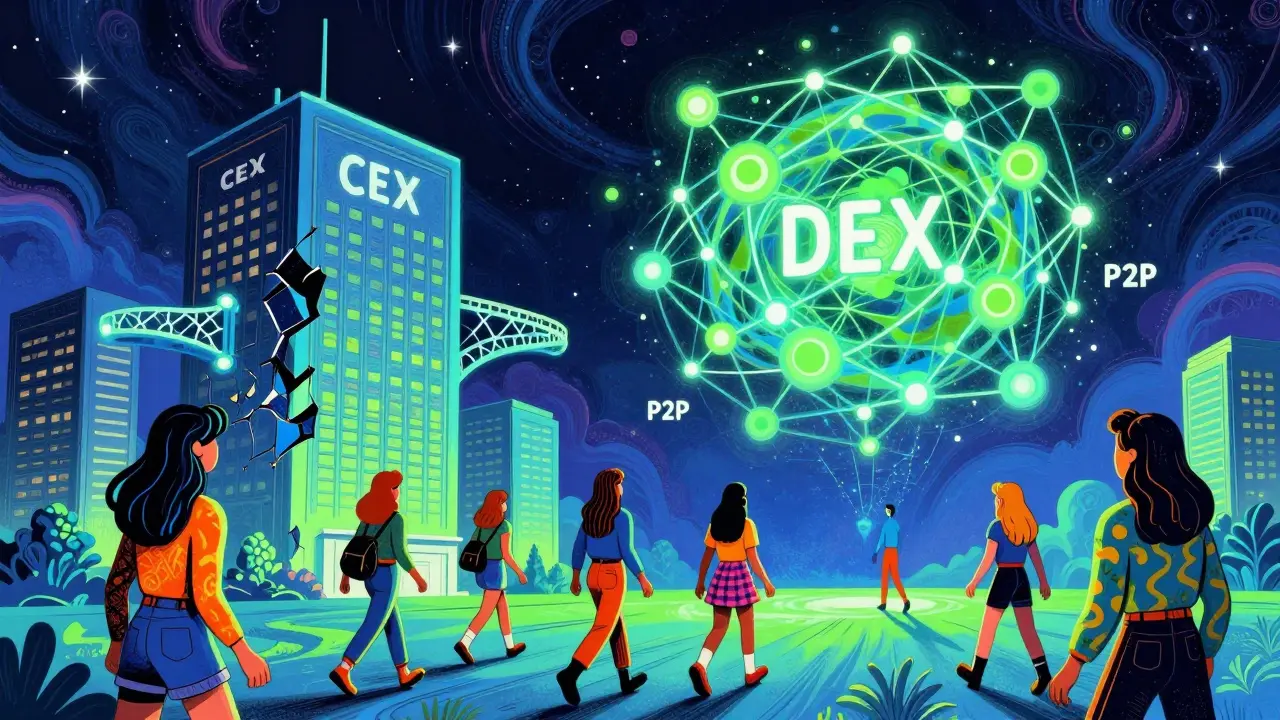
When centralized exchanges remove liquidity, users don’t disappear-they migrate. The delisting wave has accelerated the shift toward decentralized finance (DeFi) and peer-to-peer (P2P) solutions.
Reddit communities and Twitter discussions show widespread frustration among privacy advocates, but also practical adaptation. LocalMonero, a P2P platform for buying and selling Monero directly between individuals, saw a 19% uptick in activity following the major delistings. Users are increasingly turning to atomic swaps, which allow direct exchange of cryptocurrencies without intermediaries, bypassing the need for a central exchange altogether.
Decentralized Exchanges (DEXs) have become the primary venue for privacy coin trading. Since DEXs are often permissionless and do not require KYC verification, they are less susceptible to regulatory pressure. However, this comes with trade-offs: lower liquidity, higher slippage, and greater technical complexity for the average user. Institutional investors, meanwhile, are reportedly showing increased interest in privacy coins as regulatory frameworks stabilize, suggesting that while retail access shrinks, sophisticated demand remains.
Market Paradox: Price vs. Accessibility
If the outlook were purely negative, prices would crash. Instead, we’ve seen a paradoxical rally. In 2025, privacy cryptocurrencies gained 71.6%, outperforming major assets like Bitcoin. This surge occurred despite-or perhaps because of-the delisting wave.
Several factors explain this price action:
- Supply Shock: As exchanges delist coins, the available supply on centralized order books decreases. With demand remaining steady or growing, prices rise.
- Narrative Strength: The "digital gold" narrative for privacy coins has strengthened. Users view them as essential tools for financial sovereignty, especially in authoritarian regimes or during periods of economic instability.
- Institutional Interest: Some institutional players see long-term value in privacy-preserving technology, betting on future regulatory clarity.
However, there are warning signs. Zcash experienced an 8% decline in shielded address usage due to strict KYC measures, indicating that regulatory pressure does impact adoption metrics. The rally may be speculative rather than fundamental, driven by scarcity rather than utility.
Future Outlook: Compliance Meets Privacy
The tension between privacy and regulation will define the next decade of cryptocurrency development. Industry analysts predict that hybrid solutions will emerge. Zero-knowledge proof implementations are being developed to enable AML compliance without completely compromising transaction anonymity. These technologies could allow privacy coins to meet regulatory requirements by providing selective transparency to auditors while keeping user data private.
Currently, 74% of privacy coin developers cite FATF rules as their biggest challenge. The success of future projects hinges on creating technologies that satisfy both user privacy demands and regulatory oversight. If they can achieve this balance, privacy coins may return to mainstream exchanges. If not, they risk further marginalization, existing only on niche P2P platforms and DEXs.
For now, the delisting wave is real and impactful. Users must adapt by learning decentralized trading methods, understanding their local laws, and recognizing that the era of easy, anonymous trading on major exchanges is over.
Which privacy coins are most affected by the 2025 delisting wave?
The most significantly affected coins are Monero (XMR), Zcash (ZEC), and Dash (DASH). These three accounted for the majority of trading volume on centralized exchanges before the delistings. Other coins like Haven (XHV) and BitTube (TUBE) also faced restrictions, but XMR, ZEC, and DASH saw the broadest removal from major platforms like Binance, Kraken, and Poloniex.
Can I still buy Monero or Zcash in 2026?
Yes, but not on most major centralized exchanges in regulated jurisdictions like the US, EU, or Canada. You can still acquire these coins through decentralized exchanges (DEXs), peer-to-peer platforms like LocalMonero, or atomic swaps. However, you must check your local laws, as holding or trading these assets may be restricted in countries like Japan, South Korea, or Dubai.
Why did privacy coin prices rise despite delistings?
Prices rose due to a supply shock. When exchanges delist coins, the available supply on those platforms drops sharply. If demand remains constant or increases, the price rises. Additionally, the narrative of privacy coins as essential tools for financial sovereignty attracted new buyers, driving up prices by 71.6% in 2025.
What is the FATF Travel Rule and how does it impact privacy coins?
The FATF Travel Rule requires cryptocurrency exchanges to share customer information for transactions above certain thresholds. Privacy coins use cryptographic techniques like ring signatures and zero-knowledge proofs to hide sender and receiver details. Because this technology makes it impossible to track transactions, exchanges cannot comply with the Travel Rule if they list privacy coins, leading to delistings.
Will privacy coins return to major exchanges?
It is unlikely in the short term. Regulatory pressure is increasing, with the EU planning a full ban by 2027. However, if developers create hybrid technologies that allow selective transparency for regulators while maintaining user privacy, exchanges might reconsider listing them. Currently, 74% of developers cite FATF rules as their main challenge, indicating that technological evolution is needed before a return to mainstream platforms.
Kiran CS
May 9, 2026 AT 21:02Oh, look at the masses panicking because their little digital trinkets are no longer being sold on a platform that requires them to show a passport. Truly tragic for the "sovereign" individuals who couldn't be bothered to read the terms of service regarding AML compliance. It is almost amusing how these people claim victimhood when they willingly participated in a market that was always destined to collide with reality.
Michael Berggren
May 10, 2026 AT 18:53I think we should view this as an opportunity for growth rather than just loss 🌱 The fact that privacy coins are moving to decentralized platforms actually makes them more resilient in the long run. It forces us to take ownership of our financial tools instead of relying on centralized custodians. Plus, the price surge shows there is still strong belief in the technology 💪✨
Bijan Das
May 12, 2026 AT 01:12Boring article. Everyone knows exchanges will drop what they can't track. Why do I need a 2000 word essay on something that obvious? Just tell me if I can still buy XMR or not. Waste of time reading all this regulatory fluff.
Ashley Rodriguez
May 12, 2026 AT 10:29i really feel like this is going to be a big shift for everyone involved and its sad but also kind of inevitable i guess because regulations are getting tighter everywhere so maybe we should just accept it and move forward with learning about dexs and p2p trading which seems like the only way left now honestly its a lot of work but we have to adapt right
Zara Zaman
May 13, 2026 AT 11:37This is exactly why America needs stricter controls on these foreign-backed crypto schemes. We cannot allow anonymous transactions to flourish within our borders under the guise of 'financial freedom'. It's a security risk and a threat to national sovereignty. The delistings are a necessary step for protecting our economic infrastructure from illicit actors who hide behind technology.
Larry Port
May 14, 2026 AT 04:31It is interesting to see the supply shock effect here. Usually, delistings cause panic selling, but the opposite happened. This suggests that the demand for privacy is actually increasing, not decreasing. Maybe the market is voting with its wallet despite the regulatory headwinds. I wonder if this trend will continue into 2026 or if it was just a short-term reaction.
Jocelyn Garcia
May 14, 2026 AT 18:13The zk-SNARK implementation in Zcash is technically superior for auditability if configured correctly, but the UX friction for average users is too high. Most retail traders don't care about ring signatures; they care about ease of use. Until DEXs solve the liquidity fragmentation issue, the alpha will remain with the sophisticated players who can navigate the atomic swap protocols efficiently.
Amit Varpe
May 15, 2026 AT 01:17Indian exchanges are smart to stay away from this mess. RBI has already made it clear that crypto is risky, and adding privacy coins would just invite more trouble. Better to stick to Bitcoin and Ethereum where the compliance path is clearer. Let the US and EU fight over these shady assets while we focus on real innovation 🇮🇳
Bronwen Butler
May 15, 2026 AT 09:09You are all missing the point. Privacy coins were never meant for mainstream adoption. They are niche products for niche markets. The delisting is just the market correcting itself. Now that they are off Binance, they are truly underground again. Good riddance to the pretenders who thought they could have their cake and eat it too.
Pauline Larocco71
May 15, 2026 AT 23:59its so hard to find good info on this stuff nowadayss i tried to buy some monero last week and every exchange said no so im just holding onto what i have for now hopeing the price keeps going up even though its scary not knowing where to trade next maybe i should try those peer to peer sites but they seem kinda risky dont they
beti macedo
May 17, 2026 AT 08:01I believe that the future of privacy lies in hybrid solutions that respect both individual rights and societal safety. It is unfortunate that the current binary approach forces a choice between total transparency and total anonymity. Perhaps with better technological innovations, we can achieve a middle ground that satisfies regulators without compromising user trust entirely.
Michelle Bonahoom
May 18, 2026 AT 11:51lazy developers cant figure out how to make compliant privacy tech so they just blame the regulators. typical. if you cant follow the rules you get kicked out. simple as that. stop crying about your lost anonymity and learn to code something useful instead of hiding behind cryptography excuses.