SLD Shield DAO Airdrop: Complete Guide to the 2021 Distribution & Current Status
Did you miss out on the Shield DAO airdrop? Or maybe you’re wondering if those SLD tokens sitting in your wallet from 2021 are still valuable today. The short answer is complicated. The original Shield DAO was a decentralized organization that managed the governance and distribution of the SLD token for the Shield derivatives protocol airdrop happened years ago, specifically between August and September 2021. If you haven’t claimed it by now, the window has likely closed. But understanding what happened, who qualified, and where the project stands today is crucial for any crypto investor looking to avoid confusion with newer projects using similar names.
The landscape of decentralized finance (DeFi) moves fast. Projects rebrand, tokens get delisted, and new protocols emerge with identical names. This article breaks down exactly what the Shield DAO airdrop was, how it worked, and why you need to be careful about confusing it with modern entities like Skyren DAO or the newer Shield Protocol focused on security.
What Was the Shield DAO Airdrop?
To understand the value-or lack thereof-you need to look back at 2021. That year was known as "DeFi Summer," a period when numerous protocols launched token distributions to bootstrap user adoption. The Shield Protocol is a decentralized platform originally designed to provide infrastructure for derivatives trading, specifically focusing on perpetual options wanted to reward its early community. They didn't just give tokens away randomly; they targeted users who actually helped build and test the network.
The total amount distributed was 4,085,754 SLD tokens. This wasn't a massive whale-friendly dump but a targeted reward for genuine participants. The campaign ran from August 5, 2021, to September 12, 2021. Once September 12 passed, any unclaimed rewards were redistributed to a community pool. For most people reading this in 2026, that deadline is long gone.
Who Qualified for the SLD Token Distribution?
You couldn't just sign up and claim free money. The Shield team used a merit-based approach common in early-stage DeFi projects. You had to prove you were engaged with the ecosystem before the token even existed. Here is who got the nod:
- Testnet Users: People who interacted with the Shield Kovan (Ethereum testnet) and Binance Smart Chain (BSC) testnet environments.
- ITO Applicants: Those who submitted applications for the Initial Token Offering.
- Bug Bounty Hunters: Participants in the 1st and 2nd Bug Bounty Programs. This was a key differentiator, rewarding security-focused contributions rather than just clicking buttons.
- Campaign Engagers: Users who took part in the Shield Gleam Series Campaigns.
This strategy ensured that the initial holders were people who understood the technology and had a stake in its success, rather than pure speculators.
How the Claiming Process Worked
If you were one of the lucky few eligible in 2021, the process required some technical know-how. It wasn't as simple as connecting a wallet and pressing a button. Here is the step-by-step workflow that users had to follow:
- Visit the Claim Page: Users navigated to the official Shield airdrop claim interface.
- Connect MetaMask: The standard Web3 wallet connection was required.
- Switch Networks: This was the tricky part. Even though the underlying smart contracts were on Ethereum, the claiming process required switching the MetaMask network to Binance Smart Chain (BSC).
- Claim Rewards: Eligible users could then execute the transaction to receive their SLD tokens.
Many users faced issues during the first round due to network switching errors. In response, the team launched a second claiming round on August 12, 2021, at 12 PM UTC to help those who encountered difficulties. Despite these efforts, the multi-chain requirement created barriers for beginners unfamiliar with configuring RPC nodes in their wallets.

Current Status of the SLD Token
Here is the hard truth for anyone holding old records of eligibility: the SLD token appears to have lost its market presence. According to data from CoinMarketCap, while the maximum supply was capped at 1 billion SLD tokens, the current circulation and total supply are listed as 0 SLD.
This suggests one of two things:
- The token was burned or migrated to a new contract without proper tracking.
- The project stalled, leading to a delisting from major exchanges and a collapse in liquidity.
The original contract address 0x1ef6...95a084 on the Ethereum blockchain remains, but without active trading pairs or liquidity pools, the token holds little to no practical value today. Always verify current tokenomics directly on block explorers like Etherscan before assuming historical assets retain value.
| Feature | Shield DAO (2021) | Skyren DAO (Modern Era) |
|---|---|---|
| Focus | Rewarding early testnet/bug bounty participants | AI-driven airdrop farming and accumulation |
| Duration | One-time event (Aug-Sept 2021) | Ongoing platform with recurring yields |
| Yield Model | Fixed token distribution | Estimated 216% APY through diversified strategies |
| Security | Community bug bounties | Multi-audit security and AI governance |
| Token Status | Zero circulation/delisted | Active trading and staking |
Avoiding Confusion: Shield Protocol vs. New Entities
The biggest risk for investors today isn't missing the airdrop-it's falling for scams or confusing unrelated projects. The name "Shield" is being reused in different contexts.
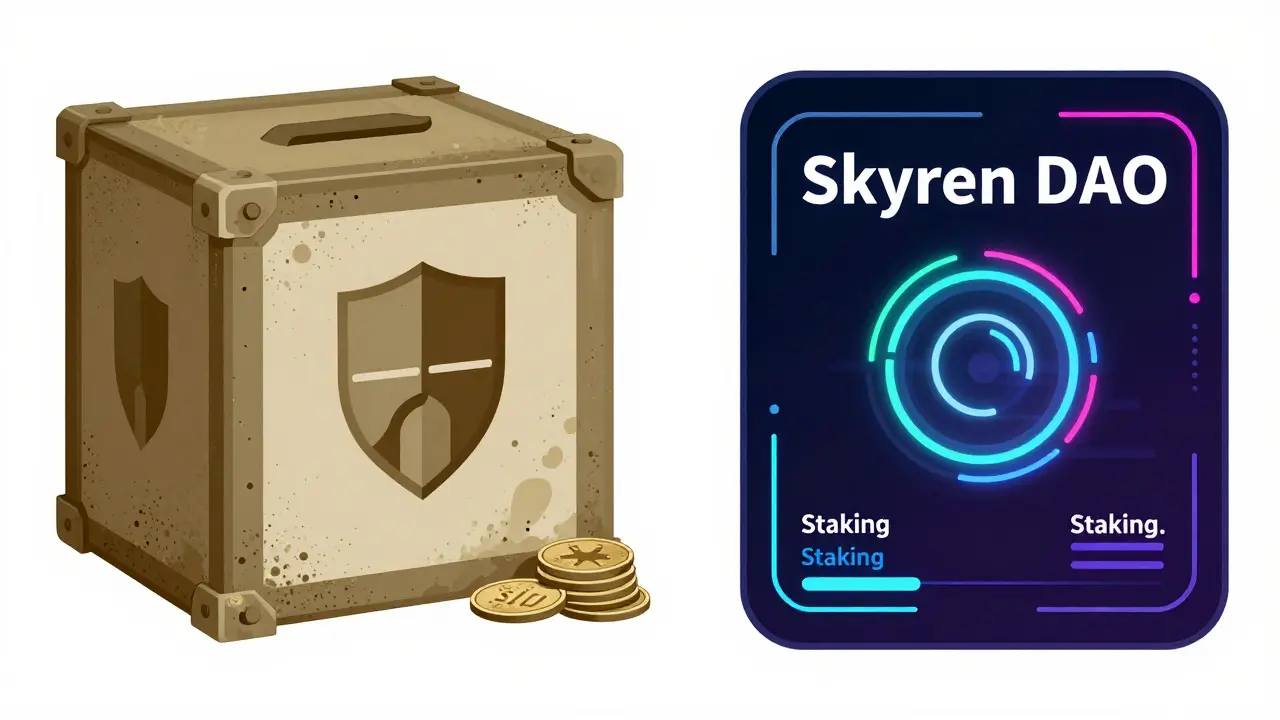
First, there is the Skyren DAO positions itself as the first airdrop collection DAO, utilizing AI to optimize airdrop farming across multiple blockchain projects. Unlike the static Shield DAO airdrop, Skyren operates as an ongoing service. It uses AI-driven governance to collect airdrops from various protocols and offers high-yield staking models. If you are looking for active airdrop opportunities in 2026, Skyren represents the modern evolution of this concept, whereas Shield DAO is a relic of 2021.
Second, be wary of the newer Shield Protocol announcements regarding gaming and NFTs. Recent roadmaps from 2024-2025 mention a "Shield SWAG Gaming Platform" and "NFT Mystery Boxes." However, research indicates this may be a separate entity focused on cross-blockchain 2FA (Two-Factor Authentication) security, replacing centralized servers from giants like Amazon and Google Cloud. Do not assume these new initiatives are connected to the original derivatives-focused Shield DAO that issued the SLD token. The naming similarity creates significant confusion, and mixing them up could lead to investing in the wrong asset class entirely.
Lessons Learned for Future Airdrops
The Shield DAO case study offers valuable lessons for navigating future distributions:
- Act Fast: Deadlines are strict. The five-week window in 2021 seemed generous, but technical hurdles ate into that time.
- Master Multi-Chain Ops: Knowing how to switch networks in MetaMask between Ethereum, BSC, and others is no longer optional. It’s a basic skill for DeFi participation.
- Verify Project Longevity: Just because a project gives away tokens doesn't mean the token will hold value. Check liquidity and exchange listings regularly.
- Distinguish Between Entities: Always check the whitepaper and team background. A shared name does not imply a shared history or tokenomics.
Next Steps for Investors
If you believe you are eligible for the Shield DAO airdrop and missed the deadline, your chances of recovery are slim unless the team has announced a retroactive redistribution, which has not been reported. Instead, focus your energy on current opportunities.
For those interested in airdrop farming, look into platforms like Skyren DAO that offer structured, ongoing yield generation. For derivatives traders, explore established protocols with clear liquidity and active development teams. Always do your own due diligence (DYOR). Check the latest audits, read the community forums, and never invest more than you can afford to lose based on a brand name alone.
Is the Shield DAO airdrop still open in 2026?
No, the original Shield DAO airdrop closed on September 12, 2021. Any unclaimed tokens were redistributed to the community pool after this date. There have been no official announcements extending this specific distribution.
What is the current value of the SLD token?
The SLD token currently shows zero circulation and total supply on major trackers like CoinMarketCap. This suggests the token is either delisted, burned, or inactive, meaning it likely has no liquid market value today.
How do I claim my Shield airdrop if I missed the deadline?
You likely cannot claim it. The claiming window ended in 2021. Unless the project team announces a retroactive claim portal (which is rare), the tokens are considered forfeited. Be cautious of third-party sites claiming to offer late claims, as these are often scams.
Is Skyren DAO related to Shield DAO?
No, they are distinct entities. Shield DAO was a one-time distribution event in 2021 for a derivatives protocol. Skyren DAO is a modern, ongoing platform that uses AI to farm airdrops from various other projects, offering staking yields rather than a single token drop.
Why did the Shield airdrop require switching to Binance Smart Chain?
While the core protocol was built on Ethereum, the claiming mechanism was deployed on Binance Smart Chain (BSC) to reduce gas fees for users. This required participants to manually configure their wallets to interact with the BSC network, which caused technical difficulties for some users.
Are the new Shield Protocol NFTs connected to the SLD token?
Probably not. Recent developments under the name "Shield Protocol" focus on 2FA security and gaming NFTs. These appear to be separate initiatives from the original derivatives-focused Shield DAO. Always verify the contract addresses and team details to ensure you aren't mixing up two different projects with similar names.