Tax-Free Long-Term Crypto Gains in Portugal: How to Keep 100% of Your Profits
Want to sell your Bitcoin or Ethereum in 2026 and pay zero in taxes? Portugal is one of the few places in the world where that’s still legal - if you play by the rules.
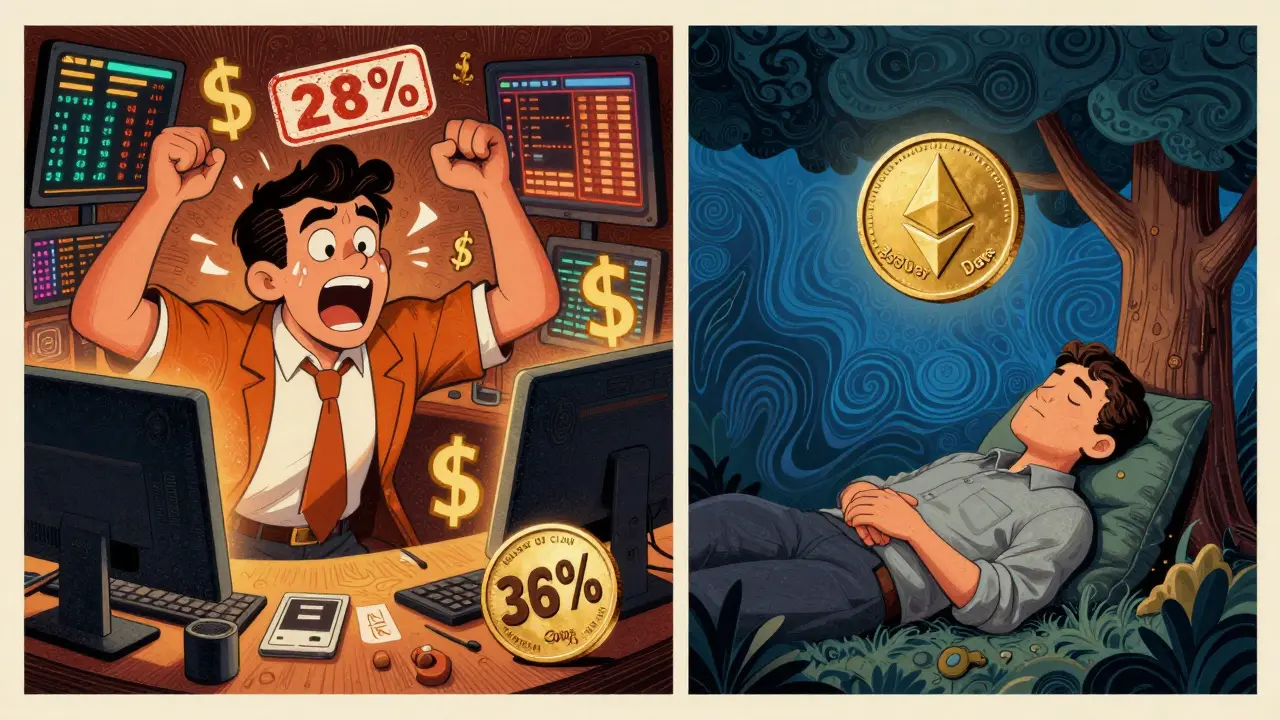
Back in 2023, Portugal changed its crypto tax law. It wasn’t a crackdown. It was a cleanup. They kept the best part - no tax on crypto you hold for more than a year - and added a flat 28% rate for short-term traders. The message was clear: we want investors, not day traders.
How Portugal’s Crypto Tax System Works
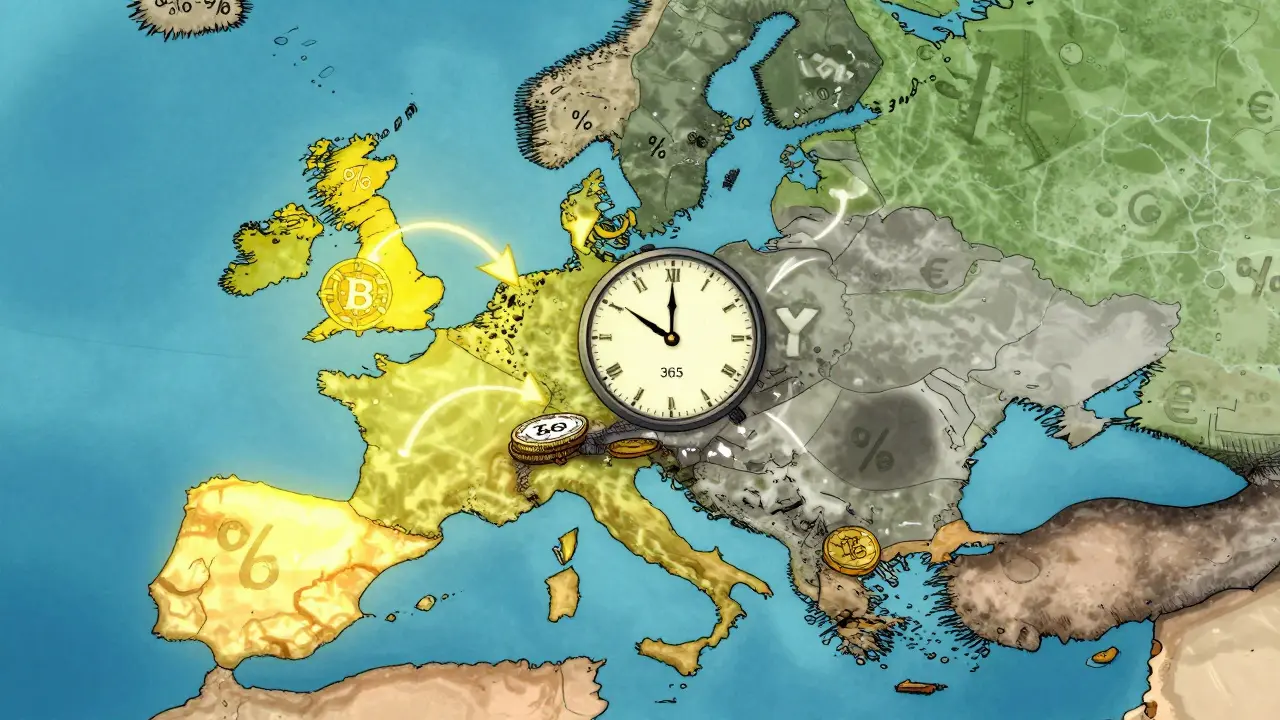
If you buy Bitcoin in January 2025 and sell it in March 2026, you owe nothing. That’s because you held it for 448 days - past the 365-day mark. Portugal doesn’t care how much profit you made. If it’s been over a year, it’s tax-free.
But if you bought that same Bitcoin in January 2025 and sold it in July 2025? That’s a 180-day hold. You owe 28% of your profit. No deductions. No brackets. Just 28% flat. And that’s actually better than most of Europe.
Portugal splits crypto income into three buckets:
- Category G (Capital Gains): Selling crypto after 365 days = tax-free. Selling before = 28% tax.
- Category E (Capital Income): Staking, lending, or earning interest on crypto = 28% flat tax, no matter how long you held it.
- Category B (Self-Employment Income): If you’re mining, running a node, or trading professionally as a business - your profits get taxed like regular income, from 14.5% up to 53%.
Here’s the key: you only pay tax when you cash out. Not when your Bitcoin goes up in value. Not when you swap ETH for SOL. Only when you turn crypto into euros, dollars, or use it to buy a car or a laptop.
What Doesn’t Count as a Taxable Event
Portugal makes it easy to avoid taxes - legally - if you’re smart.
Swapping one crypto for another? No tax. You can trade BTC for ETH, ETH for ADA, ADA for SOL - as many times as you want - and never trigger a tax event. The only time you owe anything is when you exit to fiat.
Also, NFTs aren’t treated like regular crypto. If you buy an NFT and sell it later, it’s not automatically taxed under the same rules. The Portuguese tax authority hasn’t fully clarified this yet, but most professionals treat NFT sales as separate - sometimes falling under capital gains, sometimes under business income, depending on intent.
And here’s something most people miss: if you hold crypto in a wallet outside the European Economic Area (EEA), the tax exemption might not apply. The law says your assets must be held within the EEA to qualify for the long-term exemption. That means if you’re using a U.S.-based exchange like Coinbase as your main wallet, you could be at risk.
How Portugal Compares to the Rest of Europe
Let’s say you made €50,000 in crypto profits in 2025. Here’s what you’d pay in different countries:
| Country | Short-Term Gain Rate | Long-Term Gain Rate | Staking/Lending Tax |
|---|---|---|---|
| Portugal | 28% | 0% | 28% |
| Germany | 28% | 0% | 28% |
| Spain | 19%-47% | 19%-47% | 19%-47% |
| France | 30% | 30% | 30% |
| Italy | 26% | 26% | 26% |
| Belgium | 33% | 33% | 33% |
Portugal and Germany are the only two EU countries that fully exempt long-term gains. Germany’s rules are nearly identical - one-year hold, no tax. But Portugal wins on simplicity. No complicated calculations. No exceptions for different asset types. Just 365 days. Done.
Spain and France? They tax everything. Even if you held Bitcoin for ten years. You still pay 47% in Spain if you’re a high earner. In France, it’s a flat 30% regardless of how long you waited. That’s why thousands of crypto investors moved from those countries to Portugal after 2023.
Who Benefits the Most?
Long-term holders. That’s it.
If you bought crypto in 2018 and never touched it until now? You owe nothing. Even if your portfolio is worth €2 million. You sell, you walk away with all of it.
If you’re a digital nomad? Portugal’s non-habitual resident (NHR) program ended in 2024, but that doesn’t matter for crypto. The long-term exemption stands on its own. You don’t need to be a resident to benefit - as long as you’re a tax resident somewhere else, you’re not taxed in Portugal on foreign income. But if you move your life to Portugal, you can legally keep 100% of your crypto gains after a year.
Professional traders? Not so much. If you’re buying and selling daily, you’ll pay 28% - and you might even be forced to declare your activity as a business under Category B. That means higher taxes, social security contributions, and accounting requirements.
So the strategy is simple: buy, hold, wait. Don’t trade. Don’t move funds around. Just sit on it. Let time do the work.
What You Need to Keep Track Of
Portugal doesn’t require you to file crypto-specific forms. But if the tax office ever asks - and they will if you’re audited - you need proof.
You must keep:
- Date and time of every purchase
- Amount paid (in EUR or equivalent)
- Wallet address or exchange used
- Date and price of every sale
- Proof of transfer if you moved crypto between wallets
Use software like CoinTracking, Koinly, or even a simple spreadsheet. The goal is to show the 365-day holding period for every asset you sold tax-free. If you can’t prove when you bought it, the tax authority will assume it was less than a year - and tax you at 28%.
Also, don’t forget: if you received crypto as a gift, inheritance, or airdrop, the acquisition date is the day you received it. Not the day the sender bought it.
Common Mistakes People Make
Here’s what goes wrong:
- Thinking “I’m not a resident, so I’m safe.” Portugal taxes residents on worldwide income. Non-residents are only taxed on Portuguese-sourced income. If you’re a U.S. citizen living in Portugal, you’re still subject to U.S. taxes - but Portugal won’t tax your long-term crypto gains.
- Trading crypto-to-crypto thinking it’s tax-free. It is. But if you later cash out, you still need to track the original purchase date. Don’t reset the clock by swapping.
- Using U.S.-based exchanges as your main wallet. If your crypto sits on Coinbase or Kraken (U.S. entities), and you’re a Portuguese tax resident, you might not qualify for the exemption. Move your assets to a non-EEA wallet if you want to be 100% safe.
- Ignoring staking rewards. These are taxed at 28% every time you receive them. Even if you hold them for 10 years, you pay tax when you get them - not when you sell.
Why Portugal Still Leads in Crypto-Friendly Taxation
Other countries are trying to copy this model. But none have nailed it like Portugal.
They didn’t ban crypto. They didn’t overcomplicate it. They didn’t raise taxes on long-term investors. They just said: if you’re here to build wealth, not flip coins, you’re welcome.
And that’s why in 2026, Portugal still attracts more crypto investors than any other EU country. Not because it’s cheap to live. Not because of the weather. But because it’s the only place where you can legally turn a $1,000 Bitcoin purchase into $1 million and keep every euro.
The EU’s MiCA regulation is coming into full force in 2026, but Portugal made sure its tax rules are grandfathered in. Even under MiCA, member states can set their own tax policies - and Portugal isn’t backing down.
What’s Next?
Will Portugal change this again? Unlikely.
The 2023 law was the result of years of debate. The government wanted to stop tax evasion by day traders, not scare off long-term investors. The results? Crypto-related tax filings in Portugal rose 40% in 2024 - but only because short-term traders started reporting. Long-term holders? They didn’t file at all. Because they didn’t owe anything.
This isn’t a loophole. It’s policy. And it’s here to stay.
If you’re holding crypto and thinking about where to live - or just where to sell - Portugal is still the easiest place in Europe to keep your gains.
Just remember: one year. No exceptions. No tricks. Just patience.
Do I need to be a Portuguese resident to get tax-free crypto gains?
No. The tax exemption applies to anyone who sells crypto after holding it for over 365 days, regardless of residency. However, if you’re a tax resident of Portugal, you’re only taxed on Portuguese-sourced income. Non-residents are not taxed on foreign crypto gains at all - but if you sell crypto while physically in Portugal, the tax exemption still applies as long as you meet the holding period.
Is crypto-to-crypto trading taxed in Portugal?
No. Swapping Bitcoin for Ethereum, or Solana for Cardano, is not a taxable event in Portugal. Taxes only trigger when you convert crypto into fiat currency (like Euros) or use it to buy goods or services. This makes Portugal one of the few countries where you can actively trade between cryptocurrencies without triggering any tax liability.
What happens if I hold crypto for 364 days and sell it?
You’ll owe 28% tax on your profit. Portugal’s rule is strict: it’s 365 full days or more. Even one day short means you fall into the short-term category. There’s no grace period, no rounding up. If you want the exemption, you must wait until the next calendar day after the one-year mark.
Are staking rewards taxed in Portugal?
Yes. Staking rewards, lending interest, and other passive crypto income are taxed at 28% as soon as you receive them - even if you hold them for 10 years. The long-term exemption only applies to capital gains from selling, not to income earned from staking or lending.
Can I use a U.S. exchange like Coinbase and still get the tax exemption?
Technically, no. Portugal’s tax exemption requires your crypto assets to be held within the European Economic Area (EEA). If your coins are stored on a U.S.-based exchange, you may not qualify for the exemption if audited. To be safe, transfer your holdings to a non-EEA wallet (like a hardware wallet or a European exchange) before selling after one year.
Do I need to file a tax return if I made no crypto gains?
If you didn’t sell any crypto or earn staking income, you don’t need to report it. Portugal doesn’t require you to file a return just because you own crypto. But if you sold any assets - even if you owe zero tax - it’s wise to include a note in your annual tax return to avoid future questions from the tax authority.
Is there a limit to how much crypto I can sell tax-free?
No. There’s no cap on the amount. Whether you made €10,000 or €10 million from crypto held over a year, you pay zero tax. Portugal’s exemption is based on holding period, not profit size. This makes it uniquely favorable for high-net-worth crypto investors.
Heather Crane
January 25, 2026 AT 05:56And yes, I’m a US citizen, but I’m not a resident there anymore. No one’s coming after my gains. Just patience and planning.
Julene Soria Marqués
January 26, 2026 AT 02:11Bonnie Sands
January 26, 2026 AT 09:59katie gibson
January 27, 2026 AT 22:20Ashok Sharma
January 28, 2026 AT 16:47Margaret Roberts
January 28, 2026 AT 18:14Jonny Lindva
January 30, 2026 AT 04:49Darrell Cole
February 1, 2026 AT 04:16Linda Prehn
February 2, 2026 AT 10:09Clark Dilworth
February 3, 2026 AT 19:33David Zinger
February 3, 2026 AT 22:05Catherine Hays
February 4, 2026 AT 19:25Nathan Drake
February 4, 2026 AT 22:59HARSHA NAVALKAR
February 5, 2026 AT 16:03Ryan Depew
February 6, 2026 AT 05:21Kevin Pivko
February 7, 2026 AT 21:17