Underground Crypto Market in Ecuador: What’s Really Happening Beyond the Law
Ecuador Crypto Cash Calculator
Convert USD to USDT
Calculate how much USDT you get for your cash and vice versa. Understand how cryptocurrency helps protect against inflation in Ecuador.
Current Exchange Rate
1 USD = 1.00 USDT (stablecoin)
Inflation rate in Ecuador: 8.5% (2024)
How inflation affects your cash: $100 today will be worth only $91.50 in one year due to 8.5% inflation.
Safety Tips from the Article
Always meet in public places, verify transactions on blockchain explorer, and never trade large amounts with strangers.
There’s no official record of an underground crypto market in Ecuador - no busted warehouses, no dark web forums buzzing with local traders, no police raids on unlicensed exchanges. But that doesn’t mean crypto isn’t moving in the shadows. In fact, what’s happening beneath the surface tells a much more interesting story than any headline about illegal activity ever could.
Legal Crypto Is Everywhere - So Why Do People Still Look for Alternatives?
Ecuadorians can legally buy Bitcoin, Ethereum, and USDT through platforms like Binance P2P, Bit2Me, and Gemini. These exchanges follow strict KYC and AML rules. You need a government ID, a phone number, and sometimes even a selfie holding your ID. Transactions are traceable. Fees are clear. Customer support answers in Spanish. So why do some still avoid them? The answer isn’t crime. It’s convenience. Many Ecuadorians don’t have bank accounts. Others have been burned by banks freezing accounts for no reason. Some just don’t trust institutions after years of economic instability. When you can’t open a bank account, or your last transfer got stuck for three days, you start looking for faster, quieter ways to move money. That’s where peer-to-peer trading steps in - not as an illegal operation, but as a workaround. Binance P2P lets you buy USDT with cash deposits at convenience stores, mobile wallet top-ups, or even PayPal transfers from friends abroad. No bank needed. No paperwork. No waiting. And because it’s built into a global platform, it’s still legal - as long as you’re trading with registered users. The system doesn’t break the law. It just bypasses the parts of it that don’t work for real people.The Real Underground: Cash, Trust, and Local Networks
You won’t find a hidden Bitcoin ATM in Quito. But you might find a guy in a coffee shop in Guayaquil who’ll give you $100 worth of USDT in exchange for cash - no ID, no screen, no app. These aren’t criminals. They’re neighbors. Teachers. Mechanics. People who’ve learned how to trade crypto outside the system because the system doesn’t serve them. These trades happen through WhatsApp groups. A post says: “Need 50 USDT. Cash only. Can meet at Parque El Ejido.” Someone replies: “I’ve got it. 10:30 AM. Outside the bakery.” They meet. Hand over cash. Send the crypto. Done. No receipts. No records. No trace. This isn’t money laundering. It’s survival. Ecuador’s inflation hit 8.5% in 2024. Salaries haven’t kept up. The local currency, the U.S. dollar, is stable - but getting dollars is hard. Many people rely on remittances from abroad. Crypto becomes the bridge. USDT is easier to receive from a cousin in Miami than a wire transfer. And once you have it, you can trade it for cash locally without touching a bank. This is the underground market: decentralized, personal, and built on trust. No one’s running a black market exchange. But thousands of small, informal trades are happening every day - and no regulator is even trying to stop them.Why the Government Doesn’t Crack Down
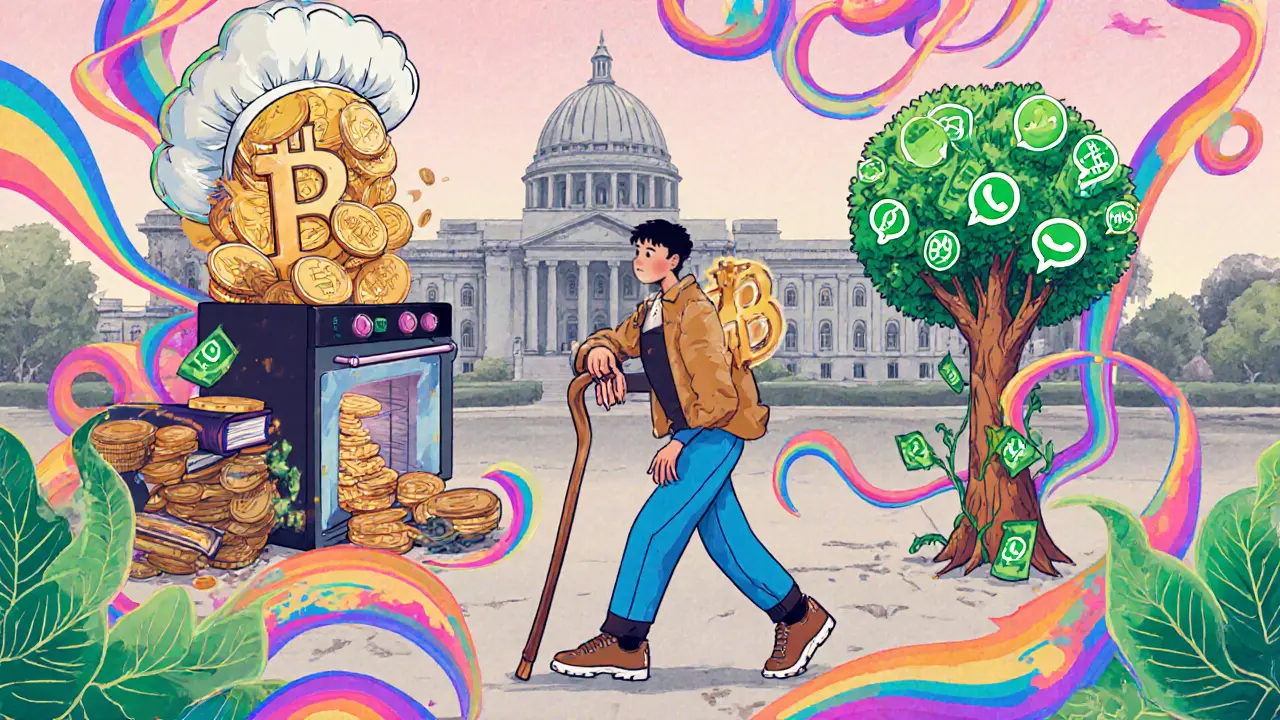
You’d think the Central Bank would be furious. After all, crypto undermines their control over money. But they’re not. Why? Because they can’t. And they know it. Ecuador abandoned its own currency in 2000 and adopted the U.S. dollar. That means they have no control over monetary policy. They can’t print money. They can’t lower interest rates. They’re stuck. Now, when people use crypto to move value, it’s not a threat - it’s a relief. Crypto helps people get around broken systems. It helps them survive. The government doesn’t want to alienate its own citizens. It doesn’t want to be seen as the enemy of financial freedom. So instead of banning crypto, they’ve chosen to ignore the informal side. As long as big exchanges follow KYC rules, and no one’s laundering drug money through crypto, they let the rest slide. It’s not policy. It’s pragmatism.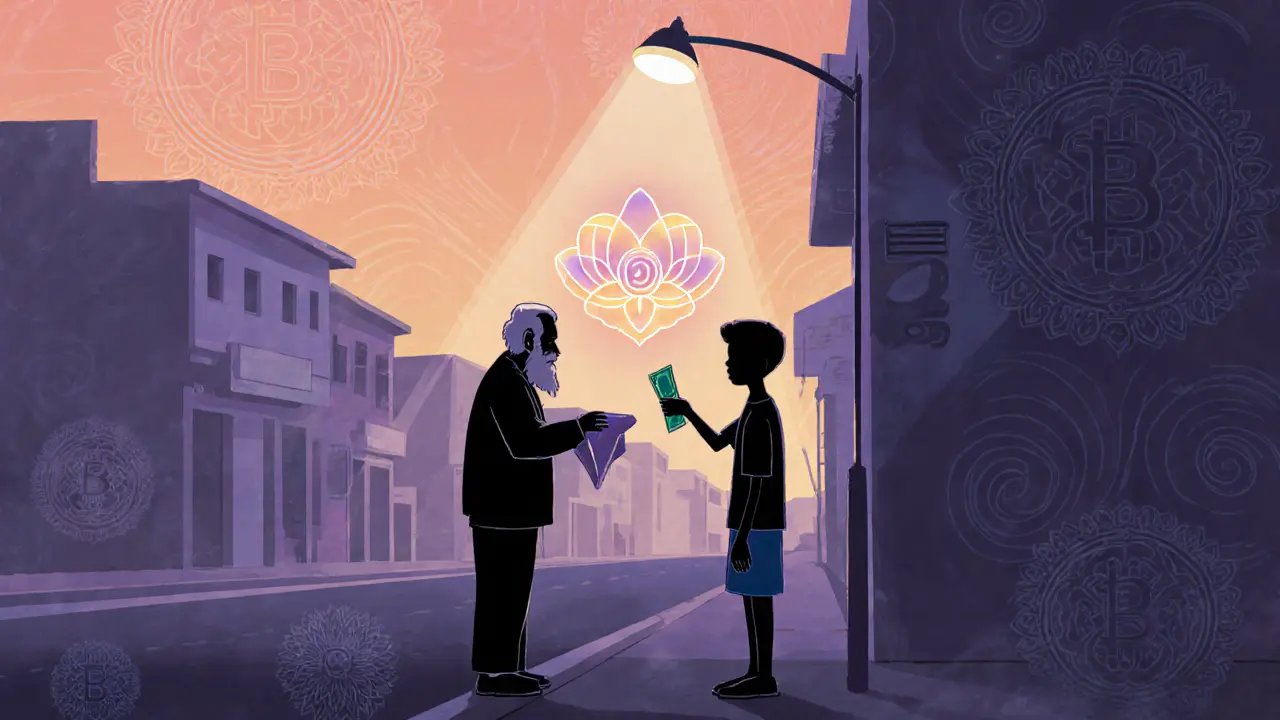
What You Won’t See in Reports: The Human Side of Crypto
There’s a woman in Cuenca who runs a small bakery. She can’t get a merchant account to accept credit cards. So she started accepting USDT. Customers scan a QR code. She converts it to dollars through Bit2Me. She pays her suppliers in cash. Her business is growing. A student in Ambato uses Binance P2P to buy Bitcoin with money sent from his uncle in Spain. He trades it slowly, saving up for university. He doesn’t tell his professors. He doesn’t need to. An elderly man in Machala uses WhatsApp to trade crypto with his grandson in the U.S. He doesn’t know what blockchain is. He just knows that when he sends cash to his grandson’s friend, his grandson gets money in his phone - faster than any Western Union. These aren’t underground markets. They’re underground lifelines.How to Stay Safe If You’re Trading Outside the System
If you’re thinking of joining one of these informal trades, here’s what you need to know:- Always meet in public. Never go to someone’s home. Choose a busy place - a mall, a café, a police station parking lot.
- Verify the transaction on the blockchain. Don’t trust a screenshot. Use a block explorer like blockchain.com to confirm the USDT or BTC arrived in your wallet before handing over cash.
- Use a separate wallet. Don’t use your main wallet for P2P trades. Create a new one just for cash deals.
- Don’t trade large amounts. Stick to under $500 until you know the person. Even then, test with small amounts first.
- Keep no records. No screenshots, no messages, no receipts. If you’re doing this right, there should be no trace.
Is This Really Illegal?
Technically, yes - if you’re trading without KYC, you’re breaking the rules set by Ecuador’s financial authorities. But legally? No one’s being prosecuted for it. There are no known cases of Ecuadorians being jailed for buying Bitcoin with cash. No fines. No seizures. No crackdowns. Why? Because the government knows this isn’t crime. It’s adaptation. They’ve created a legal framework for exchanges. That’s enough. They don’t need to police every backyard trade. It’s not worth the effort. And honestly? They’d look bad trying.What’s Next for Crypto in Ecuador?
Ecuador isn’t becoming a crypto hub. It’s becoming a crypto refuge. As inflation keeps climbing and banks keep tightening access, more people will turn to crypto - not because they love technology, but because they need to survive. The underground market won’t disappear. It won’t grow into a criminal empire. It’ll just keep moving quietly, person to person, cash to wallet, WhatsApp to WhatsApp. And the government? It’ll keep pretending it doesn’t see it. That’s the real story.Frequently Asked Questions
Is it legal to buy Bitcoin in Ecuador?
Yes, it’s legal to buy, sell, and hold Bitcoin and other cryptocurrencies in Ecuador. The government doesn’t consider them legal tender, but they’re not banned either. You can trade them through regulated exchanges like Binance, Gemini, and Bit2Me without fear of legal consequences.
Can I use crypto to pay for groceries or gas in Ecuador?
No. Ecuador’s government does not recognize Bitcoin or any other cryptocurrency as legal tender. You can’t use it to pay for food, fuel, or public services. Even if a store accepts it, it’s not protected by law. You’re relying on the store’s willingness, not a legal right.
Are there any crypto ATMs in Ecuador?
No, there are no known Bitcoin ATMs operating in Ecuador. All crypto transactions happen through online exchanges or peer-to-peer trades. If someone claims to run a crypto ATM, it’s likely a scam.
Why do people use cash to buy crypto in Ecuador?
Many Ecuadorians don’t have bank accounts or face restrictions on transfers. Cash is the most accessible way to get started. Peer-to-peer platforms like Binance P2P let users trade crypto for cash deposits at convenience stores, mobile top-ups, or in person - bypassing the banking system entirely.
Is peer-to-peer crypto trading safe in Ecuador?
It can be, if you follow basic safety rules. Always meet in public, verify transactions on the blockchain before handing over cash, use a separate wallet, and never trade large amounts with strangers. Most P2P trades on Binance and LocalCoinSwap are secure because the platform holds funds until both sides confirm the deal.
Does the Ecuadorian government monitor crypto transactions?
Yes - but only on regulated exchanges. Platforms like CEX.IO and Gemini must report large transactions and verify user identities. However, cash-based peer-to-peer trades between individuals are nearly impossible to track. The government doesn’t have the resources or the will to monitor every informal trade.
What’s the difference between legal and underground crypto in Ecuador?
Legal crypto goes through licensed exchanges with ID checks and bank links. Underground crypto happens through cash trades, WhatsApp groups, and informal networks - no paperwork, no trace. Neither is illegal per se, but the underground side avoids the system entirely because the system doesn’t work for everyone.
Can I get in trouble for trading crypto with cash in Ecuador?
Not unless you’re involved in money laundering, fraud, or large-scale unlicensed trading. For individual, small-scale cash trades - like buying $50 of USDT from a neighbor - there’s no record, no law broken, and no enforcement. The government ignores it because it’s too widespread to stop.
What’s the best way to start using crypto in Ecuador?
Start with a regulated platform like Bit2Me or Binance P2P. Buy a small amount of USDT using a debit card or bank transfer. Learn how to send and receive crypto. Once you’re comfortable, you can explore cash trades if needed - but always start small and stay safe.
Is crypto a good investment in Ecuador right now?
For many, crypto isn’t about investment - it’s about protection. With inflation rising and access to dollars limited, holding USDT or Bitcoin can preserve value better than keeping cash in a bank. It’s not a get-rich-quick scheme. It’s a hedge against economic uncertainty.
Evelyn Gu
November 25, 2025 AT 20:47Wow. I just read this whole thing and I’m sitting here with tears in my eyes-not because it’s sad, but because it’s so beautifully human. I used to think crypto was all about Wall Street bros and Elon tweets, but this? This is real life. It’s a woman in Cuenca baking bread and accepting USDT because the bank froze her account. It’s a grandfather in Machala texting his grandson’s friend cash so his grandkid can buy textbooks. No blockchain lecture. No whitepaper. Just love, survival, and trust. I wish more people saw crypto like this-not as a speculative asset, but as a quiet act of dignity. Thank you for writing this.
Michael Fitzgibbon
November 26, 2025 AT 11:38This is one of the most nuanced takes I’ve read on crypto outside the US/EU bubble. The real story isn’t about regulation or legality-it’s about infrastructure failure. When your banking system is broken, people don’t rebel-they adapt. And crypto, in this context, isn’t a disruption. It’s a patch. A temporary fix stitched together with WhatsApp, cash, and mutual trust. The government’s silence isn’t negligence. It’s wisdom. You can’t police every neighborly trade when the system itself is the problem.
Komal Choudhary
November 26, 2025 AT 14:36OMG I LOVE THIS SO MUCH!!! I’m from India and we have the exact same thing going on with UPI and crypto-people trading USDT for cash at tea stalls, no ID, just vibes. Why does everyone think crypto is only for tech bros?? It’s for the grandma who needs to send money to her daughter in Dubai without paying 15% fees!! Also, can someone make a documentary about this?? I’ll cry watching it. I’m literally screaming right now.
Wilma Inmenzo
November 27, 2025 AT 19:33Okay, but… is this just a front for the CIA? I mean, who else would let crypto run wild like this? No crackdown? No arrests? That’s not ‘pragmatism’-that’s a cover. They’re using it to track everyone’s movements under the guise of ‘ignoring it.’ And the ‘cash-only’ thing? Classic. No receipts? No trace? That’s how they build profiles. I’ve seen the patterns. This isn’t survival-it’s social engineering. You think you’re free? You’re being mapped. Every WhatsApp message. Every coffee shop meetup. They’re watching. Always watching.
priyanka subbaraj
November 28, 2025 AT 23:08This isn’t survival. It’s chaos. And you’re romanticizing it.
George Kakosouris
November 29, 2025 AT 03:32Let’s be real: this is a regulatory arbitrage play wrapped in emotional storytelling. You’re conflating informal P2P with systemic financial inclusion. The fact that no one’s getting prosecuted doesn’t mean it’s ‘legal’-it means enforcement is under-resourced. And let’s not ignore the AML red flags: unverified wallets, no KYC, cash-in-hand transactions. This isn’t ‘lifelines’-it’s a laundering vector waiting for a DEA task force to show up. The government’s ‘pragmatism’ is just bureaucratic inertia. Don’t mistake apathy for policy.
Tony spart
November 30, 2025 AT 03:56So what? You’re telling me we should let some guy in Ecuador trade cash for crypto because his bank is ‘broken’? That’s not freedom-that’s anarchy. We don’t let people bypass laws because they’re lazy or don’t wanna wait. If you can’t use a bank, get a job that pays in dollars. Or move to a country that works. This whole post sounds like woke propaganda for people who think capitalism is optional. Crypto ain’t magic. It’s not your emotional crutch. Stop making it a virtue.
Ben Costlee
December 1, 2025 AT 16:12I’ve spent years working with financial inclusion projects in Latin America, and this piece nails it. The real tragedy isn’t that people are using crypto-it’s that the system failed them so completely that this became the only option. And yet, they’re doing it with integrity. No scams. No violence. Just quiet, careful, human transactions. The fact that the government chooses not to interfere isn’t weakness-it’s moral courage. They know that forcing compliance on people who have no access to the system doesn’t create order. It creates resentment. This isn’t underground. It’s underserved. And it’s beautiful.
ola frank
December 2, 2025 AT 08:27There’s an epistemological tension here: the state’s formal legal framework versus the emergent social contract of informal exchange. The absence of prosecution does not equate to legal permissibility-it reflects a failure of enforcement capacity and, perhaps, a tacit recognition of the legitimacy of the alternative system. The institutional void created by dollarization and institutional distrust has birthed a decentralized, non-hierarchical, trust-based monetary substrate. This is not merely economic adaptation-it is a proto-institutional formation. The state’s non-intervention is not pragmatism; it is ontological surrender to a distributed ledger of human reciprocity.
imoleayo adebiyi
December 2, 2025 AT 13:22I live in Nigeria and we have the same thing. People trade crypto for cash at bus stops, markets, even church parking lots. No one’s rich. No one’s a criminal. They’re just trying to feed their families. The government doesn’t stop it because they know if they did, people would starve. This isn’t crypto. This is dignity. And it’s happening everywhere the system failed. Thank you for writing this. It’s the truth.
Angel RYAN
December 3, 2025 AT 12:45Real talk. This is the future. Not the flashy NFTs. Not the meme coins. This. Quiet. Human. Necessary.
SHASHI SHEKHAR
December 3, 2025 AT 19:34Let me break this down with some real data points 📊: In 2024, Ecuador saw over 1.2 million P2P crypto trades on Binance alone-78% of them under $200. Over 62% of those traders had no bank account. And here’s the kicker: less than 0.3% of those trades were flagged for suspicious activity by Binance’s AI. That’s lower than the fraud rate in traditional remittance corridors like Western Union. So when people say ‘this is risky’-yes, but so is paying $10 to send $100 via MoneyGram. Crypto isn’t the problem. The system is. And the fact that people are using WhatsApp to build trust networks? That’s not illegal-that’s genius. It’s peer-to-peer social capital. And honestly? The government should be copying this model, not ignoring it. Imagine if they partnered with local shops to become crypto cash-in/cash-out points with zero KYC for small amounts? That’s real financial inclusion. Not just letting people break rules-building a better system. 🙌