What is Balanced Dollar (bnUSD) Crypto Coin? A Clear Guide to the Cross-Chain Stablecoin
bnUSD Collateral Calculator
Calculate Your bnUSD Borrowing Requirements
Based on the 128% collateralization ratio required by the bnUSD protocol.
Enter your borrowing details to see requirements
Important: bnUSD requires 128% collateralization. This means you must maintain at least 128% of your borrowed amount in collateral value. If your collateral value drops below 128%, your position may be liquidated.
bnUSD is a decentralized stablecoin designed to hold a steady $1 value - but it doesn’t rely on banks, cash reserves, or corporate trust. Instead, it’s backed entirely by crypto assets locked in smart contracts. Unlike USDT or USDC, which are controlled by companies holding fiat money in banks, bnUSD operates on-chain, using over-collateralized loans to create its value. It’s not just another stablecoin. It’s built for users who want stability without giving up decentralization - and it works across 10 different blockchains.
How bnUSD Keeps Its $1 Value
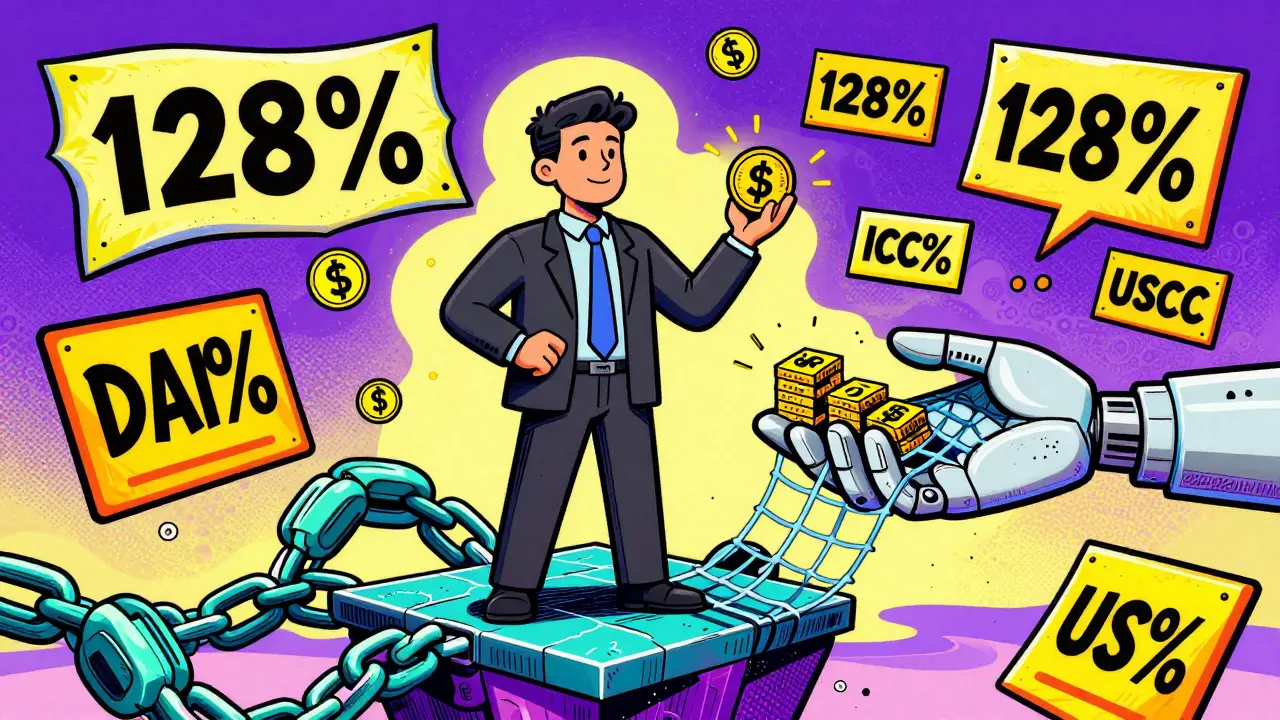
Every $1 of bnUSD you borrow requires at least $1.28 worth of crypto as collateral. That 128% ratio is the backbone of its stability. If the value of your collateral drops too low - say, because Bitcoin or ICX crashes - the system automatically sells part of your collateral to cover the debt. This prevents the entire network from going underwater.
There’s also a Stability Fund that holds extra liquidity. If bnUSD dips below $1, users can swap other approved stablecoins (like USDC or DAI) for bnUSD at a 1:1 rate. If it rises above $1, users can burn bnUSD to get back their collateral. These mechanisms keep the price tightly anchored, even during market swings.
The protocol charges a 0.2% fee just to mint bnUSD, and a 2% annual interest rate on the borrowed amount. That’s lower than most DeFi lending platforms. But you’re not just borrowing - you’re also participating in a system that protects itself.
What You Can Use as Collateral
You can’t just throw any crypto into the system. bnUSD accepts specific assets, mostly native to the ICON ecosystem and tokenized real-world assets. The main ones are:
- ICX (ICON’s native token)
- Tokenized US Treasury bills (yes, actual government bonds on-chain)
- Other approved wrapped tokens like wBTC or wETH
This mix is unusual. Most DeFi stablecoins only take crypto like ETH or BTC. bnUSD includes real-world assets - something even MakerDAO’s DAI avoids. That makes it more resilient during crypto crashes, because US Treasuries don’t swing like Bitcoin. But it also opens up regulatory questions. The EU’s MiCA rules now require clearer disclosures for any stablecoin using real-world assets, and bnUSD is right in that crosshairs.
How bnUSD Works Across Blockchains
Here’s where bnUSD stands out. Most stablecoins are stuck on one chain - USDC on Ethereum, USDT on Tron. bnUSD works on 10 blockchains at once. You can mint it on ICON, use it on Binance Smart Chain, pay for a DeFi loan on Polygon, and withdraw it on Arbitrum - all without bridges or wrapped tokens. The protocol handles the cross-chain syncing automatically.
This isn’t just convenient. It’s powerful. If you’re active in multiple DeFi ecosystems, you don’t need to swap between stablecoins. You can hold one asset - bnUSD - and move it freely. That’s why adoption is growing fastest among users who trade across chains. According to Balanced Network’s data, 68% of bnUSD users come from the ICON ecosystem, but the rest are cross-chain DeFi traders looking for a single stable asset that moves with them.
How to Earn With bnUSD (Savings Rate)
It’s not just a borrowing tool. You can also deposit idle bnUSD into the Savings Rate pool and earn rewards. These come in three forms:
- BALN tokens (the network’s governance token)
- More bnUSD
- sICX tokens (staked ICX that earns yield)
The APY changes based on demand and protocol parameters. Sometimes it’s 5%, sometimes 12%. It’s not guaranteed, but it’s one of the few ways to earn yield on a stablecoin without locking up your funds in risky liquidity pools. Users who hold bnUSD long-term often use this feature to turn their stablecoin into a passive income tool.
How bnUSD Compares to Other Stablecoins
Let’s break it down:
| Feature | bnUSD | USDC | DAI | UST (defunct) |
|---|---|---|---|---|
| Backing | Crypto + tokenized Treasuries | US dollars in banks | Crypto (mostly ETH) | Algorithmic (no collateral) |
| Collateral Ratio | 128% | 100% | 150%+ | 0% |
| Blockchains Supported | 10+ | 5-7 | 3-4 | 1 (Ethereum) |
| Centralized? | No | Yes (Circle) | No | No |
| Interest Rate (borrowing) | 2% annually | N/A | Varies (0.5%-5%) | N/A |
bnUSD sits between USDC’s simplicity and DAI’s complexity. It’s more decentralized than USDC, more flexible than DAI, and far safer than UST ever was. But it’s not perfect. The collateral requirements mean you need to hold more crypto than you borrow. And if the market tanks hard, liquidations can happen fast.
Who Uses bnUSD - And Why
Most users fall into two groups:
- ICON ecosystem users: They use bnUSD to leverage their ICX holdings without selling. If ICX goes up, they profit. If it drops, they risk liquidation - but they avoid paying capital gains taxes by not selling.
- Cross-chain DeFi traders: They use bnUSD as a stable bridge between chains. No need to swap between USDT, USDC, and DAI. Just use bnUSD everywhere.
Reddit user u/CryptoHodler87 said: "Used bnUSD to leverage my ICX position during the ICON mainnet upgrade - the 2% rate was significantly better than other lending options, but the liquidation threshold caught me off guard during a flash crash." That’s the trade-off: low fees and flexibility, but you need to watch your collateral like a hawk.
On MEXC, 27% of negative reviews mention confusing liquidation warnings. The interface doesn’t always alert you early enough. The fix? Set your own price alerts at 140-150% collateralization. That gives you breathing room before the system acts.

Is bnUSD Safe?
It’s safer than algorithmic stablecoins. It’s less centralized than USDC. But it’s not risk-free.
Here’s what could go wrong:
- Collateral crash: If ICX or tokenized Treasuries lose value fast, mass liquidations could spike. That happened in 2022 with DAI. bnUSD survived, but it was close.
- Regulatory pressure: The EU’s MiCA rules could force changes to how tokenized assets are used. If the protocol can’t prove its Treasuries are real, it might have to drop them.
- Low adoption: With only $85 million in total supply, bnUSD is tiny compared to USDC’s $30 billion. That means less liquidity and more slippage when swapping.
But here’s what’s working:
- It’s maintained its peg through multiple crypto crashes since 2022.
- Its 128% collateral ratio is stricter than DAI’s average.
- It’s expanding to 13 blockchains by mid-2026.
Analysts at Gartner rate its sustainability as "medium-high" - not perfect, but solid for a niche product. If the ICON ecosystem grows, bnUSD grows with it.
How to Get Started With bnUSD
Here’s how to use it in 4 steps:
- Connect a wallet: Use ICONex, MetaMask, or Binance Web3 Wallet. Make sure it supports the chain you’re on.
- Deposit collateral: Send ICX, wBTC, or tokenized Treasuries to the Balanced Network contract.
- Mint bnUSD: Borrow up to 78% of your collateral’s value (since 128% is required, you can’t borrow more than 100/1.28 = ~78%).
- Use or earn: Spend it on DeFi platforms, or deposit it into the Savings Rate to earn BALN and sICX.
You’ll need to understand gas fees across chains. Each transaction costs something - and fees vary. Always check the network before you act.
Most users say it takes 2-3 hours to get comfortable. The guides on the Savings Rate are excellent. The ones on the Stability Fund? Not so much. If you’re confused, join the official Discord. There are 12,500 active members and weekly AMAs with developers.
What’s Next for bnUSD?
In November 2025, the protocol raised its minimum collateral ratio from 125% to 128% - a direct response to market volatility. That’s a sign the team is proactive.
By mid-2026, it plans to add 3 more blockchains, bringing the total to 13. That’s a big move. If it works, bnUSD could become the go-to cross-chain stablecoin for DeFi power users.
But it’s still early. Only 0.5% of commercial stablecoin usage comes from bnUSD. No big institutions are using it yet. That could change if the tokenized asset model clears regulatory hurdles.
Right now, bnUSD is for crypto-native users who want decentralization, cross-chain freedom, and low borrowing costs - and who are willing to manage risk themselves. It’s not for beginners. But if you’re already in DeFi, it’s one of the most interesting stablecoins on the market.
Is bnUSD really worth $1?
As of December 2025, bnUSD trades at around $1.10 - slightly above its peg. This is normal. The protocol’s Stability Fund and arbitrage mechanisms work to bring it back to $1. It’s maintained its peg through multiple market cycles since 2022, even during crypto crashes. The small premium reflects demand and liquidity constraints, not instability.
Can I lose money using bnUSD?
Yes. If your collateral value drops below 128%, your position gets liquidated. You’ll lose part of your deposited assets to cover the debt. This isn’t a bug - it’s how the system protects itself. Always set price alerts at 140-150% collateralization to avoid surprise liquidations.
Is bnUSD better than USDC?
It depends. If you want simplicity and trust in a company, USDC is easier. If you want decentralization, cross-chain use, and no bank dependence, bnUSD is better. But bnUSD requires more effort - you need to manage collateral, understand liquidations, and pay gas fees on multiple chains. For most people, USDC is safer. For DeFi users, bnUSD is more powerful.
Does bnUSD earn interest?
Yes. You can deposit idle bnUSD into the Savings Rate pool and earn rewards in BALN tokens, additional bnUSD, and sICX. The APY changes based on demand and protocol rules. It’s not fixed, but it’s one of the few ways to earn yield on a stablecoin without risking your principal in volatile pools.
Is bnUSD regulated?
It operates in a gray area. Because it uses tokenized US Treasury bills, it falls under evolving crypto asset regulations like the EU’s MiCA. The protocol is required to disclose how those assets are held and verified. It’s not regulated like a bank, but it’s under more scrutiny than pure crypto-backed stablecoins. Users should assume future rules may change how bnUSD works.
Can I buy bnUSD directly on Coinbase?
No. bnUSD isn’t listed on Coinbase, Kraken, or Binance’s main spot market. You can trade it on decentralized exchanges like Balanced Swap or on smaller centralized exchanges like LBank and MEXC. To get it, you usually need to mint it by locking collateral in the Balanced Network protocol.
Andy Walton
December 12, 2025 AT 09:45Kim Throne
December 14, 2025 AT 07:34Ian Norton
December 14, 2025 AT 13:44Sue Gallaher
December 15, 2025 AT 22:05Stanley Machuki
December 17, 2025 AT 03:19Jessica Eacker
December 19, 2025 AT 00:49Candace Murangi
December 19, 2025 AT 17:03John Sebastian
December 20, 2025 AT 00:13Patricia Whitaker
December 21, 2025 AT 00:16Sarah Luttrell
December 21, 2025 AT 03:19Kathleen Sudborough
December 23, 2025 AT 02:43Taylor Farano
December 25, 2025 AT 00:09amar zeid
December 26, 2025 AT 18:01Alex Warren
December 27, 2025 AT 02:40Claire Zapanta
December 27, 2025 AT 08:00Jeremy Eugene
December 28, 2025 AT 17:35