What is BEPE (BEPE) crypto coin? A real look at the Blast L2 meme coin
BEPE, short for Blast Pepe, isn’t another Dogecoin copy. It’s a meme coin built directly on the Blast Layer 2 network - and it was designed to be different from day one. No team wallets. No presale. No hidden tokens. Just 100 billion tokens, all distributed to the public. If you’ve ever been burned by a crypto project that vanished after launch, BEPE’s approach might sound too good to be true. But here’s the catch: it’s also one of the riskiest bets in crypto right now.
How BEPE works - and why it’s tied to Blast
BEPE runs on Blast, a Layer 2 network built on top of Ethereum. That means transactions are faster and cheaper than on Ethereum’s main chain. But Blast isn’t just about speed - it’s also built to give users automatic yield on ETH deposits. BEPE taps into that. If you hold BEPE, you earn passive rewards just by keeping it in your wallet. No staking. No locking. No clicking buttons. The rewards come from Blast’s native yield engine, which shares earnings with BEPE holders.
This is what sets BEPE apart from other meme coins. Dogecoin? It’s on its own blockchain. Shiba Inu? It’s on Ethereum. BEPE lives inside Blast, and that’s its only real advantage. It’s not a payment system. It’s not a DeFi protocol. It’s a meme coin that piggybacks on Blast’s infrastructure to offer something no other meme coin can: built-in staking rewards.
The numbers don’t lie - BEPE is tiny
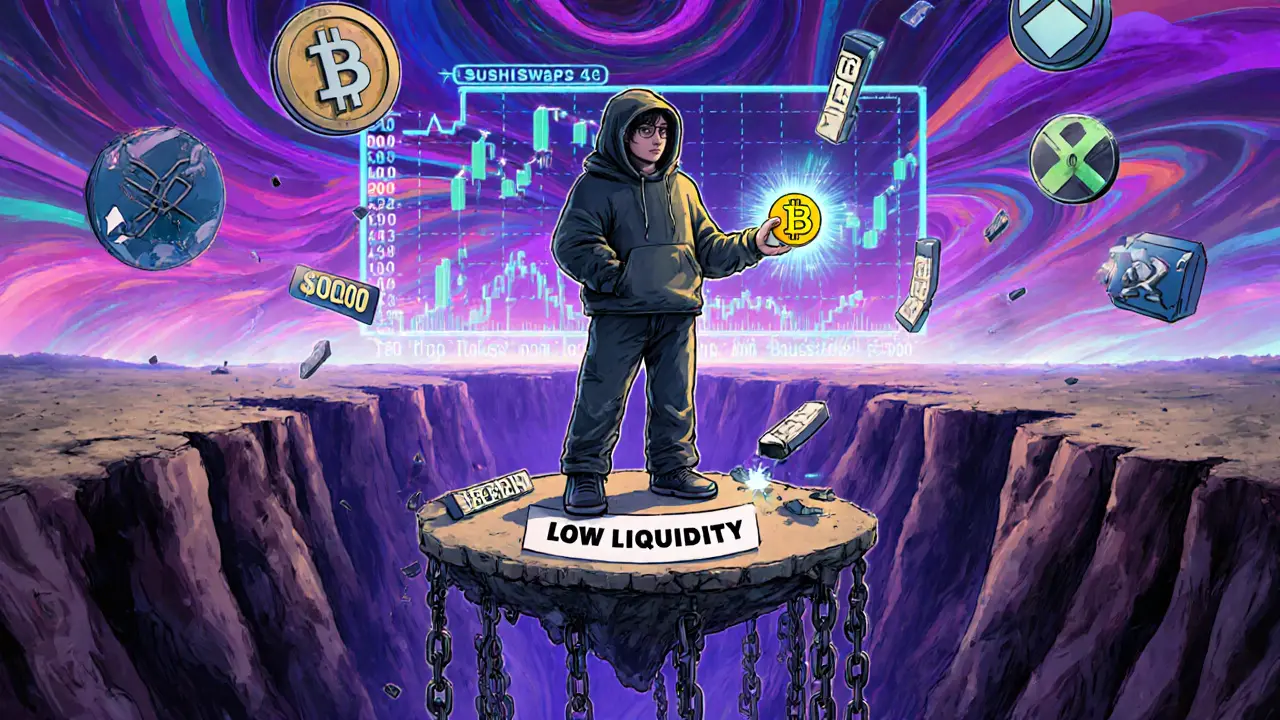
As of late 2025, BEPE’s market cap sits around $360,000. That’s less than the cost of a modest used car. Compare that to Dogecoin’s $13 billion or Shiba Inu’s $11 billion. BEPE is a micro-cap coin, meaning it’s extremely volatile and easy to manipulate. Its 24-hour trading volume? Just $1,600. That means if someone sells 10 million BEPE tokens, the price can crash 30% in seconds. Many users report being unable to sell without dragging the price down - a classic sign of low liquidity.
There are 184,012 unique holders, but 78% of them own less than $50 worth. That’s not a sign of mass adoption - it’s a sign of speculative noise. Most people bought in hoping for a quick pump, not long-term value. The top 10 wallets hold about 15.7% of all BEPE. That’s not a red flag by itself, but when combined with zero centralized exchange listings, it’s a warning.
No audits. No team. No support.
BEPE’s biggest strength is also its biggest weakness: anonymity. The developers are anonymous. There’s no official website. No customer service. No Discord team. Everything happens in Telegram and Twitter. The contract address is public (0xB582...bF9b1a), but no security audit from CertiK, SlowMist, or any reputable firm has been published. That means if there’s a backdoor, a hidden function, or a rug pull hidden in the code - you won’t know until it’s too late.
And it’s not just about trust. It’s about usability. To use BEPE, you need to manually add the Blast network to your MetaMask wallet. You need to know how to add custom RPCs (Chain ID: 81457). You need to understand gas fees, slippage, and decentralized exchanges like SushiSwap and Uniswap. Most retail investors don’t. A CryptoSlate survey found 37% of new users fail their first transaction because they set the gas fee wrong. And there’s no one to call when it goes wrong.
Community love vs. real-world pain
On Reddit and Telegram, BEPE fans call it “the OG memecoin for Blast degens.” They love the idea of a fair launch. They post memes. They celebrate NFT drops. One user claimed to earn 0.5% daily just by holding BEPE - a number that sounds incredible, but is hard to verify independently.
But behind the memes, the reality is harsh. On SushiSwap forums, users complain about 15% slippage on small trades. On Twitter, traders say they lost thousands trying to exit a position. CryptoMood’s sentiment analysis shows 62% of Telegram users are positive - but the other 38% are screaming about being trapped. The coin’s all-time high was $0.02 in December 2024. Today? Around $0.0004. That’s a 98% drop. People who bought at the peak are underwater by nearly 100%.
Is BEPE worth it? Only if you know what you’re doing
BEPE isn’t for investors. It’s for speculators. If you’re looking for long-term growth, stability, or utility - look elsewhere. But if you’re the type of person who enjoys riding meme coin waves, understands the risks, and has money you can afford to lose, BEPE might be a fun gamble.
Here’s the reality check:
- It has no real utility beyond speculation.
- It’s not listed on Coinbase, Binance, or Kraken.
- It’s not audited.
- Its liquidity is dangerously thin.
- It’s competing with 17 other meme coins on Blast.
- Analysts say fewer than 5% of coins like this survive two years.
BEPE’s only chance of survival is if Blast becomes a dominant Layer 2 network - and even then, it’s just one of dozens of meme coins trying to ride that wave. Most will vanish. A few might get lucky. BEPE? It’s got the right launch model, but zero safety net.
How to buy BEPE (if you still want to)
If you’re set on trying BEPE, here’s how to do it - and what to watch out for:
- Get a Web3 wallet like MetaMask.
- Manually add the Blast network: Chain ID 81457, RPC URL https://blast.io, symbol BLAST.
- Buy ETH on a centralized exchange (like Coinbase) and send it to your MetaMask.
- Connect your wallet to SushiSwap or Uniswap on the Blast network.
- Search for BEPE using its contract address: 0xB582...bF9b1a.
- Set slippage to 8-12% - lower than that and your trade will likely fail.
- Use a gas fee of 1.5x the base fee to avoid failed transactions.
And never invest more than you’re willing to lose. This isn’t a savings account. It’s a lottery ticket.
What’s next for BEPE?
The anonymous team says they’re planning an NFT ecosystem and a launchpad for other projects in early 2025. No details. No timelines. No code. That’s typical for meme coins. Most never deliver. But if they do - and if Blast keeps growing - BEPE could see another pump. But even then, it won’t become a serious asset. It’ll remain a speculative meme with a clever twist: automated yield.
BEPE isn’t the future of crypto. It’s a symptom of it - a wild, chaotic, high-risk experiment in decentralized culture. It’s fun. It’s risky. And if you’re not careful, it can cost you everything.
Is BEPE a good investment?
No, BEPE is not a good investment in the traditional sense. It has no utility, no audit, no team, and extremely low liquidity. It’s a speculative meme coin with high volatility and a near-zero chance of long-term survival. Only risk-tolerant traders who understand crypto’s worst-case scenarios should consider it - and even then, only with money they can afford to lose entirely.
Can I buy BEPE on Coinbase or Binance?
No, BEPE is not listed on any major centralized exchange like Coinbase, Binance, Kraken, or Gemini. You can only buy it on decentralized exchanges (DEXs) like SushiSwap and Uniswap, and only on the Blast Layer 2 network. This makes it inaccessible to most retail investors who prefer simple, one-click buying.
How does BEPE earn staking rewards?
BEPE doesn’t require you to stake manually. Because it’s built on Blast, which automatically generates yield from ETH deposits, BEPE holders earn a share of that yield just by holding the token in their wallet. It’s not a feature of BEPE itself - it’s a side effect of Blast’s design. You don’t need to lock your tokens or click anything. The rewards are distributed automatically.
Is BEPE safe to use?
No, BEPE is not considered safe by security standards. It has never been audited by any reputable firm like CertiK or SlowMist. The contract is open-source, but without an audit, there’s no guarantee it’s free from hidden functions or exit scams. The anonymous team adds another layer of risk - there’s no accountability if something goes wrong.
Why is BEPE’s price so volatile?
BEPE’s price swings because of its tiny market cap and low trading volume. With only $1,600 traded in 24 hours, even a small sell order can crash the price. It’s also driven by hype cycles on social media - a single tweet or meme can spike interest, but when the trend fades, the price collapses. This is typical for micro-cap meme coins, but BEPE’s lack of liquidity makes it especially dangerous.
Can I sell BEPE easily?
Not easily. Due to extremely thin order books, selling even a small amount of BEPE often causes the price to drop dramatically - sometimes by 20-30% in a single trade. Many users report being unable to exit their positions without massive losses. This is why BEPE is often called a “trap” for retail traders who buy in during a pump but can’t sell when they want to.
What’s the difference between BEPE and Dogecoin?
Dogecoin runs on its own blockchain and has no built-in yield. BEPE runs on Blast Layer 2 and earns passive rewards from Blast’s native ETH staking system. Dogecoin is widely accepted and has massive liquidity. BEPE is barely traded, only available on DEXs, and has almost no real-world use. Dogecoin is a cultural phenomenon. BEPE is a niche experiment for a small group of Blast users.
Is BEPE related to Pepe the Frog?
Yes. BEPE stands for Blast Pepe, and its branding is based on the Pepe the Frog meme, which is common in crypto culture. The project uses Pepe imagery in its social media, NFTs, and community events. But unlike other Pepe-based coins, BEPE’s only real innovation is its integration with Blast’s yield system - not the meme itself.
BEPE is not a cryptocurrency you buy to hold. It’s one you trade - if you dare. And even then, you’re playing a game where the house always has the edge.
Maggie Harrison
November 30, 2025 AT 01:33Britney Power
November 30, 2025 AT 13:35Lawal Ayomide
December 1, 2025 AT 02:53justin allen
December 2, 2025 AT 12:26samuel goodge
December 3, 2025 AT 11:05Katherine Alva
December 5, 2025 AT 02:22Nelia Mcquiston
December 5, 2025 AT 15:00Mark Stoehr
December 7, 2025 AT 07:36Shari Heglin
December 7, 2025 AT 11:08Reggie Herbert
December 8, 2025 AT 05:08Murray Dejarnette
December 8, 2025 AT 10:49Sarah Locke
December 8, 2025 AT 14:49Mani Kumar
December 9, 2025 AT 12:19Tatiana Rodriguez
December 11, 2025 AT 09:38