What is PolySwarm (NCT)? A Deep Dive into the Decentralized Cybersecurity Token
Imagine a world where catching malware isn't just about buying expensive software from a big corporation. Instead, it’s a global competition where independent security experts race to identify threats, earning crypto rewards for their speed and accuracy. That is exactly what PolySwarm is. It is not your typical cryptocurrency that relies on hype or meme culture. It is a functional tool built for the cybersecurity industry, designed to solve one of the biggest problems in tech: detecting new, unknown threats before they cause damage.
If you have stumbled upon the ticker symbol NCT (Nectar), you are likely wondering if this is a legitimate project or just another speculative coin. The short answer is that PolySwarm has real utility. It operates as a decentralized threat intelligence marketplace. But does that make it a good investment or a useful tool? Let's break down how it works, who uses it, and what the data says about its performance.
How PolySwarm Actually Works
Traditional antivirus software relies on centralized databases. When a new virus appears, the vendor must analyze it, update their database, and push that update to millions of users. This process takes time. In the meantime, hackers can exploit the gap. PolySwarm flips this model on its head by using a decentralized approach.
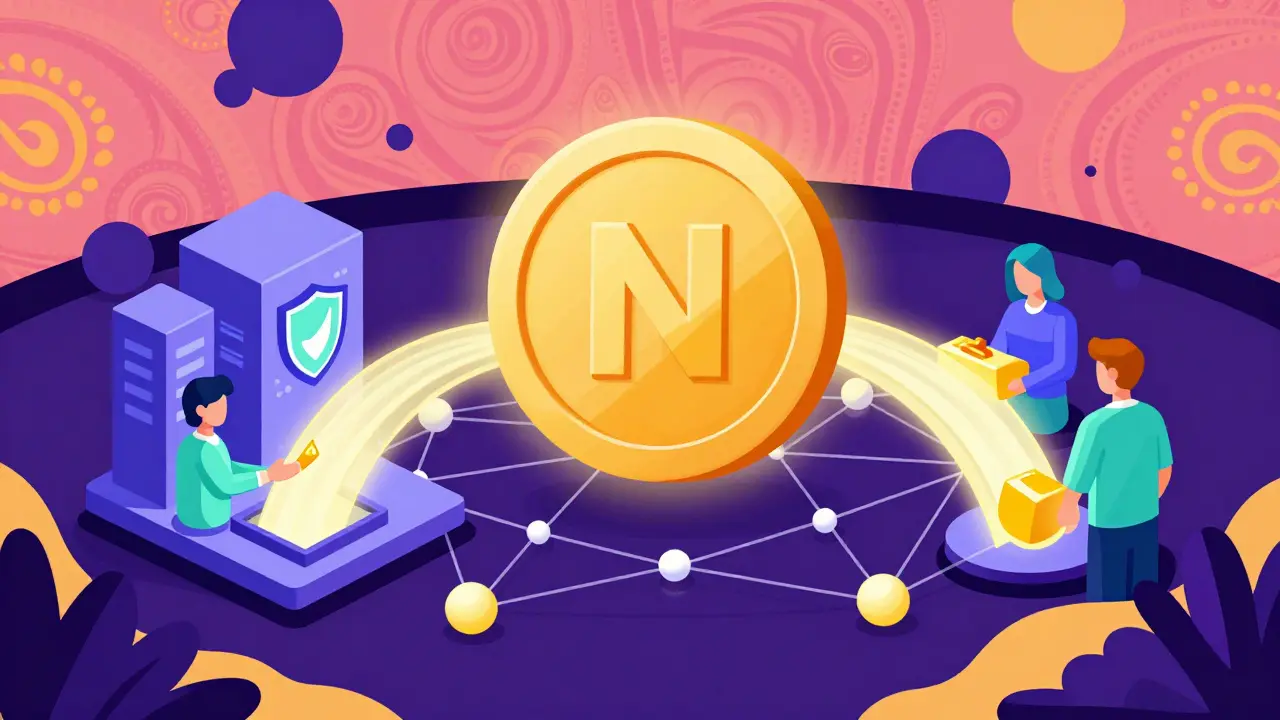
The platform connects two groups: enterprises that need protection and independent security researchers. Here is the workflow:
- Bounty Creation: An enterprise uploads a suspicious file or sample to the PolySwarm network.
- Competition: Independent security experts, known as "micro-engine" developers, compete to analyze the file. They write code to detect specific characteristics of the threat.
- Verification: The system checks the results against ground truth data. Accuracy is key.
- Reward Distribution: Experts whose engines correctly identify the threat earn NCT tokens.
This creates a self-correcting ecosystem. The better your detection engine, the more you earn. It incentivizes constant improvement and rapid response to zero-day threats-attacks that have never been seen before. Unlike traditional vendors who might take days to patch a vulnerability, PolySwarm’s community can react in hours.
The Role of the NCT Token
To understand PolySwarm, you need to understand its native currency, Nectar (NCT). It is an ERC-20 token running on the Ethereum blockchain. This means it doesn’t have its own separate chain; it leverages Ethereum’s security and infrastructure.
NCT serves three primary functions within the ecosystem:
- Payment for Services: Enterprises pay in NCT to access threat intelligence feeds and analysis services.
- Rewards for Experts: Security researchers earn NCT when their micro-engines successfully detect threats.
- Governance and Staking: While less emphasized than its utility role, holding NCT allows participants to engage with the platform’s evolving features.
A critical detail for investors is the supply. PolySwarm has a fixed maximum supply of 1,885,913,076 NCT. There is no inflationary mining process. All tokens were distributed at launch through presales, public sales, and allocations to the team and experts. According to official updates from 2024, 100% of the supply is already in circulation. This deflationary pressure mechanism means that as demand for threat intelligence grows, the available supply of NCT remains static, potentially driving up value if adoption increases.
Market Performance and Data
Let’s look at the numbers. Cryptocurrency markets are volatile, and NCT is no exception. As of late 2023 and early 2024, market data showed NCT trading around the $0.01 mark. With a market capitalization hovering near $20 million, it sits outside the top 500 cryptocurrencies by size. This indicates it is a niche asset rather than a mainstream blue-chip like Bitcoin or Ethereum.
| Metric | Value |
|---|---|
| Token Standard | ERC-20 (Ethereum) |
| Total Supply | 1,885,913,076 NCT |
| Circulating Supply | 100% (No mining) |
| Market Cap (Approx.) | $20.19 Million |
| Primary Use Case | Cybersecurity Threat Intelligence |
Trading volume has been relatively low compared to major coins, often sitting below $1 million in 24-hour volume. This suggests lower liquidity, which can lead to higher price swings during large buy or sell orders. For traders, this means careful entry and exit strategies are essential. For long-term holders, it reflects a community focused on utility rather than day-trading speculation.
Advantages Over Traditional Cybersecurity
Why would a company choose PolySwarm over established giants like CrowdStrike or Palo Alto Networks? The answer lies in specialization and speed.
Traditional vendors rely on proprietary engines. If their internal team misses a novel malware strain, their customers are vulnerable until the next update. PolySwarm aggregates insights from hundreds of independent researchers worldwide. This diversity of perspective makes it highly effective at catching rare or emerging threats that centralized systems might overlook.
Additionally, PolySwarm offers features tailored for Security Operations Centers (SOCs), such as:
- PolyScore: A threat scoring system that helps automate decision-making.
- PolyFeeds: Customizable, geotargeted threat intelligence streams.
- YARA Rulesets: Unlimited custom rules for detecting specific file patterns.
These tools allow enterprises to integrate PolySwarm’s data directly into their existing workflows, enhancing their defense without replacing their entire security stack.
Risks and Challenges
No technology is perfect, and PolySwarm faces distinct challenges. First, there is the dependency on Ethereum. Since NCT is an ERC-20 token, transactions are subject to Ethereum’s network fees (gas fees) and congestion. During periods of high network activity, costs can rise, potentially impacting the efficiency of micro-transactions between experts and enterprises.
Second, enterprise adoption is still growing. While PolySwarm claims partnerships with "blue-chip" clients, these names are rarely disclosed publicly. Compared to legacy cybersecurity firms with decades of trust and massive sales teams, PolySwarm is a newcomer. Convincing conservative IT departments to integrate a blockchain-based solution requires significant proof of concept and reliability.
Finally, there is the regulatory uncertainty surrounding utility tokens. As governments worldwide tighten rules on digital assets, projects like PolySwarm must navigate complex legal landscapes to ensure compliance. This could affect exchange listings and institutional participation.

Who Should Care About PolySwarm?
Your interest in NCT depends largely on your role in the tech world.
For Security Researchers: PolySwarm offers a direct monetization path for your skills. If you are good at malware analysis, you can build micro-engines and earn passive income as your code detects threats globally. It turns expertise into a tradable asset.
For Enterprise CISOs: If you are looking to enhance your threat hunting capabilities, PolySwarm provides a cost-effective way to tap into global intelligence. It complements existing tools rather than replacing them, offering early warning signs for zero-day attacks.
For Crypto Investors: NCT appeals to those interested in "real-world utility" tokens. It is not a meme coin. Its value is tied to the growth of the cybersecurity market, which Gartner estimates will exceed $200 billion globally. However, be prepared for volatility. The token has experienced significant drawdowns, including monthly declines of over 35% in recent periods. It is a high-risk, high-reward play on the intersection of AI, blockchain, and security.
Future Outlook
The future of PolySwarm hinges on execution. The team has consistently updated the platform since its 2018 launch, focusing on enterprise integration and improving the accuracy of threat detection. The roadmap emphasizes deeper SOC automation and broader adoption of PolyScore metrics.
As ransomware and state-sponsored cyberattacks become more sophisticated, the demand for decentralized, rapid-response intelligence will only grow. If PolySwarm can solidify its position as a trusted layer in the enterprise security stack, the demand for NCT could rise organically. Conversely, if competitors emerge or Ethereum scalability issues persist, growth may stall.
Ultimately, PolySwarm represents a shift from closed, proprietary security models to open, collaborative ecosystems. Whether it becomes the standard for threat intelligence remains to be seen, but its innovative approach has already carved out a unique niche in the crypto landscape.
Is PolySwarm (NCT) a good investment?
Whether NCT is a good investment depends on your risk tolerance and belief in the project's utility. It is a niche token with real-world use cases in cybersecurity, which gives it fundamental value beyond speculation. However, it has low liquidity and high volatility compared to major cryptocurrencies. Only invest what you can afford to lose and conduct thorough research on the cybersecurity market trends.
Can I mine NCT tokens?
No, you cannot mine NCT. The total supply of 1,885,913,076 tokens was created at launch and is fully circulating. There is no proof-of-work or proof-of-stake mining mechanism. You can only acquire NCT through exchanges or by earning it as a security expert on the PolySwarm platform.
What is the difference between PolySwarm and traditional antivirus?
Traditional antivirus relies on centralized databases updated by a single vendor. PolySwarm uses a decentralized marketplace where independent experts compete to detect threats. This allows for faster identification of new, unknown malware (zero-days) because multiple diverse perspectives are analyzing the same threat simultaneously.
How do security experts earn money on PolySwarm?
Security experts create "micro-engines," which are small programs designed to detect specific malware characteristics. When these engines successfully identify a threat uploaded to the platform, the expert earns NCT tokens as a reward. The more accurate and fast your engine, the more you earn.
Which blockchain does PolySwarm use?
PolySwarm operates on the Ethereum blockchain. The NCT token is an ERC-20 token, meaning it inherits Ethereum's security and consensus mechanisms. This also means transactions are subject to Ethereum gas fees.