BHEX (BlueHelix Exchange) Review: Is It Safe in 2026?
Imagine signing up for a cryptocurrency exchange that was backed by industry giants like Huobi and OKEx. You deposit your funds, expecting a cutting-edge platform with innovative custody technology. Then, you check back a few years later, and the order books are empty. The trading volume has vanished. The support channels are silent. This is not a hypothetical nightmare scenario; this is the reality of BHEX, also known as BlueHelix Exchange.
If you are reading this in 2026 because you found an old tutorial or heard the name mentioned in passing, stop right here. Do not deposit a single cent. BHEX is effectively defunct. While it once promised to revolutionize how we handle crypto assets through decentralized custody, it has since evaporated from the market. In this review, I will break down what happened to BHEX, why its initial promise was so strong, and exactly why you should avoid it today.
The Promising Start: Big Backers and Bold Tech
To understand why BHEX failed, you have to look at where it started. Launched in December 2018, BHEX didn't just appear out of nowhere. It had serious weight behind it. The founder, James Ju, was no rookie. He previously served as the Chief Technology Officer (CTO) of Huobi, one of the largest cryptocurrency exchanges in the world. That pedigree alone attracted attention.
The funding round was equally impressive. BHEX raised $15 million, with investments coming from heavy hitters like Huobi Global, OKCoin (now OKX), Node Capital, Genesis Capital, and City Holdings. They positioned themselves as a "next generation" financial services provider. Their pitch? A hybrid model that combined the ease of centralized trading with the security of decentralized finance (DeFi).
At launch, they offered spot trading, perpetual futures, options, margin trading, and an OTC market. They even launched their own token, BHT, for staking rewards. On paper, it looked like a competitor ready to take on Binance or Coinbase. But looking good on paper doesn't mean much if the engine breaks down.
The BlueHelix Technology: Innovation or Illusion?
The core selling point of BHEX was its proprietary technology called BlueHelix Custody and Clearing. This system aimed to solve the trust issue in centralized exchanges by separating asset custody from trading operations. The idea was clever. Instead of the exchange holding your money in a black box, BHEX claimed to use a community-managed clearing mechanism called BHPOS (BlueHelix Proof of Stake).
They argued that transaction data would be committed to blockchains, using cold/hot wallet segmentation and multi-signatures. Essentially, they wanted to prove they weren't holding your assets in a way that allowed for fraud. Later, in July 2021, they launched HDEX, a decentralized cross-chain trading protocol built on the BHEX Chain. HDEX promised to allow deposits and withdrawals of any asset across different blockchains, claiming to bridge the gap between Centralized Exchanges (CEX) and Decentralized Exchanges (DEX).
While the technical whitepapers were dense and ambitious, the execution faced a common problem in crypto: complexity often kills adoption. Users want simple, fast, and reliable trades. If the custody mechanism requires complex community consensus for every move, friction increases. And in the crypto world, friction means users leave.
The Collapse: From Billions to Zero
The story of BHEX's decline is written in its trading volumes. Let’s look at the numbers, because they tell the whole truth.
| Date | 24-Hour Trading Volume (USD) | Status |
|---|---|---|
| March 16, 2020 | $1.51 Billion | Peak Activity |
| December 2, 2021 | $707,798 | Sharp Decline |
| 2026 (Current) | $0 / Untracked | Defunct / Inactive |
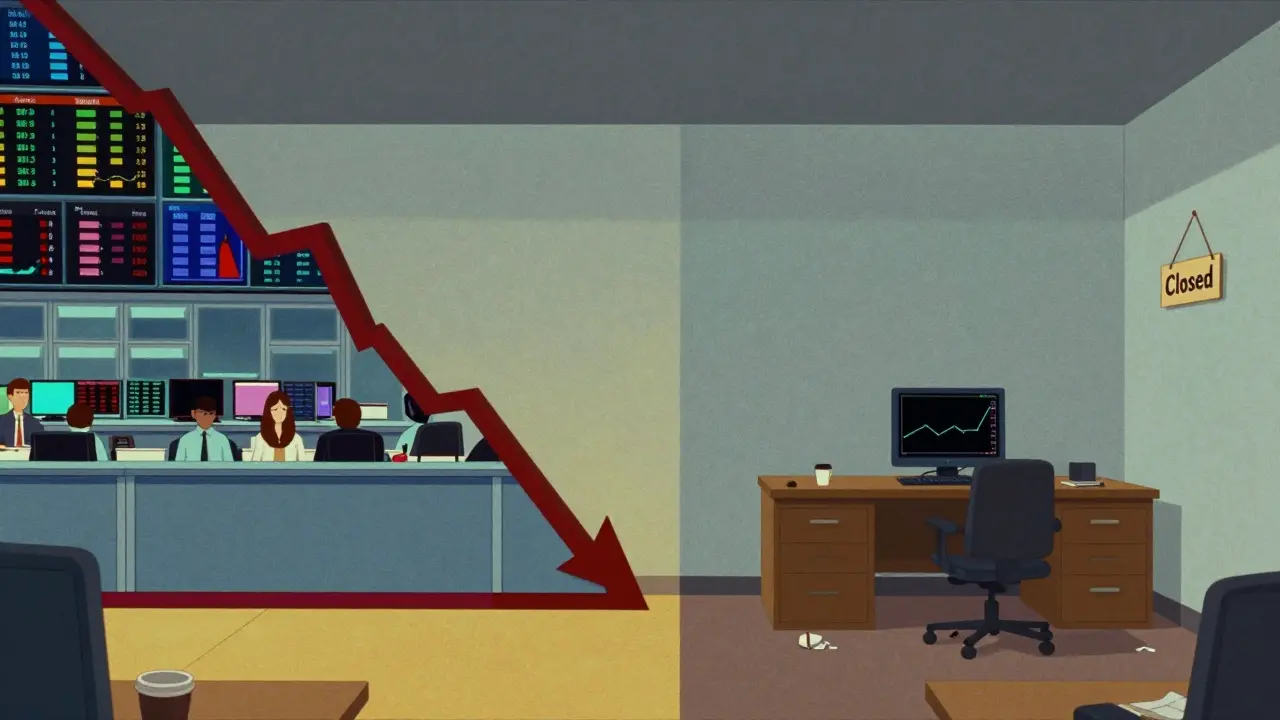
In March 2020, BHEX recorded a staggering $1.51 billion in daily trading volume. By late 2021, that number had plummeted by over 99.9% to less than $708,000. Today, in 2026, the volume is effectively zero. Market trackers like CoinMarketCap and CoinGecko have flagged BHEX as untracked or inactive. The order books are empty. There is no liquidity. If you try to buy Bitcoin on BHEX now, there is no one on the other side of the trade to sell it to you.
This isn't a temporary dip. This is a dead platform. The liquidity has evaporated completely. Without liquidity, an exchange cannot function. You might be able to log in, but you likely won't be able to withdraw your funds, nor will you be able to execute any meaningful trades.
Why Did BHEX Fail?
There was no single explosion or hack that took down BHEX overnight. Instead, it suffered from a slow bleed of user confidence. Several factors contributed to its demise:
- Intense Competition: The crypto exchange market is brutal. Binance, Coinbase, Kraken, and KuCoin dominate the space. They offer lower fees, higher liquidity, and better customer support. BHEX struggled to differentiate itself enough to keep users loyal.
- Complexity vs. Usability: While the BlueHelix custody tech was innovative, it may have been too complex for the average trader. Most users don't care about BHPOS consensus mechanisms; they care about whether their app works smoothly.
- Regulatory Pressure: As global regulations tightened around crypto exchanges, many platforms without robust compliance frameworks struggled. BHEX, based in Malta, faced the same scrutiny as everyone else, but without the massive legal teams of its competitors.
- Loss of Institutional Interest: When the early hype faded and trading volumes dropped, institutional investors likely pulled back support. Without continuous investment and marketing, the platform stagnated.
The result is a ghost town. The website may still load, and the mobile apps might still exist in app stores, but the backend is essentially dormant. Support tickets go unanswered. Withdrawals are stuck in limbo. For anyone who held funds on BHEX during its active years, the situation is dire. For new users, it is a trap.
Is Your Money Safe on BHEX?
If you currently have funds on BHEX, you need to act immediately. Try to withdraw everything. If the withdrawal fails, document every step. Take screenshots of your balance, your transaction history, and any error messages. Contact their support team via email and social media, even if responses are unlikely. Keep records of all communication.
However, be realistic. With the platform inactive and no visible leadership or operational activity, the chances of recovering funds are slim. This is a harsh lesson in crypto: never leave large amounts of money on any single exchange, especially smaller or mid-tier ones. Always use hardware wallets for long-term storage.
Safe Alternatives to BHEX in 2026
Since BHEX is no longer viable, where should you trade? Here are some established, liquid, and regulated alternatives that actually work:
- Coinbase: Best for beginners in the US. Highly regulated, easy to use, and insured against certain types of theft.
- Binance: Offers the widest range of cryptocurrencies and trading pairs. High liquidity and advanced tools for experienced traders.
- Kraken: Known for strong security practices and excellent customer support. Good for both beginners and pros.
- KuCoin: Great for finding altcoins and newer tokens that aren't listed on larger exchanges. Still maintains significant volume.
These platforms have proven track records, active development teams, and real liquidity. You can trade, deposit, and withdraw without worrying if the platform will vanish overnight.
Lessons from the BHEX Case Study
BHEX serves as a cautionary tale for the entire crypto industry. It shows that even with top-tier founders, massive funding, and innovative technology, an exchange can still fail. Trust is fragile in crypto. Once users lose confidence, liquidity dries up, and the platform becomes a zombie.
For traders, the key takeaway is due diligence. Don't just look at the promises or the backers. Look at the current trading volume. Check recent reviews. See if the team is active on social media. If an exchange seems quiet, it probably is. In 2026, stick to platforms with transparent proof-of-reserves, clear regulatory compliance, and millions of active users.
BHEX tried to change the game with BlueHelix technology. It didn't work. The market moved on, and BHEX was left behind. Don't let your portfolio get stuck in the past.
Is BHEX (BlueHelix Exchange) still active in 2026?
No, BHEX is effectively inactive in 2026. Trading volumes have disappeared, order books are empty, and there is no significant user activity. The platform is considered defunct.
Can I withdraw my funds from BHEX?
Withdrawal success is highly unlikely. Many users report stuck transactions and unresponsive support. If you have funds on BHEX, attempt to withdraw immediately, but do not expect a successful outcome given the platform's inactive status.
Who founded BHEX?
BHEX was founded by James Ju, who previously served as the CTO of Huobi. The exchange was launched in December 2018 with backing from investors like Huobi Global and OKCoin.
What was BlueHelix Custody technology?
BlueHelix Custody was a proprietary system designed to separate asset custody from trading operations. It used blockchain-based clearing and community consensus (BHPOS) to enhance security and transparency, aiming to prevent exchange fraud.
Why did BHEX fail?
BHEX failed due to a combination of intense competition, loss of user trust, declining liquidity, and possibly regulatory challenges. Despite strong initial backing, it could not maintain user adoption against larger, more established exchanges.
Is it safe to sign up for BHEX today?
Absolutely not. Signing up for BHEX in 2026 poses a high risk of losing your funds. The platform has no liquidity, and there is no guarantee you will be able to withdraw any deposited assets. Use reputable, active exchanges instead.