Cellana Crypto Exchange Review: Is This Aptos DEX Worth Your Time?
Cellana Finance isn’t another copycat decentralized exchange. It’s a niche player on the Aptos blockchain trying to fix a real problem: token inflation in DeFi. Most DEXs like Uniswap or PancakeSwap give out new tokens every day to reward liquidity providers. That sounds good until you realize it floods the market, dragging prices down. Cellana says no to that. Instead, it uses something called the ve(3,3) model-a system where users lock up their CELL tokens to earn voting power, not just rewards. It’s clever. But is it practical? And should you even touch it in 2026?
How Cellana Finance Works (Without the Jargon)
Cellana runs on Aptos, a fast and low-cost blockchain. You don’t need a bank account or ID to use it. Just an Aptos wallet like Petra or Martian. Once you’re in, you can trade tokens, add liquidity, or lock up your CELL tokens to get veCELL-a non-fungible token (veNFT) that gives you voting rights.
Here’s the twist: the longer you lock your CELL, the more voting power you get. Lock for 2 weeks? You get a little. Lock for 2 years? You get a lot. That power lets you decide which trading pools get the most rewards. Want more incentives for the APT/CELL pair? Vote for it. Think the USDC/CELL pool is underused? Push it to the top. It’s community-driven liquidity management. No centralized team decides where the money goes.
This model avoids constant token emissions. That means less dilution. Less pressure on the token price. That’s the theory, anyway. In practice, it’s still untested at scale.
CELL Token: What’s the Real Value?
As of October 2024, CELL trades at $0.0061. That’s down 91% from its all-time high of $0.0672. The total supply is over 1.08 billion tokens. The market cap? Just $1.95 million. Fully diluted? $6.63 million. For context, Uniswap’s UNI token has a market cap of over $2 billion. Cellana is barely a blip.
Trading volume is tiny-around $118,000 in 24 hours. That’s less than 0.001% of the entire DEX market. What does that mean for you? Slippage. A lot of it. If you try to trade more than $500 in a single swap, your price could move dramatically. You might buy $500 worth of APT and end up with $420 worth because the pool is too shallow.
There are only 7 trading pairs available. You won’t find BTC, ETH, or even SOL on Cellana. It’s mostly Aptos-native tokens and a few stablecoins. If you’re looking to trade mainstream crypto, this isn’t the place.
Why Cellana Might Be a Good Idea (For Some)
If you believe in sustainable DeFi, Cellana is one of the few projects trying to build it. It doesn’t rely on printing new tokens. It rewards long-term commitment. That’s rare. If you’re a DeFi veteran who’s tired of watching your rewards get eaten by inflation, this could be worth exploring.
Also, the ve(3,3) model is the first of its kind on Aptos. That’s a technical win. It proves the Move programming language can handle complex DeFi mechanics. That matters for Aptos’s future as a DeFi hub.
And yes, the interface is clean. Simple. No clutter. If you’ve used a DEX before, you’ll figure it out in minutes. The locking mechanism for veCELL is straightforward. No confusing menus. Just pick your lock duration and click.

The Big Problems You Can’t Ignore
Let’s be blunt: Cellana is risky. And not just because the token crashed.
No security audits. Not one public audit. That’s a red flag. In 2024, 78% of DeFi hacks happened on projects without verified audits. Cellana’s code is live. It’s handling real money. And no third party has checked it for bugs. That’s like driving a car with no brakes and hoping for the best.
Liquidity is too thin. With $1.95 million in market cap and $118k daily volume, the pools are tiny. Even small trades cause big price swings. You can’t move large amounts without losing money. That makes it useless for serious traders or anyone trying to hedge.
No fiat on-ramps. You can’t buy CELL with a credit card. You can’t deposit USD. You need to already own crypto-specifically APT or another token on Aptos-and swap it over. That’s a barrier for beginners.
No advanced features. No limit orders. No stop-loss. No DEX aggregator. No mobile app. The roadmap says these are coming in late 2024, but as of January 2026, they’re still missing. That’s a year late. And with a market cap under $5 million, most analysts say projects like this rarely survive past 18 months.
Who Should Use Cellana Finance?
Only three types of people should consider it:
- Long-term Aptos believers who want to support the ecosystem and are okay with high risk.
- DeFi experimenters who enjoy testing new tokenomics and don’t mind losing a small amount.
- Token holders with extra CELL who want to earn voting power and influence the protocol.
If you’re looking to make money quickly? Skip it. If you want to trade BTC or ETH? Go to Uniswap or Coinbase. If you’re new to crypto? Start with a centralized exchange. Cellana isn’t for you.
What’s Next for Cellana?
The roadmap includes cross-chain bridges to Ethereum and Solana, limit orders, and a mobile app. Those are good steps. But they’re also late. The market doesn’t wait. Competitors on Aptos like PancakeSwap Aptos and Aries Markets have already captured 90% of the chain’s DeFi volume. Cellana is playing catch-up with almost no traction.
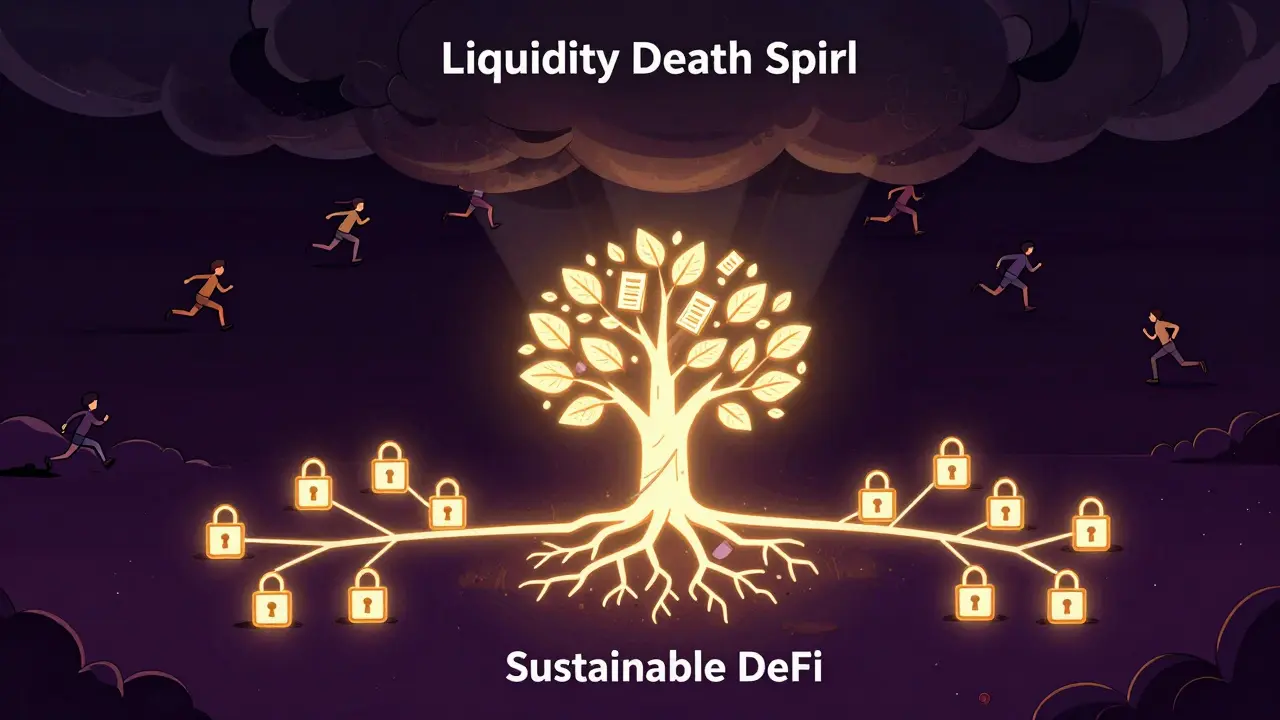
The biggest hurdle isn’t technology. It’s trust. Without audits, without volume, without a clear path to growth, most users will stay away. And if users stay away, liquidity dries up. And if liquidity dries up, the token falls further. It’s a death spiral.
Final Verdict: High Risk, Low Reward
Cellana Finance is an interesting experiment. It tackles a real problem in DeFi. But it’s still in survival mode. The token is down 91%. The liquidity is microscopic. There are no audits. The features are incomplete. The community is small. The support is slow. The future is uncertain.
If you have $50 to lose and want to be part of something new, go ahead. Stake your CELL. Vote for pools. See how it works. But don’t put in money you can’t afford to lose. Don’t expect returns. Don’t assume it’ll recover. This isn’t an investment. It’s a bet on a very small, very risky idea.
For now, Cellana remains a footnote in the DeFi world-not a contender.
Is Cellana Finance safe to use?
No, not by standard DeFi safety benchmarks. Cellana Finance has never been audited by a third-party security firm. That means there’s no public proof that its smart contracts are free from bugs or exploits. While the Aptos blockchain itself is secure, the protocol layer built on top-Cellana-is unverified. Projects with market caps under $5 million rarely have the budget for audits, and 78% of DeFi hacks in 2024 targeted unaudited code. Use it only with funds you’re prepared to lose.
Can I buy CELL tokens on Coinbase or Binance?
No. CELL is not listed on any major centralized exchanges like Coinbase, Binance, or Kraken. You can only trade it on Cellana Finance’s own DEX or on a few small decentralized exchanges that support Aptos. To buy CELL, you’ll need to first get APT or another compatible token on a centralized exchange, send it to an Aptos wallet like Petra, and then swap it on Cellana’s platform. There’s no easy way in.
What’s the difference between CELL and veCELL?
CELL is the native token you trade and stake. veCELL is what you get when you lock your CELL tokens for a set period (2 weeks to 2 years). veCELL isn’t a token you can sell-it’s a vote-escrowed NFT that gives you voting power over liquidity rewards. The longer you lock CELL, the more veCELL you earn, and the more influence you have in deciding which trading pools get more fees. Think of CELL as cash and veCELL as a voting card.
Why is Cellana’s trading volume so low?
Low volume comes from low liquidity and limited exposure. Cellana has only 7 trading pairs, no fiat on-ramps, no marketing budget, and almost no presence on social media or exchange listings. Most traders stick to bigger DEXs like Uniswap or PancakeSwap because they have deeper pools, more pairs, and lower slippage. Cellana’s $118k daily volume is less than 0.001% of the total DEX market. Without volume, it’s hard to attract more users-and without users, volume won’t grow.
Is Cellana Finance a good investment?
Not by traditional investment standards. The CELL token has lost 91% of its value since its peak. There’s no clear revenue model, no institutional backing, and no roadmap guarantee. It’s not a stock or a bond-it’s a speculative protocol. The only way to "earn" on Cellana is by locking tokens to vote, not by expecting price gains. If you’re looking for returns, this isn’t the place. If you’re looking to support a novel DeFi idea with a small amount of risk, then maybe. But don’t count on it paying off.
How do I get started with Cellana Finance?
First, download an Aptos-compatible wallet like Petra or Martian. Fund it with APT tokens (you can buy APT on Coinbase or Kraken). Go to the Cellana Finance website, connect your wallet, and start trading or staking. Be sure to read their documentation-there’s no customer support beyond Telegram, and gas fees are 0.0005 APT per transaction. Start small. Test with $20 before locking larger amounts. And never invest more than you’re willing to lose.