Crypto Exchanges to Avoid if You Are Iranian: Sanctions, Freezes, and Risks in 2026
If you are an Iranian cryptocurrency user, the platform you choose isn't just about fees or trading pairs. It is a matter of financial survival. The landscape shifted dramatically in late 2025, turning what was once a gray area into a high-stakes minefield. Between aggressive international sanctions, domestic regulatory crackdowns, and massive security breaches, many popular exchanges have become dangerous traps for your assets.
You might think keeping your money on a major global exchange or a trusted local platform keeps you safe. The data suggests otherwise. With Tether executing its largest-ever freeze of Iranian-linked funds in July 2025, and domestic giants like Nobitex facing both hacks and sanctions, the rules of engagement have changed. This guide breaks down exactly which types of exchanges you should avoid right now to protect your capital.
The Stablecoin Trap: Why USDT-Heavy Exchanges Are Risky
The most immediate danger for Iranian users comes from relying too heavily on Tether (USDT) is a stablecoin pegged to the US dollar that dominates global crypto trading but has shown aggressive compliance with international sanctions against specific regions. For years, USDT was the primary bridge currency for Iranians to move value across borders. That safety net vanished in mid-2025.
On July 2, 2025, Tether froze 42 cryptocurrency addresses linked to Iranian entities, blocking millions of dollars in value. More than half of these frozen wallets had direct transactional connections to Nobitex, Iran's largest exchange. This wasn't a random glitch; it was a targeted enforcement action. If your exchange relies heavily on USDT liquidity, you are one audit away from having your assets locked indefinitely.
This event triggered a mass exodus from USDT among savvy traders. Many moved to alternatives like DAI via the Polygon network, which offers more decentralized control. However, any exchange that forces you into USDT-centric trading pairs exposes you to this same seizure risk. If an exchange does not offer robust non-USDT stablecoin options or decentralized exit ramps, treat it as high-risk.
Local Giants Under Fire: The Nobitex Case Study
It is tempting to trust the biggest name in town. In Iran, that name is Nobitex. Serving over 11 million users, it has been the default gateway for many. However, recent events make it a prime candidate for avoidance if you prioritize asset security.
In June 2025, Nobitex suffered a devastating hack exceeding $90 million. While they eventually stabilized, the breach exposed significant vulnerabilities in their security infrastructure. But the technical failure is only half the story. The bigger issue is political. Data analysis firm Elliptic linked Nobitex to a network of wallets consistent with activity by the Islamic Revolutionary Guard Corps (IRGC).
Being labeled as critical infrastructure for sanctions evasion puts ordinary users in crossfire. When international authorities sanction an exchange associated with state actors, they do not distinguish between the government and the grandma trying to buy Bitcoin. If an exchange is flagged as part of a sanctions evasion apparatus, your account could be frozen simply by association. Given Nobitex's dual role as a domestic utility and an international target, the risk profile is extremely high.
Tier-1 International Exchanges: The Compliance Wall
You might assume that using a reputable Western exchange like Coinbase, Binance, or Kraken is safer because they are regulated. For an Iranian user, the opposite is often true. These platforms implement comprehensive sanctions screening algorithms that are ruthless in their accuracy.
These exchanges use advanced KYC (Know Your Customer) and AML (Anti-Money Laundering) tools. If your IP address, bank details, or even your device fingerprint hints at an Iranian connection, the result is usually immediate: account suspension, asset freeze, and permanent ban. Unlike local exchanges where you might have some recourse through community pressure or local laws, international platforms operate under U.S. jurisdiction. They will comply with Treasury Department orders without hesitation.
Avoid any Tier-1 centralized exchange that requires strict identity verification unless you have a non-Iranian legal residency and banking structure. Even then, the risk of false positives remains. For pure privacy and access, these platforms are currently hostile environments for Iranian nationals.
Unregulated Informal Platforms: The Wild West
As licensed platforms face tighter scrutiny, many users drift toward informal or unregulated trading venues. These include peer-to-peer (P2P) groups on Telegram, obscure websites with no clear ownership, and local brokers operating out of shops. While they may seem flexible, they lack the basic protections you need.
The Iran FinTech Association and other industry bodies have warned that restrictive regulations on licensed platforms inadvertently fuel the growth of these informal markets. The problem? There is no customer support, no insurance fund, and no legal recourse. If a broker runs off with your Rials after receiving your crypto, you are out of luck. These platforms are also vulnerable to "exit scams," where the operator shuts down the site overnight after draining user deposits. Without proper security audits or transparent reserves, these platforms are gambling dens, not exchanges.
Government-Licensed Exchanges: Privacy vs. Security
In early 2025, Iran's Central Bank shut down rial-based payment gateways for unlicensed exchanges and forced platforms to obtain licenses. This created a new category of risk: the government-compliant exchange. While these platforms are less likely to be hacked or sanctioned internationally, they pose severe privacy risks.
Licensed exchanges must submit comprehensive transaction data to government agencies for transparency. Draft regulations proposed by associations like the Iran Blockchain Association suggest that official platforms may soon be required to trace users' wallets, especially those connected to bank accounts. If you are concerned about international sanctions targeting your specific wallet history, using a fully transparent, government-monitored exchange creates a digital paper trail that could be subpoenaed or shared.
Furthermore, the August 2025 enactment of the Law on Taxation of Speculation and Profiteering introduced capital gains taxes on crypto. Licensed exchanges are best positioned to report your trades to tax authorities. If you want to remain under the radar regarding domestic tax obligations, these highly compliant platforms are counter-productive.
Exchanges Promoted by State Media
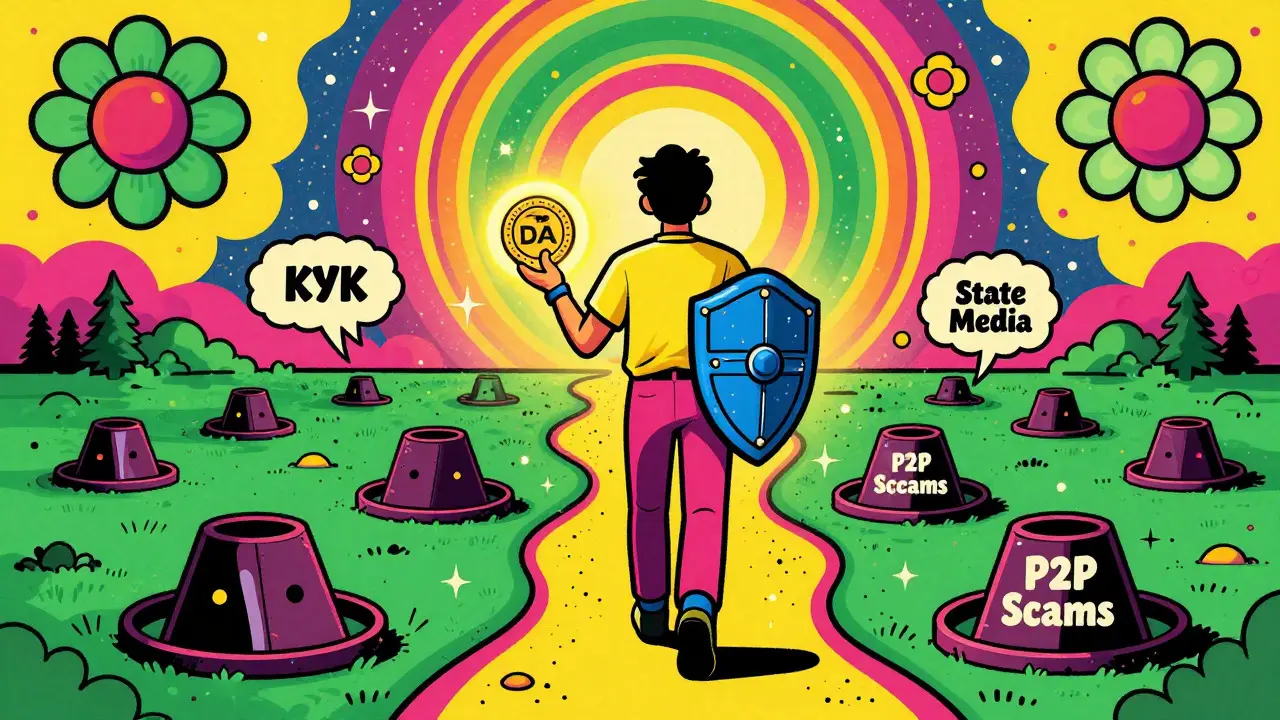
Be wary of exchanges that receive heavy promotion from state-affiliated media outlets, such as Tasnim News Agency. While this might signal "official approval," it often signals political alignment. Tasnim, affiliated with the IRGC, has actively warned users about Tether freezes while simultaneously promoting domestic alternatives.
Platforms promoted through these channels are likely deeply integrated into the state's financial apparatus. This increases the likelihood of them being targeted by secondary sanctions. If an exchange is seen as a tool for the state to bypass sanctions, international regulators will go after it hard. Users on these platforms become collateral damage in geopolitical conflicts.
| Exchange Type | Primary Risk | Sanctions Exposure | Asset Safety |
|---|---|---|---|
| USDT-Heavy Local Exchanges | Asset Freeze by Tether | High | Low |
| Tier-1 Global (Coinbase/Binance) | Account Ban/KYC Failure | Critical | Medium (if verified) |
| Government-Licensed Domestic | Privacy Loss/Tax Reporting | Medium | High (from hacks) |
| Informal/P2P Groups | Fraud/Exit Scams | Low | Very Low |
| State-Promoted Platforms | Secondary Sanctions Target | High | Uncertain |
How to Navigate the Landscape Safely
So, what should you do? The goal is to minimize exposure to both international freezers and domestic trackers. Here is a practical approach:
- Diversify Stablecoins: Reduce reliance on USDT. Use DAI or other decentralized stablecoins that are harder for central entities to freeze.
- Use Non-Custodial Wallets: Move assets off exchanges as quickly as possible. Hardware wallets or self-custody software wallets ensure no third party can freeze your funds.
- Avoid KYC Where Possible: Utilize decentralized exchanges (DEXs) like Uniswap or PancakeSwap for trading, though be mindful of gas fees and slippage.
- Monitor Regulatory Changes: The $5,000 annual purchase limit and $10,000 holding limit for stablecoins announced in September 2025 are strict. Ensure your holdings comply to avoid domestic penalties.
- Check Wallet Hygiene: Ensure your personal wallets are not mixed with funds from known sanctioned addresses. Use chain analysis tools to check your wallet's risk score before moving large amounts.
The crypto world for Iranians is no longer about finding the cheapest fee. It is about finding the least visible path. By avoiding the exchanges listed above-those tied to USDT freezes, state propaganda, or rigid international KYC-you significantly reduce the chance of losing your life savings to bureaucracy or bad actors.
Is it illegal to use cryptocurrency in Iran?
No, it is not illegal for individuals to hold or trade cryptocurrency in Iran. In fact, mining is a major industry. However, using crypto as a legal tender for goods and services is banned. The main risks come from international sanctions affecting your ability to move funds globally, rather than domestic criminalization of ownership.
Why did Tether freeze Iranian wallets in 2025?
Tether froze wallets to comply with U.S. Treasury sanctions targeting entities linked to the Islamic Revolutionary Guard Corps (IRGC). Since many Iranian exchanges, including Nobitex, had transactional flows to these sanctioned entities, Tether executed a mass freeze to avoid penalties themselves, inadvertently catching many retail users.
Can I use Binance if I live in Iran?
Technically, you might access the website, but it is highly risky. Binance enforces strict sanctions compliance. If their systems detect an Iranian IP address or identity during KYC checks, they will likely suspend your account and freeze your assets until you prove non-residency, which can take months or result in permanent loss.
What is the safest stablecoin for Iranians?
Many experts recommend DAI, a decentralized stablecoin, over USDT. Because DAI is not controlled by a single central company like Tether, it is less susceptible to unilateral freezing actions based on geopolitical sanctions. However, you must still ensure the exchange you use supports DAI withdrawals to a private wallet.
Are local Iranian exchanges safe from hacks?
Not necessarily. The $90 million hack of Nobitex in June 2025 demonstrated that even the largest local platforms have security vulnerabilities. While they may be safer from international bans, they carry higher risks of technical failure and local fraud compared to established global standards.
How much stablecoin can I legally hold in Iran?
As of September 2025, the Central Bank of Iran imposed limits on stablecoins. Individuals and legal entities face a maximum annual purchase limit of $5,000 and a total holding limit of $10,000. Exceeding these limits can result in unspecified penalties and forced compliance measures.
Should I use Decentralized Exchanges (DEXs)?
Yes, DEXs like Uniswap are generally safer for privacy as they do not require KYC. However, you must be careful about bridging funds. If you move funds from a sanctioned address to a DEX, your wallet can still be flagged by chain analytics firms used by centralized on-ramps.