Crypto Mining Regulations in Pakistan: The 2025-2026 Legal Framework & Rules
For years, if you wanted to mine cryptocurrency in Pakistan, you were walking a tightrope. You had the State Bank of Pakistan (SBP) telling you it was illegal under banking laws, while the government quietly encouraged adoption through the Pakistan Crypto Council. It was a confusing mess-a legal grey area that kept most serious investors on the sidelines. But as we move into 2026, that ambiguity is gone.
Pakistan has officially pivoted from restriction to regulation. With the enactment of the Virtual Assets Act, 2025, which established the Pakistan Virtual Asset Regulatory Authority (PVARA) in mid-2025, the country now has a clear, structured framework for crypto mining. This isn't just about allowing miners to plug in; it's about integrating them into the national economy with specific rules on electricity, taxation, and compliance. If you are looking to set up operations or understand the current landscape, here is exactly how the regulations work today.
The End of the Ban: How PVARA Changed the Game
The biggest shift in the Pakistani crypto landscape wasn't a subtle tweak; it was the creation of a dedicated regulator. Before July 2025, the SBP maintained that digital currencies were not legal tender and prohibited banks from dealing in them. This created a bottleneck where miners couldn't easily access banking services for their operations.
Then came the Virtual Assets Act, 2025. This legislation birthed the Pakistan Virtual Asset Regulatory Authority (PVARA). PVARA is an autonomous federal body responsible for overseeing all virtual asset activities, including mining. Its mandate is clear: bring transparency, ensure compliance with international standards like those from the Financial Action Task Force (FATF), and protect the financial system.
Why does this matter to you? Because PVARA issues licenses. Under the new rules, "block reward mining" is explicitly defined as a service provided by Virtual Asset Service Providers (VASPs). This means large-scale mining pools and industrial operations cannot operate anonymously. They must apply for a license, submit detailed business models, and adhere to strict data privacy and conflict-of-interest measures. Board members of these licensed entities are barred from insider trading or misusing information. This level of oversight signals that Pakistan is treating mining as a legitimate, high-stakes industry rather than a hobbyist loophole.
Electricity Allocation: The 2,000 MW Opportunity
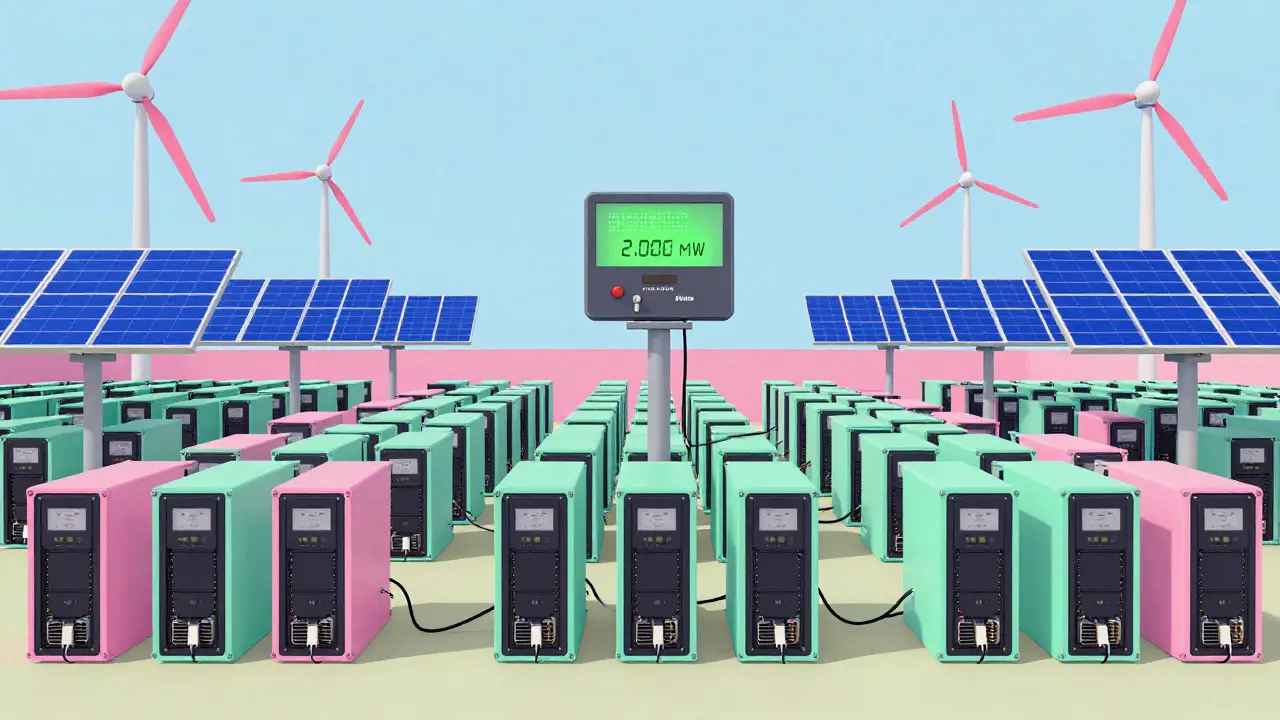
You can't talk about mining without talking about power. In August 2025, the government made a bold announcement: they would allocate 2,000 megawatts (MW) of electricity specifically for Bitcoin mining and AI data centers. This was a strategic move designed to monetize excess energy. Pakistan has faced economic challenges that led many small and medium enterprises (SMEs) to switch to solar or other alternatives, leaving some coal-based power stations operating below capacity.
Instead of letting that power go to waste, the government decided to channel it into mining. Technical analysts estimate that if all 2,000 MW is deployed using modern ASIC miners with efficiency ratings of 30-40 joules per terahash, Pakistan could contribute over 60 exahashes per second (EH/s) to the global Bitcoin network. That’s enough to potentially push Pakistan into the top five mining hubs worldwide, competing with giants like Iran and the United States.
However, there are strict conditions attached to this power. The regulatory framework explicitly prohibits mining operations from using subsidized residential electricity rates. All commercial mining facilities must operate on industrial tariffs with minimum connections of 500 kW. This rule was put in place to address concerns raised by the International Monetary Fund (IMF) regarding fiscal risks and strain on the national grid. The goal is to use surplus power, not to drain resources needed by households or essential industries.
| Requirement | Detail |
|---|---|
| Total Allocation | 2,000 Megawatts (MW) |
| Tariff Type | Industrial Tariffs Only (No Residential Subsidies) |
| Minimum Connection | 500 kW |
| Energy Source Priority | Surplus from underutilized coal plants & renewable sources |
| Renewable Target | 70% renewable or repurposed energy by 2027 |
Licensing Criteria: Who Can Mine?
Getting a license from PVARA isn't easy, especially for international firms. The authority has set a high barrier to entry to ensure only serious, compliant players enter the market. For Phase 1 implementation (Q3-Q4 2025), the focus was on major international mining operations with hash rates exceeding 1 EH/s.
To qualify, international crypto mining firms must already be licensed by recognized regulators such as the US SEC, UK FCA, EU VASP framework, UAE's VARA, or Singapore's MAS. This requirement prioritizes established global players over local startups initially. The application process requires detailed submissions including:
- Technology and security standards
- Expected hash rate capacity
- Energy consumption metrics
- Compliance track record
- A Pakistan-specific business model addressing environmental impact
Phase 2, scheduled for Q1 2026, will open licensing to domestic small-scale miners. However, even these smaller players must meet a minimum capacity of 100 PH/s. This tiered approach allows the regulator to manage the influx of operations carefully, ensuring the grid and financial systems aren't overwhelmed.
Taxation Policies: What You Owe the Government
With legalization comes taxation. The 2025 reforms formalized how mining income is treated by the Federal Board of Revenue (FBR). There are two main components to your tax liability: income from mining rewards and capital gains from selling those coins.
Mining Income: Rewards received from mining are taxed as regular income. This means they fall under progressive tax slabs. If your annual income from mining is up to ₨600,000, you pay 5%. As your income rises, so does the rate, capping at 35% for income over ₨12 million. You must report this income in Form IT-1, with an annual filing deadline of September 30.
Capital Gains: When you sell the cryptocurrency you mined, you face a flat 15% tax rate on the capital gains. This is separate from the income tax on the reward itself. Starting mid-2025, PVARA began sharing transaction data from registered mining operations directly with the FBR. This integration makes tax evasion nearly impossible for licensed entities. The government wants a transparent trail from the block reward to the bank account.

Environmental & Shariah Compliance
Pakistan is also addressing two unique local concerns: environmental sustainability and religious compliance. The draft guidelines released by PVARA in August 2025 require mining operations to utilize at least 70% renewable or repurposed energy sources by 2027. This pushes miners to integrate solar or wind power, or to use existing surplus energy rather than building new fossil-fuel plants.
Additionally, the regulatory framework includes provisions for Shariah-compliant mining operations through regulatory sandboxes. This is crucial in a country where religious sentiment plays a significant role in financial decisions. By offering a path for compliant mining, the government aims to broaden participation and address previous hesitations among conservative investors.
Remaining Challenges and Contradictions
Despite the progress, the road isn't entirely smooth. The State Bank of Pakistan still reiterates that digital currencies are not legal tender. While PVARA regulates the assets, the SBP controls the banking sector. This creates operational hurdles for miners who need traditional banking services for payroll, equipment purchases, or profit repatriation. Banks may remain cautious due to legacy interpretations of banking laws.
Furthermore, political shifts continue to influence the sector. In September 2025, a Senate standing committee recommended moving the Pakistan Crypto Council from the Ministry of Finance to the Ministry of Information Technology. This debate highlights ongoing uncertainty about which branch of government should ultimately steer digital asset policy. For now, PVARA operates autonomously, but its long-term stability depends on maintaining support across different ministries.
Is crypto mining legal in Pakistan in 2026?
Yes, crypto mining is legal and regulated in Pakistan as of 2026. The Virtual Assets Act, 2025 established the PVARA to oversee mining operations. However, miners must obtain a license and comply with strict electricity and tax regulations. Unlicensed mining remains prohibited.
What is the tax rate for crypto mining income in Pakistan?
Mining income is taxed as regular income at progressive rates ranging from 5% to 35%, depending on the total annual income. Capital gains from selling mined cryptocurrency are subject to a flat 15% tax rate. All income must be reported via Form IT-1 by September 30 annually.
Can I use residential electricity for crypto mining in Pakistan?
No. The regulatory framework explicitly prohibits using subsidized residential electricity rates for mining. Commercial mining facilities must connect to industrial tariffs with a minimum capacity of 500 kW. Violating this can result in heavy penalties and license revocation.
How do I get a mining license from PVARA?
International firms must already hold licenses from recognized regulators like the US SEC or UK FCA. Applicants must submit technology standards, hash rate capacity, energy metrics, and a compliance track record. Domestic small-scale miners can apply in Phase 2 (starting Q1 2026) if they meet a minimum 100 PH/s capacity.
Does Pakistan have any renewable energy requirements for miners?
Yes. According to PVARA draft guidelines, mining operations are required to utilize at least 70% renewable or repurposed energy sources by 2027. This encourages the use of solar, wind, or existing surplus power rather than new fossil fuel generation.
Ankush Pokarana
May 22, 2026 AT 11:17it is fascinating to observe the shift from ambiguity to regulation as this provides a clearer path for those who wish to participate in the digital economy while maintaining a sense of order and structure within the broader financial system which has been lacking for so long now that we are finally seeing some concrete steps being taken towards legitimizing these activities it feels like a breath of fresh air for everyone involved in this space
Bianca Vilas Boas Lourenço
May 23, 2026 AT 07:23oh wow another government trying to control everything with their shiny new rules 🙄 like seriously do they think we care about their little licenses when we just want to mine our coins in peace? i mean come on who needs more bureaucracy when you already have enough headaches dealing with hardware failures and power outages 😒🔥
Yash Lodha
May 25, 2026 AT 02:06the real agenda here is not about regulating mining but rather establishing a surveillance state where every transaction is tracked and monitored by PVARA under the guise of compliance with international standards such as FATF recommendations which are nothing more than tools for global financial hegemony designed to crush individual sovereignty and enforce conformity among dissenting voices who dare to challenge the established order through decentralized technologies
Jesse Alston
May 25, 2026 AT 15:31i totally get why people might feel overwhelmed by all these new regulations but honestly having clear guidelines makes things much easier for serious players looking to invest without worrying about legal repercussions down the line plus knowing exactly what taxes apply helps in planning finances better so overall it seems like a positive step forward despite initial resistance from some quarters 👍💡
Sarah C
May 25, 2026 AT 17:54this framework looks promising especially since it addresses both environmental concerns and religious sensitivities which shows thoughtful consideration towards diverse perspectives within society making it inclusive yet practical at the same time
Kimberly Herbstritt
May 26, 2026 AT 01:29surely nobody actually believes this will work smoothly right? history tells us governments always find ways to complicate simple processes unnecessarily creating red tape that stifles innovation instead of fostering growth so let's see how long before they change their minds again
Sharada Vakkund
May 27, 2026 AT 03:28great article highlighting key points clearly though i wonder if there could be more emphasis placed on educating local communities about benefits associated with adopting renewable energy sources alongside crypto mining initiatives thereby promoting sustainable development goals globally
Sudarshan Anbazhagan
May 27, 2026 AT 11:40one must acknowledge that whilst regulatory frameworks aim to bring transparency they often fail to account for unforeseen consequences arising from rapid technological advancements thus necessitating continuous review mechanisms ensuring adaptability remains intact amidst evolving landscapes characterized by uncertainty
John Gonzalez Bentham
May 28, 2026 AT 21:58typical gov't overreach trying to tax every penny earned thru mining while ignoring actual issues facing citizens daily life struggles unrelated directly or indirectly wth cryptocurrency adoption whatsoever hence rendering entire discussion moot unless addressed properly first
Ellie Riddell
May 29, 2026 AT 01:17interesting read although one cannot help but notice subtle undertones suggesting ulterior motives behind sudden interest in regulating previously ignored sectors perhaps reflecting deeper societal shifts occurring beneath surface level interactions between various stakeholders involved herein
Destiny Kilby
May 29, 2026 AT 23:42while appreciating efforts made toward clarifying ambiguities surrounding crypto mining operations within pakistan borders questions remain regarding enforcement capabilities particularly concerning smaller entities operating outside formal structures potentially undermining intended objectives outlined therein
Jerry CUNNINGHAM SR
May 31, 2026 AT 17:07it is encouraging to witness collaborative approaches adopted herein balancing economic interests against ethical considerations thereby setting precedent worth emulating elsewhere globally provided implementation proves successful moving forward without compromising core values espoused initially
Shelby Cantu
June 1, 2026 AT 10:55exciting times ahead indeed! lets keep pushing boundaries together!
Tobias Gjerlufsen
June 3, 2026 AT 08:14you fools really believe this nonsense about fair taxation and balanced regulation huh? its obvious pvara exists solely to extract wealth from hardworking individuals under pretense of protecting them meanwhile elites continue profiting off your labor unchecked unaccountable forevermore
Ruben Michel
June 3, 2026 AT 16:35as someone well versed in matters pertaining to virtual asset management i find myself compelled to point out glaring omissions within proposed framework namely lack of adequate provisions addressing cross-border transactions complexities inherent therein requiring immediate attention lest chaos ensue
Gavin Wonnacott
June 4, 2026 AT 00:58pathetic attempt at legitimizing illegal activities masquerading as progress meanwhile ordinary folks suffer due to inflated costs driven partly by speculative bubbles created artificially via media hype surrounding worthless tokens devoid intrinsic value whatsoever