Curve Finance on Arbitrum: Review, Fees, and Best Use Cases
Most people assume all decentralized exchanges work the same way. They don't. If you are trying to swap USDC for USDT or move between different versions of the same asset, using a general-purpose DEX like Uniswap can feel like paying a toll just to cross a bridge. That is where Curve Finance comes in. It is a specialized protocol designed specifically for assets with similar values. On the Arbitrum network, Curve acts as a high-speed lane for stablecoin traders, offering significantly lower slippage than standard automated market makers.
This review breaks down what makes Curve unique, how it performs on Arbitrum, and whether it fits your trading style. We will look at the fees, the security history, and the specific scenarios where this platform shines compared to its competitors.
Key Takeaways
- Best For: Swapping stablecoins (USDC, USDT, DAI) and tokenized assets with minimal price impact.
- Network Advantage: Using Curve on Arbitrum reduces gas costs significantly compared to Ethereum mainnet while maintaining deep liquidity.
- Fee Structure: Trading fees typically range from 0.04% to 0.50%, depending on the pool volatility.
- Main Limitation: Not suitable for volatile tokens like ETH or BTC; use other DEXs for those.
- Security Note: Smart contracts are battle-tested, but users should monitor recent DNS-related operational issues.
What Makes Curve Different From Standard DEXs?
To understand why Curve exists, you have to look at how standard Automated Market Makers (AMMs) work. Protocols like Uniswap use a constant product formula (x * y = k). This works great for trading an asset against a highly volatile one, like swapping ETH for a new meme coin. However, when you try to swap two assets that are both worth roughly $1, the math creates inefficiency. The price impact becomes disproportionate to the trade size.
Curve solves this with a modified bonding curve algorithm. Instead of assuming the assets might diverge wildly in value, Curve assumes they will stay close. This allows liquidity providers to concentrate their capital into a much narrower price band. For you, the trader, this means that even if you are moving $10,000 worth of stablecoins, the price you get is almost exactly the spot price. You pay a small fee, but you avoid the "slippage tax" that would eat up your profits on a generic DEX.
This design makes Curve the go-to infrastructure for yield farmers and arbitrageurs. When a slight discrepancy appears between the price of USDC on Curve and its price on another platform, traders rush to Curve to capture that difference because the execution cost is so low.
Why Trade Curve on Arbitrum?
Curve operates across 27 different blockchain networks. So why choose Arbitrum? The answer lies in the balance of speed, cost, and ecosystem depth.
Ethereum mainnet has the deepest liquidity, but gas fees can be unpredictable and high during peak times. Polygon is cheap, but some institutional players prefer the security guarantees of Ethereum L2 solutions. Arbitrum sits in the sweet spot. It offers near-instant transaction finality and very low fees, often costing less than a cent per swap.
For a Curve user, this matters because the protocol is heavily used for frequent, smaller trades or large block trades. If you are executing multiple swaps a day to optimize yields, paying $5 in gas on Ethereum Mainnet adds up fast. On Arbitrum, you can execute dozens of swaps for the cost of a coffee. Furthermore, the Arbitrum ecosystem hosts many other major DeFi protocols, making it easy to move funds in and out of Curve pools without bridging across multiple chains.
| Feature | Curve Finance (Arbitrum) | Uniswap V3 (Arbitrum) |
|---|---|---|
| Primary Use Case | Stablecoin swaps, similar-value assets | Volatile pairs, general trading |
| Slippage on Stable Pairs | Very Low (<0.01%) | Higher (varies by liquidity depth) |
| Typical Fee Range | 0.04% - 0.50% | 0.01% - 0.30% (variable) |
| Liquidity Concentration | High (focused on $1 peg) | Variable (depends on LP strategy) |
| User Interface Complexity | Moderate (governance features) | Simple (standard swap interface) |
Fees and Costs: What Will You Actually Pay?
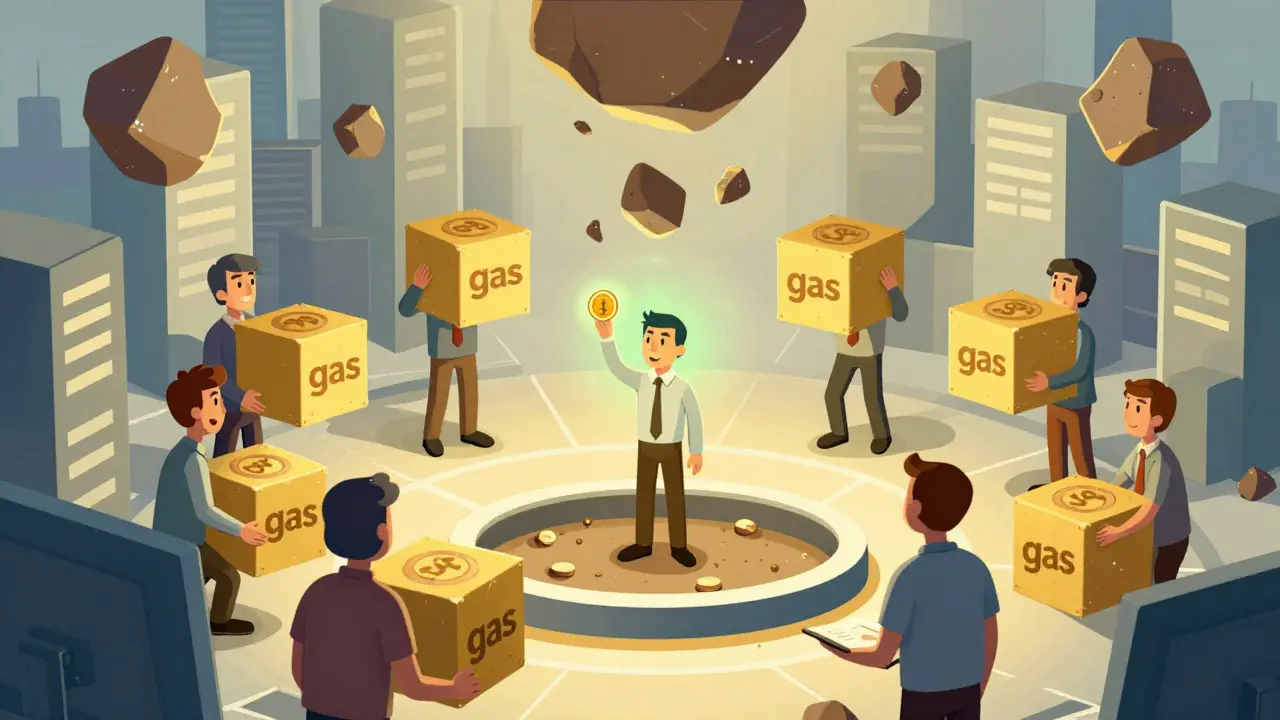
When evaluating a DEX, the sticker price isn't the whole story. You need to consider the trading fee plus the network gas fee. On Arbitrum, the gas fee is negligible, usually under $0.05. Therefore, the trading fee is your primary cost.
Curve pools are not uniform. Each pool has its own fee structure set by governance or the pool deployer. Here is how it generally breaks down:
- Major Stablecoin Pools (e.g., USDC/USDT): These pools handle massive volume and typically charge around 0.04%. This is extremely competitive.
- Tokenized Asset Pools (e.g., crvUSD/USDC): Fees here might be slightly higher, around 0.04% to 0.10%, reflecting the specific risk profile.
- Volatile or Exotic Pools: If you are trading something less stable, fees can climb to 0.30% or even 0.50%.
Compared to centralized exchanges which often charge 0.1% to 0.25% for tier-1 users, Curve's base rates are quite attractive. However, remember that you are interacting directly with smart contracts. There is no customer support to call if a transaction fails, so always double-check your wallet address and token selection before confirming.
Security and Reliability: The Fine Print
In DeFi, security is non-negotiable. Curve has been operating since 2017, making it one of the oldest and most audited protocols in the space. Its smart contracts have undergone extensive third-party audits and have survived years of market stress tests. This longevity is a strong signal of reliability.
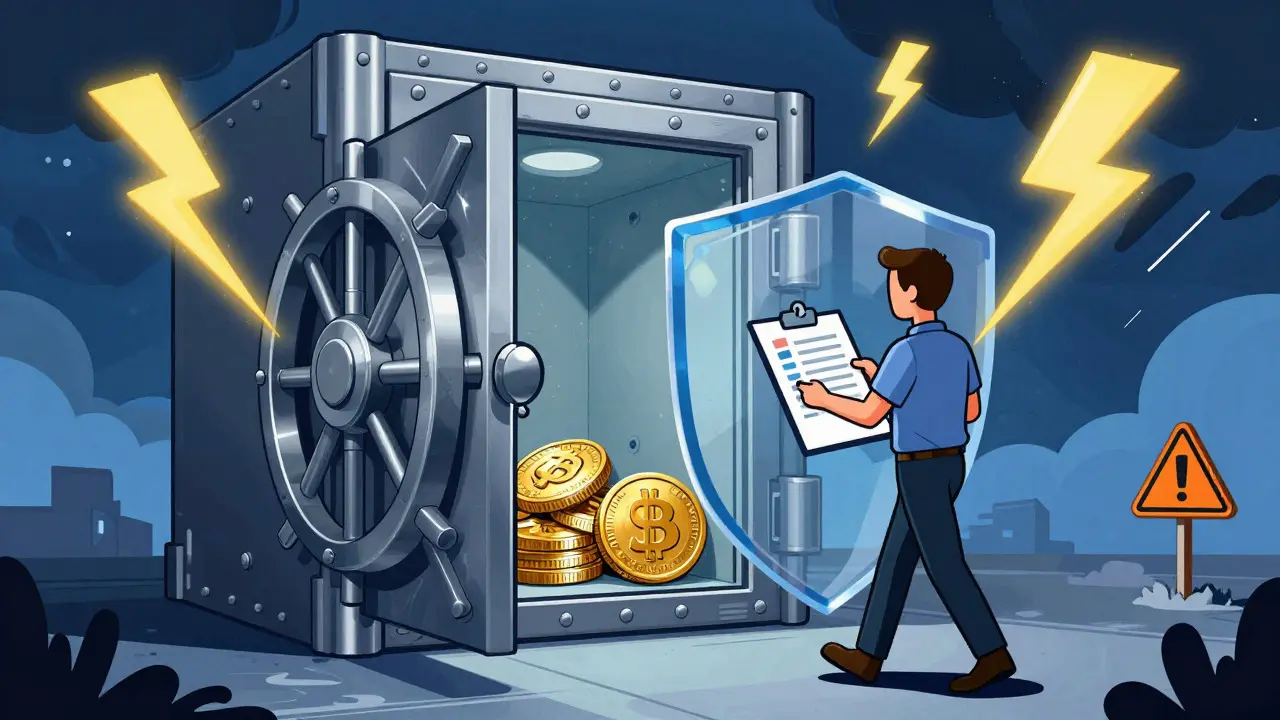
However, no system is perfect. In recent years, the broader DeFi sector has seen various security incidents. While Curve's core vaults remain secure, there have been concerns regarding peripheral elements, such as DNS attacks affecting frontend access or oracle manipulation risks in certain exotic pools. As a user, your best defense is simple: stick to the official website, verify the contract addresses via trusted aggregators like DeBank or Etherscan, and avoid obscure pools with low liquidity.
Also, keep in mind that using Curve on Arbitrum means your assets are held in smart contracts on the L2 layer. While Arbitrum itself is considered highly secure, any vulnerability in the bridge mechanism connecting Arbitrum to Ethereum could theoretically impact funds. This is a risk inherent to all L2 solutions, not specific to Curve, but it is worth noting.
Who Should Use Curve on Arbitrum?
Curve is not a one-size-fits-all solution. It is a specialized tool. Here is who benefits most from it:
- Stablecoin Traders: If you frequently swap between USDC, USDT, DAI, or FRAX, Curve is the most efficient route. You save money on slippage every single time.
- Yield Farmers: Many advanced DeFi strategies involve looping stablecoins through different protocols. Curve provides the low-cost entry and exit points needed to make these complex strategies profitable.
- Arbitrageurs: If you spot a price difference between a stablecoin on Curve and its price on a CEX or another DEX, Curve allows you to execute the trade quickly with minimal cost.
On the other hand, if you are a casual investor looking to buy ETH with USDC, or trade a volatile altcoin, Curve might frustrate you. The interface includes governance features and voting mechanisms that can be confusing for beginners. Plus, you won't find a wide variety of speculative tokens there. For those use cases, a general-purpose DEX is better suited.
Common Pitfalls to Avoid
Even experienced users make mistakes on Curve. Here are three common traps:
- Ignoring Pool Specifics: Not all pools are created equal. A pool labeled "USDC" might actually be a wrapped version with different redemption mechanics. Always check the underlying assets.
- Overlooking Impermanent Loss (IL): While IL is minimal in stable pools, it is not zero. If one stablecoin depegs slightly, you might end up holding more of the weaker asset. For short-term swaps, this is irrelevant. For long-term liquidity provision, calculate the potential IL.
- Gas Spikes on Arbitrum: Rarely, but occasionally, Arbitrum gas prices can spike during network congestion. Check the estimated gas fee before sending a large transaction to ensure it doesn't eat into your expected yield.
Final Verdict
Curve Finance on Arbitrum is a powerhouse for specific tasks. It is not the place to gamble on the next big crypto moonshot. It is the place to move value efficiently, securely, and cheaply. If your trading activity involves stablecoins or similar-value assets, incorporating Curve into your workflow will likely save you money and reduce friction. Just keep an eye on the pool fees and ensure you are comfortable with the technical aspects of DeFi interactions. For the right user, it is an indispensable tool in the modern crypto stack.
Is Curve Finance safe to use on Arbitrum?
Yes, Curve is generally considered safe due to its long history and extensive audits. However, as with all DeFi, you should verify contract addresses and be aware of standard smart contract risks. The Arbitrum network itself is also highly secure, adding another layer of protection.
What are the typical trading fees on Curve?
Fees vary by pool. Major stablecoin pools often charge as little as 0.04%, while more volatile or specialized pools can charge up to 0.50%. Always check the specific pool page before trading to see the current fee rate.
Can I trade Bitcoin on Curve?
Not native Bitcoin, but yes, you can trade tokenized versions like WBTC (Wrapped Bitcoin) against stablecoins. Keep in mind that WBTC is a derivative asset, so you are exposed to the custodial risk of the wrapper in addition to the smart contract risk.
Why is slippage lower on Curve than Uniswap for stablecoins?
Curve uses a specialized bonding curve algorithm designed for assets with similar values. This allows liquidity to be concentrated in a narrow price range, meaning the price doesn't move as much when you execute a trade compared to the constant product model used by Uniswap.
Do I need CRV tokens to use Curve?
No, you do not need CRV tokens to swap assets. CRV is primarily used for governance voting and earning incentives as a liquidity provider. You can simply connect your wallet and start trading immediately.
Alan Hawkins
August 26, 2026 AT 21:41Great breakdown of the fee structures. I've been moving between USDC and DAI on Arbitrum for a few months now, and the difference in slippage compared to Uniswap is definitely noticeable when you are moving larger amounts like $5k or $10k. The 0.04% fee is hard to beat if you are doing frequent rotations for yield farming.
Steve Sulley
August 27, 2026 AT 02:09Everyone thinks curve is magic but its just math dressed up in a fancy suit. The bonding curve is cool i guess but does it really matter if your going to get rugged by some DNS attack or oracle fail? i mean they said it was battle tested since 2017 so why do we keep hearing about peripheral issues? maybe because the core is fine but the ecosystem around it is full of holes. also arbitrum gas being cheap is only until it isn't right? we all know how l2s work eventually they become as expensive as mainnet just with more steps involved. stop hyping it up.
Linda Jevne
August 28, 2026 AT 02:09The distinction between 'specialized infrastructure' and 'general purpose tools' is fascinating here. It reminds me of how a scalpel is superior to a hammer for delicate surgery, even though both are cutting instruments. Curve seems to be that scalpel for stablecoin flows. The idea that liquidity concentration can mitigate the 'slippage tax' is a beautiful example of efficiency seeking its natural form. It’s not just about saving money; it’s about respecting the mathematical reality of asset parity. When we align our tools with the specific nature of the transaction, friction disappears. That is the true elegance of DeFi design.
Carey Thornton
August 29, 2026 AT 09:14Finally, someone writes an article that doesn't treat us like absolute peasants who need to be held by the hand through every single click. The nuance regarding the DNS operational issues is refreshing. Most retail degens are too busy staring at their green candles to notice that the frontend might be compromised by some trivial vector. But for those of us who actually read whitepapers and audit reports, this is the level of detail we crave. It’s not just a swap button; it’s a complex interplay of smart contracts, governance, and network security. Don’t get me wrong, the UI could still use a bit of polish, but functionally, it’s a beast. A magnificent, terrifying beast that eats inefficiency for breakfast.
David Powell
August 31, 2026 AT 01:04Sure, it's 'highly secure' because it hasn't been hacked yet. That's a solid track record for a protocol that holds billions in TVL, I suppose. Just don't mention the word 'risk' again unless you want me to laugh. We're all just gambling on code written by anonymous developers in pajamas, but sure, let's call it 'security'.
Ellie Brooks
August 31, 2026 AT 07:06I just started using this last week and honestly the experience has been so much smoother than I expected, especially coming from the clunky interfaces of some other L2s, and what really sold me was seeing how quickly the transactions confirmed without any of that annoying waiting period where you just stare at the screen wondering if it went through or if you accidentally sent your whole portfolio to the void, which is a very real fear when you are new to self-custody, but the clarity of the fee display before you confirm helped me feel way more confident about my first few swaps, and I am already planning to move more of my stablecoin reserves over there because the savings add up fast when you are active in the space!
Dave Worth
September 1, 2026 AT 07:18They say it's safe because it's old? 🤡 Old means outdated. Old means legacy code that nobody wants to touch because fixing it would break everything else. The DNS issue wasn't a glitch, it was a message. The elites control the narrative. You think they care about your 0.04% fee? No. They want you to trust the system so you keep swapping inside their walled garden. The bridge to Ethereum is the chokepoint. One day they flip the switch and your funds are frozen while they 'investigate'. Wake up sheeple. 🚩👀
Kelechi Precious Nwachukwu
September 1, 2026 AT 10:47It is truly impressive how such a specialized tool can handle volume so gracefully. The fact that gas costs are under a cent per swap is a game changer for anyone trying to optimize yields without burning through their profits on fees. I have seen friends lose significant amounts just on network costs when using mainnet, so this feels like a massive relief. It makes high-frequency strategies actually viable for smaller players too. The stability of the pools during recent market dips was also noteworthy, showing real resilience.
Valentine Okpala
September 3, 2026 AT 08:30Meh. Another protocol telling us it's the 'best' for something. It's fine, I guess, if you fit the niche. But let's not pretend it's revolutionary. It's just efficient plumbing. And 'efficiency' is a relative term when you consider the energy cost of running these validators. But sure, enjoy your low slippage. It's a nice little bubble. 🫧
Sean Dalton
September 3, 2026 AT 11:28Oh, wonderful. Another American-centric view of 'efficiency'. Did you even consider the impact on global liquidity fragmentation? Or are we all just supposed to thank the US-based devs for letting us use their 'high-speed lane'? It's a marvel of engineering, I'm sure, but it smells of centralization disguised as decentralization. The 'governance features' mentioned in the article? That's just another layer of bureaucracy for the common man. Splendid. Truly splendid. 🇮🇪
Rajni Mathur
September 4, 2026 AT 11:52Let us dissect the numbers, shall we? 📊 While the article touts 0.04% fees, one must account for the opportunity cost of capital locked in LP positions versus pure directional bets. The 'slippage tax' argument is valid, but it ignores the volatility drag on imbalanced pools. Furthermore, the comparison to CEX tier-1 rates is misleading; institutional desks often negotiate zero-fee rebates. Thus, the 'savings' are largely theoretical for the average retail participant. One must remain skeptical of such rosy projections. 📉💸
Ian Munro
September 6, 2026 AT 07:47Concise and accurate. The fee table is particularly useful for quick reference. Good piece.