Deflationary vs Inflationary Tokens: Which Model Wins in 2026?
Imagine you are holding a rare trading card. Every year, fewer of these cards exist because collectors burn the duplicates they don't want. Naturally, you hold onto yours tighter, expecting the price to skyrocket. Now, imagine a different scenario: you hold a coupon that expires next week. You spend it immediately because its value drops every day. This is the core difference between deflationary tokens and their inflationary counterparts.
In the world of blockchain, this isn't just about psychology; it's about code. The way a token’s supply changes dictates how people use it, whether they hoard it or spend it, and ultimately, if it survives as a useful asset. As we move through 2026, understanding these mechanics is no longer optional for investors-it is essential for survival.
The Mechanics of Scarcity: Deflationary Tokens
Deflationary tokens are digital assets designed with a shrinking or fixed maximum supply. The central philosophy here is scarcity. If demand stays steady or grows while supply decreases, basic economics dictates that price must rise. This model mimics precious metals like gold, which are finite and become more valuable over time as extraction becomes harder.
The most famous example is Bitcoin (BTC). Bitcoin has a hard cap of 21 million coins. No more will ever be created. Furthermore, Bitcoin undergoes "halving" events roughly every four years, where the reward for miners creating new blocks is cut in half. This systematically reduces the rate at which new BTC enters the market. By 2026, the issuance rate is so low that Bitcoin is often described as "digital gold." It is built to be held, not spent.
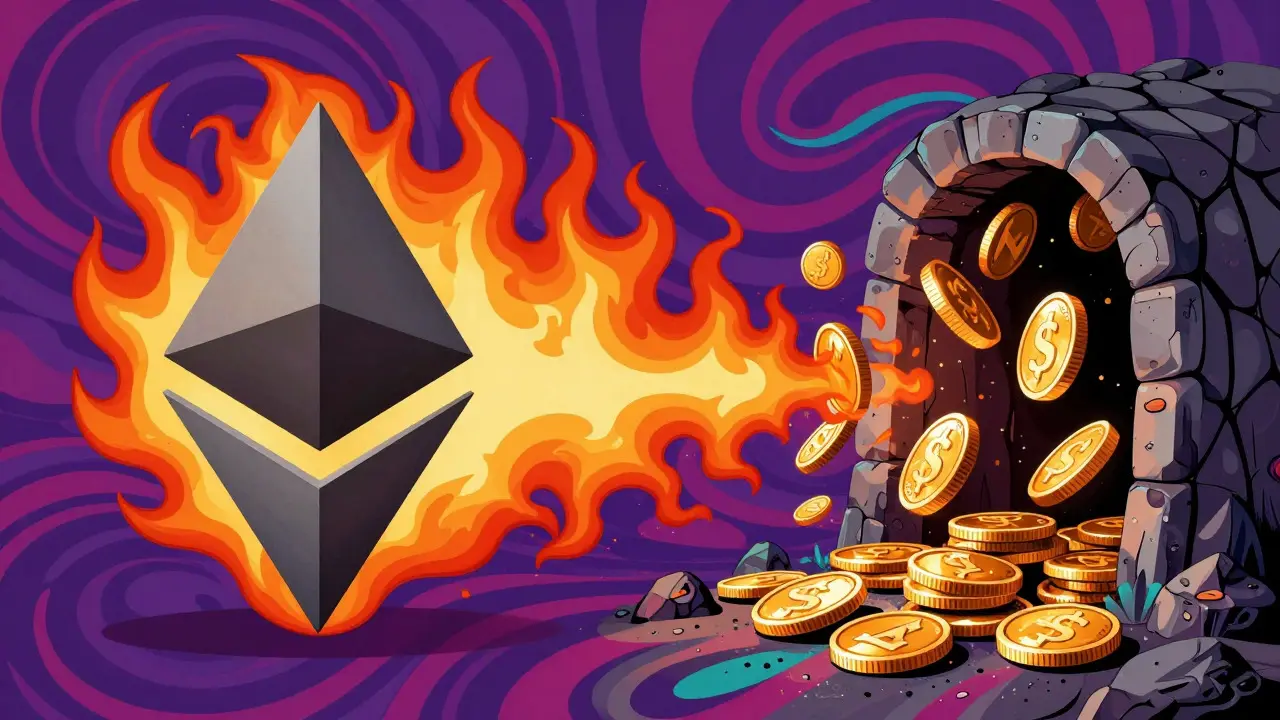
Another mechanism for deflation is "token burning." Projects like Binance Coin (BNB) periodically buy back and destroy tokens from circulation. When Ethereum implemented EIP-1559, it introduced a base fee for transactions that gets burned. During periods of high network activity, more ETH is burned than is issued as staking rewards, making the network temporarily deflationary. This creates a dynamic where users themselves contribute to the scarcity of the asset by using the network.
The Engine of Growth: Inflationary Tokens
On the other side of the spectrum are Inflationary tokens. These cryptocurrencies have an increasing supply. New tokens are constantly minted and distributed to validators, miners, or participants. Why would anyone design a currency that loses purchasing power over time? The answer lies in utility and security.
In proof-of-stake networks, validators need an incentive to lock up their capital and secure the network. Without ongoing issuance (inflation), there would be no reward for providing security. Similarly, decentralized finance (DeFi) protocols use inflationary tokens to bootstrap liquidity. They pay early adopters with newly minted tokens to encourage them to deposit funds into pools. This fuels ecosystem growth.
Dogecoin (DOGE) is the classic example of unlimited inflation. Originally created as a joke, Dogecoin mints 5 billion new coins every year forever. There is no cap. Critics argue this leads to endless dilution. Proponents argue that because the inflation rate is fixed and predictable, and because the transaction volume is high, it remains a viable medium for small payments and tips. It encourages spending because holding it offers little protection against long-term devaluation relative to fiat currencies.
Behavioral Economics: Hoarding vs. Spending
The supply model directly influences user behavior. Deflationary tokens suffer from what economists call the "Gresham's Law" reversal. Normally, "bad money drives out good," but in crypto, people tend to hoard the "good" (scarce) money and spend the "bad" (inflating) money.
If you own a deflationary token like Bitcoin, you are psychologically disincentivized to spend it. Why buy coffee with an asset that might double in value next year? This hoarding behavior can create liquidity crunches. Prices become volatile because large holders (whales) rarely sell, and when they do, the market reacts violently. Conversely, inflationary tokens encourage velocity. If you know your token’s supply is growing by 5% annually, you are more likely to use it for services, governance voting, or staking to earn yield that offsets the inflation.
| Feature | Deflationary Tokens | Inflationary Tokens |
|---|---|---|
| Supply Cap | Fixed or Decreasing | Increasing or Unlimited |
| Primary Use Case | Store of Value (SoV) | Medium of Exchange / Utility |
| User Behavior | Holding / Hoarding | Spending / Staking |
| Volatility | High (Supply shocks) | Lower (Steady flow) |
| Security Incentive | Transaction Fees only | Block Rewards + Fees |
| Examples | Bitcoin, BNB (burns) | Dogecoin, Cardano, Solana |
The Hybrid Approach: Rebase and Dynamic Supply
As the industry matures, rigid models are giving way to hybrid systems. The goal is to capture the best of both worlds: stability for users and appreciation for holders. One prominent example is Ethereum (ETH). While technically inflationary due to staking rewards, the EIP-1559 burn mechanism makes it elastic. When the network is busy, it burns more than it issues. When quiet, it inflates slightly. This aims to keep the supply neutral or slightly deflationary during bull markets.
Another innovation is algorithmic stablecoins and rebasing tokens, though these carry higher risk. Protocols like Frax Finance allow users to choose a peg that adjusts based on collateral ratios. Some experimental tokens adjust the balance in your wallet daily (rebase) to maintain a target price. If the price goes up, your balance increases (inflation for holders); if it drops, your balance decreases (deflation). This attempts to decouple price volatility from holder wealth, encouraging usage regardless of market sentiment. However, complexity here often introduces bugs and governance risks, as seen in several failed projects in previous cycles.
Investment Implications in 2026
For investors in 2026, the choice between deflationary and inflationary tokens depends entirely on your financial goal. Are you looking for insurance against fiat currency debasement, or are you seeking exposure to active ecosystems?
If your goal is preservation of wealth, deflationary assets remain the standard. Their capped supply acts as a hedge against government printing presses. Institutional adoption continues to favor these assets because their scarcity is mathematically verifiable. However, be aware that high scarcity can mean lower liquidity. Entering and exiting large positions can be difficult without moving the market significantly.
If you are interested in generating yield or participating in governance, inflationary tokens often provide better utility. Many DeFi protocols offer Annual Percentage Yields (APY) of 5-10% or more on inflationary assets. The key is to ensure the yield outpaces the inflation rate. For example, if a token inflates by 8% per year but you earn 12% staking rewards, you still see net growth. If the inflation is 15%, you are losing value despite the yield. Always calculate the net emission rate.

Pitfalls to Avoid
One common mistake is assuming all deflationary tokens are safe. A token can have a fixed supply but zero demand. Scarcity means nothing if no one wants the asset. Look for active development, real-world usage, and community engagement. A dead project with a 1 million supply cap is worthless.
Conversely, do not dismiss inflationary tokens as doomed. High-quality projects with strong fundamentals can sustain inflation if the demand for their utility grows faster than the supply. The network effect matters more than the monetary policy alone. Check the token distribution schedule. Is the team unlocking millions of tokens soon? That upcoming inflation event could crash the price regardless of current utility.
Conclusion: Context is King
There is no single winner in the battle of deflationary versus inflationary tokens. Each model solves different problems. Deflationary tokens solve the problem of trust and value storage in a digital age. Inflationary tokens solve the problem of bootstrapping networks and incentivizing participation. The most robust portfolios in 2026 likely contain a mix of both: deflationary assets for long-term savings and inflationary assets for active engagement and yield generation. Understand the mechanics, watch the supply metrics, and invest based on your specific goals, not just the hype.
What is the main difference between deflationary and inflationary tokens?
The main difference lies in supply dynamics. Deflationary tokens have a fixed or decreasing supply, aiming to increase value through scarcity. Inflationary tokens have an increasing supply, aiming to encourage spending and network participation through continuous issuance.
Is Bitcoin deflationary or inflationary?
Bitcoin is considered deflationary. It has a hard cap of 21 million coins, and the rate at which new coins are created is halved approximately every four years, leading to a decrease in new supply over time.
Why are some cryptocurrencies designed to be inflationary?
Inflationary designs incentivize network security (through staking or mining rewards) and encourage token velocity (spending rather than hoarding). They also help fund ecosystem development and attract early users.
How does token burning affect a cryptocurrency?
Token burning permanently removes tokens from circulation, reducing the total supply. If demand remains constant or increases, this reduction in supply can drive up the price, creating a deflationary pressure.
Which type of token is better for investment?
It depends on your goals. Deflationary tokens are generally better for long-term store of value and wealth preservation. Inflationary tokens may be better for generating yield through staking or for use in active DeFi ecosystems, provided the yield exceeds the inflation rate.
Can a token switch from inflationary to deflationary?
Yes, through mechanisms like Ethereum's EIP-1559. If the amount of fees burned exceeds the amount of new tokens issued as rewards, the net supply decreases, making the token effectively deflationary during periods of high usage.