Digitex Crypto Exchange Review 2026: Is the Zero-Fee Model Worth the Risk?
Imagine a cryptocurrency exchange that charges absolutely nothing. No maker fees, no taker fees, and no hidden costs. For traders who scalp or execute high-frequency strategies, this sounds like a dream come true. That is exactly what Digitex promises. Founded in 2018, this platform built its entire reputation on eliminating trading commissions by using its native token, DGTX, an ERC-223 utility token on the Ethereum network used to facilitate fee-free transactions. But here is the catch: in the world of finance, if you are not paying for the product, you might be the product. Or worse, the business model might simply not work.
By June 2026, the landscape of crypto exchanges has shifted dramatically toward regulation and transparency. While giants like Binance and Bybit have adapted, smaller players with unconventional models face an uphill battle. This review cuts through the marketing hype to look at the hard data regarding liquidity, security, and sustainability. We will examine whether Digitex is still a viable option for your portfolio or if it has become a relic of the early DeFi era.
The Core Promise: How Zero Fees Actually Work
To understand Digitex, you first need to understand why most exchanges charge fees. Traditional centralized exchanges (CEXs) cover server costs, security audits, customer support, and regulatory compliance through trading fees. When Digitex launched its public mainnet for futures in July 2020, it flipped this script. Instead of charging users, they rely on the appreciation of their DGTX token and ecosystem services like yield farming and their Blockfunder launchpad.
This model creates a theoretical win-win. You trade without losing money to commissions, which allows for tighter stop-losses and more frequent entries. However, this structure introduces significant risk. If the platform cannot generate enough revenue from its other ventures to cover operational costs, the stability of the exchange is compromised. Unlike Binance, which generates billions in fee revenue, Digitex’s financial health is tied directly to the speculative value of DGTX. This creates a conflict of interest where the platform needs the token price to rise to stay solvent, rather than focusing solely on providing the best trading execution.
Liquidity and Market Status: The Elephant in the Room
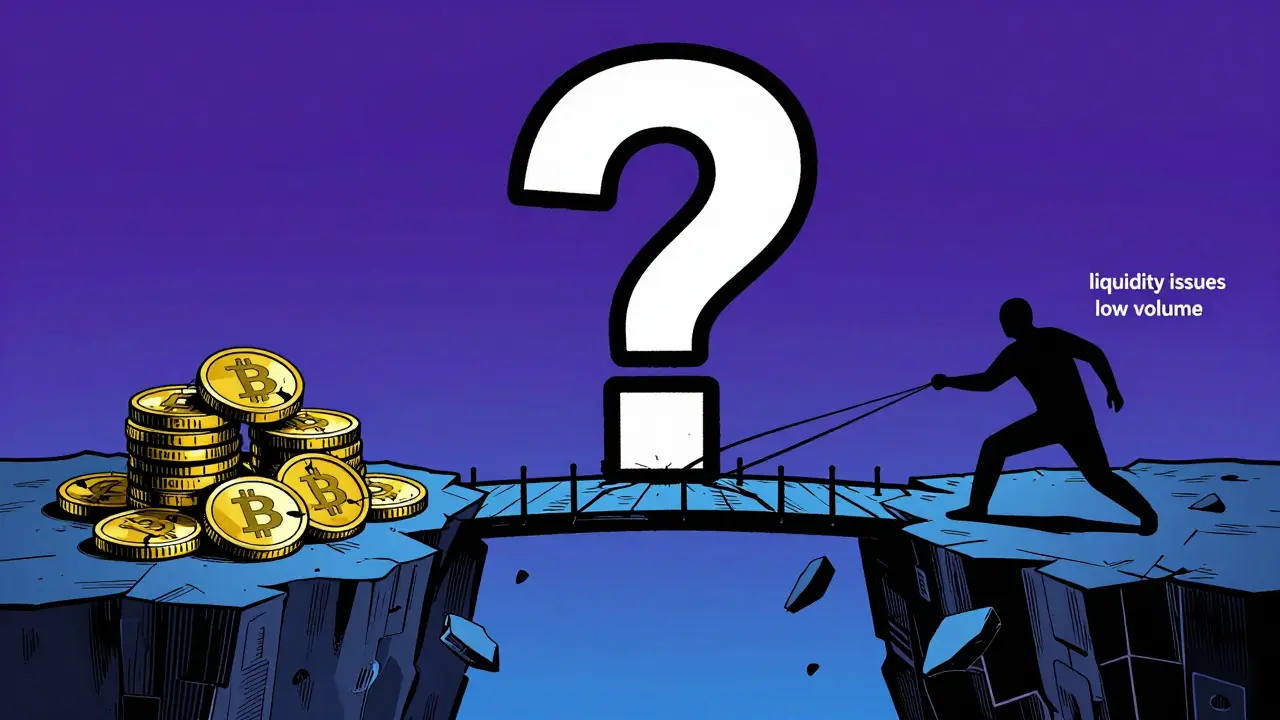
Here is the most critical issue any trader faces: Can you actually buy and sell assets quickly? Liquidity is the lifeblood of any exchange. As of mid-2024 and continuing into 2026, Digitex faces severe challenges in this area. CoinMarketCap classified Digitex as an "Untracked Listing" in July 2023. This designation means the exchange does not meet the minimum standards for volume verification and transparency required to be tracked on major aggregators.
Why does this matter? Untracked status often signals low trading volume or potential manipulation. For a futures exchange, low liquidity means wide spreads. You might see a Bitcoin price of $65,000, but when you try to open a position, the slippage could cost you significantly more. Martini.ai, a credit analysis firm, noted that Digitex’s credit quality ranks below average compared to industry peers. Their data showed credit spreads ranging from 4.4% to over 7%, whereas established exchanges typically keep these spreads under 3%. High credit spreads indicate that investors perceive a higher risk of default or instability.
| Feature | Digitex | Binance Futures | Bybit |
|---|---|---|---|
| Trading Fees (Spot/Futures) | 0% (Zero Fee) | 0.02% / 0.04% | 0.1% / 0.025% |
| Liquidity Status | Low / Untracked | Very High | High |
| Credit Rating (Martini.ai) | B4 (Non-Investment Grade) | A+ (Investment Grade) | A (Investment Grade) |
| Fiat On-Ramps | Limited / None | Extensive | Extensive |
| Regulatory Transparency | Low | Moderate to High | Moderate |
Security and Trust: What Do Users Say?
Trust is earned over years and lost in seconds. Digitex operates on Ethereum-based smart contracts for its futures, which offers a degree of transparency. However, user experiences tell a mixed story. On Trustpilot, Digitex holds a rating of 3.8 out of 5 stars based on 166 reviews as of late 2025. While some users praise the speed and the zero-commission structure for scalping, negative reviews highlight serious operational issues.
Common complaints include withdrawal delays and unresponsive customer support. One user reported waiting 14 days for a withdrawal of 5,000 DGTX tokens, with support failing to respond. Another recurring theme is the limited asset selection. With only a handful of trading pairs available compared to the hundreds offered by competitors, Digitex is nearly useless for portfolio diversification. Furthermore, there have been concerning associations with scam domains. In January 2025, the UK Financial Conduct Authority listed a domain potentially linked to Digitex in its "List of Reported Scam Companies." While this may be an impersonation attempt, it reflects poorly on the brand's ability to protect its identity and users.
The DGTX Token: Utility or Speculation?
The DGTX token is central to the Digitex ecosystem. It is an ERC-223 token, designed to prevent loss during transactions-a slight improvement over standard ERC-20 tokens. Its primary function is to enable zero-fee trading. However, the token’s performance has been lackluster. As of March 2024, the circulating supply was nearly 5 billion tokens, yet the market price hovered around $0.00003. Price predictions for 2025 and beyond are wildly divergent. Some analysts project a modest increase, while others predict a decline. This volatility makes holding DGTX risky, especially since your ability to trade freely on the platform depends on the token’s continued relevance.
Who Should Use Digitex? (And Who Should Avoid It)
Let’s be direct about who this platform fits. Digitex might appeal to highly experienced derivatives traders who already hold large amounts of DGTX and want to test high-frequency strategies without fee erosion. If you are deeply embedded in the Ethereum ecosystem and understand the risks of smart contract platforms, you might find niche value here.
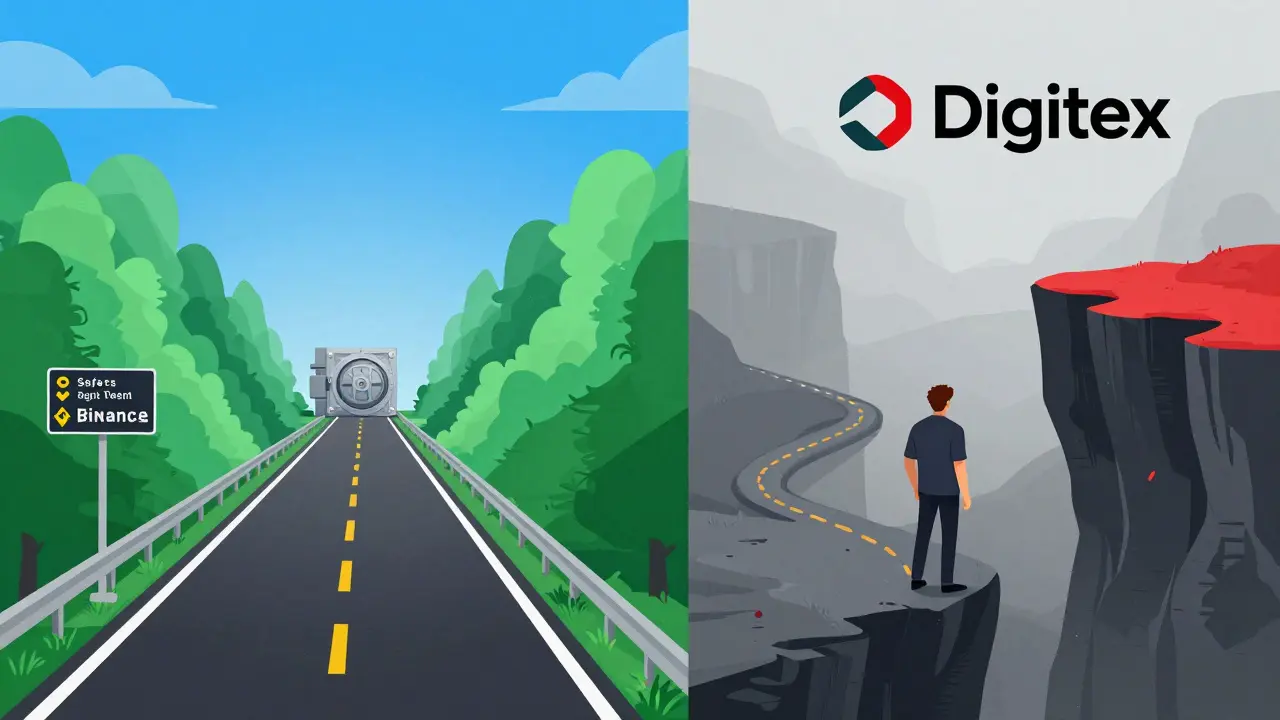
However, for the vast majority of users, Digitex is not recommended. Beginners should avoid it due to the steep learning curve and lack of fiat on-ramps. Investors looking for stability will be disappointed by the low liquidity and untracked status. Those concerned with regulatory compliance and fund safety should stick to established exchanges with proven track records and transparent audit trails.
Alternatives: Better Options for 2026
If you are looking for low fees, there are safer alternatives. Binance and Bybit offer competitive fee structures, often lower for VIP tiers or when using their native tokens (BNB or BYBIT). They provide deep liquidity, extensive asset lists, and robust customer support. For those interested in decentralized options, platforms like dYdX offer non-custodial trading with greater transparency, though they also carry smart contract risks. These alternatives provide a balance between cost efficiency and security that Digitex currently fails to deliver.
Is Digitex safe to use in 2026?
Safety is questionable. While Digitex uses Ethereum smart contracts, it has faced issues with liquidity, withdrawal delays, and lacks the regulatory oversight of major exchanges. Its "Untracked" status on CoinMarketCap suggests low transparency. Always exercise extreme caution and never deposit more than you can afford to lose.
Why does Digitex charge zero fees?
Digitex eliminates trading fees to attract users and drive demand for its native DGTX token. The platform relies on the appreciation of DGTX and other ecosystem services like yield farming to generate revenue, rather than traditional trading commissions.
Can I withdraw funds easily from Digitex?
User reports indicate significant difficulties with withdrawals. Many users have experienced long pending times, sometimes exceeding two weeks, with poor customer support response. This is a major red flag compared to major exchanges that process withdrawals within hours.
What is the DGTX token used for?
The DGTX token is an ERC-223 utility token used to facilitate zero-fee trading on the Digitex platform. It also plays a role in governance and ecosystem incentives such as staking and yield farming programs.
Is Digitex regulated?
Digitex operates in a gray area regarding regulation. It does not have the same level of licensing and compliance as major centralized exchanges like Binance or Coinbase. This lack of clear regulatory standing increases the risk for users, particularly in jurisdictions with strict crypto laws.
How does Digitex compare to Binance or Bybit?
While Digitex offers zero fees, it lacks the liquidity, asset variety, and security infrastructure of Binance or Bybit. These major exchanges charge small fees but provide deep order books, fast withdrawals, and better customer support, making them safer choices for most traders.
Why is Digitex "Untracked" on CoinMarketCap?
CoinMarketCap marks exchanges as "Untracked" if they fail to meet specific criteria for volume verification and transparency. This usually indicates low trading activity, potential wash trading, or insufficient data reporting, signaling higher risk to investors.
Does Digitex support fiat currency deposits?
No, Digitex primarily supports cryptocurrency deposits. It lacks the comprehensive fiat on-ramps (like bank transfers or credit card purchases) found on larger exchanges, making it difficult for new users to enter the platform without already holding crypto.
What is the future outlook for Digitex?
The outlook is uncertain. Analysts note that the zero-fee model is difficult to sustain in a regulated environment. With low market share and credit quality concerns, Digitex faces high risks of consolidation or shutdown unless it pivots its business model significantly.
Are there any scams associated with Digitex?
While the official Digitex platform exists, there have been reports of impersonation scams. The UK FCA listed a domain associated with Digitex as a potential scam. Users must verify they are on the legitimate website and beware of phishing attempts promising guaranteed returns.