Fairdesk Crypto Exchange Review: Shutdown, Safety & What Happened to Your Funds
If you are looking for a way to sign up on Fairdesk is a defunct Singapore-based cryptocurrency exchange that specialized in derivatives and copy trading before ceasing operations in late 2024., stop right here. The platform is no longer active. Fairdesk officially shut down its doors on November 30, 2024. This means you cannot deposit funds, open new positions, or trade on the site anymore. For many users who were still holding assets when the announcement dropped, this news was a shock. For those researching it now, understanding why it closed and what happened to user funds is critical.
This review isn't just about listing features of a dead platform. It is a post-mortem analysis. We need to look at why Fairdesk was popular, where it failed, and how its closure serves as a warning for anyone trading high-leverage derivatives today. If you had an account there, you need to know if your money is gone forever or if there is a path to recovery. If you are considering similar platforms, you need to understand the risks that killed Fairdesk so you don't make the same mistake.
The Rise of Fairdesk: Why Traders Flocked to It
Fairdesk didn't start from scratch. It was founded in 2021 by former employees of Binance is the world's largest cryptocurrency exchange by trading volume, known for its wide range of coins and advanced trading features. and software architects from Morgan Stanley is a major American multinational investment bank and financial services firm.. This pedigree gave them instant credibility. They promised a mix of institutional-grade technology with retail-friendly features. Their main selling point? Derivatives trading without the headache.
At its peak in mid-2023, Fairdesk reported billions in monthly trading volume. CoinMarketCap tracked around $3.7 billion in May 2023 alone. That is serious money. But why did people choose Fairdesk over giants like Binance or Bybit?
- Optional KYC: You could trade without verifying your identity. In a world where exchanges are demanding passports and selfies, anonymity was a huge draw.
- High Leverage: They offered up to 125x leverage on perpetual contracts. For aggressive traders, this meant small capital could control large positions.
- Copy Trading: Their "Arena" feature allowed beginners to mimic top traders automatically. One Reddit user claimed 37% monthly returns using this feature.
- No Fiat On-Ramp Hassles: While they lacked direct bank transfers, their crypto-only model appealed to those already deep in the ecosystem.
The interface was clean. The mobile app scored 4.3 out of 5 stars on app stores. It felt fast. It felt easy. But as we will see, ease of use often masks underlying structural risks.
How Fairdesk Worked: Features and Fees
To understand the collapse, we first need to understand the machine. Fairdesk operated primarily as a derivatives exchange. They listed over 180 perpetual contracts. These are futures contracts that never expire, allowing traders to bet on price movements indefinitely.
| Feature | Detail |
|---|---|
| Max Leverage | 125x on select pairs |
| KYC Requirement | Optional (required for higher withdrawal limits) |
| Trading Pairs | 180+ Perpetual Contracts |
| Withdrawal Fees | $0.80 for USDT (BSC) to $60 for some altcoins |
| Security Claim | 95% cold storage, Proof of Reserves published |
The fee structure was competitive. Maker fees were low, encouraging liquidity. Taker fees were standard for the industry. However, the real cost wasn't always in the fees-it was in the complexity. Derivatives trading with 125x leverage is not for beginners. A 1% move against your position wipes out your entire margin. Fairdesk marketed itself as accessible, but the product was inherently dangerous for inexperienced users.
They also pushed "Simulated Trading" heavily. This allowed users to practice with fake money. While educational, it created a false sense of security. Many users moved to real money feeling confident, only to face the brutal reality of liquidation engines during volatile market swings.
The Warning Signs: Security and Trust Issues
Before the shutdown, opinions on Fairdesk were sharply divided. Some reviews called it "secure and trustworthy." Others flagged it as a red flag. Let's break down the reality.
Fairdesk published Proof of Reserves (PoR). This is a cryptographic proof that an exchange holds enough assets to cover user liabilities. RankFi, a reputable review site, noted this as a positive in February 2023. However, PoR has limitations. It proves you have the assets, but it doesn't prove you aren't lending them out or using them for risky ventures. It also doesn't show your liabilities fully unless audited by a third party, which Fairdesk did not consistently do.
More concerning were the operational complaints. Trustpilot archives show users complaining about withdrawal delays averaging 72 hours. In crypto, where markets move in seconds, three days is an eternity. Customer support response times exceeded 48 hours during peak volatility. If you are trying to exit a losing position or withdraw profits during a crash, slow support can mean the difference between profit and ruin.
Traders Union, another analyst firm, issued a stark warning in January 2024. Using over 100 parameters, they concluded Fairdesk was "not a safe and trusted company." They didn't disclose their full methodology, but their timing was prophetic. Just ten months later, the platform collapsed. Industry analyst John Wu of AEGIS Ventures pointed out the core issue early: "Fairdesk's lack of regulatory licensing in major jurisdictions created inherent operational risks that ultimately proved fatal."
The Shutdown: What Actually Happened?
In October 2024, Fairdesk announced a planned shutdown. The reason cited was "increasing regulatory pressures." Specifically, Singapore's Monetary Authority had tightened its Payment Services Act amendments, making it harder for unlicensed entities to operate. Global regulation was tightening everywhere post-FTX collapse, and Fairdesk, operating in a gray area with optional KYC, found itself squeezed.
Here is the timeline that affected users:
- October 17, 2024: All futures and spot positions were forcibly closed. If you had an open trade, it was liquidated at market price. No exceptions.
- October 17 - November 30, 2024: A 44-day window for withdrawals. Users could log in and move their remaining balance out.
- November 30, 2024: Final shutdown. Servers went offline. Domain redirected to a placeholder page.
The backlash was immediate. SocialBearing analytics tracked nearly 3,000 tweets with #FairdeskShutdown in the first week. Users were angry not just because the platform closed, but because the timeline felt rushed. Many were caught off guard by the forced liquidation of positions.
Where Is My Money? Recovery and Unclaimed Assets
If you missed the November 30 deadline, you are likely out of luck. According to blockchain analysis by Chainalysis in January 2025, approximately 0.8% of total platform assets-estimated at $14.7 million-remained unclaimed. These funds are currently sitting in wallets controlled by the Fairdesk entity.
There is no official mechanism for recovery. The domain fairdesk.com does not offer a support ticket system. There is no legal entity actively soliciting claims. In the crypto world, when an exchange shuts down without a clear bankruptcy process, unclaimed funds often become lost forever. The team behind Fairdesk has not announced any revival plans.
This highlights a critical risk of non-KYC exchanges. Without verified identities, it is harder for regulators to step in and protect consumers. If you are one of the thousands who left money behind, consider it a harsh lesson in the importance of choosing regulated, transparent platforms.
Fairdesk vs. Competitors: Why Others Survived
Fairdesk didn't exist in a vacuum. It competed with giants like Binance, Bybit, and OKX. So why did they survive while Fairdesk died?
| Feature | Fairdesk (Defunct) | Binance | Bybit |
|---|---|---|---|
| Regulatory Status | Unlicensed / Gray Area | Licensed in multiple jurisdictions | Licensed in multiple jurisdictions |
| KYC Policy | Optional | Mandatory for most features | Mandatory for higher tiers |
| Max Leverage | 125x | 125x | 100x |
| Spot Trading | Limited | Extensive | Extensive |
| Institutional Funding | None public | Billions raised | Significant VC backing |
Binance and Bybit invested heavily in compliance. They obtained licenses in Europe, Asia, and other regions. They implemented strict KYC. This made them slower to onboard users, but it kept them alive when regulators came knocking. Fairdesk chose speed and anonymity over compliance. In the short term, it worked. In the long term, it was fatal.
Lessons Learned: How to Choose a Safe Exchange Today
The death of Fairdesk is a case study in regulatory risk. As we move into 2026, the era of "wild west" crypto exchanges is ending. Here is what you must check before trusting your funds to any platform:
- Check Licensing: Does the exchange hold a valid license in a reputable jurisdiction (e.g., EU, UK, Singapore, Japan)? If they say "global" without specifics, be wary.
- Audit Transparency: Look for regular, third-party audited Proof of Reserves. Not just a snapshot, but ongoing audits.
- Insurance Fund: Do they have a dedicated insurance fund to cover insolvency events? Binance and Coinbase have these; many smaller exchanges do not.
- Support Responsiveness: Test their support before depositing large amounts. Slow support is a sign of deeper operational issues.
- Regulatory History: Have they received warnings or fines from regulators? A clean record is good, but a proactive approach to compliance is better.
Don't fall for the allure of anonymous trading or excessive leverage. These features often come with hidden costs. The convenience of skipping KYC is outweighed by the risk of having no recourse if things go wrong.
Alternatives to Fairdesk in 2026
If you were a Fairdesk user, you are likely looking for a replacement. Here are the best current alternatives that offer similar features but with greater stability and compliance:
Bybit: Strong derivatives focus, high leverage options, and robust copy trading. They have improved their KYC processes but remain user-friendly for experienced traders.
Binance: The industry leader. Offers everything Fairdesk did, plus spot trading, staking, and a massive ecosystem. Compliance is strict, but safety is high.
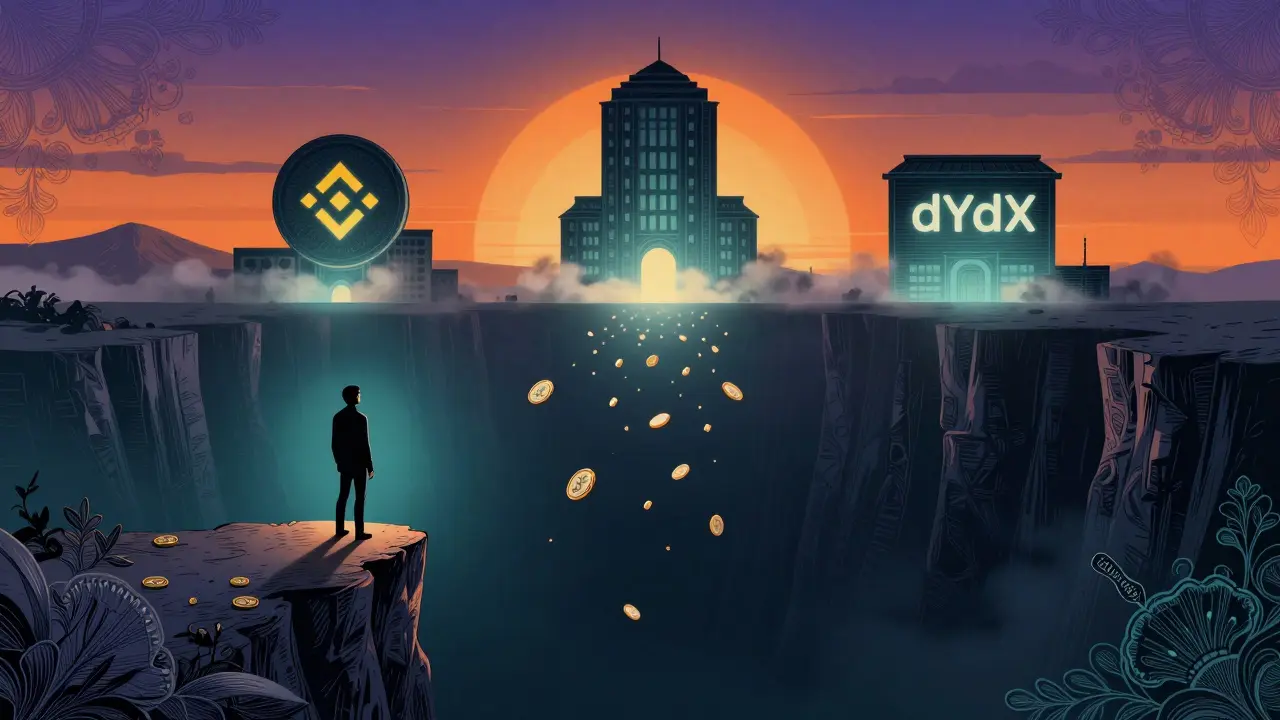
dYdX: For those who want decentralization. dYdX is a decentralized exchange (DEX) for derivatives. You retain custody of your funds via a wallet. No central entity can freeze your assets or shut down overnight. However, it requires more technical knowledge.
OKX: Another strong competitor with a wide range of derivatives products and a growing DeFi suite. They have been proactive in obtaining global licenses.
Each of these platforms has survived the recent regulatory crackdowns because they prioritized compliance alongside innovation. When moving your funds, start with small amounts to test the withdrawal process. Never keep all your eggs in one basket.
Conclusion: The End of an Era
Fairdesk was a product of its time-a period of rapid growth and loose regulation in crypto. It offered exciting features to traders who wanted freedom and flexibility. But freedom without oversight comes with risks. The shutdown in late 2024 was inevitable given the global shift toward stricter crypto laws.
For current users, the message is clear: verify your exchange's status regularly. Don't assume a platform will last forever. Diversify your holdings across multiple reputable exchanges and consider self-custody solutions like hardware wallets for long-term storage. The crypto market is maturing, and only platforms that respect regulations will thrive in the years ahead.
Is Fairdesk still operational in 2026?
No, Fairdesk ceased all operations on November 30, 2024. The website is no longer functional for trading, and no new accounts can be created.
Can I recover my funds from Fairdesk if I missed the withdrawal deadline?
Recovery is highly unlikely. Approximately $14.7 million in assets remained unclaimed after the shutdown. There is no official customer support channel or legal process currently available for users to claim these funds.
Why did Fairdesk shut down?
Fairdesk cited increasing regulatory pressures as the primary reason for its closure. Stricter licensing requirements in Singapore and globally made it unsustainable for the unlicensed platform to continue operating.
Was Fairdesk a scam?
Fairdesk was not classified as a outright scam during its operation. It provided legitimate trading services and published Proof of Reserves. However, its lack of regulatory compliance and eventual shutdown resulted in significant losses for users who could not withdraw in time.
What are the best alternatives to Fairdesk for derivatives trading?
Top alternatives include Bybit, Binance, and OKX for centralized exchanges, and dYdX for decentralized trading. These platforms offer similar leverage and copy trading features but with stronger regulatory compliance and security measures.
Did Fairdesk require KYC verification?
KYC was optional for basic trading on Fairdesk. However, higher withdrawal limits required identity verification. This optional policy contributed to its appeal but also limited consumer protections under regulatory frameworks.
When were all Fairdesk positions forcibly closed?
All open futures and spot positions on Fairdesk were forcibly closed on October 17, 2024. Users then had until November 30, 2024, to withdraw their remaining balances.
Antony Lopez
July 10, 2026 AT 21:08Typical. Another exchange collapses because they couldn't handle basic compliance. It’s not rocket science to follow the rules, but these crypto bros always think they’re above the law. The US has strict regulations for a reason, and yet people flock to these offshore gambling dens like moths to a flame. If you can’t even keep your books straight in Singapore, how were you going to survive globally? It’s embarrassing really. We see this pattern over and over again with unregulated entities. They promise high returns and anonymity, then vanish when the heat turns up. Americans need to stop chasing these shady platforms and stick to regulated institutions that actually answer to someone. The fact that $14 million is just sitting there unclaimed shows how disorganized these operations are from the start.
Kat Barr
July 12, 2026 AT 20:59Oh no 😢 This is such sad news for everyone who lost money! 💔 I hope those users find some way to get their funds back eventually 🙏 It’s scary how fast things can change in crypto 📉 Please be careful out there everyone!! Stay safe and secure 🔒✨
Logan Edmison
July 13, 2026 AT 04:50i mean its just the nature of the beast right? if u want freedom u gotta take risks. fairdesk wasnt a scam per se it was just bad business. the whole concept of KYC is flawed anyway why should i have to prove who i am to trade my own money? but yeah maybe they pushed it too far with the leverage. 125x is crazy. basically gambling. so dont blame the game blame the players who got greedy. life is short trade hard die young or something lol
Michelle Walker
July 14, 2026 AT 21:39You are missing the point entirely. It wasn't about 'freedom.' It was about negligence.
The lack of regulatory licensing wasn't a feature; it was a fatal flaw. When an exchange operates in a gray area, they are building on sand. You cannot separate the product from the legal framework that sustains it. The forced liquidation of positions without proper notice is criminal negligence.
Stop romanticizing failure. These platforms fail because they prioritize short-term user acquisition over long-term viability. The 'optional KYC' was a trap. It attracted exactly the kind of users who would cause systemic risk during volatility. Do not mistake incompetence for ideology.
Shay Thomson
July 15, 2026 AT 15:06I feel for the people who lost everything here. It must be devastating to watch your savings disappear overnight. 😔 But we have to look at this as a learning opportunity for the community. We are all part of this ecosystem, and when one piece falls, it affects us all. Let's support each other through this transition. Maybe we can create a fund or a group to help those affected navigate the next steps. Unity is strength. We shouldn't let fear divide us. Let's move forward together with caution and compassion. 🤝❤️
DJ Maleko
July 16, 2026 AT 01:21So you're saying you didn't check their proof of reserves before depositing? That's on you. 🤷♂️ The data was public. The warnings were there. Traders Union flagged them months ago. If you can't do basic due diligence, you don't deserve to make money in this market. Stop crying about it. The market doesn't care about your feelings. It cares about liquidity and compliance. You ignored the red flags because you wanted easy money. Now you're broke. Classic. 📉💸
Erika Pozzetto
July 17, 2026 AT 21:00It is imperative that we consider the broader implications of this closure for the global financial landscape. The absence of rigorous oversight mechanisms in decentralized finance platforms often leads to catastrophic outcomes for retail investors who may not possess the technical expertise to assess counterparty risk. Furthermore, the reliance on optional identity verification protocols creates a significant vulnerability in the chain of custody for digital assets. One must reflect upon the necessity of standardized international regulations that enforce transparency and accountability across all cryptocurrency exchanges operating within multinational jurisdictions. Without such frameworks, the likelihood of similar incidents recurring remains alarmingly high, thereby undermining trust in the entire sector.
Russ Fincham
July 17, 2026 AT 23:33The collapse of Fairdesk is a textbook example of what happens when innovation outpaces regulation. While the technology behind derivatives trading is sound, the operational structure was fundamentally flawed. They tried to offer institutional-grade tools to retail users without the institutional safeguards. It’s a mismatch that inevitably leads to disaster. The comparison to Binance and Bybit is apt; those companies survived because they adapted to the regulatory environment rather than fighting it. Fairdesk chose to ignore the writing on the wall. Their failure serves as a cautionary tale for any startup looking to enter the space without a solid compliance strategy.
Linda Hilliard
July 18, 2026 AT 07:24Let’s be honest, most of the people using Fairdesk were probably engaging in speculative behavior that borders on pathological gambling. The platform catered to a demographic that lacks financial literacy and discipline. Offering 125x leverage to amateurs is like handing a loaded gun to a toddler. The fact that they marketed this as 'accessible' is offensive to anyone who understands risk management. These users brought this upon themselves by ignoring the obvious dangers. The market corrected itself, and now we have to deal with the fallout. Typical. :)
Winston Lacewing
July 18, 2026 AT 19:29This is absolutely outrageous!! 😡 How dare they just shut down and leave millions of dollars hanging?? It’s morally bankrupt! These executives are thieves! They knew the regulators were coming and still took our money! I’m furious! Everyone needs to boycott any platform that doesn’t have full insurance! This is a crime against humanity! 🚫💰😤
Kristine Lawson
July 20, 2026 AT 04:38Contrary to popular belief, the shutdown was not entirely unexpected. Those paying attention to the regulatory shifts in Singapore saw this coming. The Monetary Authority’s tightening of the Payment Services Act was a clear signal. Yet, here we are, with people acting shocked. It is frustrating to witness such collective ignorance. The responsibility lies squarely with the users who failed to monitor the legal landscape. Ignorance is not an excuse for financial loss. One must remain vigilant and informed at all times.
Nick Wengel
July 21, 2026 AT 02:45In many cultures, trust is built slowly over time. In crypto, it seems to be broken instantly. It is sad to see another platform fail. But we must learn from this. Different countries have different ways of handling finance. Some value speed, others value safety. Fairdesk tried to have both and failed. We should respect the lessons learned. Let us move forward with more understanding and less anger. Peace and patience will serve us better than rage.