Livecoin Crypto Exchange Review: Pros, Cons, and Real User Experiences in 2026
Is Livecoin Still a Viable Crypto Exchange in 2026?
If you're looking for a crypto exchange that supports dozens of obscure altcoins and lets you trade directly with USD, EUR, or Russian Rubles, Livecoin might have caught your eye. It’s been around since 2013, survived market crashes, and never suffered a major hack. But here’s the catch: Livecoin is not for everyone. In fact, for most traders, especially those in the U.S., it’s not even an option. And recent user reviews suggest things might be falling apart.
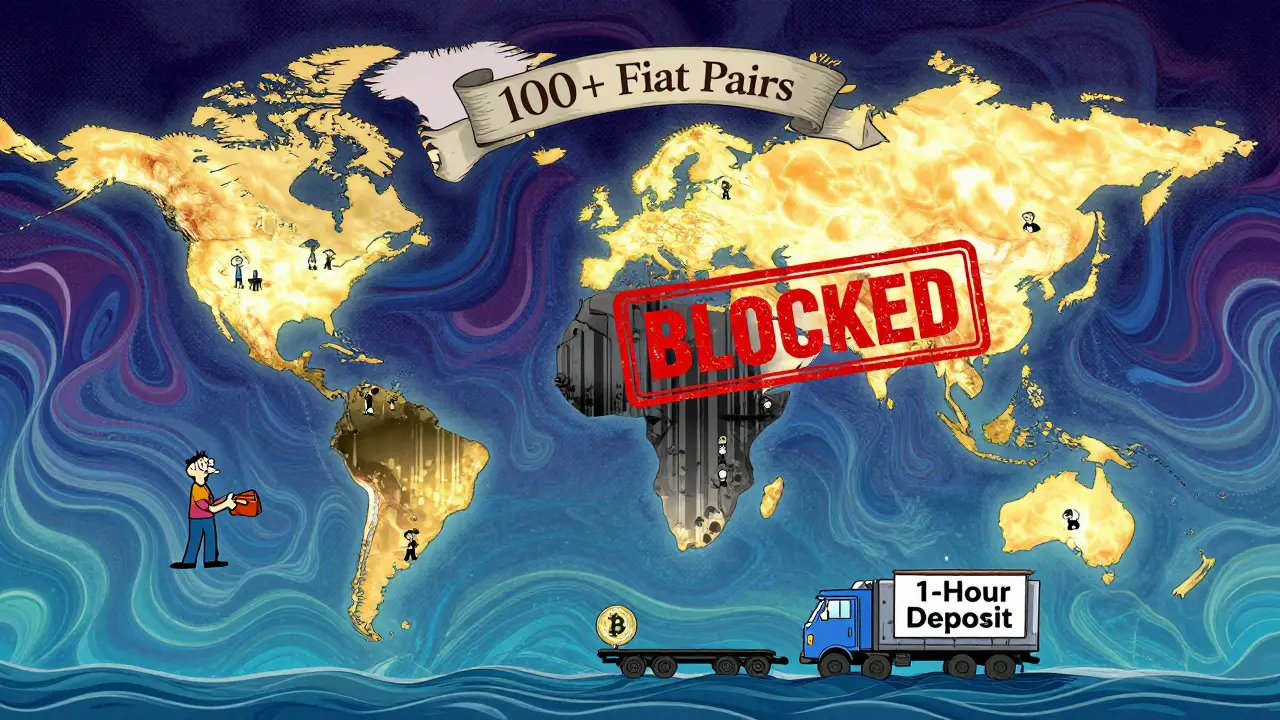
Livecoin operates out of England with servers in Louisiana, USA. It doesn’t serve customers in the United States, which immediately cuts out a huge chunk of the global market. But for international traders-especially in Europe and Russia-it still offers something few other exchanges do: over 100 cryptocurrency-to-fiat pairs. That means you can buy Dogecoin with euros, trade Solana for rubles, or swap Chainlink for dollars without jumping through hoops or using third-party gateways.
Trading Fees: Lower Than Average, But Not Always Better
Livecoin charges a flat 0.18% fee for both makers and takers, according to Cryptowisser’s 2025 analysis. That’s slightly below the industry average of 0.25%. If you trade a lot, your fee drops-down to as low as 0.02% for high-volume traders. That’s competitive, and it’s one of the few things Livecoin does consistently well.
But here’s what most people don’t tell you: low fees mean nothing if you can’t execute trades. Many users report that even popular coins like LTC or XRP have painfully low trading volumes on Livecoin. One G2 reviewer wrote: “The not so nice thing about Livecoin is the volume of trading. It is often quite low, even for more popular currencies.” That means if you want to sell 5 BTC, you might get stuck waiting for buyers-or worse, you’ll have to lower your price significantly to find someone.
Withdrawals and Deposits: Slow, But Not Always Expensive
When you withdraw Bitcoin, Livecoin charges 0.0005 BTC. That’s about $30-$40 depending on price, and it’s lower than what Coinbase or Kraken charge. For altcoins, fees vary, but most are reasonable. The problem isn’t the cost-it’s the speed.
Bitcoin deposits can take up to an hour to show up in your account. That’s not a security delay-it’s a network lag. But users say it feels like forever when you’re trying to get into a trade. Withdrawals aren’t much faster. Some report waiting 6-12 hours for funds to leave, even for verified accounts. Compare that to Binance or Bybit, where withdrawals often hit your wallet in under 10 minutes, and you start to see the gap.
Altcoins: The Real Reason People Use Livecoin
If you’re into niche tokens-coins you can’t find anywhere else-Livecoin is still one of the few places you can trade them. It supports dozens of obscure altcoins that Coinbase, Kraken, and even Binance have dropped. Tokens like DibCoin (DIBC), Verge (XVG), and dozens of others you’ve never heard of are available here.
But that’s also the danger. In 2023, one user reported that DibCoin’s wallet froze, trading was halted, and they lost access to over $200 worth of assets for two weeks. No updates. No communication. Just silence. When you trade on Livecoin, you’re trusting not just the exchange, but the projects it lists. And many of those projects are poorly managed, underfunded, or outright abandoned.
User Experience: Simple? Maybe Not
Livecoin claims its interface is “very simple,” but that’s not what users are saying. The platform feels outdated. Navigation isn’t intuitive. Finding your wallet balance, checking order history, or adjusting settings takes more clicks than it should. For beginners, it’s overwhelming. For experienced traders, it’s frustrating.
There’s an API for algorithmic trading, and it’s well-documented. But most people won’t use it. The web platform doesn’t even have mobile apps. You’re stuck on desktop. No iOS or Android app means you can’t check your portfolio on the go. In 2026, that’s a major red flag.
Customer Support: Helpful… Until It’s Not
Livecoin offers 24/7 support in English, Russian, and Chinese. That’s rare. Most exchanges only support English. Response times are usually under 24 hours for simple questions. But when things get complicated-like frozen funds, failed deposits, or issues with unsupported tokens-users report long delays and inconsistent answers.
One verified reviewer on Reviews.io said they had trouble reactivating their old account but eventually got their money back. That’s a win. But another user on Trustpilot said they submitted a ticket about a missing deposit and got no reply for five days. The difference? Luck. And that’s not a good foundation for trust.
Trustpilot Rating Plunged to 2.2/5 in 2026
This is the biggest warning sign. As of January 21, 2026, Livecoin’s Trustpilot rating sits at 2.2 out of 5, based on 56 reviews. That’s a sharp drop from the 3.5-4.0 ratings it had in 2023 and 2024. People used to say, “It’s slow but reliable.” Now, they’re saying, “I lost money and no one helped.”
What changed? No one’s sure. Maybe the team got stretched thin. Maybe they stopped investing in tech support. Maybe more users are finally speaking up after years of silence. Whatever the reason, the trend is clear: satisfaction is falling.
Who Should Use Livecoin in 2026?
Only three types of people should consider Livecoin right now:
- International traders outside the U.S. who need to trade altcoins with fiat (USD, EUR, RUB) and don’t mind slow deposits.
- Altcoin hunters looking for obscure tokens no other exchange carries-even if they’re risky.
- Low-volume traders who don’t need fast execution and are okay with a clunky interface.
If you’re in the U.S., skip it. You can’t sign up anyway. If you trade large amounts, avoid it-low liquidity will eat your profits. If you want speed, reliability, and a modern app, look elsewhere.
How Does Livecoin Compare to Other Exchanges?
| Feature | Livecoin | Coinbase | Binance | Kraken |
|---|---|---|---|---|
| Available in U.S.? | No | Yes | No (U.S. users on Binance.US) | Yes |
| Fiat pairs (USD, EUR, RUB) | 100+ | 4 | 10 | 8 |
| Trading fee (standard) | 0.18% | 0.50% | 0.10% | 0.16% |
| Altcoin selection | Excellent | Poor | Very Good | Good |
| Trading volume | Low | High | Very High | High |
| Mobile app | No | Yes | Yes | Yes |
| Trustpilot rating | 2.2/5 | 4.1/5 | 3.9/5 | 4.3/5 |
Livecoin wins on altcoin variety and fiat pairings. But it loses badly on liquidity, app experience, and recent trust metrics. Binance and Kraken offer better fees, faster speeds, and far more reliable customer service. Coinbase is simpler and safer for beginners. Livecoin only edges out if you need something no one else has-and you’re willing to accept the risks.
Final Verdict: A Niche Tool with Growing Risks
Livecoin isn’t dead. It’s still operating. It still has users. It still adds new coins. But it’s no longer the reliable, quiet player it once was. The drop in Trustpilot ratings, the lack of mobile apps, the slow support for complex issues, and the low trading volumes all point to one thing: stagnation.
If you’re a hobbyist trader in Europe or Russia who wants to buy obscure altcoins with euros, Livecoin might still work for you. Just keep your deposits small. Don’t rely on it for emergencies. And never put more money in than you’re willing to lose.
For everyone else-especially those who care about speed, security, and support-there are better options. Livecoin feels like a relic from the early days of crypto: interesting, stubborn, and slowly fading out.
Is Livecoin safe to use in 2026?
Livecoin hasn’t been hacked since it launched in 2013, which is impressive. But safety isn’t just about hacks. It’s about customer support, transparency, and how they handle failures. Recent Trustpilot reviews show a sharp decline in user satisfaction, with complaints about frozen funds and slow responses. If you use Livecoin, treat it like a high-risk experiment-not a primary wallet or trading platform.
Can I use Livecoin if I live in the United States?
No. Livecoin explicitly blocks U.S. customers due to regulatory concerns. Even if you try to sign up with a VPN, your account will likely be flagged and frozen. Don’t risk it. Use U.S.-based exchanges like Kraken, Coinbase, or Gemini instead.
What’s the best altcoin to trade on Livecoin?
There’s no “best.” Livecoin lists hundreds of obscure coins, many with little to no real use case. Some, like Verge (XVG) or Ravencoin (RVN), have active communities. Others, like DibCoin (DIBC), have vanished or frozen trading without warning. Stick to coins with clear development teams, active GitHub repos, and recent price movement. Avoid anything that’s been silent for over a year.
Why is Livecoin’s trading volume so low?
Because most serious traders use bigger exchanges. Livecoin’s lack of a mobile app, poor UI, and slow withdrawals discourage high-volume traders. It also doesn’t market itself well. Without liquidity, prices jump around more, making it harder to enter or exit trades without losing money. It’s a cycle: low volume scares traders away, which makes volume even lower.
Should I switch from Binance or Coinbase to Livecoin?
Only if you need a coin that’s not listed anywhere else-and you’re okay with slower trades, no mobile app, and higher risk. For most people, the answer is no. Binance and Coinbase offer better tools, faster execution, stronger support, and far more reliability. Livecoin is a backup, not a replacement.
What are the withdrawal fees on Livecoin?
Bitcoin withdrawals cost 0.0005 BTC (about $30-$40). For most altcoins, fees range from $0.10 to $2.00, depending on the network. These are below average compared to other exchanges. But remember: low fees don’t matter if your withdrawal takes 12 hours to process.
Next Steps: What to Do If You’re Already Using Livecoin
If you’re already on Livecoin:
- Withdraw any major holdings to a personal wallet or a more reliable exchange.
- Only keep small amounts for trading altcoins you can’t find elsewhere.
- Never rely on it for emergency access to funds.
- Monitor Trustpilot and Reddit for new complaints-especially about frozen accounts.
If you’re thinking about signing up:
- Don’t. Use Kraken, Coinbase, or Binance.US instead.
- If you absolutely need an altcoin only on Livecoin, use a small test amount first.
- Assume you’ll lose time, not just money.
Livecoin isn’t a scam. But it’s no longer a safe or smart choice for most people. The market has moved on. The platform hasn’t.
Edward Drawde
February 3, 2026 AT 21:31Will Pimblett
February 5, 2026 AT 14:26And don't get me started on the UI. I've seen better interfaces on a 2012 Nokia.
Nickole Fennell
February 5, 2026 AT 21:04Investigating? I was literally holding a digital asset that had no liquidity and zero customer care. I lost $300 and my faith in humanity. Don't be me.
Freddy Wiryadi
February 6, 2026 AT 20:26Also, no mobile app? Yeah, that’s wild in 2026. 😅
Elle M
February 7, 2026 AT 23:26And don’t tell me 'but I need DibCoin'-if a coin’s only on a platform with a 2.2 Trustpilot rating, it’s not an investment. It’s a funeral.
Crystal Underwood
February 8, 2026 AT 18:10And the '24/7 support'? More like 24/7 auto-replies. I’ve seen the same canned response 7 times. They don’t care. They’re milking the last few ruble traders before the whole thing collapses.
Jack Petty
February 9, 2026 AT 22:13But the walls are whispering: 'You’re gonna lose everything.' And the lights? They flicker every time you try to withdraw. The devs? Gone. The devs are ghosts. The only thing still alive is the 0.18% fee-because they still want your money before they vanish.
christal Rodriguez
February 10, 2026 AT 13:06Meenal Sharma
February 12, 2026 AT 03:10One must question whether the platform’s continued operation constitutes ethical participation in the digital asset economy.
Brianne Hurley
February 13, 2026 AT 23:46And when I finally got my funds? They took 3% in fees. THREE PERCENT. On a withdrawal. I was already emotionally bankrupt. Now I’m financially broken too.
They didn’t even say sorry. Just 'your transaction is pending.'
That’s not customer service. That’s emotional abuse.
Rico Romano
February 14, 2026 AT 11:12Low fees? Big deal. Binance has lower. Better liquidity? Obviously. Mobile app? They don’t even have a responsive website. You’re not saving money-you’re paying in time, stress, and sanity.
And don’t tell me you 'need' DibCoin. If you can’t find a coin on Binance or Kraken, it probably doesn’t deserve to exist. You’re not an early adopter. You’re a sucker.