Mastering the Gaming NFT Economy and Tokenomics for Sustainable GameFi
The New Math Behind Video Games
Remember when your best weapon had to stay locked in a server you didn't own? It feels like another era now. Today, we talk about Gaming NFT Economy not as a buzzword, but as the actual financial engine keeping blockchains alive. This is where the rubber meets the road for digital ownership.
We aren't just talking about buying pixels here. We are dealing with complex economic systems where supply and demand dictate the fun factor just as much as the graphics do. A poorly designed economy kills a project faster than bad code. In fact, most games launch with great visuals but collapse because their money math doesn't add up. We need to look at the Blockchain technology underpinning this system.
How Tokenomics actually works
You see the term Tokenomics is a portmanteau of 'token' and 'economics' that describes the economic frameworks governing cryptocurrency projects thrown around constantly. It sounds fancy, but really, it's just supply management. In traditional software games, companies print infinite gold. If too many players find a glitch to get gold, inflation hits, and nobody cares about the currency anymore.
In Non-Fungible Tokens (NFTs) represent unique digital assets like avatars, land, or weapons stored on a blockchain, the supply cap matters. Let's say a developer creates only 1,000 rare swords. Those swords have scarcity. Scarcity creates value. But value is useless if people can't trade them. That's where the token comes in-it acts as the liquid fuel moving those assets around.
| Feature | Traditional MMORPG | NFT Game Economy |
|---|---|---|
| Asset Ownership | Licensed to player | Owned by player wallet |
| Asset Transfer | Restricted to internal auction | Portable across platforms/marketplaces |
| Currency Value | Tied to game health only | Tied to external market demand |
Breaking down the Asset Classes
A healthy ecosystem doesn't rely on one coin. It usually needs three distinct layers to function correctly without collapsing. First, you have the Utility Token. Think of this as your gas bill. You need it to cast spells, upgrade gear, or enter the arena. It gets spent inside the game loop.
Then there's the Governance Token provides holders with voting rights on protocol decisions. This isn't just for spending; it's for steering the ship. Holders vote on things like changing the drop rate for rare items or adjusting transaction fees. This creates alignment: people holding the token want the game to succeed so their voting power remains valuable.
Finally, the NFTs are non-interchangeable digital assets with unique identifiers and metadata. These are your character skins, the land you build on, or the legendary sword you fought for. Unlike utility tokens, which are fungible (every $1 token is equal), every NFT has its own unique ID hash.
Fighting the Inflation Beast
Here is the harsh reality check: Every successful game suffers from inflation eventually. Why? Because as long as you reward players with new coins for doing activities, the supply goes up. If the supply goes up and demand stays flat, the price crashes. In 2026, we've learned that simple "minting" of new tokens is dangerous.
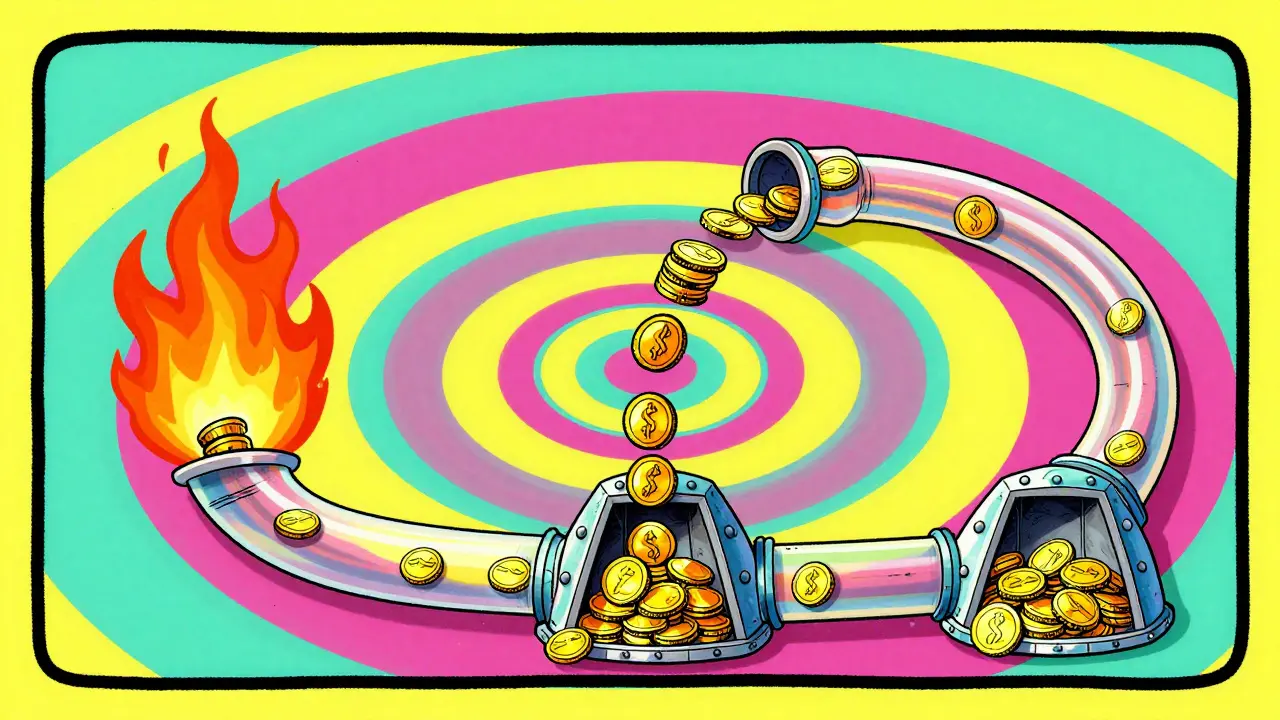
Developers are using sophisticated deflationary mechanics. One common tool is the buyback-and-burn strategy. When you win a major tournament, a percentage of the prize pool might be taken to buy back the company's currency on the open market and then permanently delete it. This reduces the total supply over time, theoretically making remaining tokens more scarce.
Another vital mechanic involves friction. In the old days, getting resources was easy and fast. Now, smart games make you earn the right to earn. This could mean locking an NFT for a week to unlock crafting capabilities, effectively removing that asset from circulation temporarily while encouraging long-term commitment.
Staking and DeFi Integration
We can't talk about modern economies without mentioning Decentralized Finance, commonly known as DeFi. Many players treat game economies like bank accounts. By staking your assets, you agree not to sell them for a set period. In return, the protocol pays you interest.
Staking is the process of holding cryptocurrency in a wallet to support network operations and earning rewards. In gaming, this serves two purposes. First, it locks up excess supply so it doesn't flood the market. Second, it turns idle inventory into passive income. If you aren't playing the game, you put your sword to work.This integration requires robust liquidity management. A liquidity pool allows you to swap one game's currency for another instantly without waiting for a buyer. However, if everyone rushes to cash out at once (a death spiral), the liquidity evaporates. Proper tokenomics ensures these pools are deep enough to handle volatility.
Accessibility through Fractionalization
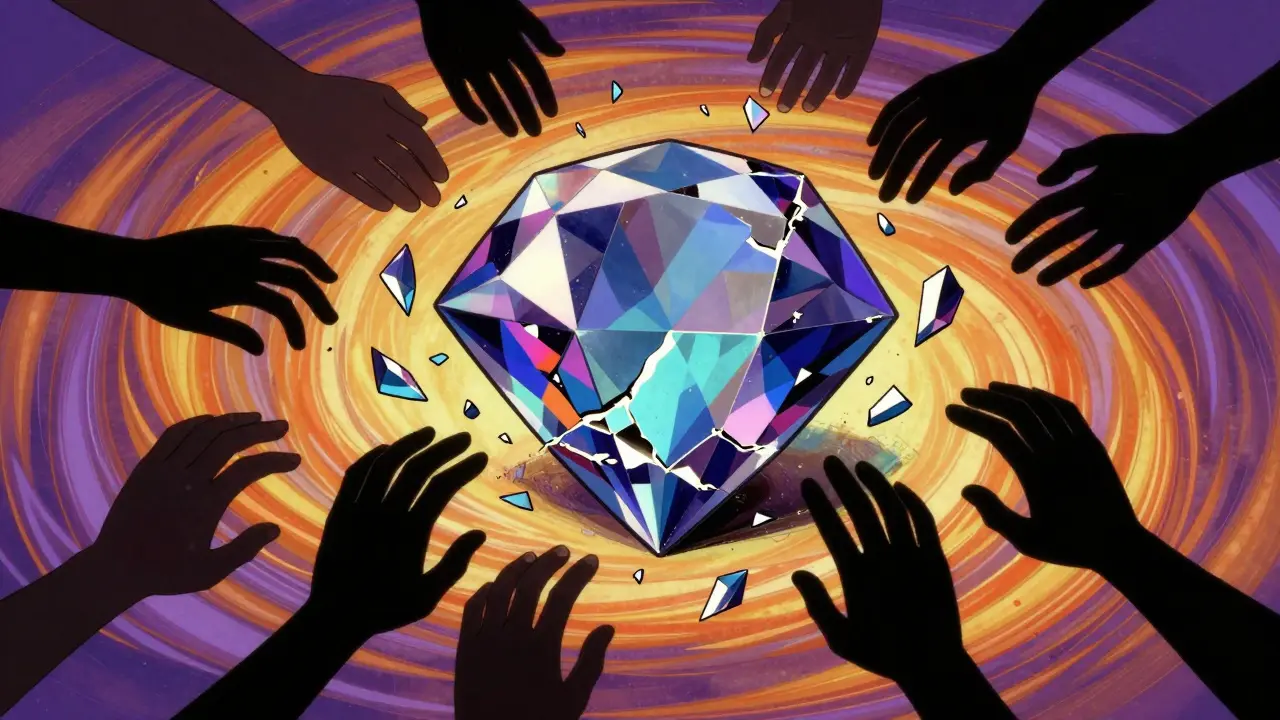
High-value NFTs often cost thousands of dollars, putting the economy out of reach for casual players. To combat this, developers introduced fractionalization. Imagine a legendary dragon skin worth $10,000. Instead of selling it to one person, the contract breaks it into 1,000 pieces.
Now, anyone can buy one piece for $10. If the original skin becomes rarer or the game grows, the fractions increase in value. This opens up the economy to a massive audience who previously couldn't afford entry-level assets. It democratizes participation and boosts overall market depth.
Spotting Red Flags Before You Invest
Before diving into any GameFi project, check the whitepaper carefully. Look for the token emission schedule. Does the supply increase every year? Or does it shrink? Unchecked inflation is the fastest way to zero.
Also, ask yourself: Is the fun dependent on the price? If the game becomes boring when the token value drops, it's a scheme, not a game. Sustainable economies prioritize entertainment value alongside financial engineering. Players come for the gameplay; they stay because the economy works.
What happens if a game's token loses all value?
If a token loses value, the primary impact is on secondary market sales. If the token represents utility, you may still use it in-game, but its purchasing power drops. Often, players shift to fiat currencies or other stablecoins within the game ecosystem to stabilize their progress.
Are NFTs guaranteed to increase in value?
Absolutely not. NFTs are highly speculative assets. Their value depends entirely on community adoption, scarcity, and the health of the underlying game. Most NFTs lose value over time unless the utility they provide is consistently in high demand.
Can I play these games without spending real money?
Yes. While many start with free-to-play tiers, advanced features or high-tier earning potential usually require holding specific assets or tokens. However, you don't strictly need to buy-in if you are willing to grind for rewards manually.
How do I manage taxes on my earnings?
You must track every transaction involving taxable events like swapping tokens or selling NFTs. Treat each transaction as a separate event for tax reporting purposes, documenting the fair market value at the time of execution.
Is cross-chain interoperability possible?
Currently, bridges allow moving assets between different blockchains, but true seamless interoperability is still developing. Be aware of bridge risks; smart contract vulnerabilities on bridges have historically been sources of security exploits.
Matthew Wright
April 2, 2026 AT 01:14This breakdown is actually really solid for understanding the mechanics! We need to focus on the utility tokens primarily!! The governance aspect is crucial for longevity too!!! Most people miss that part entirely!!!!
Arwyn Keast
April 2, 2026 AT 16:53The narrative ignores the systemic risks inherent in such volatile structures. British investors are already wary of these schemes due to regulatory clarity. Scarcity models rarely survive without external fiat support.
Evan Borisoff
April 2, 2026 AT 17:53I see the fundamental flaw in how these economies are currently structured. The reliance on constant influx of capital is unsustainable by design. Players expect returns that simply do not exist in reality. Traditional games work because they control supply completely. Blockchain introduces volatility that kills retention rates quickly. New entrants always flood the market with sell pressure. Veteran holders then panic when prices dip sharply. Dev teams cannot print money like central banks do. Smart contracts enforce rules that prevent emergency interventions. Liquidity pools dry up during bad market cycles. Staking rewards become insufficient to offset inflation losses. Real value never sticks to the underlying asset class. Governance votes get manipulated by whale wallets easily. We need strict regulation before mass adoption happens. Until then this is just speculation wrapped in gaming skin.
Emma Pease-Byron
April 4, 2026 AT 03:08Your pessimism is as expected from someone who clearly misses the nuance of true decentralization. Only those with intellectual capacity can grasp the complexity beyond price charts. The rest of you are merely reacting to fear mongering.
Erica Mahmood
April 5, 2026 AT 21:30Token emission schedules matter most when evaluating projects. High inflation rates destroy value faster than gameplay issues. Deflationary mechanisms are key for stability. Supply caps help maintain purchasing power over time.
Krystal Moore
April 7, 2026 AT 17:21It is absolutely heartbreaking to watch people lose savings like this. We need ethical standards enforced immediately across all platforms. Nobody should suffer financial ruin because of coding errors. The industry needs moral leadership right now.
Sharhonda Walker
April 8, 2026 AT 01:13I thnk the tax part is super impotant tho. Many ppl forget to track transactions properly. It could lead to audits later if u dont document evrything. Using spreadsheets helps keep things clear for filing.
gladys christine
April 8, 2026 AT 14:21You are doing such a great job highlighting the financial responsibilities. Everyone needs to stay organized to protect their assets. Remember to keep your records safe always.
Manisha Sharma
April 9, 2026 AT 00:11Our nation shoul d lead in blockchain techology not america. Westrern companies focus only on profit greed. True innovatioon happens where culture values digital sovereignty. We must reclaim our data ownership rights.
Bruce Micciulla Agency
April 10, 2026 AT 03:51the risk profile here is incredibly dangerous for retail investors without proper diversification strategies. smart contracts have bugs that auditors consistently miss during initial deployment phases. liquidity provision requires deep pockets to avoid impermanent loss scenarios. i see no path forward that guarantees safety against black swan events. developers prioritize speed over security in most rushed launch schedules.
Adriana Gurau
April 10, 2026 AT 08:25Surely you know better than this simplistic view of crypto economics :) These projects are designed for sophisticated traders only :/ Most people should just stay away from high risk assets.
Robert Coskrey
April 10, 2026 AT 15:21The integration of DeFi protocols provides necessary infrastructure for sustainable growth. It is imperative to analyze whitepapers thoroughly before allocation. Interoperability bridges require significant security audits. Market depth depends heavily on community participation levels. Long term viability hinges on consistent utility delivery.
Suvoranjan Mukherjee
April 12, 2026 AT 00:12This is exactly what we need for the future economy.