Minswap Review: The Cardano DEX You Should Know in 2026
Most crypto traders have heard of Uniswap or PancakeSwap. Fewer have looked closely at Minswap, the leading decentralized exchange (DEX) built natively on the Cardano blockchain. If you are holding ADA or exploring low-fee DeFi options, Minswap is likely the first platform you should check out. It launched in 2021 and has since become a cornerstone of the Cardano ecosystem, offering automated market maker (AMM) swaps without the high gas fees associated with Ethereum.
This review breaks down what makes Minswap tick, how it compares to other DEXs, and whether the native MIN token is worth your attention in 2026. We will look at the user experience, technical features, and the real-world implications of trading on this platform.
What is Minswap?
Minswap is a decentralized exchange protocol that enables users to swap tokens with minimal cost and time on the Cardano network. Unlike centralized exchanges like Coinbase or Binance, Minswap does not hold your funds in custody. Instead, it uses smart contracts to facilitate peer-to-peer trades. This means you maintain control over your assets through compatible wallets, reducing the risk of exchange hacks.
The platform’s core value proposition is simplicity. It was designed to make DeFi accessible to regular people, not just tech-savvy developers. By leveraging Cardano’s energy-efficient proof-of-stake mechanism, Minswap keeps transaction costs extremely low. For context, a swap on Minswap typically costs a fraction of a cent, whereas the same trade on an Ethereum-based DEX might cost several dollars in gas fees alone.
Key Features and User Experience
Getting started with Minswap is straightforward if you already use the Cardano ecosystem. Here is what you can expect from the interface and functionality:
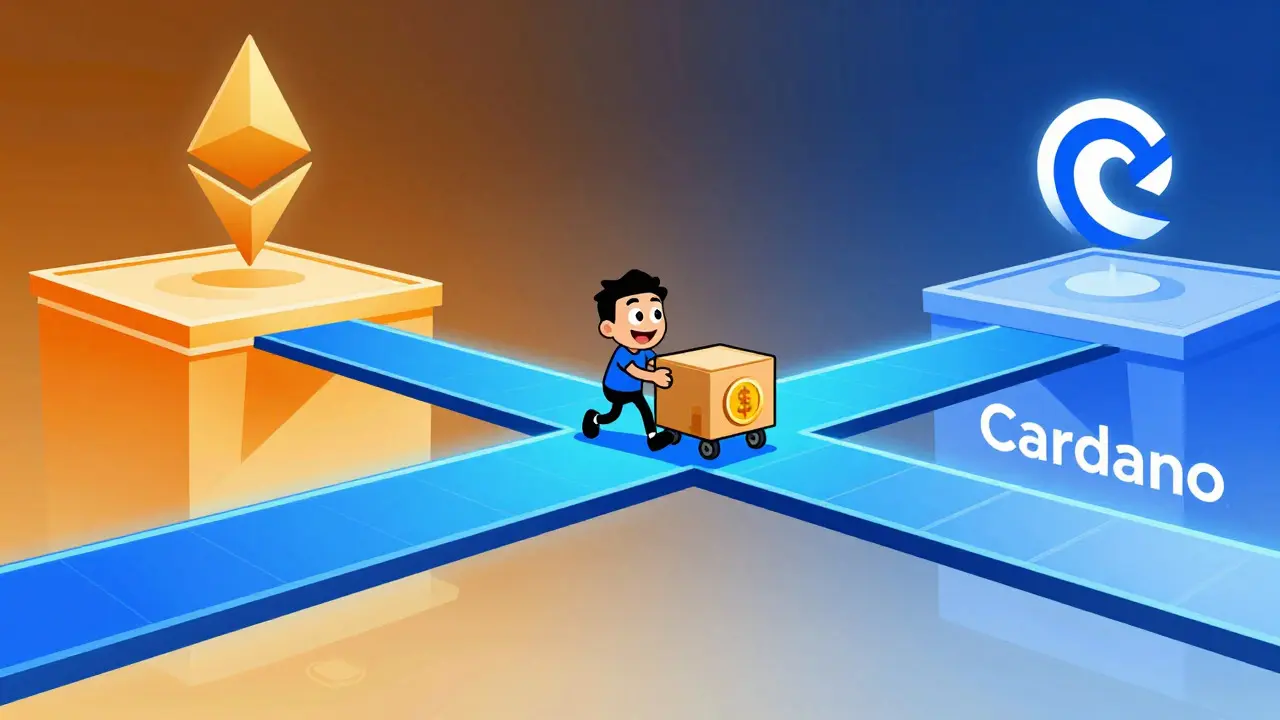
- ERC-20 Converter: One of Minswap’s standout features is its ability to bridge Ethereum tokens. This allows you to trade ERC-20 tokens on Cardano without paying Ethereum gas fees. It’s a clever workaround for cross-chain liquidity issues.
- Wallet Integration: Minswap supports major wallets including MetaMask, Coinbase Wallet, and native Cardano wallets like Eternl and Lucid. Connectivity via WalletConnect ensures compatibility across mobile and desktop devices.
- Multi-Platform Access: You can access Minswap via web browser, iOS, Android, and even desktop applications for Windows, Mac, and Linux. This flexibility is rare among DEXs and helps capture a broader user base.
- Liquidity Pools: Like other AMMs, Minswap relies on liquidity providers (LPs). You can deposit pairs of tokens into pools to earn trading fees. The interface clearly displays APR (Annual Percentage Rate) for each pool, helping you make informed decisions.
The user interface is clean and uncluttered. There are no unnecessary ads or confusing menus. However, if you are new to DeFi, you might find the concept of slippage and impermanent loss challenging. Minswap provides basic educational resources, but you may need to do some independent research to fully understand the risks involved in providing liquidity.
The MIN Token: Utility and Value
Every DEX needs a native token, and for Minswap, that is MIN. What sets MIN apart is its distribution model. Unlike many crypto projects that allocate a large portion of tokens to venture capitalists (VCs) or insiders, Minswap distributed MIN fairly to early users and community members. There was no private investment round, which reduces the risk of massive sell-offs by early investors.
Here is how MIN is used within the ecosystem:
- Fee Discounts: Holding MIN allows you to pay reduced trading fees on the platform.
- Governance: MIN holders can vote on protocol upgrades and parameter changes, giving them direct influence over the project’s future.
- Staking: You can stake MIN to earn rewards, further incentivizing long-term holding.
As of mid-2026, the MIN token has shown significant volatility. Price predictions vary wildly among analysts. Some platforms like TradingBeast remain cautious, while others like PricePrediction.net show more optimistic growth trajectories. This divergence highlights the speculative nature of DeFi tokens. Always do your own research before investing, as past performance does not guarantee future results.
Minswap vs. Competitors
To understand where Minswap stands, let’s compare it with other popular DEXs. While Uniswap dominates Ethereum, Minswap holds a strong position in the Cardano space. Its main competitor within the same ecosystem is ShibaSwap, though ShibaSwap is primarily focused on the SHIB token ecosystem.
| Feature | Minswap | Uniswap | PancakeSwap |
|---|---|---|---|
| Blockchain | Cardano | Ethereum | Binance Smart Chain |
| Average Transaction Fee | < $0.01 | $1 - $50+ | $0.05 - $0.50 |
| Native Token | MIN | UNI | CAKE |
| Cross-Chain Support | ERC-20 Converter | Multiple Chains | Multiple Chains |
| User Interface Complexity | Simple | Complex | Moderate |
Minswap wins on cost efficiency for Cardano users. If you are already in the ADA ecosystem, switching to Uniswap would require bridging assets, adding complexity and cost. Conversely, if you hold a lot of Ethereum assets, Uniswap remains the default choice due to its deep liquidity. Minswap’s ERC-20 converter bridges this gap partially, allowing some Ethereum tokens to be traded on Cardano.
Risks and Considerations
No DeFi platform is without risk. Here are the key factors to consider before using Minswap:
- Smart Contract Risk: Since Minswap relies on smart contracts, any bug in the code could lead to fund loss. While audits help mitigate this, they don’t eliminate it entirely.
- Impermanent Loss: If you provide liquidity, you face impermanent loss if the price ratio of your paired tokens changes significantly. This is a standard risk in AMM-based DEXs.
- Regulatory Uncertainty: DeFi regulations are still evolving globally. Changes in law could impact how Minswap operates or who can access it.
- Liquidity Depth: Compared to Uniswap, Minswap has lower total volume. For very large trades, you might experience higher slippage due to thinner order books.
Despite these risks, Minswap has maintained a solid reputation for security since its launch. The team has been transparent about updates and has a responsive community support system available 24/7.
Is Minswap Right for You?
Minswap is ideal for:
- Cardano holders looking to diversify into other tokens without leaving the ecosystem.
- Users seeking low-fee transactions for frequent small trades.
- DeFi enthusiasts interested in governance and staking opportunities with fair token distribution.
It might not be the best fit if:
- You primarily hold Ethereum or BNB and want deep liquidity for large institutional-sized trades.
- You prefer centralized exchanges with customer support for every minor issue.
- You are uncomfortable managing your own private keys and wallet security.
In summary, Minswap has carved out a niche as the go-to DEX for Cardano. Its focus on low fees, fair tokenomics, and user-friendly design makes it a compelling option for both casual traders and serious DeFi participants. As the Cardano ecosystem continues to grow, Minswap is well-positioned to benefit from increased adoption and development activity.
How do I start using Minswap?
You need a compatible wallet like MetaMask or Eternl funded with ADA or other supported tokens. Connect your wallet to the Minswap website or app, select the tokens you want to swap, and confirm the transaction. Make sure you have enough ADA for gas fees, though they are negligible.
Is Minswap safe to use?
Minswap is generally considered safe, having undergone multiple smart contract audits. However, all DeFi platforms carry inherent risks such as smart contract bugs and regulatory changes. Always verify the official URL and use hardware wallets for large amounts to enhance security.
What are the fees on Minswap?
Trading fees are typically around 0.3%, similar to other major DEXs. However, holding the MIN token can reduce these fees. Additionally, you only pay the standard Cardano network fee for the transaction, which is usually less than one cent.
Can I trade Ethereum tokens on Minswap?
Yes, thanks to the ERC-20 Converter feature. This allows certain Ethereum tokens to be represented and traded on Cardano, bypassing high Ethereum gas fees. Not all ERC-20 tokens are supported, so check the list of available pairs on the platform.
How is the MIN token different from UNI or CAKE?
The main difference is distribution. MIN was distributed fairly to the community without a large VC allocation. This means fewer early investors dumping their tokens on the market. MIN also offers specific fee discounts and governance rights within the Cardano ecosystem.