StationDex V3 Review 2026: Is This 'x Layer' Exchange Safe?
You’ve heard the name. You’ve seen it listed on tracking sites like CoinGecko. But when you actually try to find out what StationDex V3 is, where it runs, or who built it, you hit a wall of silence. In a market dominated by giants like Uniswap and PancakeSwap, StationDex V3 remains a ghost.
This review cuts through the noise. We aren’t here to hype a new token or promise moonshots. We are here to answer one critical question: Is your money safe on this platform? Based on data available as of August 2026, the answer leans heavily toward caution. Let’s look at the facts, the missing pieces, and why this obscurity matters for your portfolio.
The Mystery of the "x Layer"
The biggest red flag isn’t that StationDex V3 is small; it’s that we don’t know where it lives. The platform claims to operate on an "x Layer". In the world of blockchain, specificity is everything. We know Ethereum runs on its mainnet and Layer-2 solutions like Arbitrum, Optimism, and Base. We know Solana has its own high-speed chain. We know BNB Chain hosts PancakeSwap.
But "x Layer"? It’s vague. It could be a private sidechain, a niche scaling solution, or even a marketing term with no technical backing. Without knowing the underlying infrastructure, you can’t verify security audits, transaction finality times, or gas fee structures. If the layer fails, your liquidity vanishes. With major competitors like Uniswap expanding to over 15 Layer-2 networks by mid-2026, StationDex’s refusal to clarify its home base suggests either extreme novelty or hidden risks.
Market Presence: Invisible by Design?
Let’s talk numbers. In January 2026 alone, the total decentralized exchange (DEX) market processed over $2.1 trillion in annualized volume. The leaders are clear:
- Uniswap: Processed $175.3 billion in monthly volume, holding a 38.7% market share.
- PancakeSwap: Generated $42.8 billion monthly, capturing 19.2% of the market.
- Curve Finance: Held steady at 11.4% share.
Where is StationDex V3 in these rankings? Nowhere. Not in the top 10, not in the top 50, and barely visible in the long tail. Industry analysts from Coin Bureau and MEXC evaluated dozens of platforms based on liquidity depth, fee structures, and governance models. StationDex didn’t make the cut. Its absence from YouTube reviews, Reddit discussions on r/DeFi, and Trustpilot lists is deafening. When users complain about high gas fees on Ethereum or centralization concerns on BNB Chain, they have voices. StationDex has none.
| Platform | Monthly Volume | Market Share | User Sentiment Source |
|---|---|---|---|
| Uniswap | $175.3 Billion | 38.7% | High (Reddit, CryptoSlate) |
| PancakeSwap | $42.8 Billion | 19.2% | Medium-High (Trustpilot, Forums) |
| Raydium | Data Available | Visible | High (Solana Community) |
| StationDex V3 | N/A / Negligible | <0.1% | None Verified |
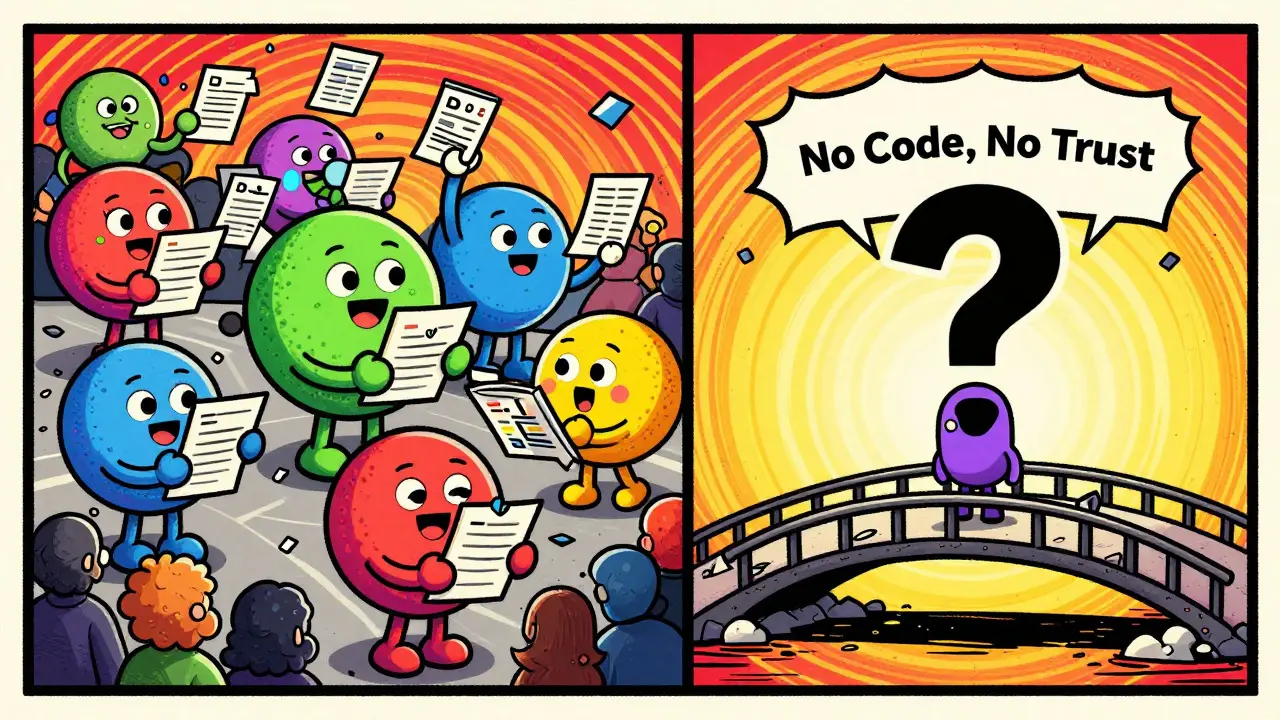
Technical Black Box: No Code, No Trust
In decentralized finance, code is law. Or rather, audited code is trust. Major DEXs publish their smart contracts on GitHub. They undergo rigorous audits by firms like CertiK or OpenZeppelin. They release whitepapers detailing their liquidity models.
StationDex V3 offers none of this. There are no verified GitHub repositories. There are no public security audit reports. There is no whitepaper explaining how the "x Layer" handles transactions or how liquidity providers earn yields. Compare this to Balancer V3, which recently integrated boosted pools routing idle liquidity to Aave, or Uniswap V4, which introduced programmable "hooks" for custom trading logic. These innovations are documented, debated, and improved upon publicly.
Without transparency, you are trusting strangers with your assets. In 2026, with the SEC cracking down on non-compliant DEX fronts and enforcing stricter KYC protocols, operating in the shadows is a liability, not a feature.
Who Should Avoid StationDex V3?
Not every project is for everyone, but some projects are risky for almost everyone. Here is who should stay away:
- Liquidity Providers: If there’s no verified volume, there’s no fee income. Your capital sits idle, exposed to smart contract risk without reward.
- Beginners: New users need support, tutorials, and community help. StationDex has zero documented user guides or troubleshooting resources.
- Risk-Averse Investors: If you value capital preservation, avoid platforms with no audit history or unclear regulatory status.
Why Does It Exist?
If it’s so obscure, why is it on CoinGecko? Tracking sites list exchanges to provide comprehensive market data, even for niche players. Sometimes, these platforms serve specific, isolated communities or act as testbeds for experimental tech. Other times, they are abandoned projects that haven’t been delisted yet. Given the lack of social media presence on X (Twitter) and no mention in DeFiLlama’s upcoming launches tracker, StationDex V3 appears to have minimal development momentum. While competitors like Hyperliquid secured $15 million in funding in late 2025, StationDex operates in a vacuum.
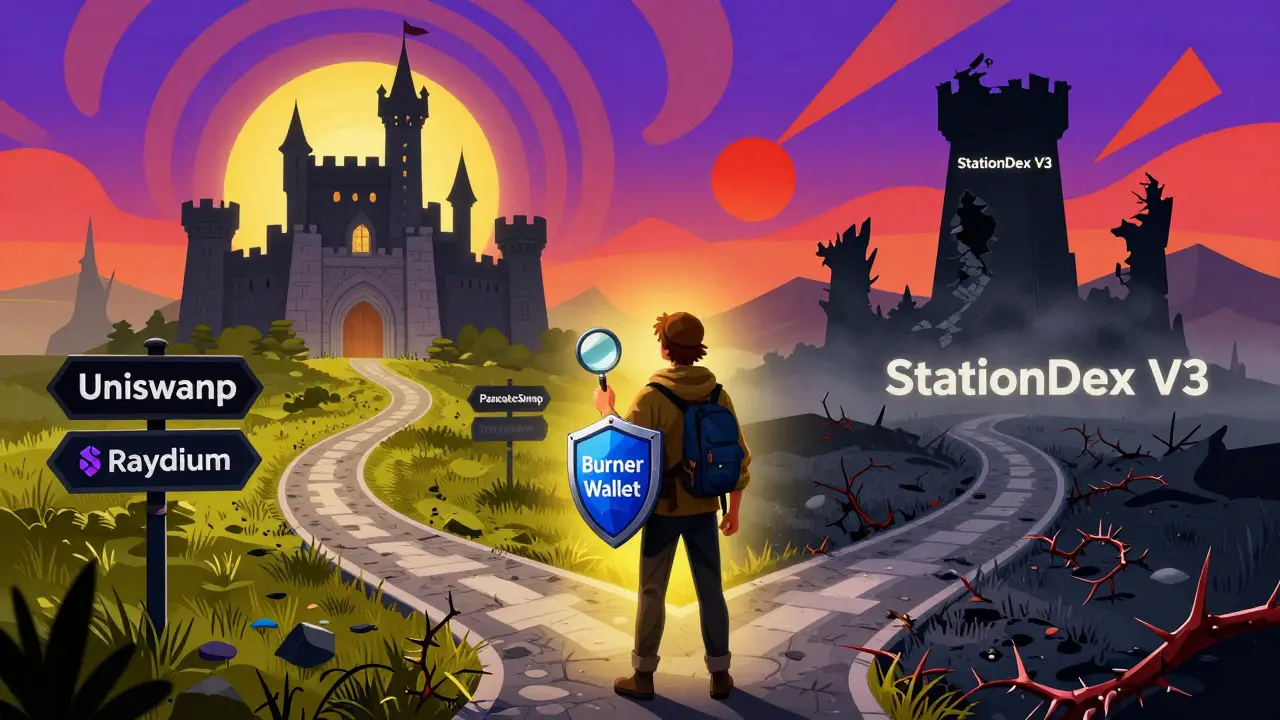
Safety Checklist Before You Swap
If you still want to experiment with StationDex V3 despite the warnings, follow this strict protocol to minimize risk:
- Check the Contract Address: Never click links from search results. Copy the verified contract address directly from CoinGecko or Etherscan (if applicable).
- Use a Burner Wallet: Never connect your primary wallet holding significant funds. Use a secondary MetaMask or Phantom wallet with only the amount you’re willing to lose.
- Revoke Permissions: After swapping, immediately revoke token approvals using tools like Revoke.cash to prevent future unauthorized access.
- Verify the Layer: Try to identify if "x Layer" is a known bridge or network. If you can’t find it on Chainlist.org, treat it as unverified.
Better Alternatives in 2026
Unless you have a specific reason to use StationDex V3, established platforms offer better security, liquidity, and user experience. Consider these proven options:
- For Ethereum Users: Uniswap remains the gold standard for deep liquidity and broad token support.
- For Low Fees: PancakeSwap on BNB Chain offers fast, cheap swaps with a massive ecosystem.
- For Speed: Raydium on Solana provides near-instant transactions at negligible cost.
- For Derivatives: dYdX offers institutional-grade trading with transparent governance.
These platforms have survived multiple market cycles, undergone numerous audits, and maintain active developer communities. They are not perfect-gas fees can spike, and bugs do happen-but they are visible, accountable, and resilient.
Is StationDex V3 a scam?
There is no definitive proof labeling StationDex V3 as a scam, but its lack of transparency, missing audits, and zero market presence raise significant red flags. In crypto, obscurity often correlates with higher risk. Treat it as unverified until more data emerges.
What is the "x Layer" used by StationDex?
The "x Layer" is not a widely recognized blockchain network like Ethereum, Solana, or Arbitrum. It may refer to a proprietary sidechain or a niche scaling solution. Without official documentation, its security and compatibility remain unknown.
Why isn't StationDex V3 on the top DEX lists?
Top DEX lists prioritize volume, liquidity, and user activity. StationDex V3 processes negligible volume compared to leaders like Uniswap ($175B/month) and PancakeSwap ($42.8B/month), making it invisible in market share calculations.
Are there any security audits for StationDex V3?
As of August 2026, no public security audits from reputable firms like CertiK or OpenZeppelin have been found for StationDex V3. This lack of verification increases the risk of smart contract vulnerabilities.
Should I provide liquidity on StationDex V3?
Generally, no. Liquidity provision requires trust in the platform's longevity and security. With no verified volume or fee generation, your capital is likely to stagnate while remaining exposed to potential exploits.
How does StationDex compare to Uniswap?
Uniswap is a market leader with billions in daily volume, extensive audits, and multi-chain support. StationDex V3 is a niche, unverified platform with minimal visibility. Uniswap offers far greater safety and utility for most traders.
Is StationDex V3 regulated?
There is no information suggesting StationDex V3 complies with current 2026 regulatory standards, including SEC guidelines for DEX fronts. Operating without clear governance or KYC protocols places it in a gray area legally.
Ken G
August 13, 2026 AT 10:33its obvious they are hiding something because the big guys dont like them being quiet. i bet its a government plot to keep us from making easy money. nobody talks about it so you shouldnt either. stay away from the truth
Lorraine Surringer
August 14, 2026 AT 03:32oh my gosh this is such a relief to read because i was feeling so anxious about my portfolio lately and now i feel better even though i have no idea what x layer means but thanks for sharing your thoughts with us all
i really appreciate when people take the time to write these long reviews because it helps me feel connected to the community and less alone in my crypto journey which can be so lonely sometimes
Alex Di Mango
August 14, 2026 AT 19:41I think we should give it a chance just in case it is actually good. Maybe they are just shy developers who want to focus on code instead of marketing. It could be a hidden gem that pays off later if you wait patiently.
Amor Jordan
August 16, 2026 AT 09:17I am terrified to put any money into something that has no social proof. It feels like walking into a dark room without a flashlight. I need to see audits and team info before I even consider looking at their website again because my heart cannot take another rug pull drama
Nick Darring
August 16, 2026 AT 18:08You guys are all missing the point completely because silence is golden in the high stakes world of decentralized finance where noise attracts hackers and regulators alike. Think about it for a second, would Uniswap be as secure if everyone was screaming about it on twitter every five seconds? Probably not, so maybe StationDex is playing 4d chess while you are stuck in checkers mode worrying about market share percentages that mean absolutely nothing in the grand scheme of technological evolution. I have been investing in obscure protocols since 2017 and the ones that made the most money were the ones nobody talked about until it was too late for the average joe to get in. So go ahead and mock the obscurity but remember who is laughing when the next bull run happens and your favorite hyped tokens are down ninety percent while your quiet little friend doubles overnight. It is all about patience and contrarian thinking which seems to be a lost art form in this instant gratification society we live in today. Keep reading your reddit threads and I will be busy compounding yields in the shadows where the real action is happening. Just saying.
Eden Tadesse
August 18, 2026 AT 00:01i agree with nick mostly but also kinda scared lol. typos happen when u type fast on phone anywayz
Eric Zehr
August 18, 2026 AT 09:51It is important to verify the source of information before trusting any platform. Always do your own research and never invest more than you can afford to lose. This review provides a solid foundation for caution which is wise in the current market conditions.
Namrata Mapgaonkar
August 19, 2026 AT 09:27in india we have many small exchanges that are safe but nobody knows them :) just be careful ok. smiley face :)
Rita Dutta
August 20, 2026 AT 02:06the existential dread of the unknown blockchain is palpable here. x layer is not just a tech spec it is a metaphor for the void we stare into daily. why do we crave visibility when invisibility might be the ultimate shield against the predatory gaze of the masses? perhaps stationdex is a zen master teaching us detachment from volume metrics. or maybe it is just a scam. who can say in this digital maya?
Paul Smith
August 21, 2026 AT 13:55Hey everyone! 👋 Just wanted to drop by and say that transparency is key 🗝️. If they cant tell us where it runs how can we trust it? 🤔 Stay safe out there friends! 🚀💎
Rodmun Tarnowski
August 22, 2026 AT 19:20Indeed; the lack of clarity is concerning. One must always prioritize security over potential gains. The data presented here is quite compelling. Thank you for the thorough analysis.
Prudence Flemming
August 23, 2026 AT 05:35liquidity depth is king. no volume means no exit liquidity means you are holding the bag forever. simple math. skip it.