WELL Airdrop Details: What You Need to Know in 2026
It is June 29, 2026. The crypto world moves fast, and rumors fly even faster. If you are searching for "WELL airdrop by WELL details," you might be feeling a mix of excitement and confusion. That is completely normal. In the current landscape, specific, verified information about a project explicitly named "WELL" launching a major public airdrop is scarce. This silence can be suspicious, or it might just mean the project is in stealth mode-or worse, it does not exist as a legitimate entity.
However, this search tells us something important about your intent. You are looking for free tokens, likely based on a rumor, a social media post, or a community whisper. To help you navigate this safely, we need to look at how real airdrops work in 2026, what red flags to watch for, and how to verify if the "WELL" project is legitimate before you risk your time or wallet security.
The Current State of Crypto Airdrops
In 2026, the golden age of "click here and get $10,000" has largely passed. Projects have become much more sophisticated in their distribution methods. Instead of simple giveaways, most reputable protocols now use complex qualification criteria. These often involve interacting with smart contracts, providing liquidity, or holding specific assets over a long period.
For example, major Layer 2 solutions like Arbitrum and Optimism set the standard years ago by rewarding early users who bridged funds and made transactions. More recently, projects like MetaMask a popular cryptocurrency wallet that allows users to interact with decentralized applications have hinted at airdrops for active users, requiring minimum balances and transaction history. Similarly, protocols like zkSync and Renzo have focused on rewarding users who engaged with their testnets or mainnet bridges during specific snapshot periods.
If the "WELL" project is legitimate, it will likely follow one of these established patterns. It will not simply hand out tokens to random email addresses. It will require proof of activity. This means you need to know exactly what actions qualify you. Without official documentation from the WELL team, any claim otherwise should be treated with extreme skepticism.
How to Verify the WELL Project
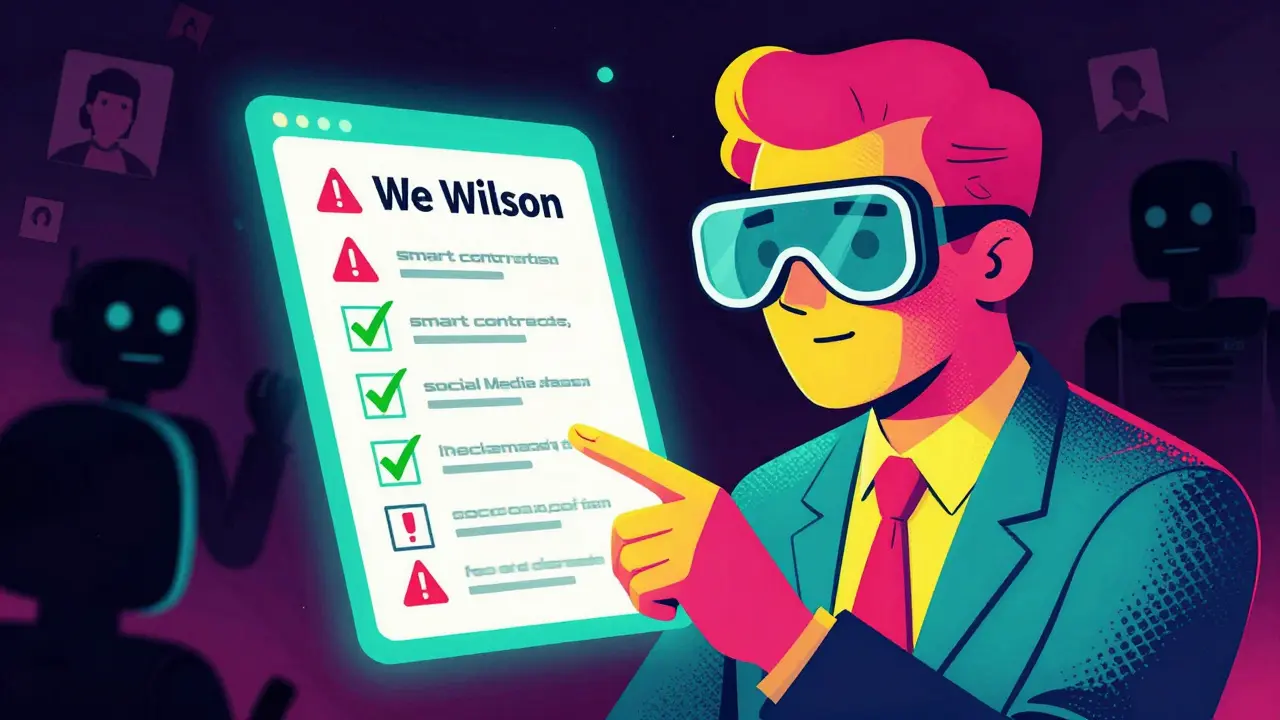
Before you do anything else, you must verify the existence and legitimacy of the WELL project. Scammers love to create fake websites and social media accounts that mimic real projects. Here is how to check:
- Official Website: Does the project have a professional website? Is the domain name recent? Use tools like Whois lookup to see when the domain was registered. New domains (less than 6 months old) for major airdrops are a huge red flag.
- Social Media Presence: Check Twitter (X), Discord, and Telegram. Look for engagement quality. Are there real people discussing technical details, or is it just bots posting "GM" and "Moon soon"? Legitimate projects have active developer channels.
- Smart Contract Verification: If they mention a token contract address, paste it into Etherscan or the relevant blockchain explorer. Is the contract verified? Who deployed it? Does it have liquidity locked?
- Team Information: Do they reveal their team? Anonymous teams are common in crypto, but for an airdrop, transparency builds trust. Look for LinkedIn profiles or past project experience.
If you cannot find clear, verifiable information from primary sources, assume the project is either dead or a scam. Do not proceed.
Typical Eligibility Criteria for Legitimate Airdrops
Assuming the WELL project is real, what would you need to do to qualify? Based on industry standards in 2026, here are the most common requirements:
- Wallet Interaction: You usually need to connect your wallet to the project’s dApp. This could be swapping tokens, bridging assets, or staking.
- Minimum Balance: Some projects require you to hold a certain amount of their native token or a related asset (like ETH or USDC) during a snapshot period.
- Transaction History: Projects often look for consistent activity. One transaction might not be enough. They may require multiple interactions over weeks or months.
- Referral Programs: Many projects reward users who invite others. However, be careful-referring too many low-quality accounts can sometimes lead to being flagged as a sybil attacker.
- Task Completion: Social tasks like following Twitter, joining Discord, or liking posts are common but rarely sufficient on their own. They are usually combined with on-chain activity.
For instance, the GOOD Airdrop Two required users to trade actively and maintain an average balance of 10,000 $GOOD. This shows that projects want committed users, not just free-token hunters. If WELL follows this trend, expect similar demands.
Red Flags: How to Spot a Scam
This is the most critical section. If you see any of these signs, walk away immediately.
| Red Flag | What It Means | Action |
|---|---|---|
| Asking for Private Keys | No legitimate project will ever ask for your private key or seed phrase. | Block and report immediately. |
| Urgency Tactics | "Claim now or lose forever!" is a classic pressure tactic. | Take your time. Real airdrops have clear deadlines. |
| Unverified Contracts | If the contract code is not visible on the blockchain explorer, it could contain malicious code. | Do not interact with the contract. |
| Too Good to Be True | Promising thousands of dollars for minimal effort is unrealistic. | Assume it is a lie. |
| Phishing Links | Links sent via DMs or unofficial emails often lead to fake sites. | Always type the URL manually or use official bookmarks. |
Scammers often create fake landing pages that look identical to the real project. They might even clone the Discord server. Always double-check URLs and source links from official announcements.
Security Best Practices for Claiming Airdrops
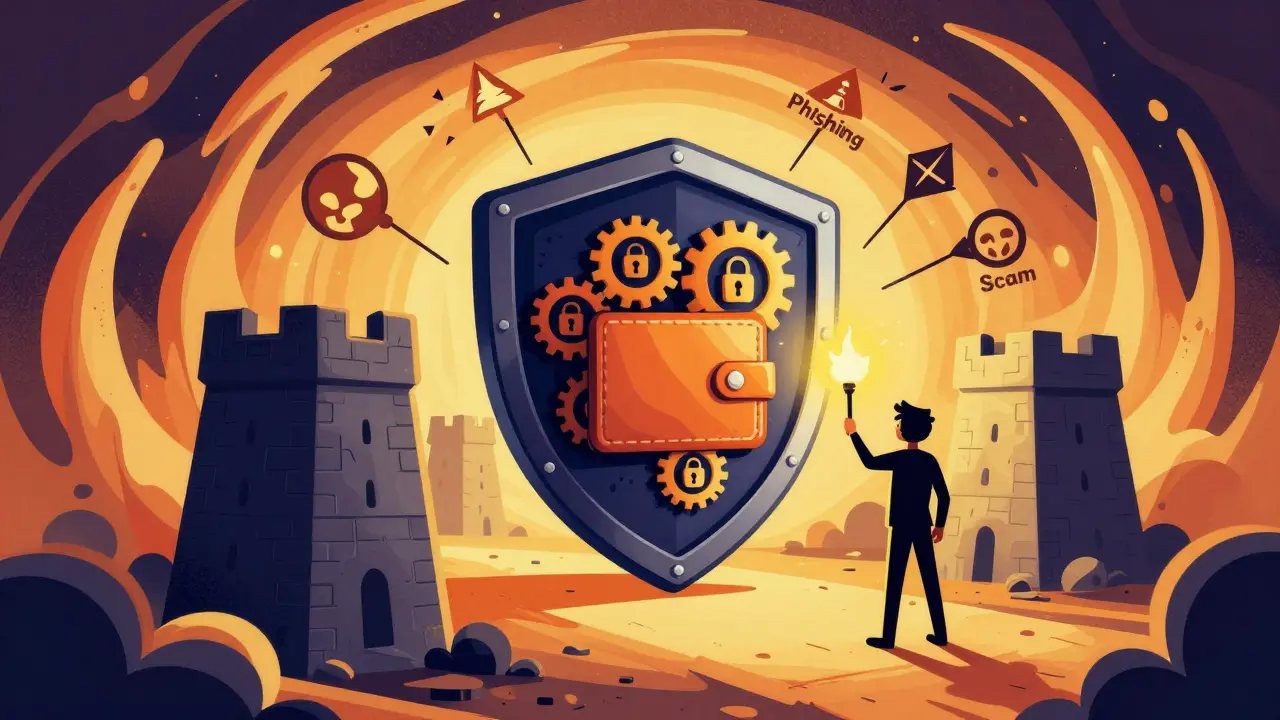
Even if the project is legitimate, claiming an airdrop carries risks. Here is how to protect yourself:
- Use a Burner Wallet: Never use your main wallet where you store significant funds. Create a separate wallet specifically for interacting with new or unproven protocols. This limits your exposure if something goes wrong.
- Revoke Permissions: After interacting with a dApp, go to a tool like Revoke.cash and check if you have granted any allowances. Revoke them if you no longer need them. Malicious contracts can drain your wallet if you leave permissions open.
- Check Gas Fees: Sometimes scams trick you into paying high gas fees for a worthless transaction. Ensure the transaction looks correct before signing.
- Beware of Sybil Detection: If you are using multiple wallets to maximize rewards, be aware that projects use advanced algorithms to detect sybil attacks. If caught, you could be blacklisted from future distributions. It is better to focus on quality interactions with one wallet.
What to Do If No Official Info Exists
If you have searched thoroughly and found no official announcement from the WELL team, then there is likely no airdrop yet. Or, the "WELL" name might be confused with another project. For example, there are projects with similar names like Wellbeing DAO or various wellness-focused NFT projects. Make sure you are not mixing up entities.
In this case, your best move is to monitor official channels. Follow the project’s verified Twitter account and join their official Discord. Turn on notifications for announcements. Do not rely on third-party aggregators or influencers, as they often spread outdated or false information.
Conclusion: Patience and Verification
The crypto space is full of opportunities, but also pitfalls. The lack of concrete details about the "WELL airdrop" is a signal to pause and investigate. Do not let FOMO (Fear Of Missing Out) drive your decisions. Real projects communicate clearly. If the information is vague, the risk is high.
Focus on building a strong foundation. Learn how to verify contracts, secure your wallets, and identify scams. These skills will serve you well regardless of whether the WELL airdrop happens or not. Stay safe, stay skeptical, and always do your own research.
Is the WELL airdrop real?
As of June 2026, there is no widely recognized, verified information about a major "WELL" project launching a public airdrop. This lack of information suggests it may be a rumor, a very new project, or potentially a scam. Always verify through official channels before participating.
How can I check if a crypto airdrop is legitimate?
Check the project's official website, social media accounts, and smart contract verification on blockchain explorers like Etherscan. Look for a transparent team, active community engagement, and clear terms of service. Avoid projects that ask for private keys or use urgent language.
What are the typical requirements for qualifying for an airdrop?
Most legitimate airdrops require on-chain activity such as swapping tokens, bridging assets, or staking. Some may require holding a minimum balance of a specific token during a snapshot period. Social tasks like following Twitter or joining Discord are common but usually secondary to on-chain actions.
Is it safe to connect my wallet to claim an airdrop?
It can be risky. Always use a burner wallet with minimal funds for interacting with unknown or new protocols. Never connect your main wallet containing significant assets. Additionally, revoke any unnecessary permissions after interacting with the dApp.
What should I do if I suspect an airdrop is a scam?
Stop all interaction immediately. Do not sign any transactions. Disconnect your wallet from the site. Report the scam to the platform hosting it (e.g., Twitter, Discord) and warn the community. If you have already signed a transaction, monitor your wallet for unauthorized movements and consider moving your remaining funds to a new wallet.
Can I get an airdrop just by joining a Discord server?
Rarely. While joining a Discord server is often a step in the process, it is almost never the sole requirement for a valuable airdrop. Legitimate projects require on-chain activity to ensure they are rewarding genuine users rather than bots. Social tasks are usually combined with other actions.
How do I avoid being flagged as a sybil attacker?
Avoid using multiple wallets to perform identical actions. Projects use heuristics to detect sybil behavior, such as similar transaction patterns, funding sources, or IP addresses. Focus on making meaningful, unique interactions with one wallet instead of trying to game the system with many low-quality accounts.
Melissa L
July 1, 2026 AT 06:39honestly this is just basic stuff but ppl still get rekt every day lol
Ryan Peters
July 2, 2026 AT 21:18Another day, another scammy token trying to separate you from your ETH. The WELL project? Sounds like a bucket of cold water on your hopes and dreams. If it were real, the insiders would have dumped on you by now. Wake up, sheeple.
Fiona Ellis
July 4, 2026 AT 09:02I must admit, I was quite intrigued by the title, thinking perhaps there was a legitimate opportunity lurking in the shadows 🕵️♀️. However, upon reading the detailed breakdown, it becomes abundantly clear that caution is not merely advised; it is absolutely mandatory. The lack of verified information is truly alarming, especially in an era where transparency should be the norm, not the exception 😟. One must wonder why such projects remain in stealth mode for so long without any concrete updates or community engagement. It is rather suspicious, isn't it? 💭
The article rightly points out that the golden age of easy money is over, which is both a relief and a disappointment depending on your perspective. On one hand, it protects users from obvious scams; on the other, it raises the barrier to entry for genuine enthusiasts who wish to support early-stage projects. We need more rigorous verification processes before we even consider connecting our wallets 🔐. Perhaps a standardized audit protocol for airdrop eligibility could help restore some trust in this chaotic space. Until then, I shall remain skeptical and keep my funds in cold storage ❄️.
ross harris
July 4, 2026 AT 21:11The WELL is a metaphor for the abyss of human greed, staring back at us with hollow eyes. You seek tokens, but you find only void. The blockchain is a mirror, reflecting our desperate need for validation through arbitrary numbers. Is the WELL real? No. But your desire for it is painfully authentic. This is the tragedy of modern crypto: we build cathedrals of code to house our emptiness. The smart contracts are just digital cages, locking away our hope while promising freedom. We are all just miners in a mine that has no ore, digging deeper into the earth of our own making. The red flags are not warnings; they are beacons guiding us to our inevitable doom. Embrace the uncertainty, for it is the only truth left.
Routh Middaugh
July 6, 2026 AT 04:16I think we should all take a step back and consider the broader implications here... It's not just about missing out on free tokens... it's about the erosion of trust in decentralized systems... When projects hide behind anonymity... they undermine the very ethos of crypto... Transparency is key... Without it... we are just gambling... And as we all know... the house always wins... So let's focus on education... Let's learn how to verify... Let's protect ourselves... And maybe... just maybe... we can rebuild a system that actually serves the people...
Rob Morton
July 7, 2026 AT 13:47It is interesting to observe how the market evolves. The shift from simple giveaways to complex qualification criteria reflects a maturation of the industry. Projects are no longer seeking mere attention; they are seeking active participants. This aligns with the philosophy that value is created through engagement. However, this also places a higher burden on the user to understand the mechanics. It is a delicate balance between accessibility and security. We must encourage critical thinking rather than blind participation. The tools mentioned in the post are essential for anyone navigating this landscape. Knowledge is indeed power.
Nicole Woessner
July 9, 2026 AT 07:57i feel like everyone is forgetting the cultural aspect of these communities. in my country we have a saying about trusting too easily. it applies perfectly here. the way these projects communicate says a lot about their values. if they cant be open about their team why should we trust them with our assets. its not just about money its about respect. i hope people start demanding better standards instead of chasing rumors
Jay Sharma
July 10, 2026 AT 11:16its all part of the plan. the deep state wants you distracted with fake airdrops while they track your wallet addresses. well is a front for data harvesting. dont fall for it. they are watching.
Rebecca Shoniker
July 10, 2026 AT 18:23Let me be unequivocally clear: if you are engaging with unverified contracts, you are complicit in your own demise. The terminology used here-"stealth mode," "community whisper"-is indicative of a lack of professional rigor. A competent operator does not rely on whispers. They publish whitepapers. They undergo audits. They establish legal entities. To suggest otherwise is to invite chaos. Furthermore, the notion that social tasks are secondary is correct, but the implication that they hold any merit whatsoever is laughable. They are noise. Pure, unadulterated noise designed to inflate metrics for venture capitalists who care nothing for retail investors. Cease this foolishness immediately.
Scott Miller
July 10, 2026 AT 22:26STOP BEING SO NEGATIVE! There are opportunities everywhere if you look hard enough! I made $5k last week on a similar project! You guys are just scared to put in the work! Get off your asses and start farming! Life is short! Make it count!
Abby Martin
July 12, 2026 AT 17:56I've been in crypto since 2017 and I can tell you right now that anyone claiming to know about this WELL airdrop is lying. I do my own research and I don't see anything. Stop listening to influencers who are just shilling their bags. It's embarrassing how many people fall for this stuff. Just use common sense.
Mélanie Boulay
July 13, 2026 AT 10:36While I appreciate the comprehensive nature of this guide, I believe it is crucial to emphasize the psychological toll that constant vigilance can take on individuals within the cryptocurrency community. The necessity to constantly verify domains, check contract codes, and monitor social media channels for subtle signs of malicious intent creates a state of perpetual anxiety that is detrimental to one's overall well-being. We must acknowledge that the current ecosystem places an undue burden on the end-user, who is expected to possess technical expertise that is far beyond the average person's capabilities. This disparity highlights a fundamental flaw in the design of decentralized applications, where security is often treated as an afterthought rather than a core feature. Consequently, we should advocate for regulatory frameworks that enforce stricter standards for project launches, thereby reducing the cognitive load on users and fostering a more inclusive environment where participation does not require a degree in computer science.
John Curry
July 14, 2026 AT 01:58Oh, the drama! The suspense! Will there be an airdrop? Will there not? It is like waiting for a plot twist in a bad movie. But seriously, the advice here is solid. Burner wallets are your best friend. Treat them like disposable gloves at a crime scene. Don't get attached. The blockchain doesn't care about your feelings. It only cares about gas fees and signatures. Stay wild.
Trent Erman1
July 15, 2026 AT 14:16Hey everyone! Great discussion here! I wanted to add that using tools like Revoke.cash is super important! I lost funds once because I forgot to revoke permissions! Don't make my mistake! Stay safe and happy farming! 🚀🌱
Jon Milton
July 16, 2026 AT 18:52This is absolute garbage. You're all sitting around discussing 'red flags' while the real players are already moving mountains. If you have to read a blog post to understand that anonymous teams are risky, you don't belong in this game. I've bridged millions across L2s without checking a single domain registration date. Trust your gut, not some SEO-optimized article written by a novice. The WELL might be nothing, or it might be the next big thing. Only cowards wait for official announcements. Lions hunt.
Sajjad Ghorbani Moghaddam
July 16, 2026 AT 21:02just my two cents but i think the article is spot on. sybil detection is getting really good now. i tried running multiple wallets on zkSync and got blacklisted instantly. save yourself the headache and just use one main wallet for interactions. quality over quantity always wins in the end.
Carol @minaszilda
July 17, 2026 AT 18:08We must remember that patience is a virtue. Rushing into unknown territories often leads to regret. Let us support each other by sharing verified information only. Kindness and caution go hand in hand. You are capable of making wise decisions. Trust your instincts. Stay grounded.