What is EVA AI (EVA) Crypto? Token, Risks, and How to Buy
You’ve probably seen the ticker EVA popping up in your Telegram chats or on crypto dashboards. But here’s the catch: there are two very different things called "EVA" out there. One is a corporate HR software platform. The other is a cryptocurrency token tied to an AI-powered security tool for traders. If you’re looking at charts, wallets, or DEXs, you’re dealing with the latter. This article cuts through the noise to explain exactly what the EVA AI crypto project is, how it works, and whether it fits your portfolio.
Quick Summary / Key Takeaways
- EVA AI (EVA) is a micro-cap cryptocurrency token powering an AI-driven Web3 security and token-tracking ecosystem integrated into Telegram.
- The token has a fixed supply of 100 million units, with roughly 80% currently circulating, making it a deflationary-style asset by design.
- Trading happens almost exclusively on decentralized exchanges like Uniswap V2; you won’t find it on major centralized order books like Binance Spot yet.
- It serves as a utility token for accessing real-time risk audits and market data within the Telegram app, targeting retail traders wary of rug pulls.
- Be aware of the name confusion: this token is completely unrelated to the enterprise HR software company EVA.ai.
What Exactly Is EVA AI?
Let’s get the definition straight first. EVA AI is an AI-enhanced token-tracking and risk-analysis tool that lives inside Telegram. Think of it as a smart assistant for crypto traders who spend hours scrolling through charts and group chats. Instead of switching between five different tabs to check if a new meme coin is a scam, you ask the EVA bot, and it gives you a quick breakdown.
The core value proposition here is speed and safety. The platform aggregates real-time performance metrics-price, volume, volatility-and runs them through security checks. It looks for red flags like honeypots, unlocked liquidity, or suspicious contract ownership. The EVA token acts as the native utility currency for this ecosystem, likely used to access premium features, govern updates, or incentivize network participants.
Why Telegram? Because that’s where the action is. Most early-stage crypto discovery happens in chat groups. By bringing the analytics directly into the messenger, EVA removes friction. You don’t leave the conversation to verify a token; you just query the bot right there.
The Name Confusion: Crypto vs. Corporate HR
Before you buy anything, you need to clear up a major point of confusion. There is a well-established software company called EVA.ai. They build enterprise HR tools for talent management and workforce intelligence. They have nothing to do with cryptocurrency.
The EVA AI crypto token is a separate entity focused entirely on Web3 security and trading intelligence. Major listing sites like CoinMarketCap and CoinGecko make no connection between the two. If you’re researching the token, ignore the HR reviews. If you’re hiring employees, ignore the crypto charts. Keeping these distinct prevents costly mistakes and ensures you’re evaluating the right technology stack.

Tokenomics: Supply and Distribution
Understanding the math behind a coin is crucial before you put money in. EVA operates on a fixed-supply model, which means no new tokens can be minted later to dilute your holdings. Here is the breakdown based on current aggregator data:
| Metric | Value | Implication |
|---|---|---|
| Total Supply | 100,000,000 EVA | Hard cap; no inflation possible. |
| Circulating Supply | ~80,000,000 EVA | 80% of total supply is already in market. |
| Locked/Reserved | ~20,000,000 EVA | Remaining 20% held for team, liquidity, or future incentives. |
| Holders | ~3,140 addresses | Indicates a small but active community base. |
The fact that 80% of the supply is already circulating suggests that the initial distribution phase is largely complete. However, the remaining 20% raises questions. Where is it locked? Is it vested for the development team? Without a detailed public whitepaper or audit report specifying the vesting schedule, investors should assume some risk regarding potential future sell pressure from those reserved tokens.
How to Buy EVA AI Token
You won’t find EVA on the main spot markets of giants like Binance or Coinbase Pro. It is a decentralized exchange (DEX)-first asset. This means you need a Web3 wallet to interact with it. Here is the step-by-step process most users follow:
- Set Up a Wallet: Download a compatible Ethereum wallet like MetaMask or use the Binance Web3 Wallet. Secure your seed phrase offline. Never share it.
- Fund with ETH: You’ll need Ether (ETH) to pay for gas fees and to swap for EVA. Buy ETH on a centralized exchange and transfer it to your wallet address.
- Connect to a DEX: Navigate to Uniswap V2 (on Ethereum). Connect your wallet.
- Paste the Contract Address: This is critical. Search for "EVA" on aggregators like CoinGecko to copy the exact contract address. Paste it into the swap field. Fake tokens with similar names exist; always verify the address.
- Execute the Swap: Set your slippage tolerance (often higher for low-liquidity tokens) and confirm the transaction. Wait for the blockchain confirmation.
Note that because EVA trades primarily on Uniswap V2, you are interacting directly with the smart contract. There is no customer support desk to reverse a mistake. Double-check every address before clicking "Swap."
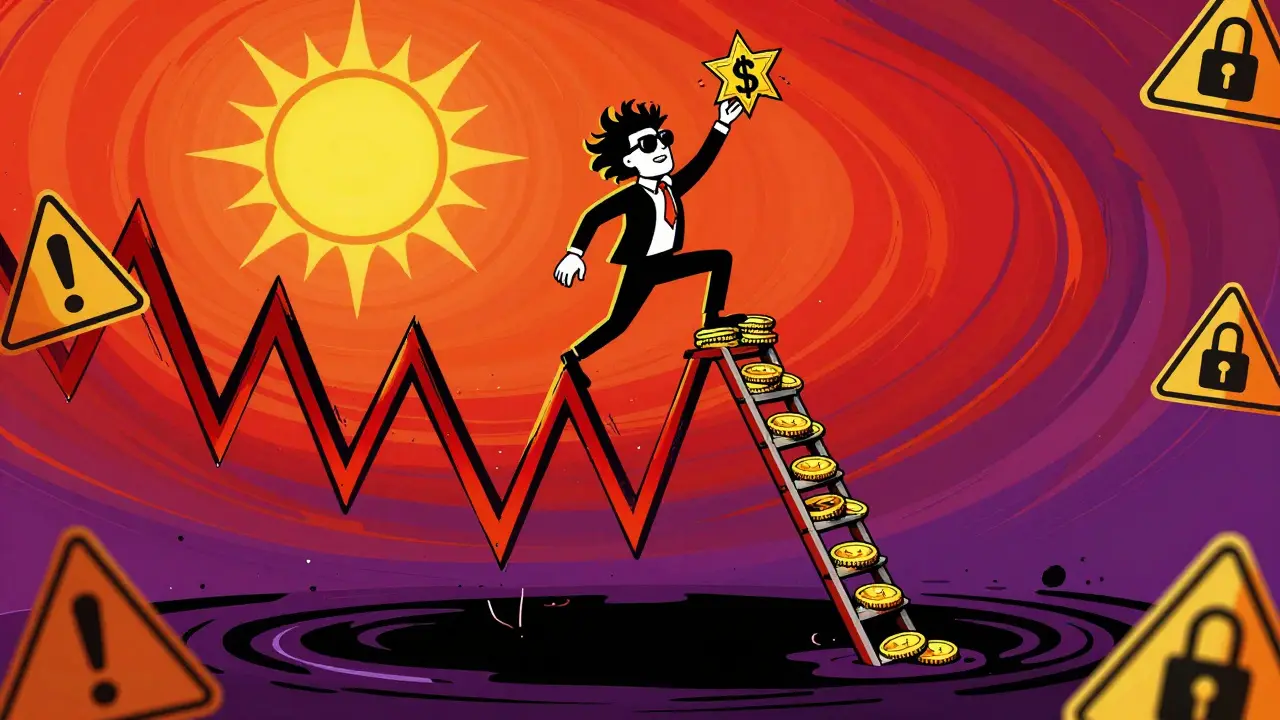
Market Reality: Volatility and Liquidity
Let’s talk numbers, because they tell a story of high risk and high reward. As of recent snapshots, EVA ranks around #7,674 on CoinMarketCap. That places it firmly in the micro-cap category. Market capitalization estimates vary wildly depending on the data source, ranging from roughly $250,000 to over $8 million. Why the discrepancy? Thin liquidity.
When daily trading volume sits around $37,000, a single large buy or sell order can move the price significantly. You might see a snapshot price of $0.003 on one site and $0.10 on another due to time lags or different pool depths. In May 2025, the token hit an all-time high of $0.13, driven by speculative interest in AI-themed crypto projects. Since then, it has retraced, showing the typical boom-and-bust cycle of nano-cap assets.
This volatility isn’t unique to EVA; it’s standard for tokens outside the top 100. However, it means EVA is not suitable for conservative investing. It is a speculative play on the adoption of its Telegram-based security tools. If the bot gains widespread traction among traders, demand for the utility token could rise. If it remains a niche tool, the price may stagnate or decline.
Security and Risk Assessment
Ironically, a token dedicated to security carries its own risks. While EVA AI scans other tokens for scams, does anyone scan EVA? Currently, there is limited public information regarding third-party security audits of the EVA smart contract itself. No major institutional research reports or academic papers cite EVA AI, suggesting minimal coverage beyond community sentiment.
User sentiment on social media has been reported as highly bullish in certain windows, with scores indicating strong positive engagement. But sentiment is fickle. The lack of a comprehensive developer documentation portal or open-source GitHub repository also limits transparency. For a project claiming to redefine Web3 security, more technical disclosure would strengthen trust.
Key risks to monitor include:
- Liquidity Depth: Low volume means high slippage when exiting positions.
- Regulatory Uncertainty: As an unregulated utility token, its legal status depends on local laws.
- Smart Contract Vulnerabilities: Without verified audits, code bugs remain a theoretical threat.
Final Thoughts on EVA AI
EVA AI represents a specific intersection of trends: AI, Telegram integration, and decentralized finance security. It solves a real pain point for traders who need quick, reliable risk assessments without leaving their chat apps. The fixed supply and significant circulating percentage provide some structural stability compared to hyper-inflationary meme coins.
However, it remains a high-risk, low-liquidity asset. The gap between marketing claims of being a "leading security ecosystem" and the reality of limited technical documentation and micro-cap status is wide. Approach it with caution. Use only funds you can afford to lose, verify contract addresses meticulously, and keep an eye on whether the actual usage of the Telegram bot grows organically. Adoption, not hype, will determine if EVA survives long-term.
Is EVA AI the same as the HR software EVA.ai?
No, they are completely unrelated. EVA.ai is an enterprise human resources platform. EVA AI (EVA) is a cryptocurrency token associated with a Web3 security and trading tool on Telegram. Do not confuse the two.
Where can I buy EVA tokens?
EVA is primarily traded on decentralized exchanges (DEXs) like Uniswap V2 on the Ethereum network. You cannot buy it directly on major centralized exchanges like Binance Spot or Coinbase Pro yet. You will need a Web3 wallet and ETH to perform a swap.
What is the total supply of EVA?
The total maximum supply of EVA is fixed at 100,000,000 tokens. Approximately 80,000,000 tokens are currently in circulation, meaning about 20% is reserved or locked.
Is EVA AI a safe investment?
Like all micro-cap cryptocurrencies, EVA carries high risk. It has low liquidity, limited regulatory oversight, and high price volatility. It is considered a speculative asset rather than a stable investment. Always conduct your own research and never invest more than you can afford to lose.
How does the EVA Telegram bot work?
The EVA AI bot integrates into Telegram to provide real-time token tracking and security audits. Users can query specific tokens to get data on price, volume, and potential security risks like honeypots or rug pulls, all within the chat interface.
Does EVA have a roadmap or whitepaper?
Publicly available information on major listing sites does not currently link to a detailed technical whitepaper or comprehensive roadmap. Most information comes from aggregator descriptions and social sentiment. Investors should look for official channels for updated technical documentation.
Yogendra Dwivedi
June 5, 2026 AT 15:38I've been looking into Telegram bots for security checks lately. It seems like a practical way to filter out scams before they hit the charts. The fixed supply model is interesting but I wonder if the utility is strong enough to hold value.
Madhu Menon
June 5, 2026 AT 17:22The confusion with the HR software is hilarious :D People really need to read the fine print before buying anything labeled EVA. It's wild how many projects share names.
Narendra Kulkarni
June 7, 2026 AT 03:57hey guys just wanted to say that the tokenomics seem ok but the lack of whitepaper is worrying. i hope they release more info soon so we can trust it more. its always better to be safe than sorry in crypto.
verna kennedy
June 7, 2026 AT 19:18This is exactly why you don't put your life savings into micro-caps. The liquidity is nonexistent and the risk profile is absurd. If you are buying this you are gambling not investing. Stay away from unverified contracts.
Kelly Tenney
June 8, 2026 AT 17:07I appreciate the detailed breakdown here. It helps to know exactly what the risks are before diving in. The integration with Telegram does make it very accessible for new traders who might get overwhelmed by complex dashboards.
Caralee Robertson
June 10, 2026 AT 00:23i tried using the bot once and it was pretty fast. but im still scared about the smart contract stuff. no audit means anyone could pull a rug at any time right? feels risky tbh
Greg Lewis
June 11, 2026 AT 06:28you people are missing the point entirely. this is about decentralization and freedom from corporate control. who cares about audits when the code is open source supposedly. trust the community not the institutions
JEVON HALL
June 11, 2026 AT 15:00Actually checking the contract address on Etherscan is step one 😅 Most people skip that and get rekt. Make sure you verify the creator wallet too. Its easy to copy paste wrong links on DEXs.
Dr Lynea LaVoy
June 13, 2026 AT 05:40It is crucial to understand that utility drives long-term value. If the bot doesn't gain traction among serious traders, the token will likely stagnate. Look for organic growth metrics rather than hype cycles. Education is key here.
Matthew Malone
June 15, 2026 AT 03:45Another American dream crushed by foreign tech scams. Why do we keep falling for these low-effort projects? Get a real job instead of chasing pumps on Uniswap. This whole sector is a joke.