What is Terraport (TERRA)? A Complete Guide to the Terra Classic DeFi Platform
Remember when Terra fell apart in May 2022? It was a massive shock to the crypto world. The algorithmic stablecoin UST lost its peg, and the LUNA token-now known as LUNC, or Terra Classic native token-crashed by over 99%. Most people thought that ecosystem was dead. But while many moved on, a dedicated community stayed behind to rebuild utility on the Terra Classic blockchain, a proof-of-stake network derived from the original Terra chain after the 2022 collapse. One of the most prominent projects emerging from this ashes is Terraport.
If you are holding LUNC or curious about the revived Terra ecosystem, you have probably seen the ticker $TERRA. You might be wondering: Is this a scam? Is it the old Terra back? Or is it something new entirely? This guide breaks down exactly what Terraport is, how it works, and whether it deserves a spot in your portfolio.
What Exactly Is Terraport?
Terraport is an autonomous decentralized finance (DeFi) platform built specifically for the Terra Classic blockchain. Think of it as a one-stop shop for managing your crypto assets without needing a middleman like a bank or a centralized exchange. It operates using smart contracts, which are self-executing codes that run on the blockchain.
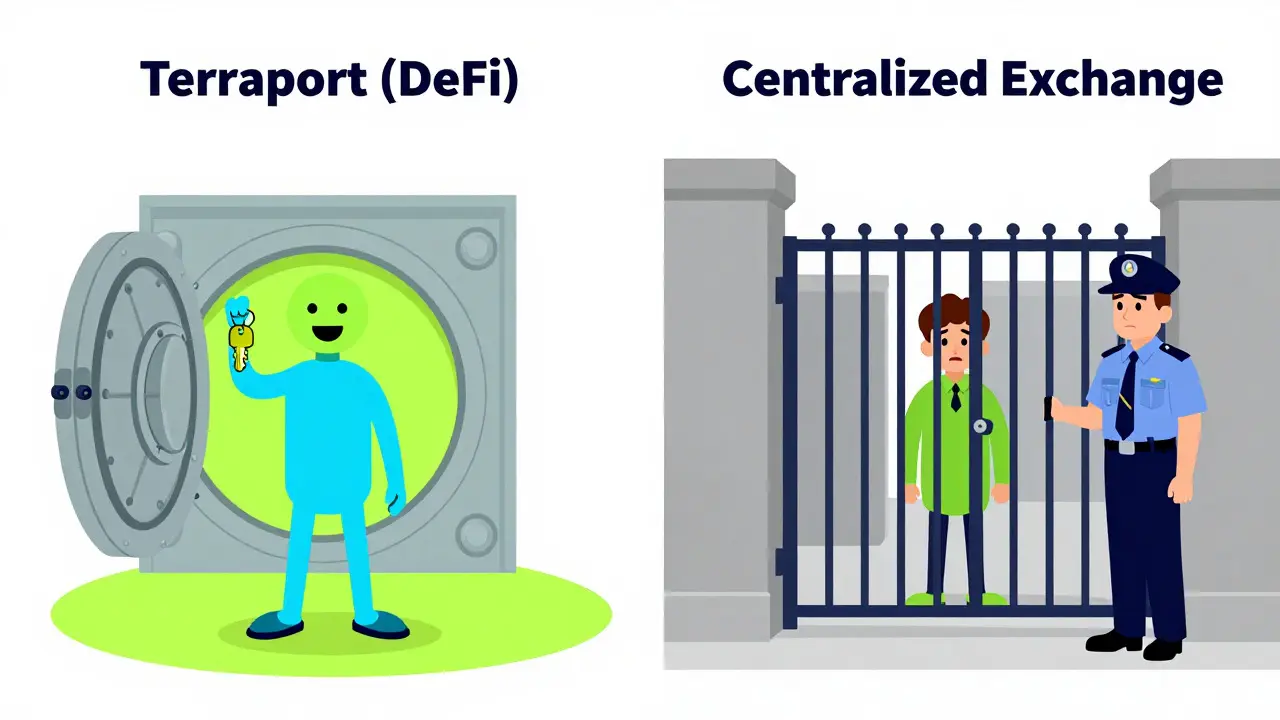
The core idea behind Terraport is accessibility. Unlike traditional finance platforms that require identity verification (KYC), long wait times, and complex paperwork, Terraport lets you interact with financial services directly through your wallet. You keep full control of your funds at all times. If the website goes down, your money isn't locked away; it stays in your wallet. This non-custodial approach is a fundamental pillar of decentralized finance.
The platform revolves around its native token, $TERRA, the deflationary utility token powering the Terraport ecosystem. This token is not just a currency; it’s the fuel for the entire system. You use it to pay for transaction fees, participate in governance votes, and earn rewards. As of late 2025 and into 2026, Terraport has positioned itself as a critical piece of infrastructure for anyone still invested in the Terra Classic narrative.
How Does the Terraport Ecosystem Work?
Terraport isn’t just a simple swap tool. It’s designed as a circular economy, meaning different parts of the platform support each other to create sustainability. Here are the main components you need to know:
- Swap Services: This is the basic function. You can trade LUNC for TERRA, or TERRA for other tokens supported on the Terra Classic network. Because it uses automated liquidity pools, trades happen instantly without an order book.
- Staking: If you want to put your idle TERRA tokens to work, you can stake them. In return, you earn daily rewards. This is similar to earning interest in a savings account, but the rates are often higher because they come from protocol revenue rather than bank loans.
- Liquidity Providing: Advanced users can provide pairs of tokens (like TERRA/LUNC) to the platform’s liquidity pools. In exchange, they earn a cut of the trading fees generated by swaps. This helps ensure there’s always enough depth for others to trade smoothly.
- Yield Farming: For those looking for higher risk and potentially higher returns, yield farming involves providing liquidity to specific pools and receiving additional reward tokens on top of trading fees.
- LaunchPad: Terraport also acts as a launchpad for new projects wanting to enter the Terra Classic ecosystem. This allows early investors to get access to promising new tokens before they hit major exchanges.
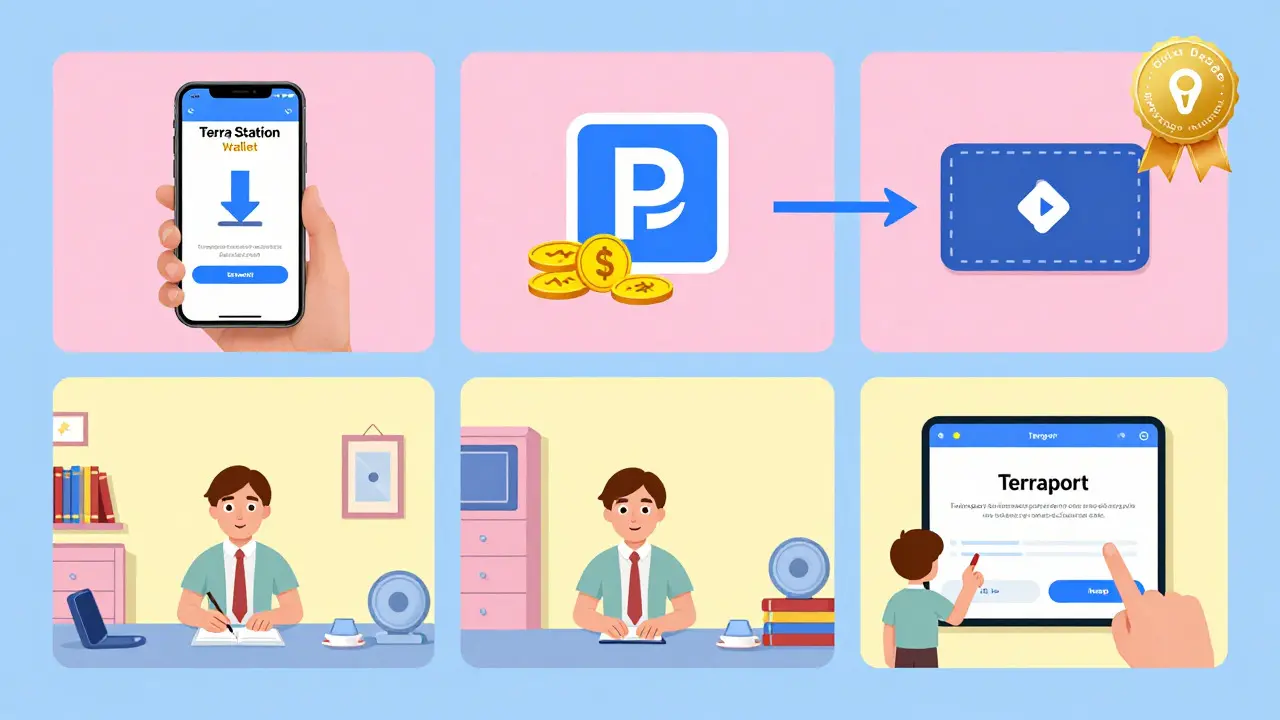
All these features are accessible via the Terra Station Wallet, a browser extension and mobile app used to manage Terra Classic assets and interact with dApps. You don’t need to create a username or password. Your private key is your identity.
TERRA Tokenomics: Why Is It Deflationary?
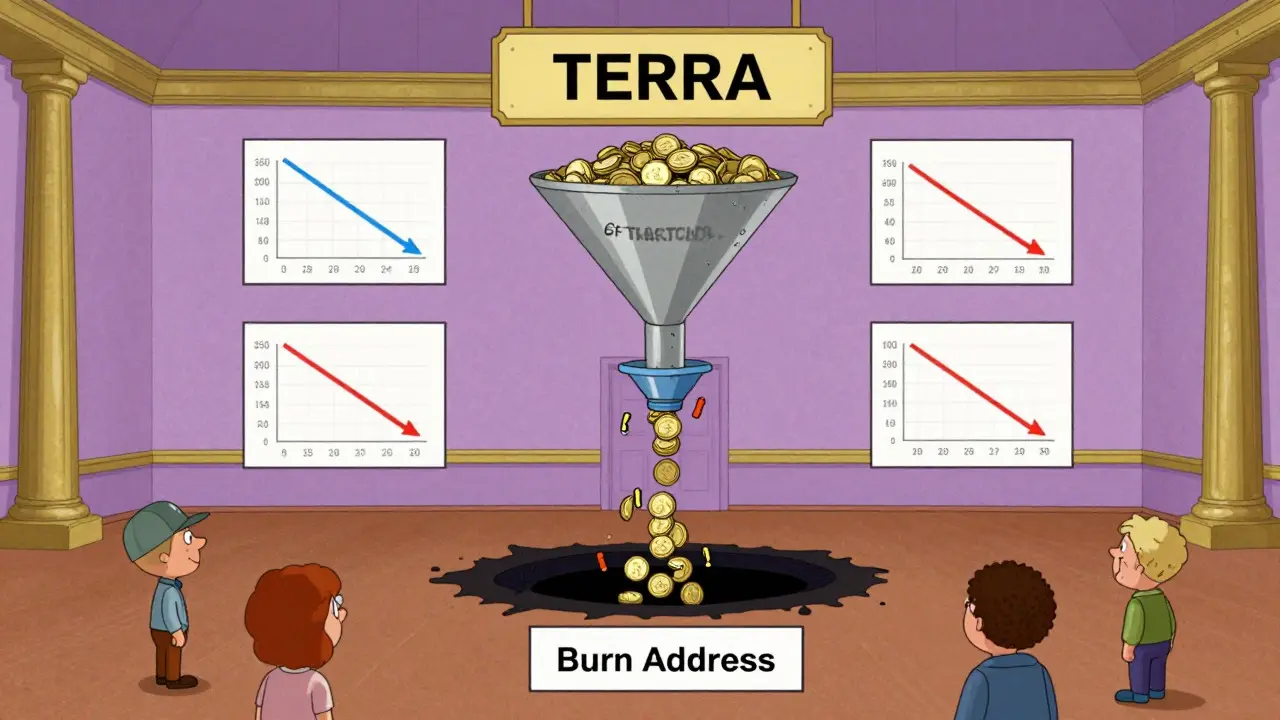
One of the biggest selling points of Terraport is its deflationary model. In economics, deflation means the supply of money decreases over time, which can increase the value of each remaining unit if demand stays constant or grows. Terraport achieves this through a systematic burning mechanism.
Here is how the burn process works in practice:
- Transaction Fees: Every time you swap tokens on Terraport, a small percentage of the fee is taken in TERRA tokens.
- Automatic Burning: These collected TERRA tokens are sent to a burn address-a digital black hole where no one can ever access them again. They are removed from circulation permanently.
- Supply Reduction: With every trade, the total supply of TERRA drops slightly. As of mid-2026, the circulating supply hovers around 642 million tokens, but this number is constantly shrinking.
This creates a scarcity dynamic. If more people are using Terraport to trade, more fees are generated, and more TERRA is burned. This aligns the interests of the users and the project: the more useful the platform becomes, the scarcer the token gets. However, remember that price is determined by both supply and demand. If demand drops, even a shrinking supply won’t necessarily push the price up.
Security and Trust: Who Audited Terraport?
In the crypto world, especially after the Terra crash, trust is earned, not given. Smart contract vulnerabilities are the leading cause of hacks in DeFi. To mitigate this, Terraport partnered with CertiK, a leading blockchain security firm specializing in smart contract auditing.
CertiK conducted a thorough audit of Terraport’s codebase. More importantly, the development team completed CertiK’s institutional KYC process and received the Gold badge certification in 2023. This badge signifies that the team’s identities are verified, reducing the risk of anonymous developers disappearing with user funds. Additionally, Terraport participates in a Bug Bounty program, where external security researchers are paid to find and report vulnerabilities before malicious hackers can exploit them.
While audits reduce risk, they do not eliminate it entirely. Always double-check URLs and verify contract addresses before connecting your wallet. Phishing sites remain a significant threat in the DeFi space.
Terraport vs. Centralized Exchanges: What’s the Difference?
You might ask, "Why use Terraport when I can just buy TERRA on Binance or Coinbase?" The answer lies in control and integration. Let’s compare the two approaches:
| Feature | Terraport (DeFi) | Centralized Exchange (e.g., Bitget, Binance) |
|---|---|---|
| Custody | Non-custodial (You hold keys) | Custodial (Exchange holds keys) |
| KYC Required | No | Yes (ID verification needed) |
| Access | Global, 24/7 via wallet | Subject to regional restrictions |
| Earning Opportunities | Staking, Farming, Liquidity Provision | Savings products, Margin trading |
| Risk Profile | Smart contract risk, user error | Exchange insolvency, hacking |
If you prefer simplicity and don’t mind giving up control, a CEX is easier. But if you want true ownership, privacy, and direct participation in the Terra Classic ecosystem, Terraport offers a more integrated experience. You can actually bridge assets from a CEX to your wallet and then use them immediately on Terraport for staking or swapping.
How to Get Started with Terraport
Getting started is straightforward, but you need to follow the steps carefully to avoid losing funds. Here is your checklist:
- Install Terra Station: Download the Terra Station browser extension or mobile app. Create a new wallet and write down your seed phrase on paper. Never share this phrase with anyone.
- Fund Your Wallet: Buy LUNC or TERRA on a centralized exchange like Bitget or KuCoin. Withdraw these tokens to your Terra Station wallet address. Make sure you select the Terra Classic (LUNC) network during withdrawal.
- Connect to Terraport: Visit the official Terraport website. Click "Connect Wallet" and approve the connection in your Terra Station popup.
- Start Trading or Staking: Navigate to the Swap tab to exchange tokens, or go to the Stake tab to lock up your TERRA and start earning rewards.
Tip: Always bookmark the official site. Scammers often create lookalike domains to steal credentials. Verify the URL matches the official links provided in reputable crypto directories like CoinMarketCap or CoinGecko.
Price Analysis and Future Outlook
As we move through 2026, the price of TERRA remains volatile, reflecting the broader sentiment around the Terra Classic ecosystem. Technical analysts use tools like Moving Averages and RSI indicators to gauge momentum. While short-term predictions vary, long-term models suggest that the deflationary pressure combined with increased utility could stabilize the price floor.
However, be cautious of hype. The Terra Classic community is passionate, but passion doesn’t always equal profitability. The success of Terraport depends heavily on continued adoption within the Terra Classic network. If more developers build on Terra Classic, Terraport benefits. If the ecosystem stagnates, growth may slow.
For traders, the low market cap of TERRA compared to major coins means high volatility. This presents opportunities for swing trading but also carries significant risk. Always do your own research (DYOR) and never invest more than you can afford to lose.
Is Terraport the same as the old Terra (LUNA)?
No. Terraport is a separate DeFi platform built on the Terra Classic blockchain. The old Terra project collapsed in 2022. Terraport uses its own token, $TERRA, which is distinct from the original LUNA token (now LUNC). It aims to restore utility to the surviving Terra Classic network.
How do I buy TERRA tokens?
You can buy TERRA on centralized exchanges like Bitget or KuCoin. Alternatively, you can swap LUNC for TERRA directly on the Terraport platform using your Terra Station wallet. Some platforms also offer Learn-to-Earn programs where you can earn small amounts of TERRA for free by completing educational tasks.
Is Terraport safe to use?
Terraport has been audited by CertiK and holds a Gold badge certification, indicating strong security standards. However, all DeFi platforms carry smart contract risks. Always use a hardware wallet for large amounts, verify URLs, and never share your seed phrase.
What happens to the TERRA tokens that are burned?
Burned tokens are sent to an unrecoverable address on the blockchain. They are permanently removed from circulation, reducing the total supply. This deflationary mechanism is designed to increase scarcity and potentially support the token's value over time.
Do I need to complete KYC to use Terraport?
No. Terraport is a decentralized platform that does not require Know Your Customer (KYC) verification. You only need a compatible wallet, such as Terra Station, to access the services. This ensures privacy and global accessibility.