What Is TQQQX? The Tokenized Version of the ProShares UltraPro QQQ ETF Explained
You want the explosive upside of the tech-heavy Nasdaq-100, but you also want the flexibility of blockchain. That is exactly what TQQQX is designed for. It is not a standard cryptocurrency like Bitcoin or Ethereum that relies on mining or network consensus for value. Instead, it is a tokenized version of the ProShares UltraPro QQQ ETF, issued by the platform xStocks. Think of it as a digital receipt that proves you own a slice of one of the most volatile and popular leveraged ETFs in the world, but with the added ability to move it around decentralized finance (DeFi) protocols.
If you have ever wanted to trade the S&P 500 or tech stocks without opening a traditional brokerage account, or if you want to use your stock exposure as collateral in a DeFi lending protocol, TQQQX bridges that gap. However, because it sits at the intersection of traditional finance (TradFi) and crypto, it comes with specific rules, risks, and quirks that you need to understand before buying a single token.
How TQQQX Works: Bridging Wall Street and Web3
To understand TQQQX, you first need to look at what it represents. The underlying asset is the ProShares UltraPro QQQ, commonly known by its ticker symbol TQQQ. This ETF seeks daily investment results of 300% of the performance of the Nasdaq-100 Index. It is a leveraged product, meaning it amplifies gains-and losses-threefold every day. It is a favorite among aggressive traders who believe in the long-term growth of big tech companies like Apple, Microsoft, and Nvidia.
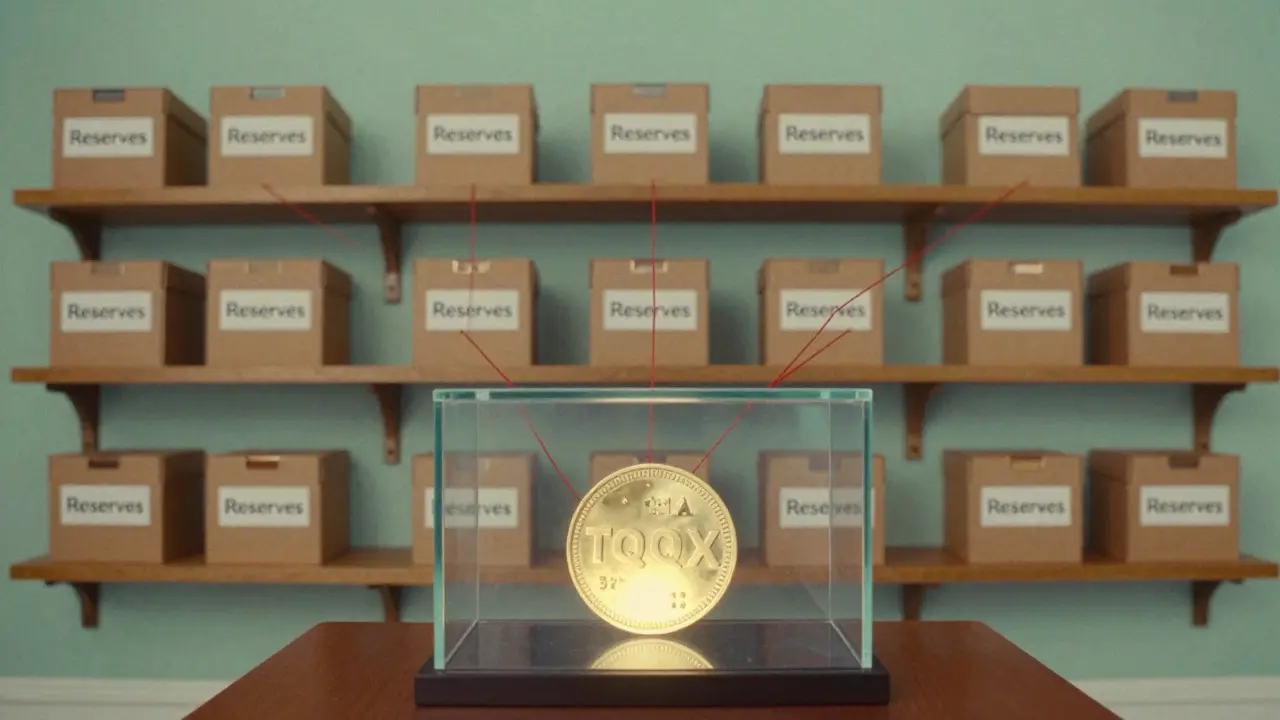
xStocks takes this traditional financial instrument and turns it into a blockchain token. Here is the key mechanism: for every TQQQX token in circulation, xStocks claims to hold the equivalent value of the underlying TQQQ shares in a custodial account. This is called 1:1 backing. If you hold one TQQQX token, you should theoretically have a legal claim to the value of one share of the TQQQ ETF.
This structure makes TQQQX a Real-World Asset (RWA) token. Unlike meme coins or algorithmic stablecoins, its value is tied directly to a tangible, regulated financial product. The platform issues these tokens under European Union regulations, which means they are primarily accessible to non-US users. US investors are generally restricted from accessing these specific tokenized securities due to strict SEC regulations regarding unregistered securities offerings.
| Feature | Traditional TQQQ (ETF) | TQQQX (Tokenized ETF) |
|---|---|---|
| Access | d>Brokerage account (US & Global)Crypto wallet (Non-US primarily) | |
| Trading Hours | Market hours only (9:30 AM - 4:00 PM ET) | 24/7 via DEXs and crypto exchanges |
| Composability | No (cannot be used in smart contracts) | Yes (can be used as collateral in DeFi) |
| Regulation | SEC regulated (US) | EU compliant (Swiss ISIN registered) |
| Settlement | T+1 or T+2 days | Near-instant on-chain settlement |
The xStocks Platform and Regulatory Structure
xStocks is the engine behind TQQQX. They do not just issue one token; they offer a basket of 57 U.S. stocks and ETFs in tokenized form. This includes giants like Tesla, Amazon, and various index funds. But why does this matter for TQQQX specifically?
The regulatory framework is crucial here. TQQQX carries an International Securities Identification Number (ISIN): CH1436219757. An ISIN is a unique code used to identify specific securities globally. Having an ISIN means TQQQX is treated more like a formal security than a speculative crypto experiment. It suggests that the token has been structured to meet certain legal standards, likely within Switzerland or the broader EU jurisdiction where xStocks operates.
This "Native Distributed" tokenization model means the ownership records are kept on a distributed ledger (blockchain), but the actual assets are held off-chain by a custodian. You are trusting xStocks and their custodian partners to maintain the 1:1 reserve. If the custodian fails, or if xStocks goes bankrupt, your token could lose its backing. This is counterparty risk, and it is the biggest difference between holding TQQQX and holding native crypto like Bitcoin.
Valuation, Liquidity, and Market Data
One of the most confusing aspects of trading TQQQX is understanding its price and liquidity. Because it is a niche RWA token, data can vary significantly between platforms.
As of mid-2025, analytics sites like RWA.xyz reported a Total Asset Value (NAV) per token hovering around $73.05, with a total market capitalization in the low millions (around $1.19 million to $1.33 million). However, live price trackers like Coinpedia or Coinbase have shown prices fluctuating between $86 and $156 depending on the timestamp and available liquidity pools. This discrepancy often happens because:
- Low Liquidity: With only a few thousand tokens circulating freely at any given time, large trades can cause significant price slippage.
- Premium/Discount to NAV: If demand for TQQQX is high on a specific Decentralized Exchange (DEX), the price might trade above the actual Net Asset Value of the underlying ETF. Conversely, panic selling can push it below NAV.
- Data Lag: Crypto aggregators sometimes struggle to pull accurate real-time data from private or permissioned liquidity pools.
For example, CoinGecko noted that while volume existed, active spot markets were limited on the exchanges they track. This means you cannot always expect to sell your TQQQX instantly at the exact fair market value. Always check the current order book or pool depth before executing a large trade.
How to Buy and Trade TQQQX
You cannot buy TQQQX on the main Binance exchange (the centralized part). It is not listed there. To get your hands on TQQQX, you need to use the Binance Web3 Wallet or another compatible self-custody wallet that supports the token’s blockchain standard (likely ERC-20 on Ethereum or a similar EVM-compatible chain).
- Set Up Your Wallet: Open the Binance app, go to Wallet, then select Web3 Wallet. Create a new wallet and securely store your recovery phrase. Never share this phrase with anyone.
- Fund with Stablecoins: Transfer USDT or USDC into your Web3 wallet. You can do this from your Binance exchange account, another external wallet, or by buying directly with a card if supported.
- Find the Token: In the Web3 wallet, go to the Trade tab. Select Swap.
- Execute the Swap: Choose USDT as the "From" currency and search for TQQQ tokenized ETF (xStock) as the "To" currency. Enter the amount you wish to swap.
- Approve and Confirm: Review the gas fees and price impact. Tap Approve & Swap to finalize the transaction on the blockchain.
Once you own TQQQX, you can hold it in your wallet, swap it back for stablecoins, or potentially use it in DeFi protocols if they support xStocks tokens. Some users explore yield farming or lending options, but availability depends entirely on whether specific DeFi platforms have integrated TQQQX.
Risks You Must Consider
Investing in TQQQX involves three layers of risk. Ignoring any of them can lead to significant losses.
1. Leveraged ETF Decay: Remember, TQQQ is a 3x leveraged ETF. These products suffer from "volatility drag" or decay over time if the market chops sideways. Even if the Nasdaq ends the year flat, TQQQ might be down significantly. TQQQX inherits this mathematical risk directly.
2. Counterparty Risk: You are relying on xStocks to keep the reserves intact. While they claim EU compliance and 1:1 backing, there is no public audit trail as transparent as Bitcoin’s blockchain. If the custodian holding the actual TQQQ shares fails, your token becomes worthless paper.
3. Liquidity and Access Risk: As mentioned, liquidity is thin. If you need to exit quickly during a market crash, you might not find enough buyers at a fair price. Additionally, since this is primarily for non-US residents, regulatory changes in Europe or Switzerland could affect your ability to trade or redeem the token.
Is TQQQX Right for You?
TQQQX is a specialized tool. It is not for beginners who are still learning how wallets work. It is best suited for experienced crypto users who already understand leveraged ETFs and want to integrate traditional market exposure into their DeFi strategies. If you are a US resident, you likely cannot access it legally. If you are outside the US and want 24/7 access to tech-leveraged exposure without a broker, TQQQX offers a unique solution-but always verify the current NAV versus the market price before entering a position.
Can US citizens buy TQQQX?
Generally, no. xStocks designs its tokenized securities to comply with European Union regulations, which typically excludes US residents due to strict SEC rules regarding unregistered securities. Attempting to bypass geo-restrictions may violate terms of service and local laws.
Does TQQQX pay dividends?
The underlying TQQQ ETF does not pay dividends in the traditional sense, as it is a leveraged fund focused on price appreciation. Therefore, TQQQX does not distribute dividend payments to token holders. Its value changes based on the price movement of the Nasdaq-100.
What blockchain is TQQQX built on?
While xStocks has explored multiple chains, TQQQX is typically associated with Ethereum-compatible networks (ERC-20 standard) or other EVM chains that support complex smart contracts required for security token distribution. Always check the contract address provided by xStocks or reputable data aggregators like RWA.xyz to ensure you are interacting with the correct token.
Is TQQQX safer than regular crypto?
It is different, not necessarily safer. It eliminates some crypto-specific volatility risks because its value is tied to a real ETF. However, it introduces counterparty risk (trust in xStocks/custodian) and regulatory risk. Regular cryptos like Bitcoin have no central issuer to fail, but TQQQX has a central issuer whose failure would impact the token's value.
Why is the price of TQQQX different from the TQQQ ETF price?
Several factors cause this divergence. First, TQQQX trades 24/7, while the ETF only trades during market hours. Second, liquidity differences can create premiums or discounts. Third, fees associated with token redemption or creation can affect the arbitrage efficiency, causing the token price to drift slightly from the underlying Net Asset Value (NAV).