Iquant Crypto Exchange Review: What You Need to Know Before Trading
Scam Alert: Iquant Platform Checker
Identify the Legitimate Exchange
Which of these platforms is a legitimate crypto exchange?
There is no such thing as an official crypto exchange called Iquant. If you're searching for it, you're not alone - many people get confused by similar-sounding names in the crypto space. What you're likely seeing are three completely different platforms: iQUANT.pro, Bequant Global, and CryptoQuant. None of them are the same, and only one is even a trading platform. Mixing them up could cost you money - or worse, lead you to a scam.
What Is iQUANT.pro? (It’s Not a Crypto Exchange)
Users get access to tools like a Portfolio Optimizer, Risk Assessment Questionnaire, and a technical indicator backtester. All of this is designed for professionals who want to build better portfolios faster. But here’s the catch: you need to pay for a membership to use it. There’s no free trading. No wallet. No deposits. No withdrawals. If someone tells you you can trade crypto on iQUANT.pro, they’re wrong - or trying to scam you.
Bequant Global: The Real Crypto Exchange
The only platform among these three that actually lets you trade cryptocurrency is Bequant Global. It’s a real crypto exchange with over 2,000 trading pairs. You can do spot trading, margin trading, and trade perpetual futures. They claim to have the tightest spreads and lowest fees in the market - but there’s almost no public data to back that up.There’s no clear information about when Bequant was founded, who runs it, or where it’s headquartered. No reviews on Trustpilot. No detailed fee schedule posted publicly. No mention of regulatory licenses from the SEC, FCA, or any other major authority. That’s a red flag. Legitimate exchanges like Binance, Kraken, or Coinbase publish their compliance status openly. Bequant doesn’t. That doesn’t mean it’s a scam - but it means you’re walking into unknown territory.
If you’re thinking about using Bequant, you need to verify everything yourself. Check their website for official contact info. Look for regulatory disclosures. Search for user experiences on Reddit or crypto forums. Don’t trust marketing claims. If they say “best fees,” ask for a fee table. If they say “secure,” ask for proof of cold storage and two-factor enforcement. Without that, you’re gambling with your funds.
CryptoQuant: The Data Platform (Not a Trading Site)
Then there’s CryptoQuant. This is a blockchain analytics company. It doesn’t let you trade. It gives you data. Think of it like Bloomberg Terminal for crypto - it shows on-chain metrics, wallet movements, exchange inflows and outflows, miner activity, and more. Professionals use it to predict price movements, spot whale activity, and understand market sentiment.CryptoQuant offers APIs, drag-and-drop charts, and pre-built dashboards. You can track how much Bitcoin is moving into or out of exchanges - a key signal for price drops or rallies. You can see which addresses are accumulating or dumping. You can compare Bitcoin miner revenue against price. All of this is useful for serious traders and institutional investors. But again - you can’t buy crypto here. You can only analyze what’s happening on the blockchain.
Why the Confusion? Scams Are Everywhere
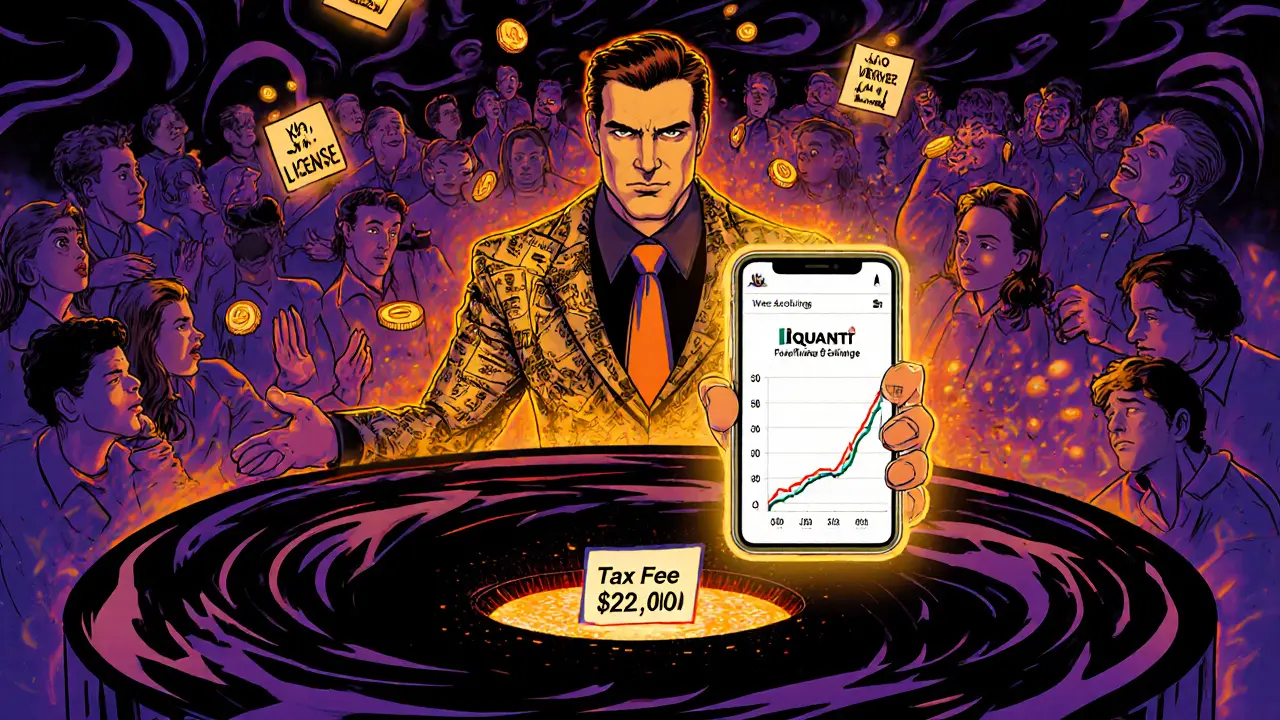
The reason names like “Iquant” cause so much confusion is simple: scammers are copying them. The California Department of Financial Protection and Innovation has documented dozens of fake crypto platforms - AELs-Exchange.com, wealthfrontstock.com, alpha2iota.com - all designed to look real. They often appear in WhatsApp groups where someone claims to have an “AI trading bot” that guarantees 20% weekly returns.Here’s how the scam works: you deposit $500. You see your balance go up to $1,200. You try to withdraw. They say you need to pay a $23,000 “tax fee” first. Then a $33,000 “compliance fee.” You pay. The site disappears. Your money is gone. No trace. No refund. No recourse.
These scams use names that sound technical and professional - “Iquant,” “Bequant,” “CryptoQuant” - because they want you to think they’re legitimate. They copy real websites. They use fake testimonials. They even have customer service chatbots that answer like real people. But they’re all designed to steal your crypto, not help you trade it.
How to Avoid Getting Scammed
If you’re looking to trade crypto, here’s how to stay safe:- Verify the website domain. Bequant Global is bequant.global. iQUANT.pro is iquant.pro. CryptoQuant is cryptoquant.com. If the URL looks off - like iquant-exchange.com or iquant.trade - it’s fake.
- Check for regulation. Look for licenses from the SEC, FCA, MAS, or other regulators. If it’s not listed, assume it’s not regulated.
- Search for user reviews. Don’t trust the testimonials on the site. Go to Reddit, Twitter, or independent forums. Look for posts from 2024 and 2025. Are people complaining about withdrawals? Are there warnings?
- Start small. Never deposit more than you can afford to lose. Even if a platform looks legit, new or unknown exchanges can disappear overnight.
- Use cold wallets. If you buy crypto, move it out of the exchange wallet within 24 hours. Exchanges get hacked. Your private keys are your only real security.
What Should You Do Instead?
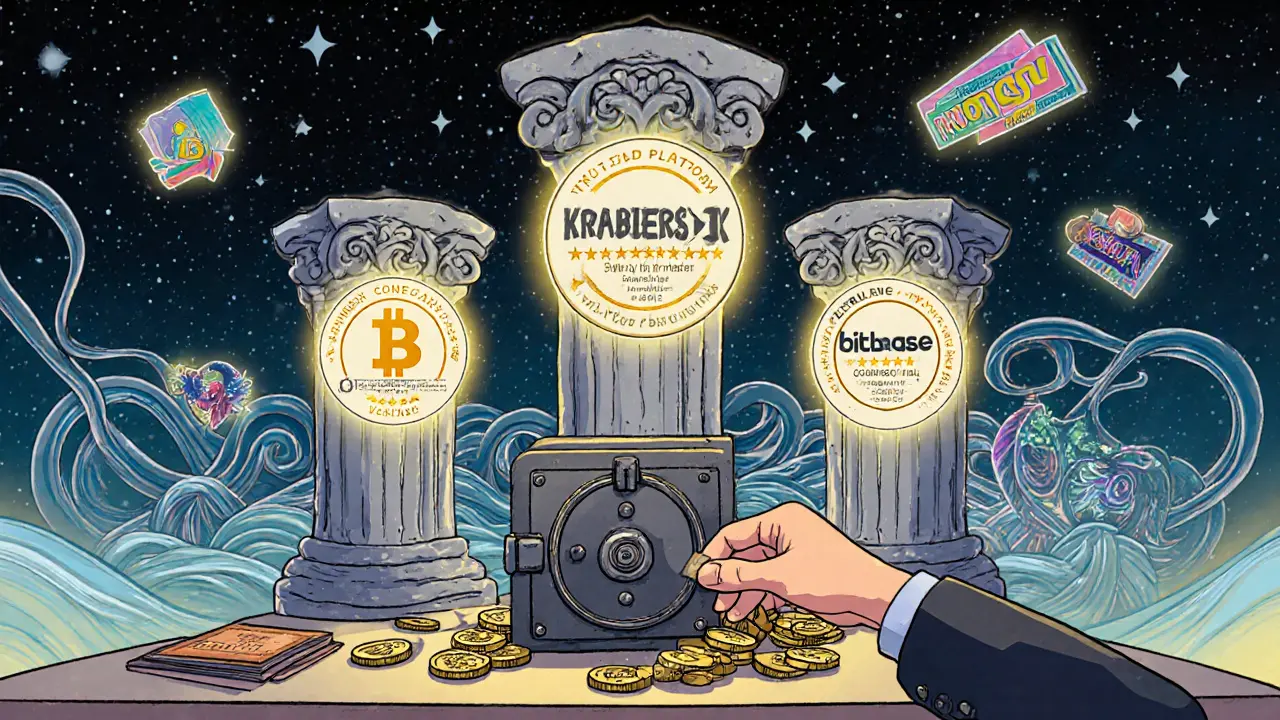
If you want to trade crypto, stick with well-known, regulated platforms:- Kraken - U.S.-based, regulated, transparent fees, strong security
- Coinbase - Public company, FDIC-insured USD balances, easy for beginners
- Binance - Largest exchange globally, but avoid U.S. version unless you’re using Binance.US
- Bitstamp - Established since 2011, regulated in the EU
These platforms have years of public records, user reviews, security audits, and regulatory filings. You can check their compliance pages. You can read their terms of service. You can call their support and get a real person. That’s what real exchanges do.
If you’re interested in investment research - not trading - then iQUANT.pro might be worth exploring. But only if you’re a financial advisor or serious investor looking for ETF strategies. Don’t use it to buy Bitcoin. Don’t use it to trade crypto. It’s not built for that.
Final Warning: Don’t Trust Names, Trust Proof
The name “Iquant” sounds like it could be a high-tech crypto platform. But names don’t guarantee safety. Only proof does. If a platform won’t show you its license, its security measures, or its customer support history - walk away. The crypto space is full of cleverly disguised scams. The ones that look most professional are often the most dangerous.Before you deposit a single dollar, ask yourself: Can I verify this company exists? Can I find independent reviews? Do they answer hard questions? If the answer is no - you’re not investing. You’re risking your money on a guess.
Is Iquant a real crypto exchange?
No, there is no legitimate crypto exchange called Iquant. The name is often confused with iQUANT.pro (an investment research platform), Bequant Global (a lesser-known exchange with little public info), and CryptoQuant (a blockchain analytics tool). None of these are the same, and none of them are officially called "Iquant crypto exchange."
Can I trade Bitcoin on iQUANT.pro?
No. iQUANT.pro is an investment research service for ETFs and financial advisors. It does not offer crypto trading, wallets, or deposits. Any website claiming to let you trade crypto on iQUANT.pro is a scam.
Is Bequant Global safe to use?
There’s not enough public information to say for sure. Bequant Global claims to be a crypto exchange with 2,000+ trading pairs, but it doesn’t publish regulatory licenses, security details, or user reviews. Without transparency, it’s too risky for most traders. Stick to well-known exchanges with proven track records.
What’s the difference between CryptoQuant and a crypto exchange?
CryptoQuant is a data analytics platform. It shows you blockchain metrics like exchange inflows, miner activity, and whale movements - but you can’t buy or sell crypto on it. A crypto exchange like Kraken or Coinbase lets you trade. CryptoQuant helps you decide when to trade. They serve completely different purposes.
How do I know if a crypto exchange is a scam?
Look for these red flags: no regulatory license, no contact info, fake testimonials, pressure to deposit quickly, difficulty withdrawing funds, or requests for extra fees to cash out. Scammers often copy names from real platforms to trick you. Always verify the official website URL and search for independent reviews before depositing anything.
What are safer alternatives to Iquant or Bequant?
Use Kraken, Coinbase, Bitstamp, or Binance.US - all regulated, transparent, and widely reviewed. They publish their security practices, licensing info, and customer support details. Avoid unknown exchanges with no public track record. Your funds are safer on platforms that have been around for years and answer to regulators.
anthony silva
November 14, 2025 AT 02:44So let me get this straight - there’s no such thing as Iquant but people keep losing money on it anyway? Wow. Crypto really is just a giant meme with a ledger.
Guess I’ll stick to trading my last 5000 satoshis in my dreams.
David Cameron
November 15, 2025 AT 08:22Names are just illusions we use to feel safe in a world full of scams.
But if you need a name to trust, you’re already one click away from disaster.
Reality doesn’t care what you call it - only what it does to your wallet.
Sara Lindsey
November 15, 2025 AT 18:16YESSSS this is why I stopped googling crypto names and started reading whitepapers instead
So many people just type in whatever they hear and boom - phishing site loaded
Stop being lazy and do the 2 minute search
You’re worth more than your next bad trade
alex piner
November 15, 2025 AT 23:10omg i was just about to deposit into iquant.pro lol
thx for the warning
im so glad i saw this before i lost my eth
you guys are lifesavers
Gavin Jones
November 17, 2025 AT 14:10It is indeed a curious phenomenon, this proliferation of nomenclatural mimicry in the cryptocurrency domain.
One might posit that the human psyche seeks familiarity even in contexts of profound uncertainty.
Thus, the name 'Iquant' - phonetically proximate to legitimate entities - becomes an unwitting Trojan horse for financial peril.
Education, not vigilance alone, is the bulwark against such deception.
Mauricio Picirillo
November 18, 2025 AT 05:36Same here - I almost signed up for iQUANT.pro thinking it was the new Binance update
Thank god I checked the domain and saw it was registered 3 weeks ago
Always check the WHOIS, folks. It’s free and saves your life
Liz Watson
November 20, 2025 AT 02:52Wow. So the crypto space is now a kindergarten where toddlers name their toys and then expect adults to invest in them?
Did we forget that ‘Quant’ doesn’t mean ‘secure’? Did we forget that ‘.pro’ is the domain of scammers who can’t afford .com?
And yet… people still click.
It’s not ignorance. It’s willful stupidity.
Rachel Anderson
November 21, 2025 AT 13:35I cried when I realized Iquant wasn’t real… I had this whole vision of me becoming a crypto millionaire with my 3 BTC…
My therapist says I’m projecting my need for control onto blockchain names…
But still… I just wanted to believe.
Why does crypto feel like a breakup you keep going back to?
😭💔
Hamish Britton
November 22, 2025 AT 12:34Been around since 2017. Seen this exact thing happen with Bitfinex vs Bitfins, Bitstamp vs Bitstamp.io, etc.
It’s not new. Just more aggressive now.
Always check the domain, check the GitHub, check the team.
If it’s got no history, it’s not worth your time.
Robert Astel
November 22, 2025 AT 12:35you know what i think its not about the name its about the energy like when you feel a platform is legit its like a vibe you know like the way the buttons look or the way the loading screen makes you feel like its gonna work and i think that’s why people get tricked because they feel something and they trust that feeling and that’s the real problem because we’re taught to trust feelings not facts and maybe we need to rewire our brains to think in terms of verification not vibes because the universe doesn’t care how you feel it only cares if you did your due diligence and honestly i think this is why so many people lose money not because they’re dumb but because they’re too human and that’s beautiful but also dangerous
Andrew Parker
November 23, 2025 AT 17:30EVERY TIME. I swear to god. Every. Single. Time.
I just watched a guy cry in a Discord call because he sent 12 ETH to 'Iquant' thinking it was the new Binance fork.
He said 'I felt it in my soul.'
His soul just lost $30k.
And I’m sitting here wondering if the universe is just trolling us.
Are we the punchline? 😭
Can someone please make a goddamn AI that auto-blocks all .pro domains with 'quant' in them?
My heart hurts.
Kevin Hayes
November 25, 2025 AT 07:46The phenomenon of linguistic mimicry in financial platforms is not unique to cryptocurrency. It mirrors the historical exploitation of homophonic brand names in pharmaceuticals and banking. The cognitive bias known as the 'mere-exposure effect' renders users more likely to trust entities that resemble known, legitimate institutions. This is a documented vector of social engineering. The solution lies not in user education alone, but in regulatory intervention requiring domain-name transparency and trademark enforcement in digital asset spaces.
Katherine Wagner
November 26, 2025 AT 05:29Who even cares about iQUANT.pro - it’s not like anyone uses it anyway
And Bequant? Barely has volume
CryptoQuant? That’s just a data site
So why are we even talking about this?
It’s all a distraction from the real problem - the SEC
And also - who uses .pro anymore? 2015 called - they want their scams back
And also - why is everyone so obsessed with names? The tech doesn’t care what you call it
ratheesh chandran
November 27, 2025 AT 18:48i think this is karma for people who dont read whitepaper and just trust google
i saw one guy send 5000 usdt to iquant.pro because he saw a youtube ad with guy in suit saying 'this is next binance'
he was from india too
now he is crying in telegram group
we need to stop this
teach your parents before they lose pension