OKX Crypto Access Limitations by Country: 2026 Ban List & Workarounds
You try to log in, enter your details, and suddenly hit a wall. A cold, hard message tells you that OKX is not available in your region. It happens more often than you’d think, especially if you’re sitting in the United States, Canada, or even parts of Europe trying to access specific features. Understanding why this happens-and what it means for your ability to trade-is crucial before you waste time trying to force an account open.
OKX is a global cryptocurrency exchange founded in 2017 (originally as OKEx) that processes over $13 billion in daily trading volume. Also known as OKX Exchange, it operates under multiple regulatory frameworks with distinct service limitations based on jurisdiction. The platform serves users in approximately 160 countries but maintains strict bans in others due to compliance with international sanctions and national laws. As of May 2026, the landscape has shifted significantly since the full implementation of the EU’s MiCA regulations and ongoing U.S. enforcement actions. This guide breaks down exactly where you can use OKX, what features are locked, and how the platform enforces these rules.
The Three Tiers of OKX Restrictions
Not all restrictions are created equal. OKX doesn’t just flip a switch and ban everyone in certain regions; they operate on a tiered system designed to comply with local laws while maximizing market reach. Knowing which tier your country falls into determines whether you can’t use the app at all, or if you just can’t trade futures.
| Tier | Restriction Type | Key Regions/Countries | Allowed Features |
|---|---|---|---|
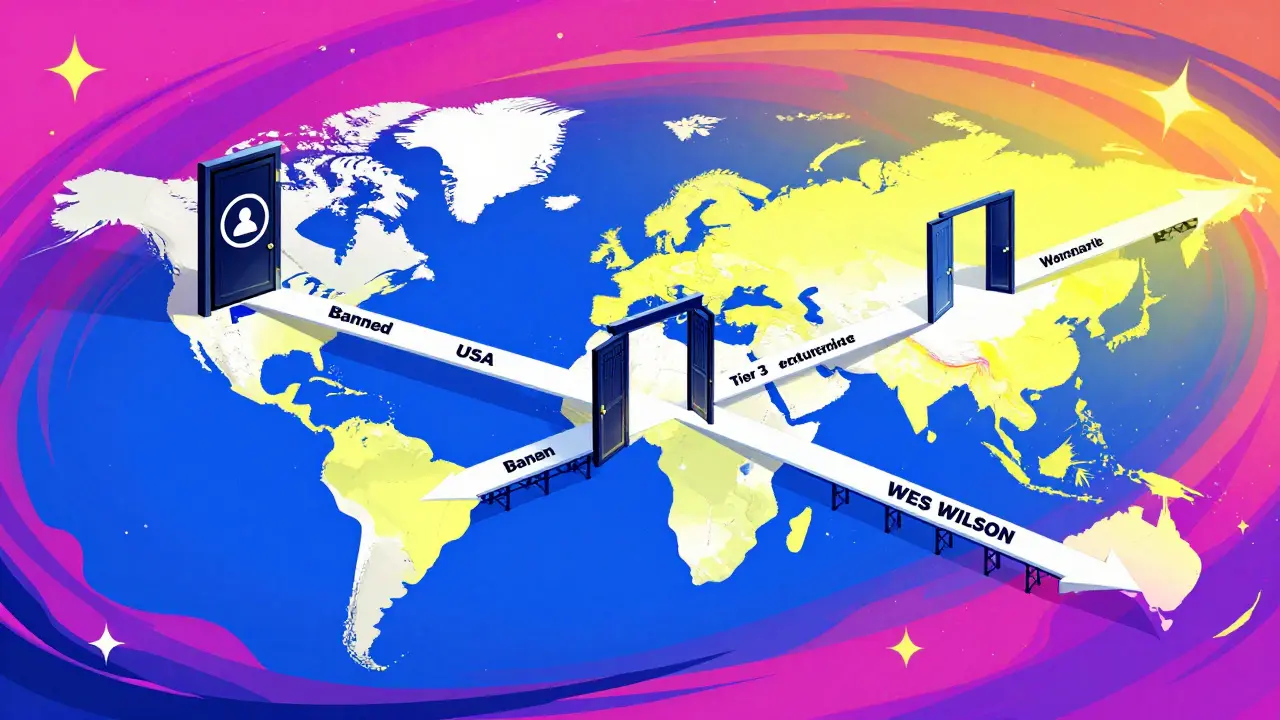
| Tier 1 | Complete Ban | USA, Canada, UK, Singapore, Malaysia, Cuba, Iran, North Korea, Syria, Crimea, Donetsk, Luhansk | None. No registration, no deposits, no trading. |
| Tier 2 | Partial/Entity Ban | U.S. Territories (Puerto Rico, Guam), Bangladesh, Bolivia, Malta | Limited or no access depending on specific entity availability. |
| Tier 3 | Feature Limits | Australia, Brazil, South Korea, Japan, EU Member States | Spot trading allowed. Derivatives (futures/perpetuals) often restricted. |
Tier 1 is the absolute no-go zone. If you live in the United States or Canada, you cannot create an account. Period. The platform blocks IP addresses from these regions entirely during the sign-up process. Tier 3 is where things get tricky. You might be able to buy Bitcoin, but if you want to leverage trade Ethereum futures, the button simply won’t appear for users in Australia or the European Union. This fragmentation exists because regulators in places like France and Germany have cracked down on leveraged crypto products specifically, forcing exchanges like OKX to disable those tools for local residents.
Why Is OKX Banned in the US and Other Major Markets?
The primary driver behind these bans is regulatory compliance, specifically regarding Anti-Money Laundering (AML) laws and sanctions administered by bodies like the Office of Foreign Assets Control (OFAC). In the United States, the Bank Secrecy Act requires crypto exchanges to register as Money Services Businesses (MSBs) and adhere to strict reporting standards. OKX, headquartered in the Seychelles, has chosen not to navigate the complex and costly legal battles required to operate fully within the U.S. financial system.
Professor Sarah Chen of MIT's Digital Currency Initiative describes this approach as "regulatory arbitrage," noting that it creates dangerous compliance gaps. While critics argue this allows bad actors to slip through, proponents like Dr. David Carlisle from Chainalysis point out that OKX’s multi-entity structure is actually one of the most sophisticated compliance frameworks among non-U.S. exchanges. By blocking high-risk jurisdictions entirely, they reduce their exposure to money laundering investigations compared to competitors who try to serve everyone.
For the average user, this means zero ambiguity: if you are a U.S. resident, OKX is off-limits. Attempts to bypass this using a VPN will likely result in immediate account termination once you attempt KYC verification. The platform uses advanced device fingerprinting and IP geolocation with 99.2% accuracy to detect such attempts.
The KYC Hurdle: Verification as a Gatekeeper
You can’t hide behind anonymity anymore. Since January 2023, OKX has mandated Know Your Customer (KYC) verification for all core features. This isn’t just a formality; it’s the primary tool used to enforce country restrictions. When you submit your ID, the system cross-references your address and nationality against their prohibited list.
Here is how the verification levels work:
- Level 1: Basic identity check. Allows daily transaction limits up to $10,000.
- Level 2: Enhanced verification. Raises limits significantly.
- Level 3: Full institutional-grade verification. Supports daily transactions up to $1,000,000.
If you live in a permitted country but fail to verify, you are stuck with minimal functionality. More importantly, if you live in a banned country, submitting a fake address during KYC is a fast track to having your funds frozen. OKX’s September 2025 enforcement report cited over 14,000 account closures for "geolocation fraud." They don’t just ban you; they can freeze assets pending investigation. It is not worth the risk.
Feature Restrictions: What Can You Actually Trade?
Even if you can log in, you might not be able to do everything. This is particularly relevant for traders in Tier 3 countries like Australia, Japan, and many EU nations. The European Union’s Markets in Crypto-Assets (MiCA) regulation, fully effective since December 2024, has forced significant changes. Under MiCA, derivatives trading is heavily scrutinized, leading OKX to restrict futures and perpetual contracts for all EU residents.
In Japan, the Financial Services Agency (FSA) issued warnings in August 2025 regarding unregistered platforms. While OKX Japan operates as a separate, regulated entity, the global OKX platform restricts Japanese users from accessing certain high-risk products. Similarly, in South Korea, real-name bank account systems link directly to crypto exchanges, making it impossible to trade anonymously or access offshore derivatives without triggering alerts.
For spot traders-those buying and holding assets like Bitcoin or Solana-the experience remains largely unaffected in these regions. You can deposit via SEPA in Europe or local bank transfers in Asia. However, if your strategy relies on leverage or hedging with futures, you will find yourself limited. This has led to a migration of derivative traders to jurisdictions with lighter regulations, impacting liquidity in some markets.
How OKX Enforces Restrictions Technically
Curious about how they catch people? It’s not just checking your IP address when you log in. OKX employs a multi-layered technical enforcement mechanism:
- IP Geolocation: Real-time checks against global IP databases. Accuracy is reported at 99.2%.
- Device Fingerprinting: Analyzes your browser, operating system, and hardware IDs. Even if you change IPs, your device signature may remain flagged.
- KYC Document Analysis: AI-driven verification of passports and driver’s licenses checks for signs of tampering and validates addresses against postal codes.
- Behavioral Analytics: Unusual login patterns, such as logging in from three different countries in 24 hours, trigger automatic security reviews.
User experiences on Reddit and Trustpilot highlight the frustration of false positives. Some users in permitted countries report being blocked due to shared IP networks (common in corporate or university settings). In these cases, customer support is the only recourse, though response times vary wildly-averaging 8.2 hours in Europe versus 24.7 hours in developing markets according to Q3 2025 data.
Alternatives for Restricted Users
If OKX is banned in your country, you aren’t out of options. The crypto market is fragmented, and other exchanges have different regulatory footprints.
| Exchange | US Access | Canada Access | Derivatives Available | Regulatory Status |
|---|---|---|---|---|
| OKX | No | No | Yes (Restricted in EU/AU) | Seychelles-based, Multi-entity |
| Coinbase | Yes | Limited | Yes (US Only) | US Public Company, Highly Regulated |
| Binance | No | No | Yes (Global) | Complex, Facing Legal Issues |
| Kraken | Yes | Yes (Limited) | Yes | Strong Compliance, US/EU Presence |
For U.S. residents, Coinbase and Kraken are the safest bets. They are fully compliant with SEC and CFTC regulations. For those in Canada, while OKX is banned, platforms like Bitbuy or Newton offer localized services. In Europe, Kraken and Coinbase provide robust alternatives with full MiCA compliance. Always check the latest terms of service, as regulations change monthly.
Future Outlook: Will Bans Lift?
As we move through 2026, the regulatory environment continues to tighten. OKX has announced plans to launch a U.S.-compliant entity following discussions with regulators, though no timeline has been set. They have invested $230 million in compliance infrastructure since early 2025, focusing on establishing entities in Switzerland and the UAE to serve previously restricted markets.
However, experts warn of increasing fragmentation. JPMorgan’s blockchain analysis team predicts that regulatory divergence could reduce OKX’s addressable market by 18% by 2027. For now, the status quo remains: strict bans in major Western economies and feature limits in others. Don’t expect sudden changes. Plan your trading strategy around the constraints of your jurisdiction, and never risk your capital on workarounds that violate terms of service.
Is OKX completely banned in the United States?
Yes. OKX does not offer any services to residents of the United States, including its territories like Puerto Rico and Guam. Attempting to access the platform using a VPN or foreign address violates their terms of service and can lead to account termination and asset freezing.
Can I use OKX in Canada?
No. Canada is listed as a Tier 1 restricted country. OKX prohibits registration and trading for Canadian residents due to regulatory differences and compliance costs associated with Canadian financial laws.
What features are restricted in the European Union?
Due to the EU's MiCA regulations, derivatives trading, including futures and perpetual contracts, is restricted for most EU residents. Spot trading (buying and selling cryptocurrencies) remains available, but leverage products are disabled to comply with local consumer protection laws.
Why is Singapore banned if there is an OKX Singapore?
The global OKX platform restricts Singaporean access to comply with broader international sanctions and general risk policies. However, OKX operates a separate, locally regulated entity called OKX Singapore, licensed by the Monetary Authority of Singapore (MAS). Residents must register specifically with the Singapore entity, which has different features and limits compared to the global site.
Will OKX ever return to the US market?
OKX has expressed interest in launching a U.S.-compliant entity and has engaged in discussions with regulators. However, as of May 2026, no official launch date has been announced. Given the complex legal landscape involving the SEC and CFTC, a full-scale return remains uncertain and likely years away.
What happens if I use a VPN to bypass restrictions?
Using a VPN to circumvent geographic restrictions is explicitly prohibited in OKX's User Agreement. The platform uses advanced detection methods, including device fingerprinting and behavioral analytics. If detected, your account will be terminated, and funds may be frozen pending investigation. It is not a reliable or safe method.
Do I need KYC to trade on OKX?
Yes. Since January 2023, mandatory KYC (Know Your Customer) verification is required for all core features, including trading and deposits. Without verification, you cannot access the majority of the platform's functionality. Verification also determines your transaction limits.
Eric Grosso
May 26, 2026 AT 22:44so is it just me or does the whole vpn thing sound like a huge red flag? i mean sure, tech guys say they can bypass it but then you read about device fingerprinting and its like oh no. why would anyone risk their life savings for a few extra features on an exchange that literally says dont do it. feels like playing russian roulette with your crypto wallet honestly.
kamal ifrani
May 28, 2026 AT 05:27the audacity of these centralized exchanges to dictate who can trade what is absolutely disgusting. they claim compliance but really its just greed and fear of losing their cushy offshore status. meanwhile we are left with fragmented markets and zero real freedom. typical corporate cowardice wrapped in legal jargon.
Bill Gunn
May 29, 2026 AT 05:43Hey there! 👋 I think its important to look at this from a practical standpoint rather than just getting mad at the system. OKX has invested $230 million in compliance since early 2025, which shows they are trying to adapt to the new reality. The MiCA regulations in Europe are strict, yes, but they also bring stability. If you are in the US, Kraken or Coinbase are solid alternatives that actually follow the rules. No need to risk everything on a workaround when safe options exist! 🚀💰
Craig Swanson
May 30, 2026 AT 05:48Listen up people because I am only going to say this once. You think you are smarter than their AI detection? Please. They have 99.2% accuracy on IP geolocation and they track your device fingerprint. You change your IP, fine, but your hardware ID stays the same. Your browser history stays the same. Your behavioral patterns stay the same. Stop thinking you can outsmart a multi-billion dollar company with a cheap VPN subscription. It is not worth the headache or the frozen funds. Just use a compliant exchange and move on with your life.
Rosie Morris
May 30, 2026 AT 22:24i feel so left out reading this :( why is it so hard for us in the us to access good trading platforms? i miss being able to trade futures easily. now i have to settle for spot trading on coinbase which is boring af. maybe okx will come back one day but until then im stuck watching everyone else make moves while i just hodl btc like a peasant lol.
lorna erni
June 1, 2026 AT 10:03You all are missing the bigger picture here! The fragmentation is intentional. They want to create walled gardens where they can control the narrative and the fees. Don't let them tell you it's just 'compliance'. It's power. We need to support decentralized protocols instead of begging for scraps from these centralized overlords. Wake up!
saradee dee
June 2, 2026 AT 00:14Oh my goodness, this is such a dramatic situation for everyone involved! I just wanted to share that I moved to a different platform last year and it was actually quite simple. The transition felt overwhelming at first, like moving houses, but then I realized I had more peace of mind. Why fight the current when you can swim with it? Let's be kind to ourselves and choose the path of least resistance. It really helps to breathe and take it one step at a time.
Sam Dashti
June 3, 2026 AT 12:17I've been down this rabbit hole before, folks. Tried every trick in the book, from residential proxies to burner phones. Spoiler alert: it doesn't end well. One day you're logging in fine, the next your account is locked tighter than a vault. The stress isn't worth the marginal gain in leverage. Plus, the tax implications of using foreign entities as a US resident are a nightmare you don't want to wake up to during audit season. Keep it clean, keep it simple.
Hadleigh Edwards
June 5, 2026 AT 02:12It is truly fascinating how the regulatory landscape continues to evolve in ways that seem almost unpredictable to the average user, yet completely logical to those who study international finance law closely, and I find myself wondering if perhaps the future holds a convergence of these disparate systems or if we are doomed to live in a fractured digital economy forevermore, which leads me to believe that patience is indeed a virtue in these uncertain times.
Crystal Davis
June 5, 2026 AT 17:39The article conveniently ignores the fact that many of these 'restrictions' are self-imposed by exchanges to avoid liability, not mandated by law. OKX could operate in the US if they wanted to, but they choose not to because the compliance costs outweigh the profits. Meanwhile, users suffer. It's basic economics, not some complex geopolitical chess game. Stop making excuses for lazy corporate strategy.
Dana Rapoport
June 7, 2026 AT 12:37There is a philosophical dimension to this restriction that often goes unnoticed. When we accept limitations imposed by external authorities, we surrender a part of our autonomy. Yet, is true freedom possible without structure? Perhaps the bans force us to reconsider our relationship with money and trust. I prefer to view this not as a loss, but as an invitation to explore deeper principles of value exchange beyond traditional platforms.
stalin brian
June 7, 2026 AT 23:46hey guys, just wanted to chime in from the other side of the globe. in india, we have our own set of headaches with taxes and regulations, but at least we can access most features. it makes me appreciate the flexibility of crypto even more. if you are struggling, maybe look into local alternatives or stablecoins that are easier to move around. community support is key here, lets help each other navigate these waters without breaking any laws tho!
Joe Clements
June 8, 2026 AT 04:17I totally get the frustration, especially for those of us who have been in crypto since the early days. It feels like the wild west is gone forever. But hey, at least our assets are safer now with KYC. I switched to Kraken recently and while the interface isn't as flashy as OKX, it works reliably. Hang in there, friends. The market always finds a way.
mark valmart
June 8, 2026 AT 13:37just stick to spot trading man. futures are gambling anyway.